This article contains affiliate links: if you buy through them we may earn a commission, at no extra cost to you. Read our affiliate disclosure.
Tournament morning, a cold 8 a.m. pitch, and a team bag with a few things in it: a ball for the warm-up, boots with the right studs, a mouthguard in its case, a shirt that has the World Rugby label. Rugby sevens gear is simpler than in many sports because the rules are the same as in the 15-a-side game: soft, thin body protection, a mouthguard, boots that grip, and a ball sized to your age. This page covers what the Laws and regulations say, what the evidence says about mouthguards and headgear, how to check fit, and a few products. It is about equipment; for safety habits see our injury prevention page.
Quick answer: Wear a well-fitting mouthguard every time you play contact rugby, use only gear that meets World Rugby’s Law 4 and Regulation 12, and be wary of claims that headgear or pads prevent concussion; the evidence does not show it. We found no sevens-specific equipment standard, so union rules apply. Product notes below are from makers’ pages, not our own tests.
What the rules allow
World Rugby’s Law 4 (Permitted clothing) lists what players may wear and what they may not. Permitted: washable elasticated supports, shin guards, ankle supports under socks (not above one third of the shin), mitts, shoulder pads or approved chest pads, mouthguards, headgear, bandages or tape, goggles and studs. Banned: items with buckles, clips, zippers or rigid material, sharp or abrasive items, jewellery, gloves, communication devices, and shorts or leggings with sewn-in padding. Player monitoring devices are permitted. Sevens uses the same laws on clothing as union; we found no sevens-only equipment standard.
Regulation 12, Schedule 1, goes further: shoulder pads and headgear must be soft and thin (not more than 1 cm uncompressed and not denser than 45 kg per cubic metre), cover only the shoulder and collar bone, and conform to World Rugby’s specification. Look for the World Rugby Approved Clothing label. USA Rugby’s 2019/20 guidelines for contact rugby say that anything with plastic or metal of any kind is not allowed, chest padding is for women only, hinged knee braces with metal or plastic are banned even if covered, and a soft brace or neoprene sleeve is permitted. They also say headgear from other sports is not permitted. Check your league, because local rules may differ.
Mouthguards: the one item everyone should wear
World Rugby recommends a mouthguard at every level of the game, and USA Rugby says mouthguards “should be worn by every player, every time they play contact rugby”. A 2026 systematic review (PMID 41871283) put dental injuries at 19.6% and orofacial injuries at 40.4% of the injuries in the studies it pooled, and reported that mouthguards were worn mainly in matches and less in training, with very low certainty in the evidence. A scoping review of custom versus boil-and-bite guards (PMID 42649805) found custom guards associated with fewer dental injuries. USA Rugby’s guidelines point players to their dentist for a custom option.
- Boil-and-bite guards are shaped at home in hot water; follow the directions exactly and recheck after braces adjustments.
- Custom guards are made by a dentist and tend to fit best.
- Check the fit: it should stay in place without biting down, not extend outside the mouth, and not make breathing or speaking hard.
- Replace a guard that is worn through, cracked or no longer fits; rinse after use and store in a ventilated case.
Mouthguards protect teeth and mouth. We found no source showing that mouthguards reduce concussion; World Rugby has claimed a benefit, but we did not use that claim.
Headgear and padding: what they can and cannot do
Soft headgear (often called a scrum cap) can reduce cuts and abrasions, but the concussion evidence is not encouraging. In a 2026 Super Rugby study (PMID 41419445), after adjusting for tackle exposure, head injury incidence was 1.78 times higher in headgear wearers, and the authors noted that the lack of a protective effect is consistent with earlier studies. A 2026 meta-analysis of shoulder injuries (PMID 42527622) found tackling the main mechanism, and we found no evidence that pads prevent them. Wear padding if you like it, but do not rely on it, and check that it meets Regulation 12.
Boots, ball and clothing
- Studs. Regulation 12 requires studs to meet the World Rugby stud specification; USA Rugby says no metal blades and screw-in studs must be a single material. Check studs before every match. Choosing between moulded and screw-in studs by ground conditions is common advice, not a sourced rule.
- Ball. Law 2 says the ball is oval, four-panelled, 410 to 460 g, inflated to 9.5 to 10.0 psi; smaller balls may be used for young players. Maker listings show size 3 for ages 7 to 10, size 4 for 11 to 13 and size 5 for 14 and up.
- Clothing. Close-fitting, strong, with no zips or hard parts. Check the label.
- Wearables. World Rugby allows players to wear a compliant player monitoring device in a pouch in the rear of the jersey or in a harness, with padding not exceeding 2 mm, and the device must carry the Regulation 12 approved label for matches.
Product notes
These are examples with ASINs we have checked on Amazon, noted from the makers’ listings, not tested by us. Fit and standards matter more than the brand.

Gilbert G-TR4000 Training Rugby Ball (Size 5)
- Size 5
- 3-ply, hand stitched
- Ships deflated

Shock Doctor Gel Max Mouthguard
- Boil-and-bite
- Youth and adult sizes
- Gel lining
$11.99 at Amazon, as of Nov 17, 2026 02:07 UTC
Check price on Amazon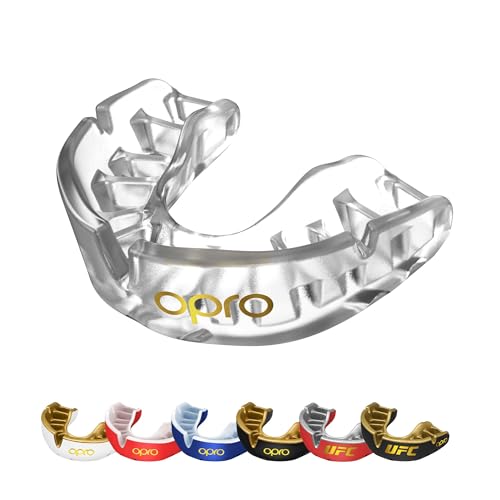
OPRO Gold Level Moldable Mouth Guard
- Moldable, self-fit
- Adult and kids
- Not for fixed braces
$19.99 at Amazon, as of Nov 17, 2026 02:07 UTC
Check price on Amazon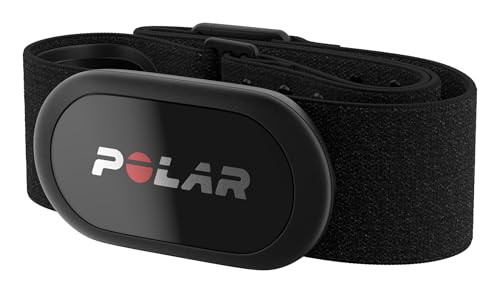
Polar H10
- ECG chest strap
- Up to 400 h coin battery
- Bluetooth + ANT+
The Gilbert G-TR4000 is a size 5 training ball with a triangular grip, 3-ply construction and hand stitching; it ships deflated and the listing says to inflate it to 9.5 psi. The Shock Doctor Gel Max is a boil-and-bite guard in youth and adult sizes; the OPRO Gold is a self-fit moldable guard whose listing says it is not for fixed braces (versions for braces are sold separately). Neither is a custom guard. For load tracking, the Polar H10 is a chest strap that reads heart rate; it tracks effort and does not prevent injury, and we have not confirmed that it carries the Regulation 12 approval needed for use in matches.
For a tournament, the short list is: mouthguard in a case, boots with checked studs, an approved top if you use padding, a spare shirt, and tape. More on the sport at the rugby sevens hub and the rugby hub.
Rugby sevens gear FAQs
What equipment do I need to start playing sevens?
A mouthguard, rugby boots with legal studs, a jersey and shorts from your club, and shin guards if you want them. Ask your club what it supplies.
Is a scrum cap compulsory?
No. World Rugby permits headgear that meets its specification, but it is optional. A 2026 Super Rugby study found no protective effect against head injury.
Are shoulder pads allowed in rugby sevens?
Yes, if they are soft and thin and conform to World Rugby Regulation 12 (not more than 1 cm uncompressed). Pads with plastic or metal parts are not allowed in USA Rugby contact play.
What size ball is used in sevens?
Law 2 describes the ball; the Laws allow smaller balls for young players. Maker listings show size 5 for ages 14 and up, size 4 for 11 to 13 and size 3 for 7 to 10.
Can I wear a GPS tracker in a match?
World Rugby permits player monitoring devices that carry the Regulation 12 approved label and are worn in a pouch or harness at the back of the jersey. Check with your league.
Sources
- World Rugby Laws of the Game 2026, Laws 2 and 4 (PDF)
- World Rugby Law 4, permitted clothing
- World Rugby Regulation 12 (PDF)
- World Rugby player monitoring device specification
- USA Rugby equipment guidelines 2019/20 (PDF)
- World Rugby: mouthguards recommended (2023 release)
- Mouthguard and dental injuries review (PMID 41871283)
- Custom vs boil-and-bite mouthguards scoping review (PMID 42649805)
- Headgear and head injury, Super Rugby (PMID 41419445)
- Shoulder injuries in rugby, meta-analysis (PMID 42527622)
- Gilbert G-TR4000, Amazon listing
- Shock Doctor Gel Max, Amazon listing
- OPRO Gold, Amazon listing
- Polar H10, Amazon listing
General information for education only, not medical advice. See a sports medicine doctor, physical therapist or athletic trainer about any injury or health concern. How we write these pages is in our editorial policy.