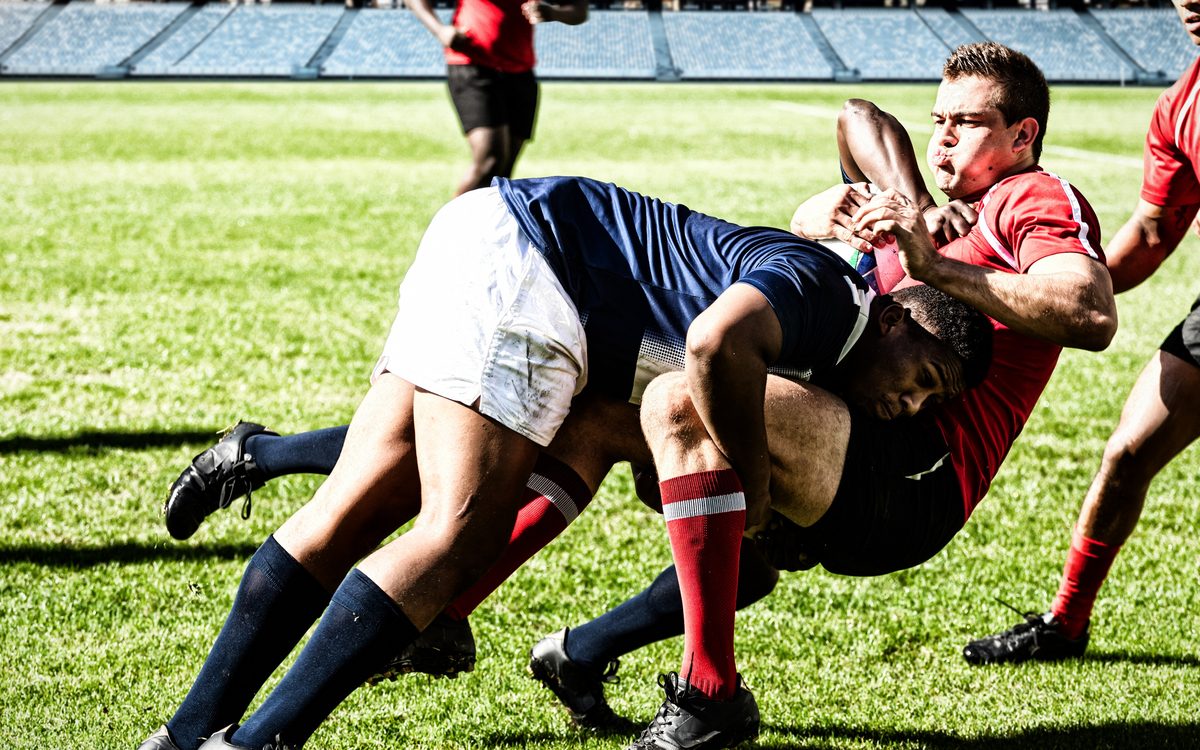
Seventy-ninth minute, a point down, last tackle of the set. The halfback has to choose: kick, run or pass. Nothing about his legs has changed in the last ten seconds; what has changed is his head. Mental training in rugby league is the set of habits, from routines to focus cues to how you handle a mistake, that help a player think clearly under pressure. It is different from mental health, which we cover separately below.
Quick answer: Mental skills such as simple goals, a pre-match routine, one-word focus cues, imagery and a plan for mistakes can be practised like any other skill, but none is proven to guarantee performance. Anxiety, depression, disordered eating, burnout or thoughts of self-harm are health matters: speak to a qualified professional. In the US, call or text 988 (the Suicide and Crisis Lifeline) in a crisis.
General information, not medical advice and not a substitute for a licensed mental health professional. See the rugby league hub for the sport overall, and training for the physical side.
What makes league mentally demanding
Under the International Laws, an attacking team gets a limited set of tackles, so every possession has a clock and a handover waiting on the sixth tackle (Section 11). Players must decide quickly where to run, when to pass and when to kick, and defenders must hold a line and make repeated tackles. Add an 80-minute match (Section 7), a referee who can caution, send off for ten minutes or dismiss a player (Section 16), and a crowd, and you have a sport where composure and decisions matter as much as fitness. The practices below are general sport-psychology practice, not findings from rugby league trials, which we did not find.
Confidence
Confidence usually comes from preparation you can point to: sessions completed, skills rehearsed, a role you understand. Many coaches help players keep a short list of “evidence” such as good training numbers or last week’s best tackles, and review it before games. Be wary of promises that a mindset trick will “unlock” performance.
Focus and refocusing
- Narrow the task. Use a one- or two-word cue for the next job, such as “head beside the ball” for a tackle, “hands up” for a catch or “talk” in defence.
- Reset after a mistake. Between plays there is a natural reset, the walk back to the defensive line or the play-the-ball. Many players use a breath, a cue word and a look at the next teammate.
- Control what you can. Effort, communication and the next play are in your hands; the referee and the scoreboard are not.
Goal setting and motivation
Coaches commonly separate outcome goals (win the competition) from performance goals (complete my tackles) and process goals (head position, getting back on side). Process goals are easier to control. Write them down, check them weekly, and change them when your role changes. Motivation dips are normal, especially after injury or being dropped.
Visualization and imagery
Imagery means rehearsing a skill in your mind, with the sights, sounds and feel of it. Players might picture a kick chase, a defensive reset or a tough conversion before a game. It is used alongside physical practice, not instead of it. We did not find a rugby league-specific trial, so describe it as a commonly used tool.
Pre-match routines and handling pressure
A routine is a fixed sequence of actions, such as eat, warm up, a few minutes of quiet breathing, team talk, so that the day feels familiar. Pressure is part of the sport, and rather than trying to remove nerves, many players treat the feeling as readiness. Slow breathing, a cue word and a focus on the next job are practical tools. If nerves become overwhelming, panic or keep you from sleeping for days, that is a health matter, not a routine problem.
Setbacks, mistakes and decisions
A knock-on or missed tackle will happen. Coaches suggest a short review (“what will I do differently?”) after the game, not during it. For halves and hookers, decision-making can be trained with video, scenario drills and simple rules for the last tackle; teammates and coaches should agree the rules in advance. Teamwork also depends on communication in defence, where a line holds only if everyone talks.
Competition preparation
Preparing for a match means sorting out sleep, food and travel the day before, a warm-up that includes mental cues, and a plan for the first few plays. Our nutrition page and recovery page cover the food and sleep sides.
Mental health is different from mental performance
Mental skills help with performance. Mental health symptoms and disorders are health matters that need qualified care. The 2026 International Olympic Committee consensus on mental health in elite athletes (Reardon and colleagues) says symptoms and disorders are common among elite athletes, may have sport-related causes and can affect performance, and recommends routine screening and monitoring with validated tools. A 2026 meta-analysis (Gouttebarge and colleagues, 72 studies) found self-reported symptoms among current elite athletes ranged from 4 percent for drug misuse to 33 percent for distress; these are symptoms, not diagnoses. Research on rugby league specifically includes an NRL study of 55 contracted players, of whom 35 percent self-reported a mental health issue (Lane and colleagues; from an abstract summary), and a Huddersfield project for the Rugby Football League that found player welfare officers integral to supporting Super League players.
- See a doctor or licensed mental health professional if you have persistent low mood, anxiety that interferes with life, disordered eating, burnout, problems with alcohol or drugs, or thoughts of harming yourself.
- In the US, the 988 Suicide and Crisis Lifeline is available by call or text to 988. If you are elsewhere, contact local emergency or crisis services.
- Tell your club, a coach or a welfare officer if you are struggling; many clubs have a welfare contact, though we did not verify any specific club’s provision.
Youth players: coaches and parents should look for sudden changes in mood, eating or sleep, and seek professional advice. We did not find league-specific youth mental health data.
Frequently asked questions
How do I stay calm before a rugby league match?
A fixed routine, slow breathing and one or two cue words are common tools. They help some players but are not proven for everyone. If anxiety is severe, see a professional.
Does visualization work?
Many athletes use imagery alongside physical practice. We found no rugby league-specific trial, so treat it as a tool that may help, not a guarantee.
What should I do after making a mistake in a game?
Many players use a quick reset, like a breath and a cue word, and save the review for after the game. Focus on the next play.
Is mental toughness the same as mental health?
No. Mental skills are about performance; mental health is about well-being and needs care when problems arise. Both matter.
Where can I get help if I am struggling?
Talk to a doctor, a licensed mental health professional or your club’s welfare contact. In the US you can call or text 988 in a crisis.
How can a halfback make better decisions?
Coaches use video, scenario practice and agreed rules for the last tackle. This is general practice; ask your coach for drills.
Sources
- Reardon et al. 2026, Mental health in elite athletes: IOC consensus statement, PMID 42580854
- Gouttebarge et al. 2026, prevalence of mental health symptoms in elite sport, PMID 42506839
- Lane, Hall and Gower, Mental health experiences of NRL athletes (Western Sydney University)
- University of Huddersfield, major study into the mental health of pro rugby league players
- 988 Suicide and Crisis Lifeline
- International Rugby League, Laws of the Game 2026
General information for education only, not medical advice. It does not replace a visit with a sports medicine doctor, physical therapist or athletic trainer. See how we research and write our pages in our editorial policy. Related: injury prevention, the rugby league hub and rugby.