This article contains affiliate links: if you buy through them we may earn a commission, at no extra cost to you. Read our affiliate disclosure.
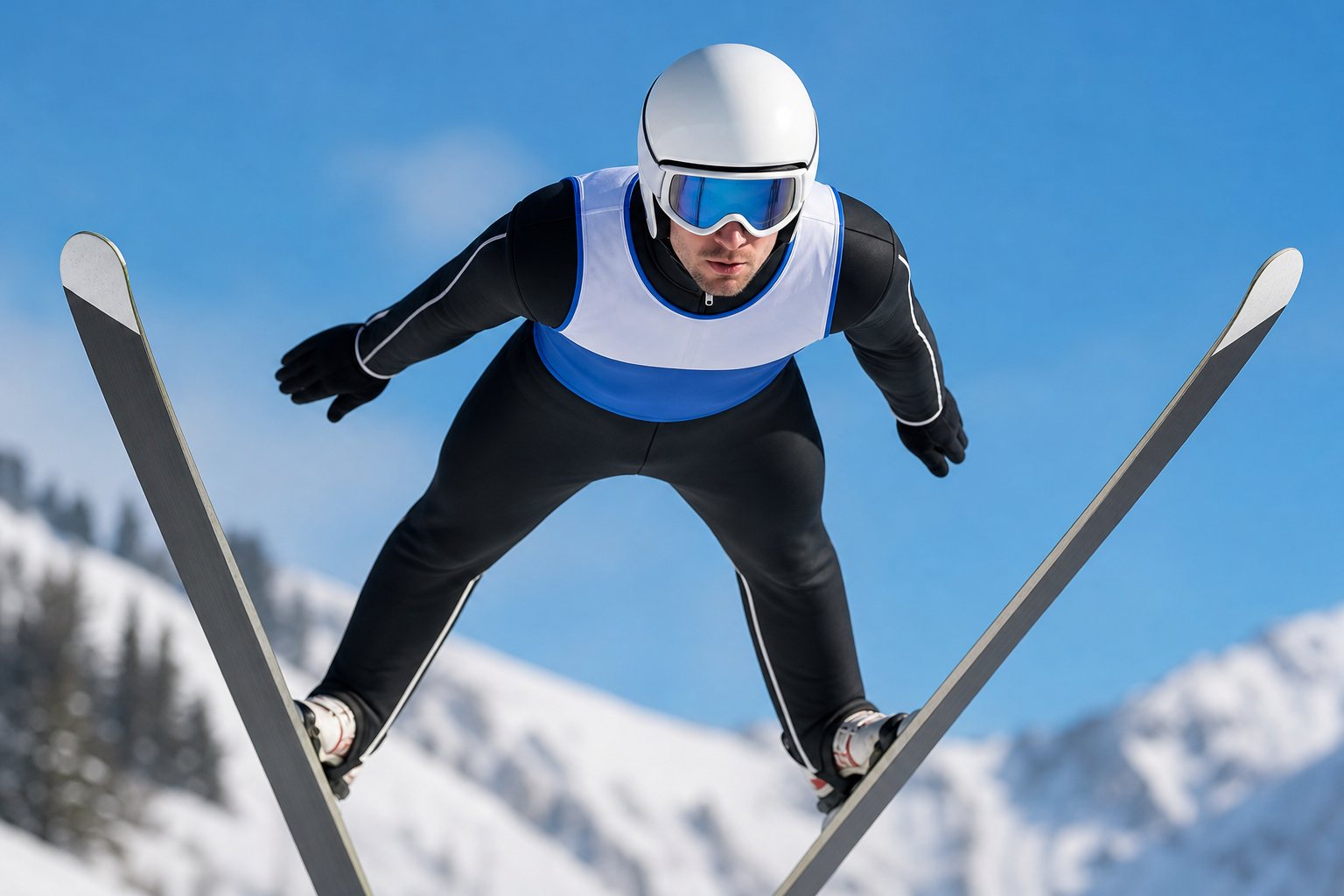
The first jumping suit a young athlete pulls on looks nothing like ordinary ski clothing: a thin, stiff-feeling microfibre shell with measured seams, skis nearly as long as a small car and boots that lace high behind the ankle. Ski jumping gear is among the most regulated in sport, and most of it is not sold in ordinary shops. This page explains what matters, which parts are checked by officials, where standards end and maker claims begin, and the few everyday items that are easy to buy.
Quick answer: Jumping skis, suits, bindings and boots usually come through a club or a specialist, not a retail shop (USA Ski Jumping). Beginners on small hills can use alpine equipment, and clubs often lend or rent gear. Ask your club what helmet it requires before buying one. The cards below are everyday items for the wait at the top, and a ski helmet only if your club accepts it.
What is regulated in competition
According to NBC Olympics’ equipment guide, skis may be at most 145% of the jumper’s height, based on a minimum body mass index of 21, with lighter jumpers using shorter skis. Suits are spongy microfibre 4 to 6 mm thick and must match the body shape within a 2 cm tolerance, and bindings may sit no more than 57% of the ski length from the front. A 2025 wind tunnel study (Virmavirta and colleagues) reported that each 2 cm of extra suit tolerance raised drag by about 4% and lift by about 5%, and a 2026 field study (Elfmark and colleagues) of 8 elite jumpers reported longer jumps with larger suits. Together they explain why officials measure suits so carefully. Check the current FIS specifications for the exact limits.
What beginners need
USA Ski Jumping says beginners on small hills can use their alpine equipment, that jumping-specific gear is needed on larger hills, that clubs often buy junior-size boots and skis, and that many clubs run rental programs. Jumping gear is not sold at retail shops; USA Ski Jumping offers equipment orders twice a year and a group for used gear. The practical advice is to ask the club before buying anything.
Helmets
FIS requires helmets in competition. For recreational snow sports, ASTM F2040 is a standard for helmets, and AAOS OrthoInfo says to wear a helmet made for skiing and not a bike helmet. Retailer fit guides (evo) say to measure the head above the eyebrows and ears, to choose a snug fit with no goggle gap and to replace a helmet after a significant impact. Whether a general ski helmet is accepted for jumping on your club’s hill is the club’s call; we did not find a published rule. Treat “Mips” or other features as maker claims unless a standard is named.
Boots, bindings and skis
Jumping boots are high-backed and bindings are specialised. Because AAOS OrthoInfo says alpine bindings should be set and tested by a ski shop following ASTM standards, jumpers should have a qualified club coach or technician check jumping setups. Do not adjust a release setting yourself. Inspect before each session: cracks, loose screws, torn straps and worn edges are reasons to stop and ask.
Goggles, layers and cold-weather items
Jumpers wait in cold wind. Retailer guides (evo) say to avoid cotton, use a wicking synthetic or wool base layer with an insulating layer and a wind- and water-resistant shell, and to choose goggles with 100% UV protection that fit the helmet. The WHO notes that fresh snow can reflect up to 80% of UV radiation, so eye protection matters on bright days. Chemical hand warmers help between rounds; follow the packaging.
Everyday picks
These are everyday cold-weather and fit items from our existing skiing recommendations, not jumping-specific equipment. We could not verify a jumping-specific product, so none is listed. We may earn a commission from Amazon links.

Smith Mission MIPS Ski Helmet
- Mips
- ASTM F2040 and EN 1077 Class B listed
- Dial fit

Smith Squad Goggles with ChromaPop
- Semi-rimless oversized lens
- Anti-fog coating
- Silicone-backed strap
$107.93 at Amazon, as of Nov 17, 2026 01:07 UTC
Check price on Amazon
HotHands Hand Warmers, 40 pairs
- Air-activated
- Up to 10 hours of heat
- 40 pairs
$25.60 at Amazon, as of Nov 17, 2026 01:07 UTC
Check price on Amazon
Smartwool Classic Thermal Merino Base Layer Crew
- 100% merino
- Midweight
- Slim fit
$93.75 at Amazon, as of Nov 17, 2026 01:07 UTC
Check price on AmazonStandards are named on the listings; features such as Mips or coatings are maker claims. Match size to your own head and fit, and ask your club first. See our injury prevention page for how protective gear fits into the larger picture.
Care and inspection
- Dry boots, gloves and helmet liner after each session.
- Replace a helmet after a significant impact, as retailer guides advise.
- Have a coach check bindings and equipment each season.
- Never borrow safety gear that is the wrong size.
See the ski jumping hub, our rules page and the skiing hub.
Ski jumping FAQs
Can I buy ski jumping skis in a shop?
USA Ski Jumping says jumping gear is not sold in ordinary retail shops; contact your club.
Do beginners need special equipment?
USA Ski Jumping says beginners on small hills can use alpine equipment, with jumping-specific gear needed on larger hills.
What helmet should a ski jumper wear?
Whatever your club requires. FIS requires helmets in competition. ASTM F2040 is a standard for recreational snow sport helmets, but ask your club about its rules.
Why are suits measured?
Suit size changes air drag and lift, according to a 2025 wind tunnel study, so officials check the fit within a tolerance.
How do I check if gear fits?
A coach or technician should check boots, bindings and helmet; retailer guides say a helmet should be snug with no goggle gap.
Sources
- NBC Olympics, ski jumping equipment
- USA Ski Jumping, ski jumping equipment
- USA Ski Jumping, Ski Jumping 101
- Virmavirta et al., suit size and air permeability, part I, 2025
- Elfmark et al., suit size and performance in ski jumping, part II, 2026
- ASTM F2040, helmets for recreational snow sports
- AAOS OrthoInfo, skiing injury prevention
- evo, ski helmet size and fit guide (retailer)
- evo, how to buy goggles (retailer)
- evo, what to wear skiing (retailer)
- WHO, radiation: the known health effects of ultraviolet radiation
General information for education only, not medical advice. It does not replace a visit with a sports medicine doctor, physical therapist or athletic trainer. See how we write and check our pages in our editorial policy.