This article contains affiliate links: if you buy through them we may earn a commission, at no extra cost to you. Read our affiliate disclosure.
The morning after a meet, the stairs feel steeper than they should. The legs are heavy, the jumps in warm-up will feel a little flatter, and the athlete wonders whether to push through. Trampoline recovery is everything done between sessions to let the body adapt to training: sleep, food, planned rest, easy movement and, for some athletes, tools such as massage or cold water. Some of it has good evidence and some does not, and this page says which is which. Rules, training and injuries are on the other pages of the trampoline hub.
Quick answer: Trampoline gymnasts need recovery because the work is repeated explosive jumping. Elite men in one study were still jumping about 5 percent lower 24 hours after a simulated competition. The most reliable recovery tools are sleep, enough food and spacing hard days; the athlete’s sleep need is individual (Walsh and colleagues, 2021 consensus). Massage has the best evidence among recovery techniques for soreness and tiredness, but effects are modest and short-term. Soreness that fades in a few days is normal; pain that is sharp, stays in one place or gets worse is a reason to see a sports medicine doctor, physical therapist or athletic trainer.
Why recovery matters in this sport
Jensen and colleagues (Journal of Sports Sciences, 2013) measured 15 elite male trampolinists in a simulated competition of about 252 jumps. Countermovement jump height was 3.8 to 5.2 percent lower after each routine and 4.8 percent lower 24 hours afterward, and a blood marker of muscle stress, creatine kinase, was up by around 50 percent right after and 65 percent a day later. Flight time over the first ten of 20 maximal jumps was about 1 percent shorter at 24 hours. This was a small group of elite men, but it shows that a day of competing can leave a trace the next day. A coach planning the following session should account for that.
Sleep
Sleep is the base. A consensus review (Walsh and colleagues, British Journal of Sports Medicine, 2021) concluded that elite athletes are prone to short or poor sleep, shaped by training, travel, competition, stress and anxiety, and recommended an individualized approach instead of a fixed target such as 7 to 9 hours. The American Academy of Sleep Medicine’s consensus on children’s sleep recommends 8 to 10 hours per 24 hours for teenagers aged 13 to 18, which is a general figure for all teens, not for athletes. Early morning sessions, late-evening meets and school can make that hard; talk to a coach about the schedule. We found no trampoline-specific sleep trial.
Load management and rest days
The best trampoline-specific evidence about recovery is about load. In 21 national-level trampolinists (Patel and colleagues, Journal of Sports Sciences, 2021), the chance of injury rose with the seven-day rolling training load (relative risk 1.88). In a second study of 26 gymnasts (Patel and colleagues, 2022), an injury or niggle in the previous week was linked with a substantial injury in the next week (relative risk 5.29). The American Academy of Pediatrics (Brenner, 2016) recommends one to two days off a week from the main sport for young athletes, and time away over the year. A planned lighter week after a hard block or a meet is general coaching practice rather than a trial-based rule.
Mobility and flexibility
Trampoline routines need athletes to reach clear tuck, pike and straight shapes, and the FIG Code requires an opening before landing, so mobility in the hips, hamstrings, shoulders and ankles supports good form. We did not find a trial that shows stretching speeds recovery or prevents injury in trampolinists, so we keep the advice modest and label it general practice. Many coaches use dynamic movements before training and gentle static stretching after, within a comfortable range, with no forced or painful stretching. Athletes with unusually loose joints (hyperlaxity) are a question for a physical therapist, who can assess what mix of strength, control and stretching suits them. One case report described a 13-year-old trampoline gymnast with hyperlaxity who dislocated both elbows (Bauer and colleagues, 2012).
Recovery methods: what the evidence says
Dupuy and colleagues (Frontiers in Physiology, 2018) pooled 99 studies on recovery techniques after exercise. They found massage the most effective for soreness and tiredness, and said that compression garments, massage or water immersion could effectively manage perceived fatigue. Cold exposure and massage reduced markers of inflammation. The studies were mostly short-term and in general or non-trampoline athletes, and results varied, so these are modest, not dramatic. Feeling better is a real benefit, but it does not show the body is ready for the next hard session.
- Massage and foam rolling: many athletes find self-massage tools helpful for soreness; evidence for massage is best, evidence for foam rollers specifically was not reviewed here.
- Compression and water immersion: may reduce perceived fatigue, with modest effects.
- Cold water: reduces some soreness markers, but how often to use it is a question for a coach or clinician, particularly for young athletes.
- Active recovery: easy movement is common practice and low risk, though we did not find a trampoline-specific trial.
- Wearables: devices that estimate recovery scores are estimates; use them as one input among several.

TriggerPoint GRID 1.0 Foam Roller
- 13-inch roller
- Multi-density foam
- Fits a gym bag
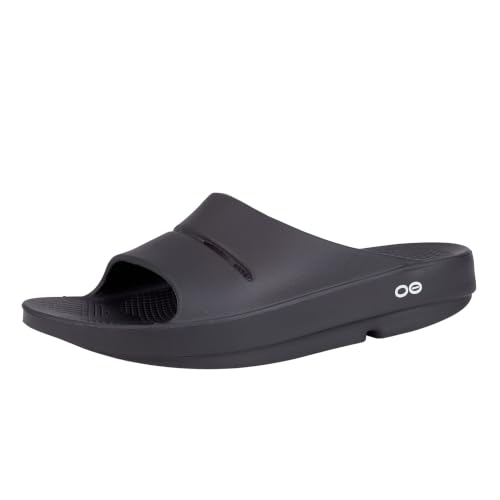
OOFOS OOahh Slide
- OOfoam slide
- APMA Seal of Acceptance
- Machine washable
$59.95 at Amazon, as of Nov 17, 2026 02:07 UTC
Check price on Amazon
OPTP Stretch Out Strap
- 6 ft nylon strap
- Ten loops
- 40-page exercise booklet
$15.95 at Amazon, as of Nov 17, 2026 02:07 UTC
Check price on AmazonSoreness versus injury
Muscle soreness that appears a day or so after a hard session and fades over a few days is common after new or intense work. Pain is different when it is sharp, stays in one spot, is there at rest or at night, comes with swelling, a joint that gives way or numbness, or when it changes how the athlete jumps or lands. OrthoInfo advises seeing a doctor for an ankle injury if swelling or pain lasts several weeks or weight bearing is difficult. See trampoline injuries for patterns and when to get help. Children and teenagers who hide pain to keep training are a particular worry; coaches and parents can ask about it openly.
Trampoline recovery FAQs
How long should a trampolinist rest between hard sessions?
We found no published figure. The simulated competition study shows jump power can be lower for 24 hours after, so many coaches space hard days. A coach and a health professional can set it for the individual.
Is massage worth it?
Dupuy and colleagues (2018) found massage the most effective technique for soreness and perceived fatigue in a review of 99 studies, though effects were modest.
How much sleep do teen trampolinists need?
The American Academy of Sleep Medicine consensus recommends 8 to 10 hours per 24 hours for teens aged 13 to 18, and sleep experts advise individualizing for athletes (Walsh 2021).
Should I stretch before or after training?
There is no trampoline-specific trial. Common practice is dynamic movement before and gentle static stretching after.
Do I need to rest completely after a competition?
Not necessarily. Easy movement is common practice, but fatigue and next-day jump loss are real, so plan the following session sensibly.
Sources
- Jensen P et al., simulated trampoline competition in elite male gymnasts, J Sports Sci 2013: PubMed
- Walsh NP et al., Sleep and the athlete: narrative review and 2021 expert consensus recommendations, Br J Sports Med 2021: LJMU Research Online
- American Academy of Sleep Medicine, pediatric sleep duration consensus: aasm.org PDF
- Patel TS et al., J Sports Sci 2021: PubMed; Scand J Med Sci Sports 2022: PubMed
- AAP, Brenner JS, Sports Specialization and Intensive Training in Young Athletes 2016: PubMed
- Dupuy O et al., recovery techniques systematic review with meta-analysis, Front Physiol 2018: PMC
- FIG Trampoline Gymnastics Code of Points 2025-2028: PDF; AAOS OrthoInfo, Sprained Ankle; Bauer S et al., BMJ Case Rep 2012: PubMed
Keep going: training, nutrition and athlete health, injuries, the gymnastics hub and the sports hub.
General information for education only, not medical advice. It does not replace a sports medicine doctor, physical therapist, athletic trainer or your coach. How we research and write these pages is in our editorial policy.