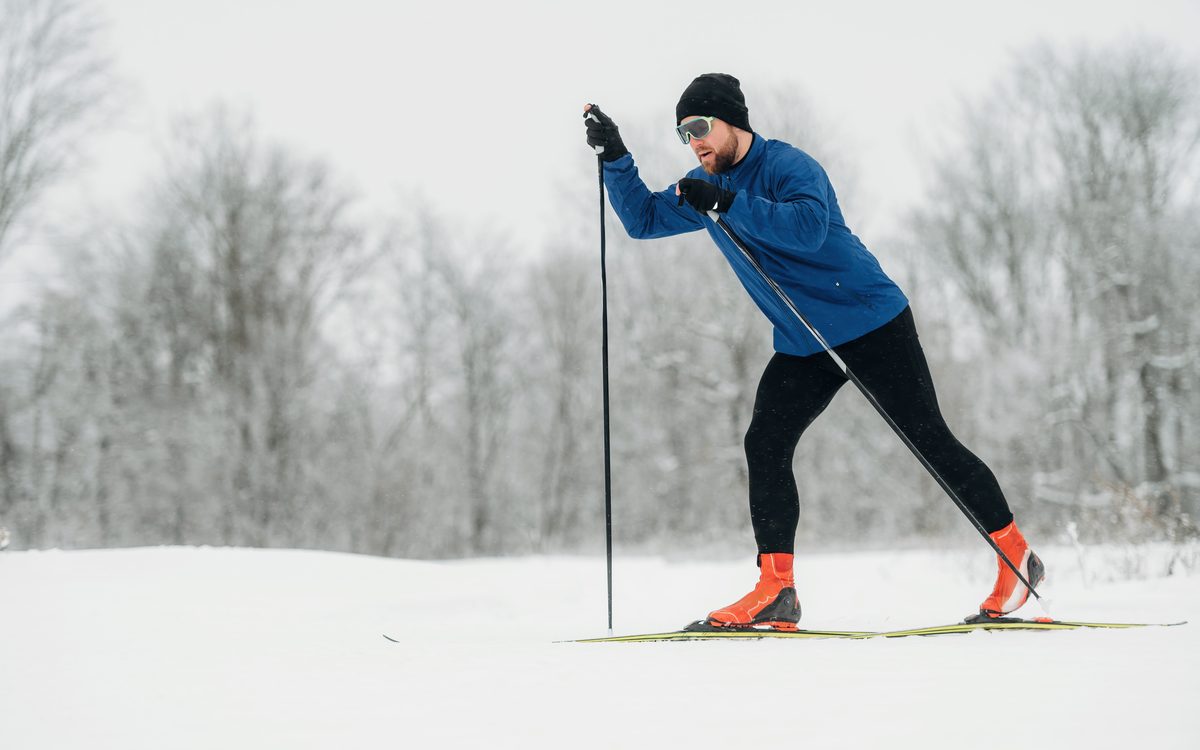
The jump goes well, the race goes badly, and the legs feel like wet sand the next morning. Then there is a second session on the schedule. Nordic combined recovery is everything that helps an athlete absorb two kinds of training, a hard endurance load and a power-and-technique load, and arrive at the next session ready. This page separates what has evidence from what is simply popular.
Quick answer: Sleep, enough food and planned easy days are the foundation. Studies of elite Nordic combined athletes show that heavy training blocks can leave them fatigued, so easy days matter. Massage may help soreness a little, compression has small effects, cold-water immersion can blunt strength gains, and evidence for many gadgets is weak. Soreness that fades in a day or two is normal; pain that lingers or changes how you move deserves a sports medicine professional.
Sleep
The American Academy of Sleep Medicine and the Sleep Research Society joint statement (Watson and colleagues, 2015) recommends adults sleep at least 7 hours a night. The CDC recommends 8 to 10 hours for teens. Evening hill sessions and early training make this hard; a regular bedtime helps. Athletes who travel to altitude should expect sleep to be lighter at first; our nutrition page covers altitude and cold.
Load and rest
The recovery that matters most is planned. In the French altitude study (Schmitt and colleagues, 2018), all Nordic combined athletes showed signs of overreaching after the block, and their training had less low-intensity volume than the cross-country skiers. The champion followed by Rasdal and colleagues (2018) cut his endurance volume by 12% in the Olympic season and focused on session quality and recovery. World-class cross-country skiers use reduced load roughly every 8 to 9 days (Walther and colleagues, 2025). These are descriptions of elite athletes, not prescriptions; for juniors the American Academy of Pediatrics (Brenner, 2016) recommends 1 to 2 days off a week.
Mobility and flexibility, especially the hips
Hip pain is common in Nordic jumping athletes (Vasavada and colleagues, 2025), and the authors suggest hip strength and conditioning. We did not find a trial proving that a mobility routine prevents injury or speeds recovery in these athletes. A sensible routine is general practice: gentle hip, ankle and trunk mobility after training, not forced stretching into pain. Ask a physical therapist about hip range of motion that feels pinched or blocked.
Recovery methods and what the evidence says
- Cool-down: a narrative review (Van Hooren and Peake, 2018) found an active cool-down largely ineffective for next-day performance and soreness, though it may help the heart and breathing settle. It is fine to do, just not magic.
- Massage and foam rolling: a systematic review of recovery techniques (Dupuy and colleagues, 2018, 99 studies) found massage the most effective for soreness and perceived fatigue. A foam roller is a form of self-massage, but the review was about massage; we did not find a Nordic combined study.
- Compression garments: a meta-analysis of 23 studies (Brown and colleagues, 2017) found small benefits, mainly for strength recovery.
- Cold-water immersion: a review (Machado and colleagues, 2016) found it can reduce soreness at 10 to 15 degrees Celsius for 10 to 15 minutes, but a trial (Roberts and colleagues, 2015) found regular post-exercise cold-water immersion blunted muscle gains from strength training. For athletes building strength, that is a trade-off to discuss with a coach.
- Wearables and HRV: Schmitt and colleagues used heart rate variability and a fatigue questionnaire in the French study, but that does not mean an app can run your training. See our HRV guide and the recovery tools guide.
Winter illness
Infections were 73.3% of the illnesses at the 2023 Nordic World Championships (Kastner and colleagues), and in Finnish cross-country skiers with respiratory infections, 54.4% trained and 22.5% competed while sick (Mäki-Heikkilä and colleagues, 2023). Staying home when you have a fever or chest symptoms is part of recovery; a doctor can advise about the rest.
A simple day-after routine (general practice)
After a hard day, many athletes eat a carbohydrate and protein meal within a couple of hours, rehydrate, take a short easy walk or spin, do gentle mobility and go to bed on time. Nothing in that list is special to Nordic combined; it simply protects the basics the studies above point to. If the next session includes jumping, many coaches schedule it fresh, with the harder skiing on a separate day.
Soreness or injury?
Muscle soreness is usually spread through a muscle group, feels better once warm, and fades in a day or two. Pain that is sharp, stays in one spot, wakes you at night, is in a joint, or changes how you jump or ski is not soreness. We did not find a source that gives one test; this is general guidance. If in doubt, see a sports medicine doctor, physical therapist or athletic trainer, and read our injuries page.
Frequently asked questions
How much sleep does a Nordic combined athlete need?
Adults need at least 7 hours (AASM and SRS joint statement); the CDC recommends 8 to 10 hours for teens. Hard training and early starts can push you to the top of those ranges.
Do cold plunges help recovery?
They may reduce soreness, but regular use after strength work blunted muscle gains in one trial. The evidence is mixed; ask a coach.
Is stretching enough to recover?
We found no evidence that stretching alone speeds recovery in these athletes. Easy movement, food, sleep and planned rest days matter more.
Should I train when sick?
Not with fever or chest symptoms. See a doctor if illness drags on or breathing gets harder.
Are recovery gadgets worth it?
Some have small, specific effects (massage and compression, per the reviews above). None replaces sleep, food and planned rest.
Sources
- Watson et al. 2015, recommended amount of sleep for adults
- CDC: about sleep
- Schmitt et al. 2018, live high-train low in Nordic combined
- Rasdal et al. 2018, Olympic champion case study
- Walther et al. 2025, periodisation in cross-country skiers
- AAP, Brenner 2016
- Vasavada et al. 2025, hip, knee, ankle outcomes
- Van Hooren and Peake 2018, cool-down review
- Dupuy et al. 2018, recovery techniques review
- Brown et al. 2017, compression garments meta-analysis
- Machado et al. 2016, cold water immersion review
- Roberts et al. 2015, cold water immersion and strength training
- Kastner et al. 2025, Planica 2023
- Mäki-Heikkilä et al. 2023, respiratory infections in skiers
General information for education only, not medical advice. It does not replace a sports medicine doctor, physical therapist, athletic trainer, dietitian or qualified coach who knows you. See our editorial policy for how we write and source our pages.
Keep exploring: the Nordic combined hub, the skiing hub, ski jumping and every sport on our sports hub.