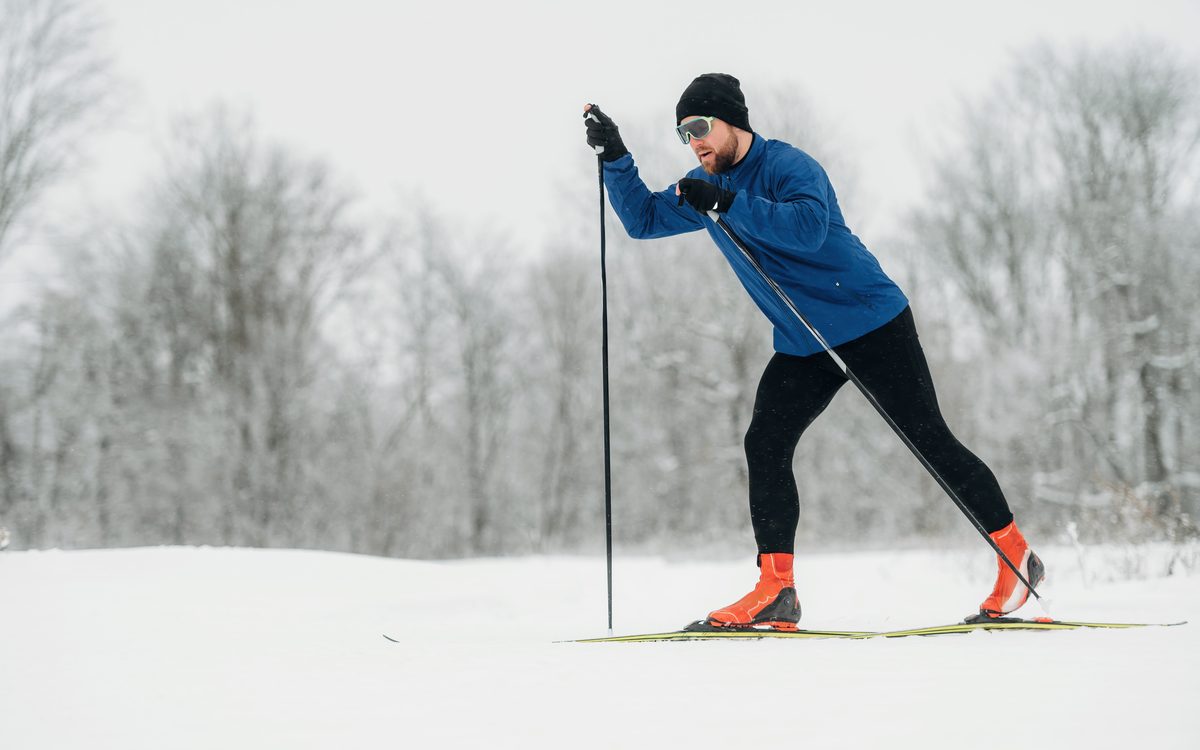
Breakfast at the hill is porridge, bread and a banana, eaten between warm-up laps with cold hands. A jumper wants to feel light and a skier wants plenty of fuel, and the two wishes pull in opposite directions. Nordic combined nutrition is eating enough to fuel long skiing, strength training and recovery while protecting health, because in a sport where body weight affects the jump the temptation to eat less is real. This page is general information and not a diet plan.
Quick answer: Fuel the endurance training: general sports nutrition guidance suggests carbohydrate needs rise with training hours, and that protein is spread across the day. Staying very lean is a health risk (RED-S, relative energy deficiency in sport), and ski jumping has a documented history of underweight athletes. Supplements are optional, can carry doping and contamination risks, and should be discussed with a doctor or dietitian. See a sports dietitian for personal advice.
Fuelling two kinds of training
The American College of Sports Medicine, Academy of Nutrition and Dietetics and Dietitians of Canada joint position (Thomas and colleagues, 2016) gives daily carbohydrate ranges: 3 to 5 grams per kilogram of body weight for light training, 5 to 7 for about an hour a day, and 6 to 10 for 1 to 3 hours a day. It gives protein as 1.2 to 2.0 grams per kilogram a day, with 15 to 25 grams after hard sessions. Elite Nordic combined athletes train about 846 hours a year (Tønnessen and colleagues, 2016), well beyond those ranges, so a team dietitian should plan their intake. A young athlete should follow a family doctor or dietitian rather than numbers on a web page.
Why weight is a sensitive topic in jumping
A lighter jumper flies further, so the sport has a history of underweight athletes. A paper on ski jumping (Schmölzer and Müller, 2002) described many contemporary jumpers as alarmingly underweight, with several cases of anorexia nervosa. Müller and colleagues (2006) reported that the average BMI of world-class jumpers had fallen by 4 units since 1970. A rule followed: NBC Olympics notes that the allowed jump ski length is tied to body size, capped at 145% of body height based on a minimum BMI of 21, so very light jumpers get shorter skis. In the Müller study, the share of underweight jumpers (BMI below 18.5) fell from 22.8% at the 2002 Olympics to 8.7% in the 2004-05 season after the new regulations. Nordic combined athletes are heavier than jumpers (Sandbakk and colleagues, 2016, 9% higher body mass), but they jump too and carry the same cultural pressure.
Relative energy deficiency in sport (RED-S)
The 2023 IOC consensus statement on RED-S (Mountjoy and colleagues) describes low energy availability, taking in too little energy for training and health, in women and men, with effects including bone, hormonal, metabolic, immune and mental health problems and reduced performance. The IOC prevention paper (Torstveit and colleagues, 2023) emphasises education and de-emphasising weight and leanness, particularly in young and sub-elite athletes. Warning signs can include persistent fatigue, frequent illness, repeated stress injuries, missing periods and constant preoccupation with food or weight. This list is general, not from a single table in the statement. If you see these signs in yourself or a teammate, see a doctor or sports dietitian. Coaches should avoid weigh-ins and body comments.
Cold, altitude and hydration
Training in the cold and at altitude changes appetite and fluid habits. The CDC’s Yellow Book lists loss of appetite among the symptoms of altitude illness. Easy-to-eat carbohydrates and a warm drink are practical, and you can still get dehydrated in the cold. The National Athletic Trainers’ Association fluid replacement statement advises against gaining body mass during exercise from drinking too much. Heat and weight-class cautions in other sports are less relevant here; Nordic combined has no weight classes, but the ski-length BMI rule works like one.
Supplements: what to know first
The IOC consensus statement on dietary supplements (Maughan and colleagues, 2018) says supplements should be used with care and after considering the evidence for the athlete’s event. Our site follows a simple rule: no health claims, no dosage advice beyond the label, and a preference for products that are third-party tested for sport (NSF Certified for Sport or Informed Sport). Athletes in FIS and other tested competitions are responsible for what they take. Check the label with your doctor, and do not take anything banned in sport. Creatine, caffeine and iron are common questions; iron should only be taken after a blood test advised by a doctor, because the UEFA expert statement (Collins and colleagues, 2021) warns that routine iron supplementation can do more harm than good. For product comparisons see our general guides on protein, electrolytes and multivitamins.
Related pages
See our recovery page for sleep and rest, the training page for volume, and the skiing nutrition page for general ski fuelling.
Frequently asked questions
What should a Nordic combined athlete eat before the jump?
Familiar, easy-to-digest carbohydrate such as toast, porridge or a banana, plus a drink. We found no Nordic combined study on pre-jump meals; practice what works in training.
Do Nordic combined athletes need to be very light?
No. They are heavier than ski jumpers (9% in one comparison). Very low weight is a health risk, and a rule ties jump ski length to BMI.
What is RED-S?
Relative energy deficiency in sport: not eating enough for training and health, with possible effects on bones, hormones, immunity and performance, in both women and men.
Are supplements safe?
Not automatically. Some products contain banned or undeclared ingredients. Talk to a doctor or dietitian, and prefer third-party tested products.
Is creatine allowed for teens?
We cannot advise on dosing. The AAP has advised against creatine under 18; ask a doctor.
Sources
- Thomas et al. 2016, ACSM/AND/DC joint position on nutrition and athletic performance
- Tønnessen et al. 2016, training of world-class Nordic combined athletes
- Schmölzer and Müller 2002, weight in ski jumping
- Müller et al. 2006, underweight in ski jumping
- Sandbakk et al. 2016, Nordic combined vs specialists
- NBC Olympics: Nordic combined 101, equipment
- Mountjoy et al. 2023, IOC consensus statement on REDs
- Torstveit et al. 2023, REDs prevention
- Maughan et al. 2018, IOC consensus on dietary supplements
- Collins et al. 2021, UEFA expert group statement on nutrition
- CDC Yellow Book: high-altitude travel and altitude illness
- NATA fluid replacement (McDermott 2017)
- AAP: creatine in young athletes (LaBotz and Griesemer 2016), as recorded in sibling pages
General information for education only, not medical advice. It does not replace a sports medicine doctor, physical therapist, athletic trainer, dietitian or qualified coach who knows you. See our editorial policy for how we write and source our pages.
Keep exploring: the Nordic combined hub, the skiing hub, ski jumping and every sport on our sports hub.