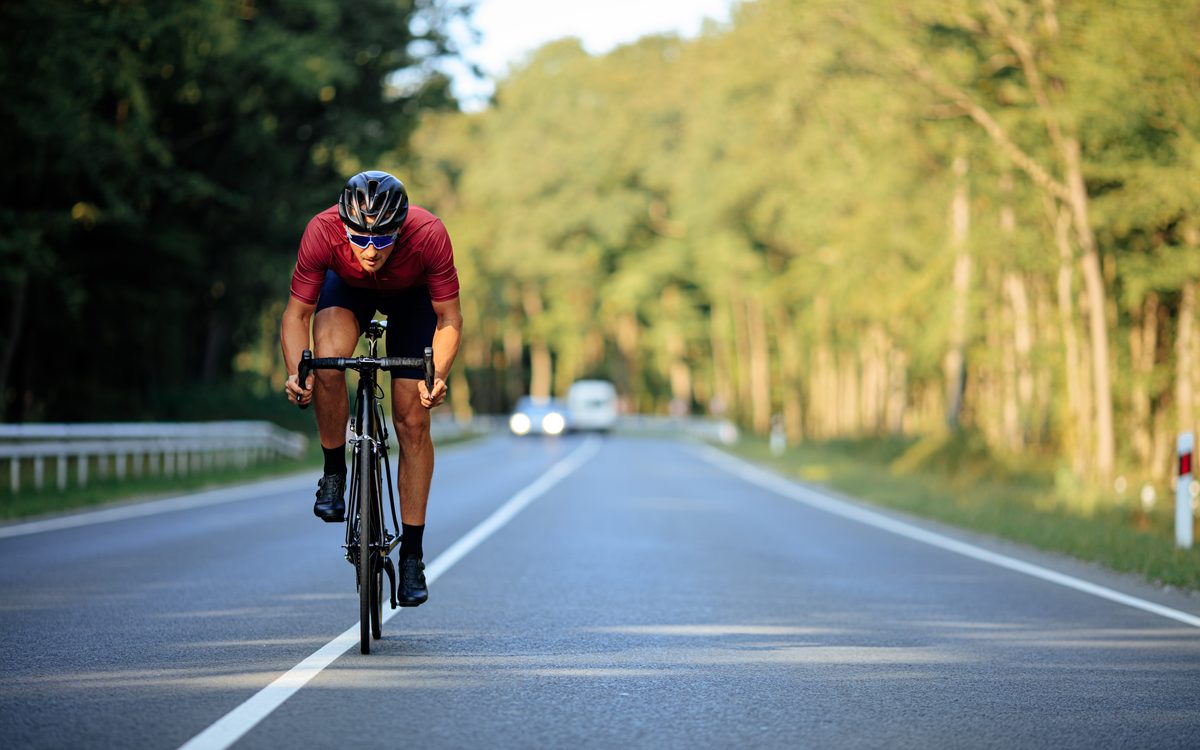
Kilometre 140, the climb is steep, the group is stretched out and the rider in third wheel is having a conversation with herself: “just stay on this wheel, just to the next sign.” Road racing is long, and much of the fight happens between the ears. Road cycling mental training is the set of skills riders practice, such as goal setting, focus, pacing patience, handling pressure and bouncing back from setbacks, to compete as well as they can. It is separate from mental health, which is covered below. For logistics on the day see our cycling race day page; for the discipline see the road cycling hub.
Quick answer: Mental skills such as goal setting, a pre-race routine, focus cues and imagery are widely taught to cyclists, and reviews of sport psychology research cover them, but no technique guarantees a result. Treat them as skills you practice in training. Anxiety, depression, disordered eating or burnout are health matters: talk to a qualified professional, and in the US call or text 988 if you are in crisis.
What the research says, honestly
A 2025 scoping review (Lochbaum and Lane, Sports) mapped 73 meta-analyses of psychological factors and sport performance and found the most-studied topics were mental practice, confidence, achievement goals, anxiety, cohesion, mindfulness and neurofeedback. It maps the field and does not claim any one technique works for cyclists. Most studies are in other sports or in lab tasks, so this page labels what comes from cycling and what is general sport psychology practice. A 2026 network meta-analysis of 24 randomised trials in competitive athletes (Chen and colleagues, Frontiers in Psychology) found sport psychology interventions reduced anxiety compared with control conditions (a pooled standardised mean difference of -0.74) and compared different approaches. Results across athletes and tasks vary, and these athletes were not all cyclists.
Confidence and motivation
A 2025 study of 73 cyclists and 83 runners (Frontiers in Psychology) found three groups: internally motivated athletes with high self-efficacy, externally motivated athletes with low self-efficacy and intrinsic motivation, and highly motivated athletes scoring high on both. It is a survey, so it shows association, not cause. A general coaching idea that fits: build confidence from evidence, such as the sessions you completed, the rides you survived and the lessons from races, and write them down.
Focus, effort and pacing
Road races ask for patience early and nerve late. A 2016 lab study of 20 experienced runners (Brick and colleagues, Medicine and Science in Sports and Exercise) found that when pace was controlled externally, runners reported more focus on cognitive strategies such as relaxing and form, and that more internal sensory monitoring coincided with higher effort perception in some of them. That was running, not cycling, and a small sample, but it illustrates why coaches teach focus cues. General practice in cycling includes:
- A focus cue for hard moments, such as breathing, cadence or “smooth”.
- Effort checks at set times: shoulders down, jaw loose, hands relaxed.
- A pacing plan for time trials and climbs based on tested power or heart rate, so the first minutes do not decide the last.
Goal setting and routines
Coaches usually split goals into outcome (a result), performance (a time or power) and process (what you control, such as eating on schedule or holding a wheel). Process goals are the easiest to repeat. A pre-race routine, the same sequence of warm-up, fueling and equipment checks, saves attention for the race and calms nerves. USA Cycling’s first-time guide gives the practical basics: lay out gear the night before, arrive early, and do not try anything new on race day. This section is general practice, not a tested program.
Imagery and visualization
Mental practice is among the most studied topics in the Lochbaum and Lane scoping review. Riders commonly use imagery to rehearse a start, a corner, a climb or a sprint, and to picture how they will respond to an attack. We did not find a cycling-specific trial to cite, so treat it as an optional tool that may or may not suit you. Imagery that includes a crash can also be used to rehearse a calm response, but an anxious rider should work with a qualified sport psychologist.
Handling pressure and setbacks
Nerves before a start are normal. Common coaching tools are slow breathing, a short warm-up routine, a positive cue and a focus on the next task. Setbacks are routine in road racing: flats, crashes, missed splits. Many riders write a short debrief with what worked, what did not and one thing to change, and avoid judging the day only on the result. Fear after a crash is common too; a coach, a gradual return and, if it persists, a sport psychologist can help.
Tactics and teamwork
A 2026 study of professional cyclists in a Grand Tour (Sanchez-Jimenez and colleagues, European Journal of Sport Science) profiles role-specific performance, a reminder that road racing involves roles, such as leaders, helpers and sprinters. For club riders, tactics means reading the bunch, saving energy, knowing when to move up and sharing work in a break. Learn by watching races and debriefing with teammates.
Mental health is not the same as mental performance
Performance skills are not treatment. The IOC’s 2026 consensus statement on mental health in elite athletes (Reardon and colleagues, British Journal of Sports Medicine) says mental health symptoms and disorders are common among elite athletes, can have sport-related causes and can affect performance, recommends screening and monitoring with validated instruments and says treatment may include psychotherapy and medication; with appropriate support many athletes can keep training and competing, sometimes with changes. If you notice persistent anxiety, low mood, loss of interest, disordered eating, constant exhaustion or thoughts of self-harm, talk to a doctor, therapist or other qualified professional. In the US, the 988 Suicide and Crisis Lifeline is available by call or text to 988. Disordered eating and low energy availability are also covered on our nutrition page.
Young riders
We did not find cycling-specific youth sport psychology sources to cite. Young riders should have supportive coaches and parents, enjoy the sport, and have access to professional help when something seems off.
Road cycling mental training: FAQs
How do I stop getting nervous before a race?
Some nervousness is normal. Coaches commonly teach a set routine, slow breathing and a focus on the next task. A 2026 review of 24 randomised trials found sport psychology interventions reduced anxiety in competitive athletes. If anxiety is intense or constant, see a qualified professional.
Does visualization work for cyclists?
Mental practice is one of the most studied topics in sport psychology, but we did not find a cycling-specific trial. Many riders find it useful; it is not a substitute for training.
How do I stay mentally strong on long climbs?
General coaching practice includes a focus cue, regular effort checks and breaking the climb into short targets. Pacing to your tested limits helps you avoid starting too hard.
What if I am scared to ride after a crash?
It is common. Go back gradually, with a coach or riding partner, and speak to a sport psychologist or other qualified professional if fear persists or affects daily life.
Where can I get help for my mental health?
Start with a doctor or therapist. In the US you can call or text 988 for the 988 Suicide and Crisis Lifeline at any time. For emergencies call 911.
Sources
- Lochbaum and Lane 2025, 50 years of sport psychology-performance meta-analyses
- Chen et al. 2026, sport psychology interventions and anxiety in competitive athletes
- Motivation and self-efficacy in cycling and running athletes (2025)
- Brick et al. 2016, attentional focus effects during running
- Sanchez-Jimenez et al. 2026, role-specific performance profiles in a Grand Tour
- IOC consensus statement on mental health in elite athletes (2026)
- 988 Suicide and Crisis Lifeline
- USA Cycling: first-time racer guide
General information for education only, not medical advice. It does not diagnose, treat or clear anyone to ride or race. Talk to a sports medicine doctor, physical therapist or athletic trainer about your own body. How we write and check our pages is in our editorial policy.