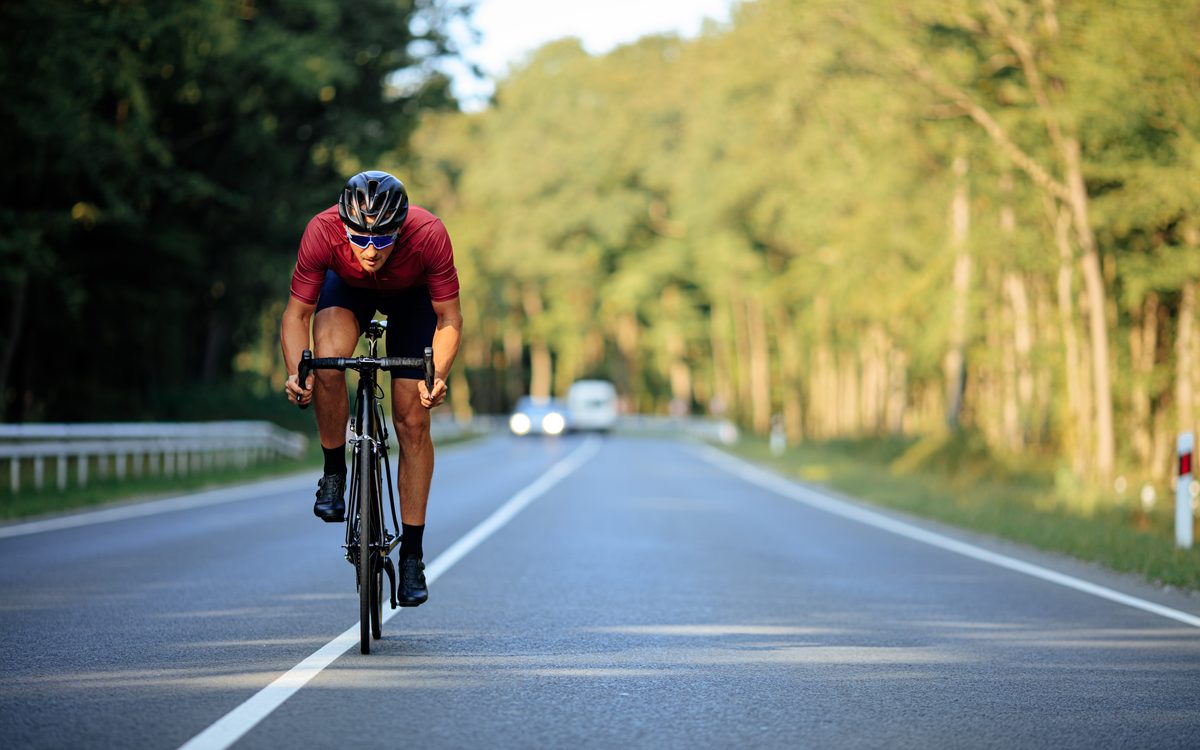
Hour four of a long road race, the bunch is quiet, and every rider is doing the same unglamorous thing: reaching for a gel, a rice cake or a bottle on a timer. Road cycling nutrition is the planning of fuel, fluid and, where used, supplements around very long days on the bike, along with the health side that runs under it all: eating enough to stay well. For training see our training page; for the discipline see the road cycling hub.
Quick answer: Road riders burn a lot of energy, so fueling during rides is part of the sport. The newest cycling-specific guidance is the UCI Sports Nutrition Project (2026), which stresses individual plans. Eating too little is a health risk (RED-S), and supplements deserve caution: few have good evidence, and some products can contain banned substances. This is general information; for a plan, ask a registered dietitian, ideally one who works with athletes.
What the UCI project says
The Union Cycliste Internationale (UCI) Sports Nutrition Project brought together 54 researchers, published 14 topic reviews and a 2026 position statement in the International Journal of Sport Nutrition and Exercise Metabolism. The position statement groups its messages into ten themes, including performance preparation, in-competition fueling, recovery, energy availability, physique management, supplements and age- and sex-specific considerations. The authors stress that the discipline and the rider matter, so a plan should be individual. It is the main source for this page.
Fueling on the bike
A UCI project review of race nutrition in road cycling (2026) describes a change in professional practice: reported on-bike carbohydrate intake has risen from about 30 to 60 grams an hour before 2010 to 90 and even 120 grams an hour and higher today, alongside “training the gut,” because race tactics now ask for higher intensity earlier in a stage. The review stresses individual plans over generic recommendations. For general guidance, the 2016 American College of Sports Medicine joint position statement suggests up to 90 grams an hour of carbohydrate for events longer than about 2.5 to 3 hours, and a 2026 review of the professional peloton (Wilson, Sports Medicine) says it remains unresolved whether going above 100 grams an hour improves performance. Those are elite numbers. A recreational rider on a two-hour ride has much lower needs, and big amounts need to be practiced in training because the gut can protest. Never try new food or drink on race day, as USA Cycling’s first-time racer guide also says.
Fluids, heat and altitude
The American Academy of Orthopaedic Surgeons advises riders to carry water and food and to drink regularly, roughly a bottle an hour on long rides. The UCI project’s review of special environments (2026) says heat, cold and altitude raise physiological stress, increase energy and carbohydrate use and change fluid needs, and offers tailored strategies. A 2024 review of endurance events (Armstrong and colleagues) found few reports of exertional heatstroke in cycling field studies compared with running and triathlon, but hot days are still a risk; as general advice, in hot weather start rides hydrated, drinking regularly and knowing the signs of heat illness. Individual sweat rates and sodium losses differ a lot, which is why plans are personal.
Eating enough: energy availability and RED-S
A 2026 review in the UCI project (Burke and colleagues) says cyclists tend to be a weight-conscious group that frequently reports restrictive eating, and that the pairing of very high energy expenditure with deliberate restriction may put riders at high risk of problems linked to low energy availability. The IOC’s 2023 consensus statement on Relative Energy Deficiency in Sport (REDs) describes it as a syndrome of harmful health and performance effects in female and male athletes exposed to low energy availability, with a clinical assessment tool and prevention principles. Warning signs can include persistent fatigue, frequent illness or injury, missed periods, mood changes and preoccupation with food or weight. Those signs are reasons to see a doctor or sports dietitian, not to diet harder. Body-weight goals in a sport where climbing favors lighter riders deserve extra care; the UCI review makes pragmatic recommendations that support physique goals together with long-term health.
Supplements: what the sources say
Our site follows a strict supplement rule: no health or cure claims, and no dosage advice beyond the label. The IOC consensus statement on dietary supplements (Maughan and colleagues, 2018) says supplement use is widespread, that only a few products, including caffeine, creatine, specific buffering agents and nitrate, have good evidence of benefit, and that some may harm health, performance or livelihood through an anti-doping violation. The UCI project’s supplements review (2026) lists caffeine, creatine, sodium bicarbonate, beta-alanine, dietary nitrate and glycerol as having a strong evidence base and exogenous ketones as emerging, and highlights safety and anti-doping risks. Practical points from this guidance:
- Get a nutrition assessment before deciding on supplements; the IOC statement says one should come first.
- Prefer products tested by a third party for sport, such as NSF Certified for Sport or Informed Sport, and check the label; products without that certification are not third-party certified for sport.
- If you compete in tested events, check the World Anti-Doping Agency’s prohibited list and ask your federation or a sports dietitian. Contamination is the main risk.
- Caffeine and other stimulants are not for everyone (sensitivity, heart conditions, pregnancy): check with a doctor.
Youth and sex-specific points
The UCI position statement lists age- and sex-specific considerations as a theme; a 2026 study found female cyclists report effects of the menstrual cycle on training and performance (Burnie and colleagues, PLoS One, a perception study). Young riders who are still growing should work with a pediatrician or sports dietitian before changing how they eat.
Road cycling nutrition and supplements: FAQs
How many carbohydrates should I eat per hour on a road ride?
For events longer than about 2.5 to 3 hours, the 2016 American College of Sports Medicine statement suggests up to 90 grams an hour. Professionals report 90 to 120 grams or more, and a 2026 review says benefit above 100 grams is unresolved. Shorter rides need less. Practice in training and ask a sports dietitian.
Do I need electrolyte drinks?
Sweat sodium losses vary a lot between riders. Many riders use electrolyte mixes on long or hot rides; our electrolyte powder guide compares options. A sports dietitian can help judge what you need.
What is RED-S?
Relative Energy Deficiency in Sport is a syndrome of harmful health and performance effects in athletes who do not eat enough for their training, described in the IOC’s 2023 consensus statement. A doctor or sports dietitian can assess it.
Which supplements have good evidence for cyclists?
The IOC (2018) names caffeine, creatine, specific buffering agents and nitrate as having good evidence; the 2026 UCI review adds beta-alanine and glycerol and lists exogenous ketones as emerging. Evidence of a benefit does not make a product right for you; talk to a doctor or dietitian.
Can supplements cause a positive drug test?
Yes. The IOC and UCI reviews both highlight anti-doping risk, including contamination. Choose products certified for sport and check the current prohibited list.
Sources
- UCI Sports Nutrition Project: position statement on nutrition for cycling (2026)
- UCI Sports Nutrition Project: race nutrition for road cycling (2026)
- UCI Sports Nutrition Project: special environments (2026)
- UCI Sports Nutrition Project: body composition, energy requirements and energy availability (2026)
- UCI Sports Nutrition Project: sports foods and supplements (2026)
- IOC 2023 consensus statement on REDs
- IOC consensus statement: dietary supplements and the high-performance athlete (2018)
- ACSM joint position statement: nutrition and athletic performance (2016)
- Wilson 2026, high-carbohydrate fueling in the peloton
- Armstrong et al. 2024, hyperthermia and exertional heatstroke in endurance events
- AAOS OrthoInfo: bicycle safety
- USA Cycling: first-time racer guide
- Burnie et al. 2026, female cyclists and the menstrual cycle (PLoS One)
- World Anti-Doping Agency: prohibited list
General information for education only, not medical advice. It does not diagnose, treat or clear anyone to ride or race. Talk to a sports medicine doctor, physical therapist or athletic trainer about your own body. How we write and check our pages is in our editorial policy.