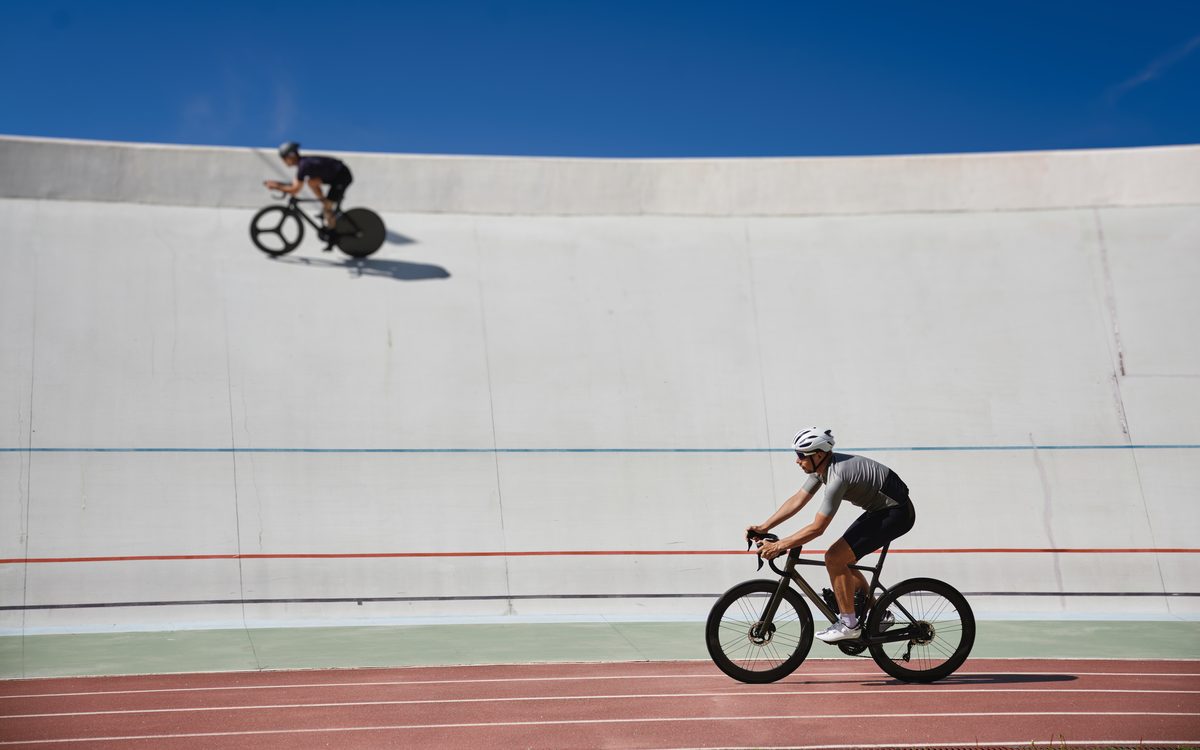
A new rider rolls onto the banking for the second week in a row, a little tired from work, and drifts a hand off the bars to wave at a friend. On a fixed-gear bike with no brakes, the next two seconds are decided by habits rather than luck. Track cycling injury prevention is the set of habits around a rider, such as a warm-up, a bike that fits, careful group riding, a gradual training load, strength work and enough rest, that aim to lower the chance of getting hurt. They lower the odds. They cannot promise anything.
Quick answer: The best-supported steps for track riders are a helmet that meets the US standard and fits, a bike that is checked and fitted to you, learning group skills in a supervised setting, building training load gradually and keeping both hands on the bars until you are confident. Most of the evidence in cycling comes from road riders, not velodromes, so treat these as sensible habits, not guarantees. See a sports medicine doctor, physical therapist or athletic trainer if pain lingers, and get urgent care after any head injury with danger signs.
General information, not medical advice. This page is about lowering risk. What each injury looks like, and what care involves, is on our track cycling injuries page, so we do not repeat it here. For the sport as a whole, start at the track cycling hub.
Warm up, but do not expect a named program
We did not find a published injury-prevention warm-up tested in track cyclists, so there is no named routine, like the FIFA 11+ in soccer, to point to. Many coaches have riders spin easily for 10 to 15 minutes, add a few short accelerations and finish with some mobility work. That is common practice, not a research finding. For sprinters, a few progressive efforts matter before a flying start; see our training page for how elite sprinters organize efforts.
Technique and track etiquette are safety skills
A 2025 systematic review of injury and illness in competitive cycling (Fallon and colleagues, BMJ Open Sport and Exercise Medicine) found that lacerations, abrasions and skin lesions were the most common injury types across disciplines, followed by fractures, and that upper limb injuries made up about 44% of track injuries. That pattern is what you would expect from falls onto the hands and shoulders, which is why the basics of crash avoidance matter. USA Cycling’s beginner guide lists the ones taught first: check over your right shoulder before moving up the banking and over your left before moving down, hold your line while others pass, and never cut across a rider, because nobody can brake. The Alkek Velodrome accreditation adds staying clipped in, riding in the drops with both hands on the bars and following officials’ instructions.
Learning these in a supervised class is the most direct prevention step we can recommend. See our getting-started page for how classes work.
Train load: build slowly
Overuse is a bigger story in road riders than on the velodrome, but the principle carries over. A 2010 study of 109 professional road cyclists (Clarsen, Krosshaug and Bahr, American Journal of Sports Medicine) recorded 94 overuse injuries, 45% of them in the low back and 23% in the knee. The IOC consensus statement on load and injury (Soligard and colleagues, 2016) links both sudden spikes and long-term overload to injury risk, without a universal number. The American Academy of Pediatrics (Brenner 2016) recommends 1 to 2 days off a week from the main sport for young athletes. A practical way to apply it: add a new type of effort, such as standing starts or heavy gym work, a little at a time, and take lighter weeks.
Strength and conditioning
Research on strength work for cyclists focuses mainly on performance and bone health, not injury. A 2025 review (Florvag and colleagues, BMC Musculoskeletal Disorders) found that cyclists and swimmers are at higher risk of low bone density, and that resistance and impact training look promising but the evidence is limited. A strong trunk, hips and shoulders may help a rider hold position and absorb a fall, but we found no trial showing that strength work cuts track injuries. The CDC adult guidelines suggest at least two days a week of muscle-strengthening.
Bike fit and the body
Fixed-gear riding means the legs are always turning, often in a low, aerodynamic position. A 2011 review of saddle height (Bini, Hume and Croft, Sports Medicine) reported that a 5% change in saddle height changed knee motion by 35% and recommended a knee flexion angle of 25 to 30 degrees at the bottom of the pedal stroke. A 2026 systematic review of bike fitting for low back pain (Barrajon and colleagues, Cureus) found only three studies, all reporting less pain after fitting. The AAOS also advises a correctly sized frame, handlebar and saddle to lower overuse risk. If you are renting a velodrome bike, say so: a bike that does not fit you is a reason to ask for another size.
Environment and surfaces
Track surfaces differ: indoor wood, outdoor concrete or asphalt. Cold, damp or dusty boards and wet outdoor tracks change grip, and an operator can close a track for those reasons. Heat is a different problem. NATA’s position statement on exertional heat illnesses advises acclimatizing over 7 to 14 days and using cold-water immersion for suspected exertional heat stroke.
Helmet, kit and equipment
A helmet is the one piece of protective gear with strong evidence. Olivier and Creighton’s 2017 meta-analysis (55 studies, more than 64,000 injured cyclists, International Journal of Epidemiology) found helmet wearers had about half the odds of head injury and about 69% lower odds of serious head injury. The CPSC says that bicycle helmets sold in the US must meet its standard (16 CFR 1203), that a helmet should fit and be replaced after an impact, and that no helmet is proven to prevent concussions. USA Cycling rules require helmets at permitted events, per its rulebook (we read a 2020 edition by summary; check the current one). Gloves and a skinsuit are common practice on the track but we found no study showing injury benefit. See our gear page.
Youth riders
Some velodromes, such as Dick Lane, send riders 16 and under to a youth league first. See our youth cycling page. We found no studies of injury prevention in young track cyclists.
What prevention cannot do
Crashes on a track involve other riders, equipment failures and split-second mistakes. A rider can do everything right and still fall. Prevention also cannot make a mild concussion safe to ignore. A 2022 paper (Gomes and colleagues, BMJ Open Sport and Exercise Medicine) proposed a three-stage concussion assessment for elite track cycling, trackside, in the changing room and the next day, which shows that track crashes are taken seriously at the top.
When to see a professional
See a sports medicine doctor, physical therapist or athletic trainer when pain stays in one place, is present at rest or at night, changes how you ride, or does not settle after a few days. Call emergency services after a head injury with the danger signs in the CDC HEADS UP guidance: a headache that gets worse, repeated vomiting, seizures, increasing confusion or loss of consciousness.
Track cycling FAQs
Is there a standard warm-up for track cycling?
We did not find a published, tested injury-prevention warm-up for track cyclists. Many coaches use 10 to 15 minutes of easy spinning plus a few short efforts, but that is common practice, not research.
Does wearing a helmet really help?
Yes. A 2017 meta-analysis of 55 studies (Olivier and Creighton) found about half the odds of head injury for helmet wearers. The CPSC adds that no helmet is proven to prevent concussion.
What is the most common injury on the track?
In a 2025 review, skin lacerations and abrasions were the most common injury type across cycling disciplines, with fractures second, and about 44% of track injuries involved the upper limb. Only a limited number of studies cover track.
Do I need strength training to avoid injury?
We found no trial showing strength work lowers track injuries. Reviews suggest it can help power and bone health. A coach can set a plan that fits your level.
Is it safer to learn on the track than on the road?
Tracks have no cars, dogs or pedestrians, as USA Cycling points out, but we found no study comparing injury rates. Crashes do happen, so use a supervised class and a helmet.
Sources
- Fallon et al. 2025, injury and illness across competitive cycling disciplines (PubMed)
- CPSC: which helmet for which activity
- Olivier and Creighton 2017, bicycle injuries and helmet use, meta-analysis
- AAOS OrthoInfo: bicycle safety
- USA Cycling: ultimate guide to getting started in track cycling
- Alkek Velodrome: track accreditation
- Clarsen, Krosshaug and Bahr 2010, overuse injuries in professional road cyclists (PubMed)
- Soligard et al. 2016, IOC consensus statement on load in sport and injury (PubMed)
- Bini, Hume and Croft 2011, cycling biomechanics and saddle height (PubMed)
- Barrajon et al. 2026, bike fitting and low back pain (PubMed)
- de Pablos et al. 2026, resistance training for cyclists (PubMed)
- Florvag et al. 2025, bone density in low-impact sport athletes (PubMed)
- Gomes, Jones and Heron 2022, concussion protocol for elite track cycling (PubMed)
- NATA: exertional heat illnesses position statement (PMC)
- CDC: physical activity guidelines for adults
- Dick Lane Velodrome: rider FAQs
- CDC HEADS UP: signs and symptoms
General information for education only, not medical advice. It does not replace a sports medicine doctor, physical therapist, athletic trainer or registered dietitian who knows you. See our editorial policy for how we research and write. More on this sport: track cycling hub, cycling hub and all sports.