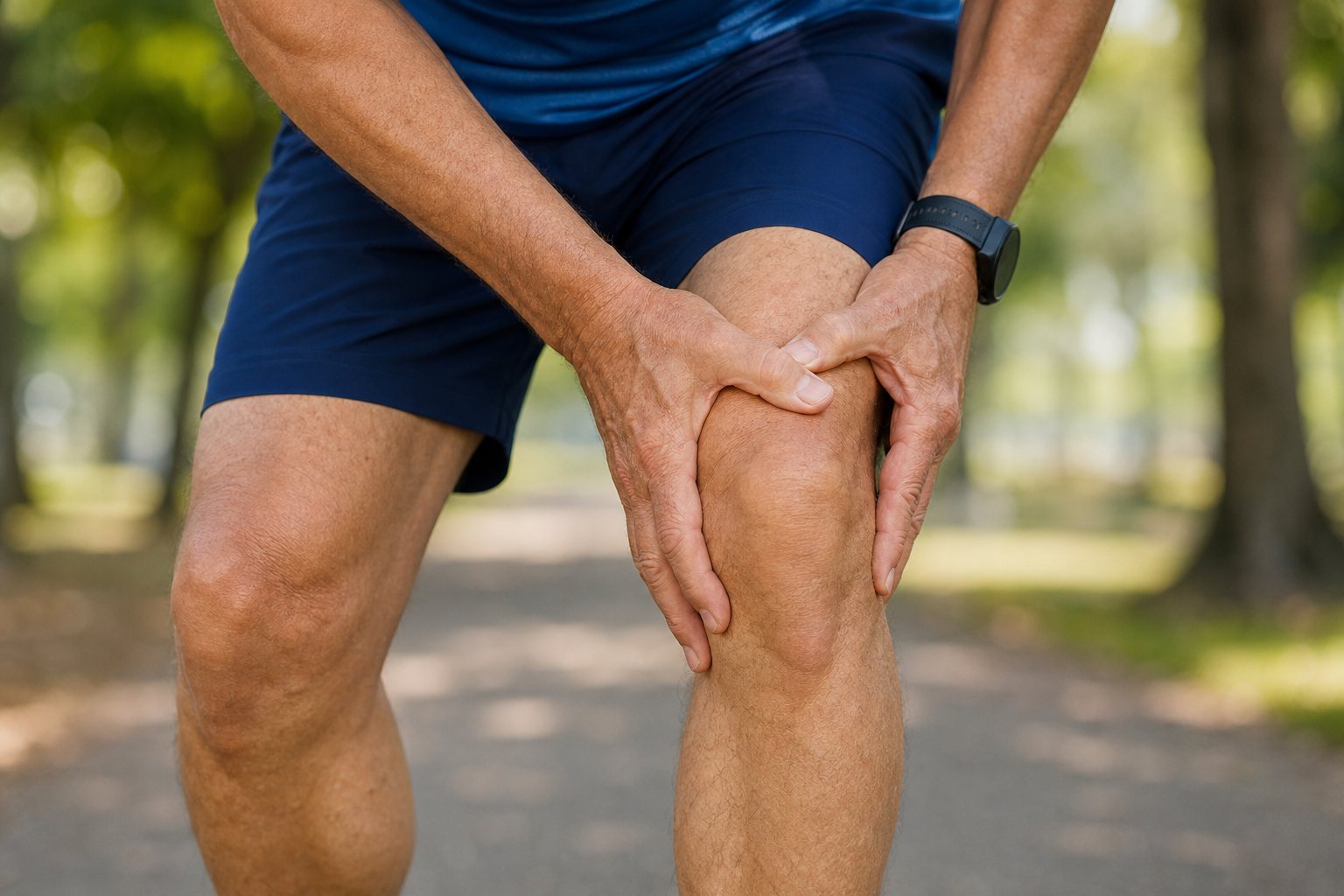
Every run, jump, throw and lift passes through your joints. Most of the time they do their job without a thought, which is exactly why they only get attention when something hurts. This page explains how joints are built, what keeps them working well, and how to think about joint discomfort when you are active.
It is for athletes, adult beginners, returning participants and the people who support them. It is general education, not a diagnosis, and it does not replace advice from a doctor or physiotherapist who knows your situation.
How a joint is built
A joint is where two or more bones meet. In most movable joints the bone ends are covered in smooth cartilage and held together by ligaments, with a thin lining that produces a lubricating fluid. Muscles and tendons cross the joint and move it. Each part has a role, and a problem in one can change how the others feel.
Not all joints are alike. The hip and shoulder are ball-and-socket joints with a wide range of movement. The knee and elbow work mainly like hinges. The spine is a stack of small joints that share a lot of work. The body areas section of this site looks at each region, starting with the knee, the shoulder and the ankle and foot.
Mobility and stability: you need both
Mobility is how far a joint can move. Stability is how well it is controlled through that movement. Some joints are built mainly to move, others mainly to steady the body, and a healthy body uses both. Someone very flexible but poorly controlled, and someone strong but stiff, can each run into trouble in different ways. For flexibility and movement range, see our hub on mobility and flexibility.
Cartilage and joint load
Cartilage helps bones glide smoothly and spreads load across the joint. It has limited ability to repair itself, which is one reason cartilage injuries can be slow to settle. Regular, sensible movement is generally understood to be good for joints, while sudden big jumps in training or repeated heavy impact without time to adapt can irritate them. Gradual change is a theme throughout our training load guidance.
Common joint symptoms
Joint complaints include pain, swelling, stiffness, clicking, a feeling of giving way, and reduced movement. Many of these can come from minor, temporary causes. Others point to something that deserves assessment, such as swelling after a twist, a joint that locks, or pain that wakes you at night. Our page on understanding sports injury symptoms goes through each of these and what they can and cannot tell you.
Arthritis and staying active
Arthritis is a broad term for conditions that affect joints. Some come from long-term wear, others from the immune system, and they are different problems. Being active when you have arthritis is often encouraged, but the right type and amount of activity depends on the person and the joint. That is a question for your own doctor or physiotherapist, not for a general website. A past injury, such as a torn ligament or damaged cartilage, can also affect a joint years later, which is one more reason to get injuries looked at properly.
Joint supplements
Supplements marketed for joints are popular, but the evidence varies and quality differs between products. Read our guide to supplement safety for athletes before buying anything, and talk to a doctor or pharmacist if you take medicines or have a health condition. Our joint supplement buying guide explains what to look for on a label.
Professional support
A general doctor is a good first stop for joint pain that is new, persistent or unexplained. Physiotherapists, sports medicine doctors and orthopaedic specialists each have a role, and you can read how they differ in sports injury assessment and care.
Guides to read next
- Knee Injuries and Joint Health
- Shoulder Injuries and Joint Health
- Hip, Groin and Pelvis
- Ankle and Foot
- Back and Spine
- Sports Injury Types & Conditions
- Understanding Sports Injury Symptoms
- Mobility and Flexibility
- Running Injury Prevention
- Tennis Injuries
- Skiing Injury Prevention
- Best Knee Sleeves
Frequently asked questions
Does exercise wear out my joints?
Sensible, gradual activity is generally considered good for joints. Problems tend to come from sudden increases in load, repeated injury or poor recovery rather than from movement itself.
Is a clicking joint a problem?
Painless clicking is common and often harmless. Clicking with pain, swelling, locking or giving way is worth having assessed.
Can I keep training with sore joints?
It depends on the cause and severity. A professional can advise what is reasonable for your situation, and pain that is getting worse is a reason to ask sooner.
Do braces and sleeves fix joint problems?
They may give support or a feeling of confidence, but they do not repair an injury. Ask a professional whether one suits your case.