This guide is for athletes, parents, coaches and organisers who train or compete outdoors or in shared venues. It covers the conditions around you: heat, cold, weather, surfaces, water, light and the facility itself. These are things you can often check or change before anyone gets hurt.
The aim is simple: look at the place and the day before you start, agree what would make you stop, and adjust. It does not replace medical advice, and it does not replace the rules of your sport or venue.
Heat
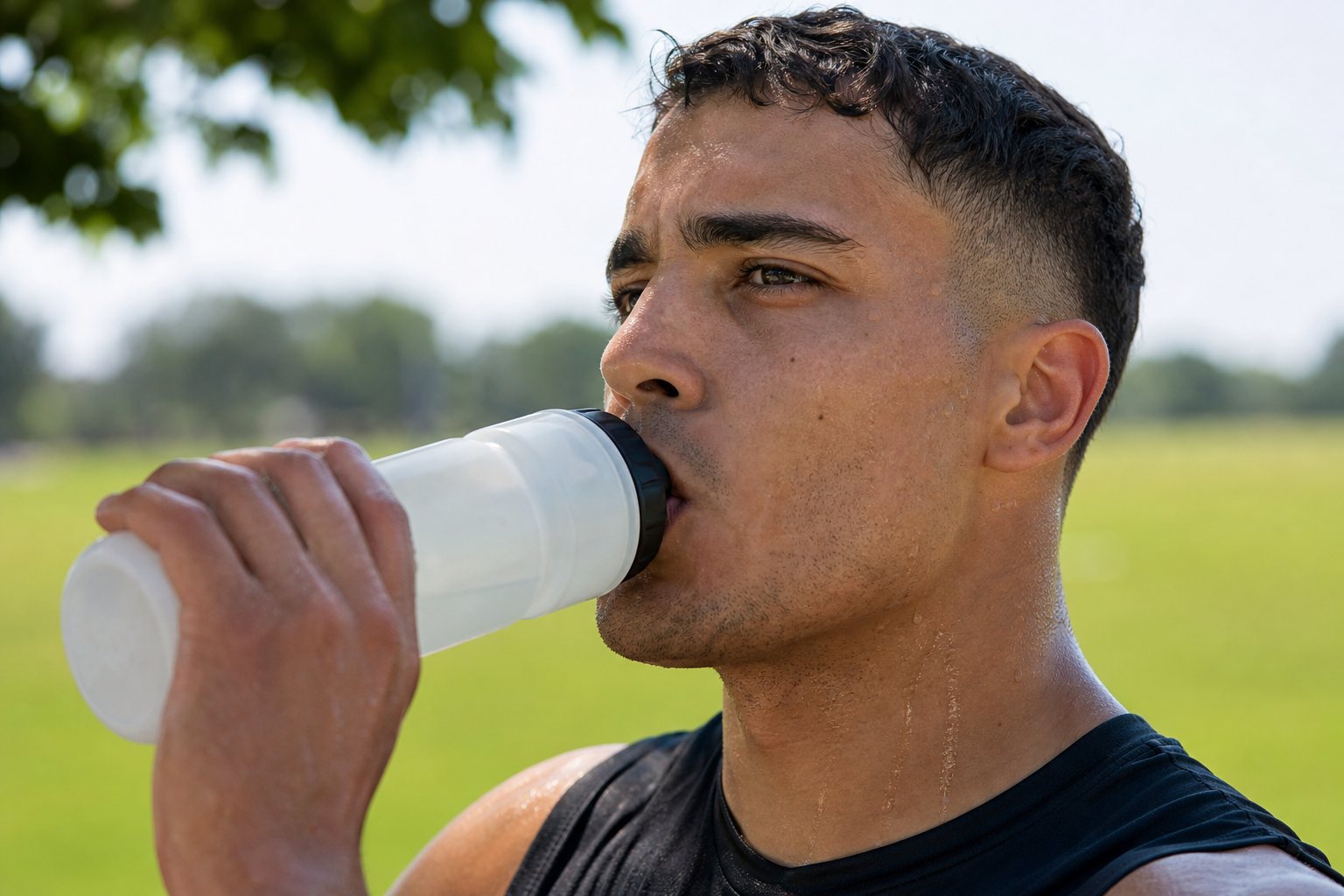
Hot and humid days make the body work harder to cool itself. Risk rises with intense effort, heavy kit, poor acclimatisation, poor sleep, illness and not drinking enough. Children and people new to a climate need extra care.
- Plan hard sessions for cooler parts of the day where you can.
- Build up gradually when you arrive in or move to a hotter place.
- Make shade, water and rest breaks part of the plan, not an afterthought.
- Know the early signs of trouble, such as dizziness, headache, nausea or confusion, and stop before it gets worse.
For symptoms, what to do and prevention in depth, read Heat Illness in Athletes. For drinking, see Hydration for Athletes.
Cold and wet
Cold muscles feel stiff, and cold hands and feet lose feel and grip. Wet and wind make cold worse, because clothing that is soaked stops keeping you warm. Allow longer warm-ups, wear layers you can add and remove, and change out of wet clothes soon after you finish. Be extra careful with children, who can lose heat quickly, and with anyone who is tired or hungry.
Weather and when to stop
Lightning, strong wind, heavy rain and extreme heat or cold can all make sport unsafe. Many leagues, clubs and venues have written weather policies that say when play is paused or cancelled. Ask for yours before the season. Check the forecast on the day, and give someone clear authority to make the call. If conditions change, take it seriously and move people to proper shelter rather than waiting it out.
Surfaces and playing areas
The ground under you affects both grip and impact. Wet grass, loose gravel, worn courts, uneven fields and slippery decks all raise the chance of a slip, trip or twist.
- Walk the area first and look for holes, debris, puddles and damaged lines or surfaces.
- Wear footwear suited to the surface. Our football cleats and soccer cleats guides explain how studs and grip differ.
- Report hazards to the venue and, if it cannot be fixed, change the activity or location.
Ankle injuries are common on poor surfaces; see Ankle Sprains in Athletes.
Water
Open water adds hazards that pools do not: currents, tides, cold water, waves, boat traffic, weather changes and poor visibility. Wear a properly fitted life jacket where your sport calls for one, tell someone your plan and expected return, never go alone when you can avoid it, and learn the local conditions before you launch. Water that is cold can sap strength and judgement fast, even on a warm day. See Best Kayak Life Jackets.
Visibility, traffic and noise
Dawn, dusk, fog, glare and dark all make it harder to see and be seen. Runners and cyclists in particular share space with vehicles. Use lights and bright or reflective clothing, choose routes with fewer hazards, and keep one ear free when you can to hear what is around you.
Venue and facility checks
- Know where the nearest first aid kit, phone and emergency exit are.
- Check goals, nets, posts and fixed equipment are secured and not damaged.
- Keep spectators, bags and spare equipment off the playing area.
- Have an emergency plan, including the venue address to give if someone has to call for help.
- At altitude or in air that is polluted or smoky, shorten or lighten sessions and listen to local health advice.
Guides to read next
- Heat Illness in Athletes
- Hydration for Athletes
- Ankle Sprains in Athletes
- Protective Equipment & Fit
- Youth Sports Safety
- Best Kayak Life Jackets
- Best Ski Helmets
- Running Injury Prevention
- Soccer Injury Prevention
- Kayaking Injury Prevention
- Skiing Injury Prevention
Frequently asked questions
Who decides if it is too hot or stormy to play?
That should be agreed before the season, usually by the organiser or governing body, with a named person responsible on the day. If there is no policy, ask for one.
Are children more at risk in hot or cold weather?
They often are, because they cope with temperature extremes differently from adults. Give them more breaks, easy access to water or warm layers, and watch them closely.
Is it safe to train outdoors in cold weather?
Often yes, with the right layers, a longer warm-up and attention to wet and wind. Stop and get warm if you cannot feel your hands or feet or start shivering hard.
What should I check before using an unfamiliar venue?
The surface, fixed equipment, emergency access, weather shelter and who to contact. A short walk-around before play starts catches most problems.