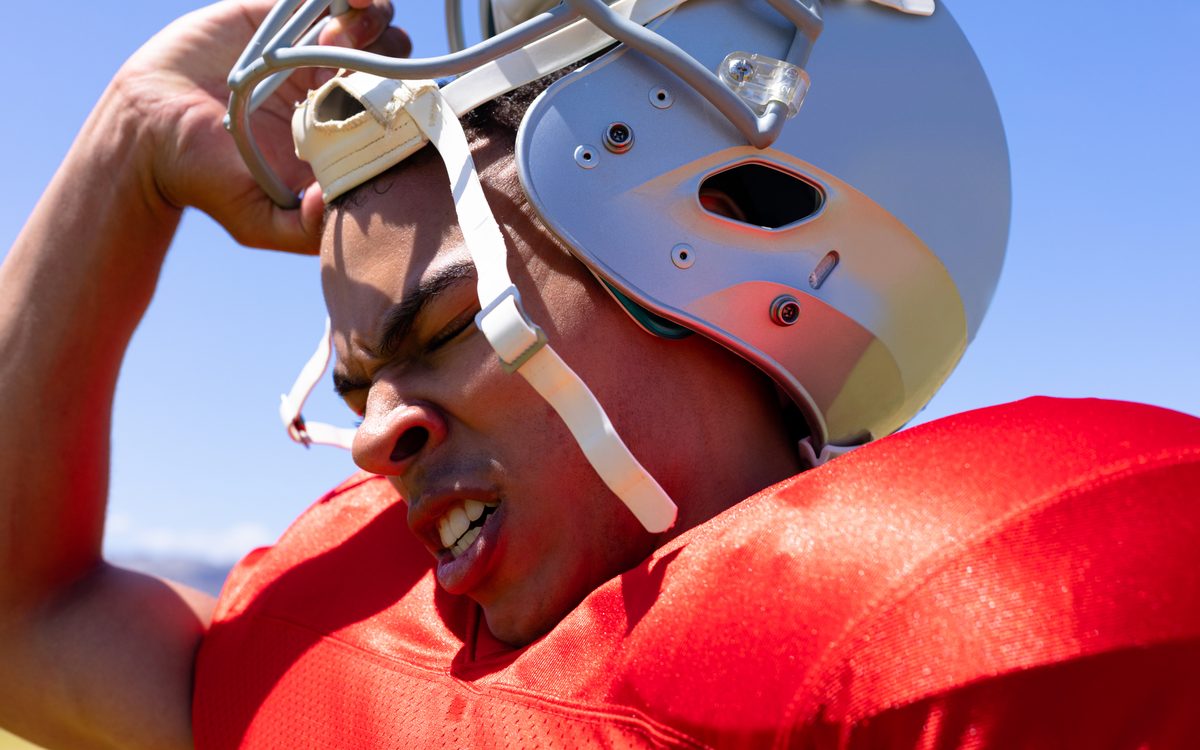
This page is for athletes, parents and coaches who want to understand head and face injuries in sport: what the area is made of, what can go wrong, and what professionals do about it. It is general education, not a diagnosis or a treatment plan.
Concussion is the head injury people ask about most, and it has its own full guide: Concussion in Sports. We do not repeat it here. This page covers the wider picture, including the face, eyes, teeth, jaw and skull.
Basic anatomy and function
The head holds the brain inside the skull, which protects it but cannot stop it from moving when the head is hit or suddenly jolted. The face is built from many small bones, including the nose, the cheekbones and the jaw, with sinuses, eyes, teeth and a lot of blood vessels close to the surface. That is why facial cuts bleed heavily and bruise quickly.
The jaw joint, the eye socket and the nasal bones are the parts most often hurt in sport because they stick out or sit just under the skin.
Common injury categories
- Concussion and other brain injuries: covered in the concussion guide.
- Cuts, scrapes and bruises: very common, usually minor, but deep or gaping cuts need a clinician.
- Nose injuries: bleeds, bruising and broken nasal bones.
- Eye injuries: a blow from a ball, finger or stick can bruise or damage the eye and the bone around it.
- Dental and jaw injuries: chipped, loosened or knocked-out teeth, and jaw fractures or dislocations.
- Facial fractures: breaks in the cheekbone, eye socket or jaw.
- Skull fractures and bleeding around the brain: rare but serious.
Symptoms people may notice
Face injuries are usually obvious: swelling, bruising, bleeding, pain when biting, a crooked nose, a tooth that moves or feels different. Changes to vision, double vision, or numbness in the cheek or lip are signs that a clinician should look.
Head injuries can be harder to see. Headache, dizziness, confusion, nausea, memory gaps, unusual drowsiness or changes in behaviour after any blow to the head or body all matter, even when the athlete says they feel fine. If symptoms are getting worse, or the person is very sleepy, vomiting repeatedly, has a seizure, or cannot be woken, treat it as an emergency and call your local emergency number.
Typical mechanisms and sport contexts
Most head and face injuries come from contact: a ball, a stick, an elbow, a head clash, or a fall. Collisions and falls from height or speed carry the highest risk. Stick-and-ball sports, combat sports and wheeled sports have more facial impacts, while cycling, skiing, snowboarding and horse riding involve falls at speed.
Eyes and teeth are hurt most by small, fast objects and by elbows or fists. Water sports bring board, boom and hard-water impacts.
Professional assessment
A clinician will ask what happened, check alertness, memory, balance, eye movement and vision, feel the bones of the face and look at the teeth and bite. Imaging such as an X-ray or CT scan is used when a fracture or bleeding is suspected. Eye injuries are usually seen by an eye specialist, and knocked-out teeth by a dentist, quickly. Anyone suspected of a head injury during play should be removed from the game or session and not left alone.
General care pathways
This is what clinicians commonly do, not a self-treatment programme. Minor cuts may be cleaned and closed. Nose injuries are checked for breaks and for blood collecting inside the nose. Dental injuries are seen by a dentist, and fractures may need a specialist surgeon. Concussion care follows the process in the concussion guide. Which of these applies to you is a question for a clinician who has examined you.
Rehabilitation and returning to activity
How long recovery takes depends on the injury, and it is not something to guess. After a head injury, a clinician guides the step-by-step return to school or work and then to play. After facial fractures, dental work or eye injuries, the treating team decides when contact is safe again. Read more in Rehabilitation and Return to Sport.
Prevention
Well-fitting protective gear, sensible rules on contact and head contact, good technique when tackling, falling or landing, and supervised coaching all lower risk. Helmets, mouthguards, eye protection and face guards each have a job, and the right type depends on the sport and the governing body. See Protective Equipment, Technique and Safety and Youth Safety.
Relevant sports
Head and face injuries come up in many sports. Start with Soccer Injuries, Boxing Injuries, Ice Hockey Injuries, Football Injuries, Rugby Injuries and Cycling Injuries.
Guides to read next
- Concussion in Sports
- Neck Injuries in Sport
- Injury Symptoms and Warning Signs
- Injury Assessment and Care
- Return to Sport
- Protective Equipment
- Soccer Injuries
- Boxing Injury Prevention
- Ice Hockey Gear
- Cycling Injury Prevention
- Best Bike Helmets
- Best Ski Helmets
Frequently asked questions
Is a head injury the same as a concussion?
No. Concussion is one kind of brain injury. A head injury can also be a cut, a fracture or bleeding. See the concussion guide for the details.
Can an athlete keep playing after a blow to the head?
If a head injury is suspected, the usual advice is to stop playing and be assessed by a qualified person. Symptoms can appear later, so watching over the following hours matters.
Should a broken nose or lost tooth be seen quickly?
Yes. A knocked-out tooth in particular is time-sensitive, and a dentist should be contacted at once. Nose injuries are best checked within a short time while swelling is low.
Do helmets and mouthguards prevent concussion?
They reduce some injuries, such as skull fractures, cuts and dental damage, but no equipment makes concussion impossible. Rules, technique and supervision also matter.
Official sources
These pages from health authorities are worth reading alongside this guide. We link to them for further reading; we are not quoting them.
- CDC HEADS UP: Signs and symptoms of concussion: Concussion symptoms that can appear hours or days later, signs in children, and danger signs that need emergency care.