This article contains affiliate links: if you buy through them we may earn a commission, at no extra cost to you. Read our affiliate disclosure.
It is Tuesday night at the sports hall. You lunge for a drop shot, your foot slides, and you think about the old trainers you are wearing. Badminton asks a lot of a shoe, and ordinary running shoes are not built for it.
An indoor badminton shoe should do three things: grip a hall floor, cushion landings, and keep your foot steady in side-to-side lunges. Below are six shoes whose product data supports that, with who each suits. They are for beginner to club players, adults and teens.
Our top picks

Yonex Power Cushion Aerus Z 2
- Power Cushion+ cushioning
- msLITE X and Durable Skin Light construction
- 3D Power Graphite Sheet for landing stability
- Radial Blade Sole for multi-directional grip
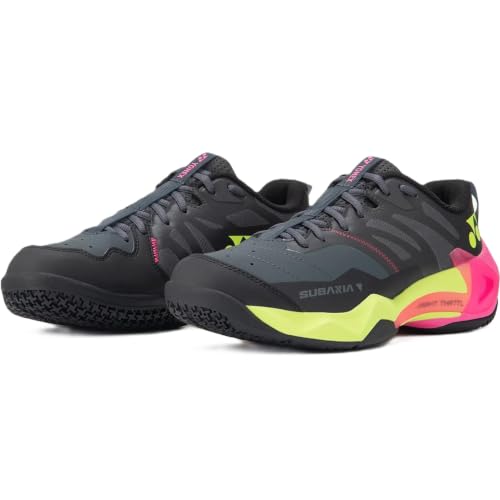
Yonex Subaxia GT
- Lateral Shell to resist foot rollover
- Hybrid midsole with extra heel volume
- Inner bootie and Synchro-Fit insole
- Radial Blade Sole for indoor badminton courts

Li-Ning Thunder II PRO
- TPU heel overlay for rearfoot lockdown
- Cloud Plus and Super Boom cushioning
- Built-in carbon-fibre plate
- Strike Loc indoor non-slip outsole
$189.00 at Amazon, as of Nov 23, 2026 13:07 UTC
Check price on Amazon
Li-Ning Almighty 5
- Narrow fit (maker advises half size up for wide feet or high instep)
- Li-Ning Cloud insole cushioning
- Probar Loc arch stabiliser
- Non-marking rubber outsole

Li-Ning ZJ 2
- Boom midsole for lighter weight and rebound
- Probar Loc arch stability device
- Cool Shell breathable upper
- Tuff RB high-wear rubber outsole
$159.00 at Amazon, as of Nov 23, 2026 13:07 UTC
Check price on Amazon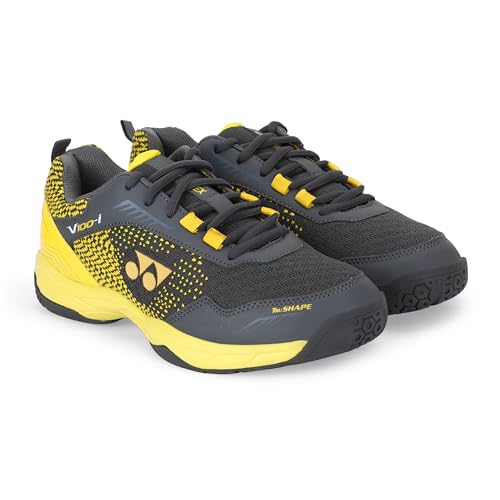
Yonex V100-i
- Non-marking outsole with Hexa-Grip sole
- Tru Cushion sockliner
- Tru Knit upper
- Listed for badminton, squash, table tennis and volleyball
The picks compared
| Product | Cushioning | Stability feature | Grip / outsole | Fit note | What the listing says |
|---|---|---|---|---|---|
| Yonex Aerus Z 2 | Power Cushion+ | 3D Power Graphite Sheet | Radial Blade Sole | Synchro-Fit insole | Ultra-lightweight indoor court badminton shoe |
| Yonex Subaxia GT | Feather Bounce Foam, hybrid midsole | Lateral Shell | Radial Blade Sole, indoor badminton | Inner bootie | Rugged, supportive badminton footwear with lateral shell |
| Li-Ning Thunder II PRO | Cloud Plus + Super Boom | Carbon-fibre plate, TPU heel | Strike Loc, indoor | Snug, low-stretch upper | Professional badminton shoe for indoor sports |
| Li-Ning Almighty 5 | Cloud insole | Probar Loc arch stabiliser | Non-marking rubber | Narrow, half size up if wide | Badminton shoe, narrow fit, non-marking |
| Li-Ning ZJ 2 | Boom midsole | Probar Loc arch stabiliser | Tuff RB wear-resistant rubber | Not stated | Lightweight, high-rebound badminton shoe |
| Yonex V100-i | Tru Cushion sockliner | Not stated | Non-marking, Hexa-Grip | Ergo Shape (name only) | Badminton, squash, table tennis, volleyball |
The picks in detail
1. Yonex Power Cushion Aerus Z 2: lightest-feel pick for fast footwork
The listing describes it as a badminton shoe with cushioning for landings, a stability sheet in the midsole and a sole made for indoor badminton courts. It covers all three needs in this guide in one shoe built for the sport.
What the Amazon listing says
- Titled as ultra-lightweight, durable indoor court badminton shoes with shock absorption
- Power Cushion+ cushioning said to reduce stress on joints
- Double Raschel Mesh upper with Synchro-Fit Insole for a snug fit
- 3D Power Graphite Sheet reinforces stability on landing
- Radial Blade Sole and Round Sole for multi-directional grip on indoor badminton courts
What the research says: Per Wikipedia's badminton article (opened 2026-11-13, a general reference, not a governing body), badminton shoe soles are made of rubber or similar high-grip, non-marking materials, and thin-soled badminton shoes are recommended over running shoes. This listing matches that description: a badminton-specific sole with an indoor-court focus. No weight figure is given, so check the maker's page for the real number.
- Strengths: Cushioning aimed at reducing joint stress on landings; Graphite sheet reinforces stability while keeping the midsole light; Breathable Double Raschel Mesh upper
- Limitations: The listing does not give a weight figure, so 'lightweight' is the maker's description only; Listed as a men's shoe; check the maker's size chart if you are between sizes
- Suits: Club players who move a lot at the net and want a light, sport-specific shoe.
- Look elsewhere if: Players who need a roomy toe box or who also want one shoe for outdoor courts.
2. Yonex Subaxia GT: best for lateral support
Its listing puts the most weight on side-to-side stability: a lateral shell, a snug bootie-style fit and extra heel midsole volume for landings. That matches what players worry about most, rolled ankles after lunges and jumps.
What the Amazon listing says
- Hybrid midsole with Feather Bounce Foam: responsive forefoot, softer heel
- Added heel midsole volume to manage impact at ground contact
- Double Raschel Mesh upper, inner bootie and Synchro-Fit Insole
- Integrated Lateral Shell to prevent foot rollover in side-to-side movement
- Radial Blade Sole and Round Sole for indoor badminton courts
What the research says: Wikipedia's badminton article (opened 2026-11-13) notes that shoes with heavily built-up lateral support can leave ankles unprepared for sudden loading, so firm support is a trade-off, not a cure-all. Treat the lateral shell as a stability aid and keep warming up.
- Strengths: Lateral shell designed to limit foot rollover; Softer heel cushioning with a more responsive forefoot; Secure, locked-down fit described by the maker
- Limitations: Described as a training shoe, so it is not marketed as the lightest racing option; Listing shows limited stock at the time of research
- Suits: Players who want extra stability for cuts and landings, including those with a history of ankle worries (see a clinician for injuries).
- Look elsewhere if: Anyone who wants the most flexible, minimal feel.
3. Li-Ning Thunder II PRO: most support-focused for advanced play
A shoe described for indoor sports such as badminton and table tennis, with a heel lock, cushioning from heel to toe and a carbon-fibre plate for support. It is the most feature-heavy badminton shoe in the data.
What the Amazon listing says
- Described as unisex professional badminton shoes
- TPU material extends up to the heel to secure the rearfoot
- Cloud Plus from heel to toe plus Super Boom on forefoot and rearfoot
- Low-stretch microfibre upper with vent holes
- Strike Loc indoor non-slip outsole, and a built-in carbon-fibre plate
What the research says: I found no independent research or governing-body page on carbon plates in badminton shoes, so treat the plate as the maker's claim. Check fit in person or return policy, because a low-stretch upper gives little room to adjust.
- Strengths: Heel-securing TPU for stable landings; Cushioning from heel to toe; Outsole made for indoor courts with quick starts and stops
- Limitations: A professional-level construction that a casual beginner may not need; Low-stretch upper: try it on carefully if your feet are wide
- Suits: Committed club players and teens training several times a week.
- Look elsewhere if: Occasional players, or anyone who prefers a soft stretchy upper.
4. Li-Ning Almighty 5: best for arch support and a narrow fit
The listing gives clear sizing advice and highlights an arch stabiliser linking forefoot and heel plus insole cushioning. Clear fit guidance helps a buyer who cannot try shoes on.
What the Amazon listing says
- Narrow fit; the listing advises half a size up for wide feet or a high instep
- Li-Ning Cloud insole to absorb shock and return rebound
- Probar Loc stability device in the midsole arch, linking forefoot and heel
- Non-marking rubber, described as mainly used in badminton and indoor shoes
- Shock-resistant toe design to reduce friction and impact
What the research says: Per Wikipedia's badminton article (opened 2026-11-13, a general reference, not a governing body), badminton shoe soles are made of rubber or similar high-grip, non-marking materials, and thin-soled badminton shoes are recommended over running shoes. The non-marking claim on this listing lines up with that, but no tread pattern is described.
- Strengths: Arch stabiliser aimed at firmer landings; Non-marking outsole suited to indoor halls; Toe area designed to resist impact and wear
- Limitations: Narrow fit; wide feet need to size up; Listing does not state a grip pattern in detail
- Suits: Players with narrow to medium feet who want arch support.
- Look elsewhere if: Players with wide feet who do not want to size up.
5. Li-Ning ZJ 2: best for a stable, durable all-rounder
This listing pairs rebound cushioning with an arch stabiliser and a hard-wearing outsole. Durability matters for players who practise weekly on hall floors.
What the Amazon listing says
- Li-Ning Boom midsole to reduce weight and give rebound
- Probar Loc stability device in the arch
- Cool Shell technology to release heat
- Tuff RB high wear-resistant rubber to extend sole life
- Listed as lightweight, high-rebound unisex badminton shoes
What the research says: Durability is the maker's claim and we found no independent wear data. The listing does not say the sole is non-marking, so ask your hall before wearing it on a protected floor.
- Strengths: Stability device across the arch; Wear-resistant outsole rubber; Breathable upper construction
- Limitations: Listing does not mention the outsole grip pattern or non-marking sole; Several colour listings share the model, so check size and colour before ordering
- Suits: Regular club and school players who wear shoes out quickly.
- Look elsewhere if: Players who need documented non-marking soles for a strict venue.
6. Yonex V100-i: most versatile for multi-racket-sport players
A Yonex shoe whose listing names badminton first and also squash, table tennis and volleyball. It is the simplest candidate here for someone starting out or sharing one pair across indoor sports.
What the Amazon listing says
- Titled for badminton, squash, table tennis and volleyball
- Non-marking outsole with Hexa-Grip sole
- TruShape, Tru Cushion sockliner and Tru Knit
- Extra cushioning for comfort
- Listing says made in India
What the research says: Per Wikipedia's badminton article (opened 2026-11-13, a general reference, not a governing body), badminton shoe soles are made of rubber or similar high-grip, non-marking materials, and thin-soled badminton shoes are recommended over running shoes. A non-marking sole is the key point in that description, and this listing states it. The listing gives no stability details, so compare it against your own need for lateral support.
- Strengths: Non-marking sole for indoor floors; Extra cushioning for comfort; Works across several indoor sports per the listing
- Limitations: Short listing, so fewer confirmed specs (no stability or weight details); Less sport-specific engineering described than the other picks
- Suits: Beginners and casual players, or people who play a mix of indoor racket sports.
- Look elsewhere if: Players who want a documented stability frame or carbon plate.
What indoor badminton shoes need
Badminton is a sport of lunges, quick stops and landings after jumps, nearly always on an indoor hall floor. Wikipedia’s badminton article says the game needs powerful lateral movements and that badminton shoe soles are rubber or similar high-grip, non-marking material. That gives three jobs for a shoe.
- Grip: a non-marking rubber outsole that holds a clean indoor floor during sharp changes of direction.
- Cushioning: foam under the heel and forefoot to soften landings from jumps and lunges.
- Side-to-side stability: a firm heel, a lateral shell or an arch stabiliser so the foot stays over the sole when you push sideways.
Everything else, from mesh type to carbon plates, is a refinement of those three jobs. When you read a listing, look for which of the three it actually describes. A shoe that talks only about style or breathability tells you little about how it will behave in a lunge. The six picks here each describe at least one of the three jobs in their Amazon feature text, and the table above lines them up side by side.
Why we left out volleyball, tennis and pickleball shoes
The search results were noisy. Many were volleyball, tennis, pickleball or running shoes, and several multi-court listings only mention badminton in the title. We kept shoes whose product data describes badminton use, a badminton-style sole or indoor-court construction. Volleyball shoes can work on a hall floor, but they are built for jumping in one direction rather than long lunges. A few all-court listings do name badminton, but their feature text is mostly about tennis or pickleball, so they would not be like-for-like with a badminton-specific shoe.
We also skipped listings with very little detail, such as one that only named the upper material or called itself a heritage sneaker. If we cannot read what a shoe is built to do, we cannot honestly place it in a comparison. This does not mean those shoes are bad. It means the data was not enough for a research-based pick. If you already own a good all-court indoor shoe with a non-marking sole, it can be a fine way to try the sport before you buy a specialist pair.
Sizing and fit: how to measure properly
Always follow each maker’s own size chart and try on with your normal sports socks. Two listings carry warnings. The Almighty 5 fits narrow, and the listing advises half a size up for wide feet or a high instep. Another Li-Ning listing we saw (the Halberd Strike, not one of our picks) warns that sizes run small and that the shipped size may be marked 0.5 to 1 size larger. Read that kind of notice before you order.
- Measure your foot in the evening, when feet are largest, standing on a sheet of paper. Mark the longest toe and the heel and measure between them.
- Compare the length to the maker’s chart, not to a size you wear in a different brand.
- Check width too. If your little toe presses on the side, the shoe is too narrow for lunges.
- On court, you should have a thumb’s width of space beyond your longest toe, a heel that does not lift, and no sliding forward when you stop.
For teens still growing, buy the size that fits now and check it every few months. Do not buy a size up to grow into: a loose shoe weakens lateral support and can let the foot slide inside it.
Beginner, club player or teen: how to choose
- Beginner, once or twice a week: start with a comfortable, cushioned, non-marking shoe. A simpler shoe is enough, and the Yonex V100-i listing is the most basic option here.
- Club player, three or more sessions: prioritise stability and heel lockdown, because you land and lunge far more often. The Subaxia GT, Thunder II PRO or Almighty 5 describe these features.
- Teen training regularly: choose by fit first, then support. A teen’s foot can change in a season, so a shoe that fits now beats a more advanced one that is slightly big.
- Previous ankle trouble: a structured heel or lateral support may help, but it does not replace advice from a physiotherapist or doctor.
- Play several indoor racket sports: a multi-sport listing such as the V100-i keeps one pair doing more work.
We do not rank by price tier because prices change, and we do not assume that a more feature-heavy shoe is a better buy. Choose for how often you play and how your feet fit.
Essential versus optional features
Essential: a non-marking indoor sole, decent cushioning and a good fit. Without these, nothing else matters. Helpful: a stability frame or arch stabiliser, a snug heel and breathable mesh. These are most noticeable if you play often or move fast.
Optional: carbon plates and premium foams. The Thunder II PRO listing describes a carbon-fibre plate, and the Aerus Z 2 describes a graphite sheet. They are aimed at frequent, competitive players. We found no independent research showing they change results for a casual beginner, so do not feel you need them to enjoy the game. A well-fitting, simpler shoe that you will wear is better than an advanced one that pinches.
Common mistakes when buying badminton shoes
- Wearing running shoes on court. Wikipedia’s badminton article recommends thin-soled badminton shoes over running shoes, because thick soles can feel unstable in lateral movement.
- Buying by colour or logo. Check the feature text for grip, cushioning and stability first.
- Ignoring the narrow or small-fit warning. The Almighty 5 and Halberd Strike listings both carry fit notices.
- Buying too big for a growing teen. Extra room means less support in a lunge.
- Wearing the same shoes outside. Street grit and wet surfaces wear the grip and can leave marks on a hall floor.
- Keeping worn shoes too long. Smooth tread and flat cushioning are signs to replace them.
- Skipping the warm-up. No shoe replaces warming up. The NHS lists not warming up as a common cause of sprains and strains.
Venue rules and non-marking soles
Many sports halls ask for non-marking indoor shoes and may ban shoes worn outside. We did not find a governing-body footwear rule in the pages we opened (Wikipedia’s article mentions only that sole material is typically non-marking), so check with your club or hall before you buy. Ask two simple questions: do you require non-marking soles, and do you allow shoes that have been worn outdoors?
Among our picks, the Almighty 5 and V100-i listings state a non-marking outsole, and the Thunder II PRO describes an indoor outsole. The ZJ 2 listing does not mention non-marking soles, so if your venue is strict, check with the maker or the hall first. Competitive events can have their own equipment rules, so tournament players should read the event’s own regulations rather than rely on a buying guide.
Injury prevention and when to see a clinician
No shoe can promise to stop ankle sprains. Wikipedia’s badminton article notes that sprains can happen when ankles are unprepared for sudden loading, and that heavily built-up lateral support is not a guarantee. The NHS sprains and strains page lists not warming up, tired muscles and playing sport as common causes, and gives warming up as the one prevention measure it mentions.
Practical points for players:
- Warm up for several minutes before play, including gentle lunges and ankle circles.
- Stop when you are tired, since tired muscles raise the risk.
- Keep your shoes in good condition and well laced, with a heel that does not lift.
- See a GP if pain is getting worse or not improving. The NHS advises calling NHS 111 if pain is severe, swelling is large or growing, or you cannot put weight on the limb, and emergency help if you heard a crack, the limb changed shape or is numb.
If you have had a past injury, speak to a physiotherapist about whether a brace or specific exercises would help. See also our ankle brace guide.
Care, cleaning and when to replace
- Keep your court shoes for indoor use only, to protect the sole’s grip.
- Wipe the sole with a damp cloth before playing if the floor feels slippery.
- Air them out after play and take out the insoles to dry. Do not machine dry them.
- Rotate two pairs if you play most days, so foam has time to recover.
- Check the toe cap and the outer heel for wear, because these areas tend to wear first when you lunge and drag.
Replace them when the tread is smooth, the cushioning feels flat, the upper has torn or gone soft, or you start to feel impact in your knees or heels. We found no independent figure for how long a pair lasts, so go by wear and feel, not by a calendar. The Li-Ning listings claim wear-resistant rubber and toe materials, but these are maker statements and your court, playing style and weight all change real wear.
What to buy first and what to leave for later
If you are new, buy shoes first and a racket second. A decent shoe protects your joints on day one, while racket upgrades matter more once your technique improves. For a first shoe, choose fit and a non-marking sole before any premium feature.
Later purchases can wait until you know how you play: a second pair for rotation, a lighter shoe if you move quickly at the net, a more supportive shoe if you start playing several times a week, and sports socks that suit your feet. Accessories such as an ankle brace should come from advice, not guesswork, so talk to a clinician or physiotherapist first if you have had an injury.
Our related guides cover rackets and ankle braces, and the gear page links to everything else a new player may need. Spreading purchases out also lets you learn what actually bothers you before you spend on features you may never feel.
A one-minute checklist before you buy
- Is the sole described as non-marking or made for indoor courts?
- Does the listing describe cushioning for landings?
- Does it describe heel lockdown, a lateral shell or an arch stabiliser?
- Have you read any size or width notice (narrow fit, runs small)?
- Do you know your measured foot length and width?
- Does your venue have footwear rules?
- Can you return them if they do not fit?
- Are you buying for fit now, not to grow into?
If you can answer yes to the first six, you are ready to choose between the shoes above.
Glossary of terms on the listings
- Non-marking sole: rubber that does not leave scuffs on hall floors.
- Midsole: the foam layer between the foot and the outsole that provides cushioning.
- Outsole: the rubber that touches the floor and gives grip.
- Lateral shell: a firmer side structure meant to limit the foot rolling over (Yonex Subaxia GT listing).
- Probar Loc: Li-Ning’s name for a stability device in the midsole arch (Almighty 5 and ZJ 2 listings).
- Carbon-fibre plate: a stiff plate in the midsole, described as support and power transfer (Thunder II PRO listing).
- Lockdown: how well the shoe holds the heel and midfoot so the foot does not slide.
- Low-stretch upper: a material that gives little, so fit must be right from the start.
How we chose these picks
This is a research-based comparison, not a hands-on test. We started from 41 products found by Amazon searches for badminton shoes, removed volleyball, tennis and pickleball models and listings with too little detail, and kept shoes whose Amazon feature text describes badminton use or indoor-court construction. Product facts come only from those listings, labelled as what the listing says. General context comes from the pages in our sources, which we opened on 2026-11-13. We could not open a maker page that described these shoes, and we found no governing-body footwear rule. We have not tested any shoe or used customer ratings or sales figures. Labels describe fit, not popularity. This page contains affiliate links; they did not decide which shoes were selected.
Sources
- Amazon product listing (ASIN B0DSQY8H68), Yonex Power Cushion Aerus Z 2 (checked 2026-11-13)
- Amazon product listing (ASIN B0GLZY82P2), Yonex Subaxia GT (checked 2026-11-13)
- Amazon product listing (ASIN B0HGKY4M45), Li-Ning Thunder II PRO (checked 2026-11-13)
- Amazon product listing (ASIN B0GN272X1V), Li-Ning Almighty 5 (checked 2026-11-13)
- Amazon product listing (ASIN B006NT97P6), Li-Ning ZJ 2 (checked 2026-11-13)
- Amazon product listing (ASIN B0DK1DVVVM), Yonex V100-i (checked 2026-11-13)
- Wikipedia, Badminton (general reference: lateral movement, non-marking soles, shoes, sprains) (checked 2026-11-13)
- NHS, Sprains and strains (causes, prevention, when to get help) (checked 2026-11-13)
- LI-NING official site (opened; no shoe technology detail found) (checked 2026-11-13)
- athleterx reference guide, best roller skates for beginners (tone and structure) (checked 2026-11-13)
Frequently asked questions
Can I wear running shoes for badminton?
It is not ideal. Wikipedia's badminton article recommends thin-soled badminton shoes over running shoes, and running shoes are built for forward motion rather than lunges. A court shoe gives better side-to-side stability.
Are volleyball shoes okay for badminton?
They can work on a hall floor and some listings call them multi-court. We did not include them because they are designed mainly for jumping and landing, not repeated lunging.
Do badminton shoes prevent ankle sprains?
No shoe can promise that. Support features can help keep the foot steady, but a warm-up, a good fit and strength work matter too. See a clinician for any injury.
What size badminton shoe should a teen buy?
Use the maker's size chart and measure the foot. Choose the size that fits now rather than a bigger size to grow into, and recheck every few months.
How long do badminton shoes last?
We found no reliable figure, since it depends on how often you play and your court. Replace them when the tread is smooth, the cushioning feels flat or the upper breaks down.
Can I wear my badminton shoes outside?
It is better not to. Outdoor grit wears the sole's grip and some halls refuse shoes worn outside. Keep them for indoor use.
Do I need a carbon-plate shoe as a beginner?
Probably not. The carbon plate on the Thunder II PRO is described for committed players, and we found no independent evidence it matters for a casual beginner. Fit and a non-marking sole come first.
What does non-marking mean?
It means the sole is made of rubber that does not leave scuff marks on indoor floors. Wikipedia's badminton article says badminton shoes usually have soles of rubber or similar high-grip, non-marking material.
Should I size up if I have wide feet?
Only if the maker says so. The Almighty 5 listing advises half a size up for wide feet or a high instep. Follow each shoe's own advice, because other models fit differently.
Can one shoe cover badminton and squash or table tennis?
Some listings say so. The Yonex V100-i is listed for badminton, squash, table tennis and volleyball. A shoe built for several sports usually has less sport-specific engineering.