This article contains affiliate links: if you buy through them we may earn a commission, at no extra cost to you. Read our affiliate disclosure.
It is Saturday morning at the lake. One friend has a rigid sit-on-top strapped to the roof, another has a bag the size of a duffel that turns into an inflatable, and a third is looking at a sit-inside in a shop and wondering which feels right. All three will float. The question is which suits your water, your car and your weight.
The short answer: choose by where you will paddle, how you will carry and store the boat and how much weight it must hold, then compare listed capacity inside that type. Whatever you choose, plan for an approved, properly sized life jacket for each person. This guide compares eight kayaks from their Amazon listings and shares the U.S. Coast Guard guidance we read, with no prices because they change.
Our top picks

Pelican Sentinel 100X
- Sit-on-top (listing title)
- 10 ft (listing title)
- Twin-arched multi-chine hull
- Patented Ram-X material, molded footrests

Lifetime Tamarack 100
- Sit-on-top, 10 ft (listing title)
- Paddle included
- UV-protected HDPE
- Supports up to 275 lb (per the listing)
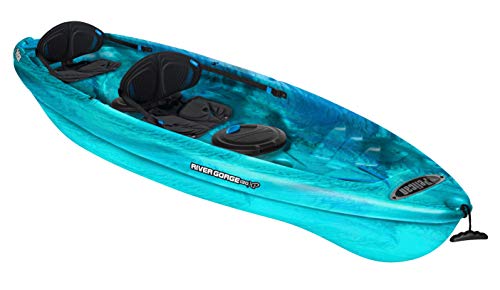
Pelican River Gorge 130X (tandem)
- Sit-on-top tandem, 13 ft (listing title)
- Maximum capacity 500 lb (per the listing)
- Weight 73 lb (per the listing)
- Molded middle seat for a child, pet or gear

Pelican Argo 100X
- Sit-in recreational kayak, 10 ft (listing title)
- Maximum capacity 275 lb (per the listing)
- Weight 36 lb (per the listing)
- Foam flotation blocks inside
$395.72 at Amazon, as of Nov 22, 2026 12:07 UTC
Check price on Amazon
Wilderness Systems Pungo 120
- Sit-in recreational kayak
- 12.2 ft (listing title)
- Phase 3 Air Pro seat, fully adjustable
- Adjustable footrests and thigh pads
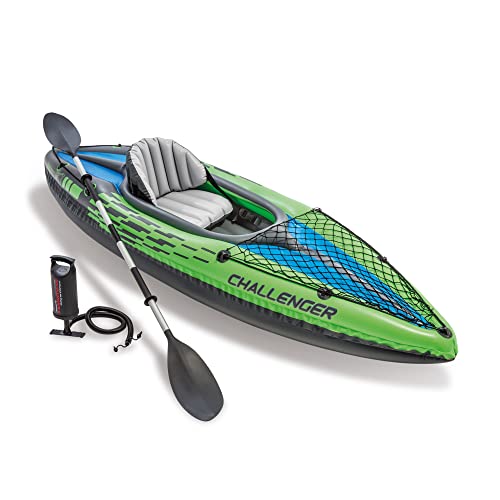
Intex Challenger K1
- Inflatable, 1 person
- Inflated 9 ft x 2.6 ft x 1.1 ft (per the listing)
- Weight capacity 220 lb (per the listing)
- Includes 86 in aluminum oar and high-output pump
$103.99 at Amazon, as of Nov 22, 2026 12:07 UTC
Check price on Amazon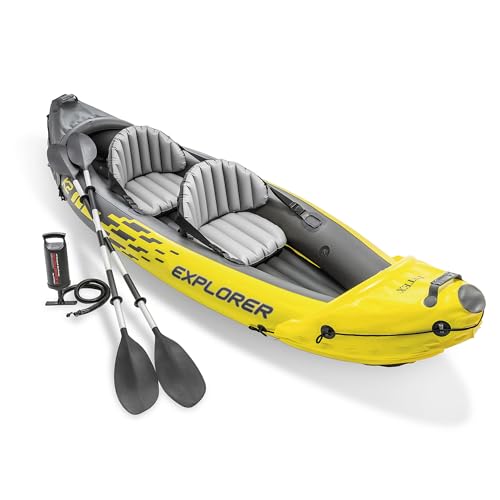
Intex Explorer K2
- Inflatable, 2 person
- Inflated 10.3 ft x 3 ft x 1.8 ft (per the listing)
- 400 lb maximum capacity (per the listing)
- Two paddles, two inflatable seats and a pump
$123.49 at Amazon, as of Nov 22, 2026 12:07 UTC
Check price on Amazon
Retrospec Coaster
- Inflatable, 1 person
- 9 ft 10 in x 37 in (per the listing)
- 23 lb; capacity 220 lb (per the listing)
- Includes pump, paddle, fins, footrest and carry bag
$299.99 at Amazon, as of Nov 22, 2026 12:07 UTC
Check price on AmazonThe picks compared
| Product | Type | Length (from listing) | Capacity (from listing) | What the listing says |
|---|---|---|---|---|
| Pelican Sentinel 100X | Sit-on-top, 1 person | 10 ft | Not stated | Molded footrests, adjustable backrest, no weight limit on the page |
| Lifetime Tamarack 100 | Sit-on-top, 1 person | 10 ft | 275 lb | Paddle included, center hatch, rear tankwell, front and rear bungees |
| Pelican River Gorge 130X | Sit-on-top, tandem | 13 ft | 500 lb | 73 lb, hatch, tankwell, molded middle seat, scupper holes |
| Pelican Argo 100X | Sit-in, 1 person | 10 ft | 275 lb | 36 lb, foam flotation blocks, adjustable Ergoform backrest |
| Wilderness Systems Pungo 120 | Sit-in, 1 person | 12.2 ft | Not stated | For small to medium paddlers; adjustable seat, footrests, thigh pads |
| Intex Challenger K1 | Inflatable, 1 person | 9 ft inflated | 220 lb | Folds into bag; oar, pump and removable skeg included |
| Intex Explorer K2 | Inflatable, 2 person | 10.3 ft inflated | 400 lb | Two paddles, two seats, pump, repair patch; lakes and mild rivers |
| Retrospec Coaster | Inflatable, 1 person | 9 ft 10 in inflated | 220 lb | 23 lb; pump, paddle, fins, footrest; life jacket reminder |
The picks in detail
1. Pelican Sentinel 100X: sit-on-top with a stated 10 ft length and molded footrests
This is the plain 10-foot sit-on-top in the group. The listing stresses the hull shape, an adjustable backrest and molded footrests that need no adjustment. It makes a sensible starting point for a paddler who wants an open deck and nothing fancy.
What the Amazon listing says
- Listing title: Pelican Sentinel 100X, recreational sit-on-top, 10 ft
- Twin-arched multi-chine hull described as very stable
- Patented Ram-X material, described as durable and light
- Ergoform seating with adjustable backrest and spacious seat cushion
- Molded footrests, no adjustment needed (per the listing)
What the research says: The Boater's Guide asks that every person aboard has a wearable life jacket of the right size and type. The listing names no capacity, so check the maker's page for the load limit and keep your paddler weight plus gear under it.
- Strengths: Molded footrests that need no adjustment, per the listing; Adjustable backrest and spacious seat cushion; Hull described as increasing contact area with the water
- Limitations: The listing gives no weight capacity, so check the maker's figure before you buy; No storage details beyond the seat and footrests; No paddle mentioned in the listing
- Suits: A single adult who wants a simple sit-on-top for calm water and is happy to confirm capacity with the maker.
- Look elsewhere if: Anyone who needs a stated weight limit on the page, or who wants built-in storage and a paddle in the box.
2. Lifetime Tamarack 100: sit-on-top with a paddle and a stated 275 lb limit
The listing includes a paddle and a stated 275-pound figure, which makes it easy to compare with the other 10-footers. Storage is more generous than on the plainest model: front and rear bungees, a center hatch and a rear tankwell.
What the Amazon listing says
- Sit-on-top, 10 ft, with paddle (listing title)
- Flat-bottom hull with chine rails, described as stable for beginners
- UV-protected high-density polyethylene
- Adjustable quick-release backrest, several footrest positions
- Front and rear shock cords, center hatch, rear tankwell; supports up to 275 pounds
What the research says: Capacity is the number to compare first. The USCG guide says to know your boat's load capacity and loading; here the listing's 275 lb figure is the one to hold yourself and your gear under.
- Strengths: Paddle included, per the listing; Capacity stated on the page; Center storage hatch plus front and rear bungees; Quick-release backrest and several footrest positions
- Limitations: Listing shows no kayak weight, so check the maker if you carry it alone; Flat-bottom hull; the listing talks about stability, not speed
- Suits: Beginners and casual paddlers on calm water who want a paddle in the box and storage for a small day pack.
- Look elsewhere if: Heavier paddlers or anyone carrying a lot of gear, since the stated limit is 275 lb.
3. Pelican River Gorge 130X (tandem): two-seat sit-on-top with a stated 500 lb capacity
The only two-person sit-on-top here with both capacity and weight stated. The listing says it has extra flotation inside the hull, scupper holes that drain water and a molded middle seat.
What the Amazon listing says
- Pelican River Gorge 130X tandem, sit-on-top, 13 ft
- Twin-arched multi-chine hull for stability
- Added flotation said to meet or surpass ABYC standards
- Maximum capacity 500 lb; weight 73 lb
- Molded middle seat for a small child, pet or gear; four accessory eyelets, two bottle holders
What the research says: The Boater's Guide says each person aboard needs their own wearable life jacket, children under 13 included. A middle seat does not change that: the child or the dog needs a properly sized one. The ABYC wording comes from the maker and was not checked against ABYC itself.
- Strengths: 500 lb capacity stated; Scupper holes described as draining water; Quick-lock hatch, tankwell with bungees, molded footrests; Extra flotation, per the listing
- Limitations: At 73 lb, it is a two-person carry; 13 ft takes real storage and roof space; The listing's ABYC wording is the maker's claim; we did not verify it
- Suits: Couples, parent-and-child or paddlers with a dog who want to share one boat on calm water.
- Look elsewhere if: Solo paddlers, and anyone with limited storage or a small car.
4. Pelican Argo 100X: sit-in with stated weight, length and capacity
A 10-foot sit-in whose listing gives both weight and capacity, which is rare in this group. It is the light, simple sit-inside reference point for the comparison.
What the Amazon listing says
- Pelican Argo 100X, recreational sit-in, 10 ft
- Twin-arched multi-chine hull, described as stable and easy to get into
- Foam blocks for added flotation; max capacity 275 lb
- 10 ft long and 36 lb, per the listing
- Patented Ram-X material; adjustable Ergoform backrest with seat cushion
What the research says: The Boater's Guide notes canoes, kayaks and paddleboards tend to be less stable and can capsize easily. Practice getting back in with your gear on before you go anywhere that matters. The listing's flotation claim is the maker's and was not independently checked.
- Strengths: Weight and capacity both stated; Foam flotation blocks, per the listing; Adjustable padded Ergoform backrest with seat cushion
- Limitations: Listing mentions no storage hatch; Ram-X material claims are the maker's; Sit-in: you sit down into a cockpit, so check you are happy with that feel
- Suits: A solo adult who wants a light sit-in for calm water and easy carrying.
- Look elsewhere if: Larger paddlers near the 275 lb limit, or anyone who wants built-in gear storage.
5. Wilderness Systems Pungo 120: longest sit-in here (12.2 ft) with seat and thigh-pad adjustments
The longest sit-inside here, with the most adjustable fit: a ventilated seat, adjustable footrests and thigh pads. The listing says it is for small to medium sized paddlers.
What the Amazon listing says
- Wilderness Systems Pungo 120, sit-inside, 12.2 ft
- Described as a recreation kayak for small to medium sized paddlers
- Hull said to offer stability without sacrificing performance
- Phase 3 Air Pro seat with mesh-covered honeycomb-vented foam
- Adjustable footrests and thigh pads
What the research says: Fit is the point of this boat. The listing says small to medium sized paddlers, but gives no numbers, so check the maker's page for the paddler and load limits. We did not open it.
- Strengths: Adjustable seat, footrests and thigh pads; Listing positions it for small to medium sized paddlers; Mesh-covered vented foam seat for airflow
- Limitations: No weight capacity or kayak weight in the listing; The listing's speed and stability claims are marketing wording; A longer boat takes more room to store
- Suits: Small to medium-sized adults who want a sit-in they can fine-tune for comfort on longer outings.
- Look elsewhere if: Larger paddlers, and anyone who needs a stated capacity on the page.
6. Intex Challenger K1: one-person inflatable with oar and pump in the set
A one-person inflatable that folds into a carry bag. The listing includes the oar, pump and a removable skeg, and describes lakes and mild rivers as the intended water.
What the Amazon listing says
- Intex Challenger K1 inflatable kayak set, 1 person
- Includes 86 in aluminum oar and high-output pump
- SuperStrong PVC described as abrasion resistant
- Removable skeg, adjustable seat with backrest
- Inflated size 9 ft x 2.6 ft x 1.1 ft; 220 lb capacity
What the research says: The listing says lakes and mild rivers. The Boater's Guide cautions that people drown close to shore in calm water, so a gentle setting is no reason to skip a life jacket.
- Strengths: Folds into a carry bag; Oar and pump included; Removable skeg for tracking, per the listing; Adjustable seat with backrest
- Limitations: 220 lb capacity is among the lowest in the group; Listing says lakes and mild rivers, not open water; Needs inflating and drying each trip
- Suits: A single paddler with limited storage who wants to try kayaking on a calm lake or a gentle river.
- Look elsewhere if: Heavier paddlers or anyone who needs more room for gear.
7. Intex Explorer K2: two-person inflatable with a stated 400 lb capacity
A two-seat inflatable with I-beam floor and high-buoyancy side chambers. The listing includes two paddles, two seats, a pump and one repair patch.
What the Amazon listing says
- Intex Explorer K2, 2-person inflatable set with oars and pump
- I-beam floor, low-profile deck, high-buoyancy side chambers
- Removable skeg; Boston valves for quick inflation
- 400 lb maximum weight capacity; 10.3 ft x 3 ft x 1.8 ft
- Includes two 86 in paddles, two seats with backrests, pump and a repair patch
What the research says: The listing states a 400 lb limit for two people and gear. Add up both paddlers and your cargo before you trust it, and give each person an approved, properly sized life jacket per the Boater's Guide.
- Strengths: Includes paddles, seats, pump and a repair patch; I-beam floor and side chambers described as stabilizing; Compact in its carry bag, per the listing
- Limitations: Sized for lakes and mild rivers, per the listing; 400 lb is shared by two people and gear; Valves and chambers need checking before each trip
- Suits: Two people, or a parent and child, who want to share a boat that packs into a trunk.
- Look elsewhere if: Anyone paddling in current or open water, or two heavier adults with gear.
8. Retrospec Coaster: inflatable that states weight, size and a life jacket reminder
The listing states the weight and size outright and is one of two listings that tell the buyer to wear a USCG approved life jacket. It describes room for one paddler and a dog.
What the Amazon listing says
- Retrospec Coaster, 1-person inflatable kayak
- 9 ft 10 in x 37 in inflated; 23 lb
- 900-denier puncture-resistant fabric, heavy-duty tarpaulin hull
- Dual-action pump, paddle, removable fins, footrest and carry bag included
- Reminds buyers to wear a properly fitted USCG approved life jacket, and one for a dog
What the research says: The listing and the USCG guidance agree that a properly sized, approved life jacket is the base layer of safety. The listing's wording is a reminder, not a certification of the boat itself.
- Strengths: Weight stated at 23 lb; Includes pump, paddle, removable fins, footrest and bag; Listing itself reminds buyers to wear a USCG approved life jacket; Described as puncture resistant fabric with a heavy-duty hull
- Limitations: Capacity is 220 lb, shared with any dog or gear; Fishing claims in the title are the seller's wording; Needs inflating and drying each trip
- Suits: A solo paddler who wants a clearly specified, packable boat and possibly a dog for company.
- Look elsewhere if: Heavier paddlers, or two people.
Accessories (separate from the main picks)
- Approved life jacket for every paddler: The U.S. Coast Guard's guide says each person aboard needs a wearable, approved, correctly sized life jacket. See our kayak life jackets guide.
- Whistle and small emergency light: The Boater's Guide calls both a good idea to keep with your life jacket, though they are not required.
- Paddle that fits (if not included): Some listings include a paddle and some do not. Check the listing.
Sit-on-top, sit-inside or inflatable: the three types in plain words
All three types appear in the listings we compared, and each listing describes its own type in its own words. Here is what those words say.
Sit-on-top
You sit on the deck, not inside a cockpit. The sit-on-top listings here mention scupper holes that drain water, molded footrests, storage tankwells with bungee cords, and in the Lifetime and Pelican River Gorge models, a center or quick-lock hatch. Several also describe a flat or multi-chine hull that the maker calls stable.
Sit-inside
You sit down into an open cockpit. The Perception listing says its sit-inside kayak has an open cockpit that drains when you tilt or flip the kayak over after paddling, rather than through scupper holes. The sit-inside listings here emphasize adjustable seats, footrests, thigh pads and in some cases front storage hatches with watertight covers.
Inflatable
The inflatable listings describe PVC bodies that fold into a carry bag, with a hand pump, skeg or fins, and an inflatable seat. All state lakes, mild rivers or calm water as the intended use. The Retrospec and VEVOR listings also remind buyers to wear a USCG approved life jacket.
None of these descriptions is a ranking. Choose the type that matches where you will paddle, how you will move the boat and how many people will use it, then compare capacity and length inside that type.
Life jackets and the US Coast Guard: read this before you shop for a boat
A life jacket matters more than the kayak itself. This section comes from two pages we opened on 2026-11-13: the U.S. Coast Guard’s Boater’s Guide to the Federal Requirements for Recreational Boats and its How to Choose the Right Life Jacket brochure.
- Every person needs one. The guide says all recreational vessels must carry one wearable life jacket for each person aboard, and that you and your passengers should always wear it when the vessel is underway.
- What the jacket must be. In good and serviceable condition, the appropriate size and type for the intended user, appropriate for the activity and U.S. Coast Guard approved (check the label).
- Throwable device. The guide says boats 16 feet and longer, other than canoes and kayaks, must also carry a throwable device. So a kayak does not need one under that rule.
- Children under 13. On a vessel that is underway, children under 13 must wear an appropriate approved life jacket unless below deck or in an enclosed cabin. If a state sets a different child rule, the state’s rule applies on its waters. Child-size jackets are often approved for weight ranges, so check the user weight on the label.
- Accessible, not stowed. Wearable jackets must be readily accessible, not in plastic bags or locked compartments.
- Extras. The guide says a whistle and an emergency light are good ideas.
The brochure lists a paddling jacket type for touring and whitewater, and says life jackets have to fit in order to work. State rules can be stricter than federal ones, so check your state boating agency. We did not verify any single state’s rules.
Size, length and weight capacity: how to read the numbers
Three numbers decide whether a boat suits you: length, weight capacity and the boat’s own weight. The listings we compared give them unevenly, which is itself useful information.
- Weight capacity. Stated on the listings for the Lifetime Tamarack (275 lb), Pelican River Gorge (500 lb), Pelican Argo 100X (275 lb), Intex Challenger K1 (220 lb), Intex Explorer K2 (400 lb) and Retrospec Coaster (220 lb). The Pelican Sentinel 100X and Wilderness Systems Pungo 120 listings do not state one.
- Add it up. The USCG guide tells operators to know their boat’s load capacity. Add your own weight, any passenger, a dog if you bring one, and the gear you carry. Stay clearly under the stated limit.
- Length. Lengths in the listings range from about 8 to 13 feet. A longer kayak takes more room to store and carry. Length does not by itself tell you how a boat behaves; the listings focus on hull shape and the maker’s wording for stability.
- Kayak weight. Stated only for the Pelican River Gorge (73 lb), Pelican Argo 100X (36 lb) and Retrospec Coaster (23 lb). If you carry the boat alone, find the weight on the maker’s page before you buy.
- Tandem. A two-person kayak’s capacity covers both people and gear. Check the sum, not just the headline number.
We did not open any maker pages for exact dimensions, so every figure above is the one on the Amazon listing. If a number matters to you, confirm it with the maker.
How to choose: five steps in order
- Where will you paddle? All the inflatable listings here describe lakes, mild rivers or calm water. The sit-on-top Perception listing mentions lakes, ocean bays, light surf and slow rivers. If your water is more exposed than a listing describes, look elsewhere.
- How will you carry and store it? A rigid 10-footer needs roof racks or a trailer and garage space. An inflatable folds into a bag. Rigid boats need room; inflatables need a pump and drying time.
- How many people? A tandem boat can carry two, but a tandem used solo is a long boat to handle. The River Gorge listing, for example, states 13 feet and 73 lb.
- What load? Add up body weight, gear and any dog or child. Compare to the capacity.
- What fit? Check seat, footrests and thigh support. The Pungo listing is the most detailed on adjustment; the sit-on-top listings emphasize easy entry and molded footrests.
Then budget the life jacket, a paddle if one is not included, and transport gear. Do not skip the life jacket to afford a more elaborate boat.
Essential and optional features
- Essential: a stated weight capacity that covers you and your gear; an approved, properly sized life jacket for each person; a paddle of suitable length; a way to carry or transport the boat.
- Useful: an adjustable seat and footrests, per the listings; molded or carry handles; storage that you can reach (hatch, tankwell or bungees); flotation. Several listings mention foam blocks or chambers for added flotation.
- Optional: rod holders, camera mounts, a GoPro mount, extra dry bags and a dog seat. The Intex Excursion Pro listing, for example, lists rod holders and a camera mount in the set. Nice, but not what decides a first boat.
- Not a feature to rely on: a middle seat for a child or dog. It is a place to sit, not a safety system.
The Boater’s Guide adds that a whistle and an emergency light are not required but are a good idea to carry with your life jacket. Both cost little compared to the boat.
Common mistakes when buying a kayak
- Skipping the life jacket. The Boater’s Guide says drowning is the leading cause of death in boating, and that most drowning deaths occur near shore in calm weather. Wearing it is the single biggest safety choice.
- Ignoring capacity. Gear, a dog and a child all count. A boat loaded near its limit has less margin.
- Buying a tandem for solo use. It is longer and heavier to carry.
- Reading wording as a spec. ‘Stable’ and ‘fast’ in a listing are the seller’s words, not a measured figure.
- Forgetting storage. A 13-foot rigid boat needs somewhere to live. An inflatable needs a dry bag and space to dry.
- Not practicing re-entry. The Boater’s Guide asks paddlers if they are sure they can climb back in with all their gear on, and whether they have practiced.
- Skipping the state rules. Rules for child life jackets and other equipment vary by state.
- Assuming an inflatable is a toy. The listings here describe real capacities up to 400 lb and say lakes and mild rivers. They also say to wear a USCG approved life jacket.
By level and by use, without the price tag
First-timers on a calm lake
A simple 10-foot sit-on-top or an inflatable is a natural fit. The Pelican Sentinel 100X and Lifetime Tamarack 100 are the sit-on-top examples; the Intex Challenger K1 is the one-person inflatable. All describe calm or recreational use.
Casual paddlers who want more fit
If you expect longer outings, look at the more adjustable seats. The Wilderness Systems Pungo 120 listing is the one here with a fully adjustable seat, footrests and thigh pads, and it is written for small to medium sized paddlers.
Two paddlers, a child or a dog
The Pelican River Gorge 130X (500 lb, middle seat) and the Intex Explorer K2 (400 lb, two seats) are the two-person examples. The USCG guide says each person aboard needs their own wearable life jacket and that children under 13 must wear an approved one. A dog needs a properly fitted one too, which the Retrospec and VEVOR listings also state.
Anglers
Some listings mention rod holders or mounting points, such as the VEVOR and Intex Excursion Pro listings. Treat those as extras, and remember that standing in a boat raises the center of gravity and the risk of capsizing, per the Boater’s Guide.
Kids
Some youth kayaks appear in our candidate list, with their own stated weight limits and age notes. We did not rank them here. Follow the maker’s age and weight guidance, and never buy a child’s life jacket to grow into.
Cold water, capsizing and staying afloat
The Boater’s Guide is direct on this. It says canoes, kayaks and stand-up paddleboards tend to be less stable and can easily capsize, and that standing in a boat raises the center of gravity. It asks paddlers whether they can climb back into the boat when they fall out with all their gear on, and whether they have practiced.
If you capsize or fall in, the guide’s tips for staying afloat start with remaining calm and not thrashing about or trying to remove clothing or footwear. It also says that, depending on the water temperature, loss of consciousness may occur in as little as one hour in cold water, and that you should concentrate on self-rescue. The brochure says some life jackets, such as vests, help you conserve heat and ward off hypothermia.
- Wear your life jacket every time, not only when conditions look rough.
- Practice re-entry in shallow, calm water with a friend nearby before you paddle farther out.
- Tell someone where you are going and when you expect to be back. The guide has a float plan section; we recommend reading it.
- Do not drink alcohol before paddling. The guide calls alcohol use the leading known contributing factor in fatal boating incidents.
This guide is not a rescue course. Consider a local paddling class if you are new.
Carrying, loading and storing
This is where rigid and inflatable boats differ most, and where the listings give useful clues.
- Handles. The Perception Tribe listing says its multiple carry handles make it easy for two adults to carry. The Lifetime listings mention T-handles and side luggage handles. The Pelican Sentinel 80X listing says 34 lb. The River Gorge listing says 73 lb.
- Weight. Only some listings state kayak weight. If you will carry the boat alone, check the maker page.
- Inflatables. They fold into a carry bag with a pump. The HHSJZWCY listing says about 10 minutes to inflate by hand pump. We did not time any boat.
- Rigid storage. Store out of the sun when you can. Lifetime’s listing says its HDPE is UV protected, but sun and heat can still wear any boat over time; follow the maker’s care sheet.
- Racks and straps. We did not open maker pages on racks. Use padded cradles and straps designed for kayaks, and check them before you drive.
If your storage is a small apartment or a car trunk, that may decide the type before any other feature does.
Care, cleaning and when to replace
- Rinse after use. Rinse salt and sand off the boat, the seat and any fittings. This is common sense, not a rule from the sources.
- Dry inflatables fully. Fold and pack only when dry, and follow the maker’s pump and valve guidance. The Intex Explorer K2 listing includes a repair patch.
- Inspect before each trip. Look for cracks, deep gouges, loose handles or fittings, and soft spots or leaks in an inflatable.
- Check life jackets. The USCG guide says a jacket must be in good and serviceable condition. If straps are torn or the label is unreadable, replace it.
- Store out of direct sun when possible. The Lifetime listings mention UV protection; others do not.
- Replace when unsafe. There is no fixed lifespan in any source we opened. If a boat leaks, a hull is cracked, or a seat or footrest no longer holds, stop using it.
If your boat has foam flotation blocks, as the Pelican listings describe, do not remove them.
Myths and facts
- Myth: an inflatable is only for the pool. Fact: the inflatable listings state lakes, mild rivers or calm water, with capacities up to 400 lb for the Intex Explorer K2.
- Myth: calm water means I do not need a life jacket. Fact: the USCG says most drowning deaths occur near shore in calm weather, and its brochure says one-half of all recreational boating fatalities happen in calm water.
- Myth: a bigger boat is always safer. Fact: nothing in the sources we opened says so. Capacity for your load, fit and your own practice matter more.
- Myth: a kayak needs a throwable device. Fact: the Boater’s Guide exempts canoes and kayaks from the throwable requirement on boats 16 feet and longer.
- Myth: children can wear any life jacket. Fact: the guide says child-size jackets are approved for weight ranges, so check the label.
- Myth: ‘stable’ means it cannot flip. Fact: the guide says canoes, kayaks and paddleboards tend to be less stable than other boats and can easily capsize.
One-minute checklist
- Where will I paddle: calm lake, slow river, bay?
- One person or two? Any child or dog?
- What is the total weight of everyone and everything?
- Does the listing state a capacity that covers it?
- Do I have an approved, correctly sized life jacket for each person?
- How will I carry, load and store this boat?
- Is a paddle included, or do I need one?
- Does my state have its own rules on life jackets or equipment?
- Have I practiced getting back in?
Glossary of terms
- Sit-on-top. You sit on a deck instead of inside a cockpit.
- Sit-inside (sit-in). You sit in an open cockpit.
- Inflatable. A boat filled with air, packed into a bag when empty.
- Scupper holes. Holes through the hull that let water drain, per the listings.
- Tankwell. A rear storage area, often with bungee cords.
- Skeg. A fin that helps the boat track straight; several inflatables here have a removable one.
- Chine. The edge where the hull side meets the bottom, mentioned in hull descriptions.
- PFD. Personal flotation device, the USCG term for a life jacket.
- Tandem. Built for two paddlers.
What to buy first and what can wait
- An approved life jacket for each person. See our kayak life jackets guide.
- A paddle that fits. Some boats include one, some do not. See canoe paddles for general ideas on paddle fit.
- The boat. Pick type, capacity and size using this guide.
- A whistle and a small light. The USCG guide calls them a good idea.
- Transport and storage. Straps, racks, a pump or a dry bag.
- Extras. Rod holders, mounts and dry bags come last.
Also see our inflatable paddle boards guide if you are weighing a board against a kayak.
How we chose these picks
This is a research-based comparison, not a hands-on test. Safety and life jacket facts come from two U.S. Coast Guard documents opened on 2026-11-13: the Boater’s Guide to the Federal Requirements for Recreational Boats (revised September 2023) and the How to Choose the Right Life Jacket brochure. Product facts come only from the Amazon listing text for each ASIN, as supplied to us. We could not open any maker’s page: the Pelican page redirected and we did not follow it, so kayak sizes and capacities are as the listings state them. We did not test any boat, and we do not use ratings, reviews or sales rankings. Picks cover sit-on-top, sit-inside and inflatable types, one and two person, and were chosen for how the listing supports the buying question, not for commission. No prices are quoted because they change.
Sources
- U.S. Coast Guard, A Boater's Guide to the Federal Requirements for Recreational Boats (revised September 2023) (checked 2026-11-13)
- U.S. Coast Guard, How to Choose the Right Life Jacket (brochure) (checked 2026-11-13)
- Amazon product listing (ASIN B0DZDRKMCW) (checked 2026-11-13)
- Amazon product listing (ASIN B0GMRW951V) (checked 2026-11-13)
- Amazon product listing (ASIN B07VT14RN1) (checked 2026-11-13)
- Amazon product listing (ASIN B0845GT2W2) (checked 2026-11-13)
- Amazon product listing (ASIN B0CV82YLQ9) (checked 2026-11-13)
- Amazon product listing (ASIN B00177J4JS) (checked 2026-11-13)
- Amazon product listing (ASIN B00A7EXF4C) (checked 2026-11-13)
- Amazon product listing (ASIN B0F865NPZM) (checked 2026-11-13)
Frequently asked questions
Which is better for a beginner: sit-on-top, sit-inside or inflatable?
None is better for everyone. Pick by where you will paddle, how you will carry and store the boat, and the total weight it must carry. All three types appear in the listings here, with calm water as the common intended use.
Do I need a life jacket for a kayak?
Yes. The U.S. Coast Guard's Boater's Guide says every person aboard needs a wearable, approved, correctly sized life jacket, and recommends you always wear it while underway. Check your state for any extra rules.
Does a kayak need a throwable flotation device?
Under the federal guide, the throwable device requirement for boats 16 feet and longer excludes canoes and kayaks. State rules may differ, so check your state boating agency.
What size life jacket does a child need?
The guide says child-size jackets are often approved for weight ranges, so check the user weight on the label. Children under 13 must wear an approved jacket on a vessel that is underway, unless below deck or in an enclosed cabin. Never buy one to grow into.
How much weight can a kayak hold?
Only what the maker states. The listings here give 275 lb for the Lifetime Tamarack and Pelican Argo 100X, 220 lb for the Intex Challenger K1 and Retrospec Coaster, 400 lb for the Intex Explorer K2 and 500 lb for the Pelican River Gorge. Add your body weight, passengers and gear.
Can I take my dog in a kayak?
Some listings say so, such as the Retrospec Coaster and VEVOR, and they also say to give a dog a properly fitted life jacket. The weight limit includes the dog. Practice getting in and out with calm water first.
How long does a kayak last?
No source we opened gives a lifespan. It depends on use, sun and storage. Replace a boat that leaks, cracks or has fittings that no longer hold.
Are inflatable kayaks safe?
The inflatable listings here describe lakes, mild rivers and calm water, with stated capacities. As with any kayak, wear an approved life jacket, check the valves and seams before each trip and stay within the stated limit.
Can I stand up in a kayak?
Some listings mention a slip-resistant standing area, but the Boater's Guide warns that standing in a boat raises the center of gravity and risks capsizing, and that kayaks can capsize easily. Practice in shallow, calm water first.
What size kayak do I need?
Length and fit vary. The listings here range from about 8 to 13 feet. Weight capacity matters most; the Pungo 120 listing also says it suits small to medium sized paddlers. Check the maker's sizing for your height and weight.