This article contains affiliate links: if you buy through them we may earn a commission, at no extra cost to you. Read our affiliate disclosure.
The canoe is loaded, the lake is flat, and somebody pulls a stiff old orange vest out of the garage and says nobody will need it. Then the wind picks up, a paddle gets dropped, and the canoe rocks harder than anyone expected. That is the moment a life jacket that fits and is actually worn is worth more than any other piece of gear in the boat.
The short answer: choose a U.S. Coast Guard approved life jacket that is the right size and type for the wearer and suits paddling, then wear it. For most canoeists that means a low-profile foam vest with open sides and a back that clears the seat. An inflatable is a lighter, cooler option for adults, but it needs upkeep and is not for everyone. This guide compares eight life jackets using their Amazon listing text and the Coast Guard pages we opened. It is a research-based comparison, not a hands-on test, and it quotes no prices.
Our top picks
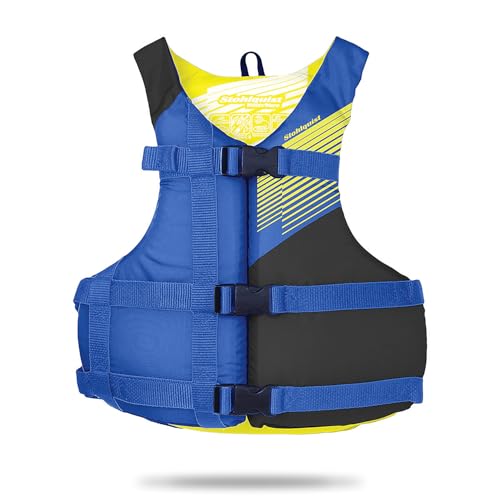
Stohlquist FIT adult (Type III foam)
- Type III foam vest, adults 90 lb and up (listing)
- Fits chest 30-52 in (listing)
- Three front buckles plus side straps
- Listed weight 0.7 lb; 200D nylon
$49.99 at Amazon, as of Nov 22, 2026 12:07 UTC
Check price on Amazon
BLUESTORM Drift (Type III foam)
- Type III paddle sports vest (listing)
- Universal fit, chest 30-56 in
- For persons over 80 lb
- Front zip entry, 1 in waist belt, five adjustment points
$39.99 at Amazon, as of Nov 22, 2026 12:07 UTC
Check price on Amazon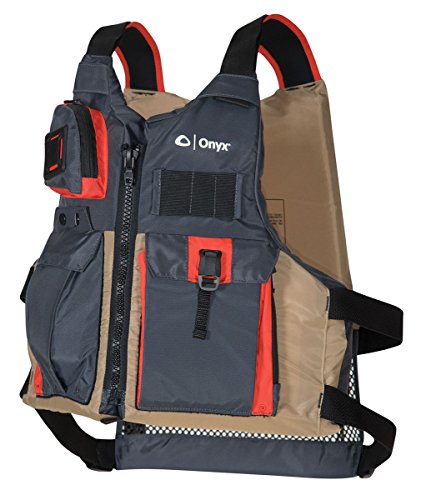
Onyx Kayak Fishing (USCG PFD with pockets)
- Listed as U.S. Coast Guard approved PFD (type not stated)
- High-back design for kayak seats
- Mesh lower back and shoulders
- Zippered pockets and D-ring attachments
$77.50 at Amazon, as of Nov 22, 2026 12:07 UTC
Check price on Amazon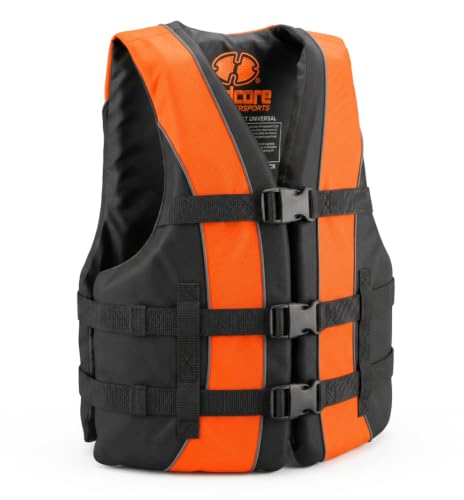
Hardcore Paddle Vest (Type III, adult and youth sizes)
- Type III PFD (listing)
- Open sides, solid colour, no outside logos
- Cordura polyester and closed-cell PE foam
- 1 in straps with quick-release buckles
$34.00 at Amazon, as of Nov 22, 2026 12:07 UTC
Check price on Amazon
Onyx A/M-24 inflatable (auto/manual)
- Inflatable; automatic or manual (listing)
- Users 16 or older and over 80 lb; chest 30-52 in
- 22.5 lb buoyancy when fully inflated
- Neoprene neckline, adjustable belt, front buckle
$95.99 at Amazon, as of Nov 22, 2026 12:07 UTC
Check price on Amazon
Onyx M-16 manual belt pack
- Manual inflatable belt pack (listing)
- Users 16 or older and over 80 lb; universal fit to a 52 in waist
- 16 g CO2 gives 17 lb; oral inflation up to 26.5 lb
- Listed as under 1 lb; D-ring
$64.99 at Amazon, as of Nov 22, 2026 12:07 UTC
Check price on Amazon
BLUESTORM Cirrus26 inflatable (auto with manual override)
- Listed as USCG-approved Type V with Type III performance
- Automatic inflation via CO2 cylinder, or manual cord or oral tube
- 26 lb buoyancy (listing)
- Manual-only conversion cap; spare cylinder pocket
$119.99 at Amazon, as of Nov 22, 2026 12:07 UTC
Check price on Amazon
Stohlquist Kids Type III, 50-90 lb
- Type III, listed as USCG approved
- For children 50-90 lb (listing)
- Front three-buckle entry
- Thinner back panel; 200D nylon
$44.99 at Amazon, as of Nov 22, 2026 12:07 UTC
Check price on AmazonThe picks compared
| Product | Type | Fit range (per listing) | Notes | What the listing says |
|---|---|---|---|---|
| Stohlquist FIT adult | Foam, Type III | Chest 30-52 in, 90 lb and up | Three front buckles | Low-profile back, listed as USCG and Transport Canada |
| BLUESTORM Drift | Foam, Type III | Chest 30-56 in, over 80 lb | Front zip, five adjustment points | Deep neckline, large armholes |
| Onyx Kayak Fishing | Foam, type not stated | Not stated | Pockets and D-rings | High back, mesh back and shoulders, USCG approved |
| Hardcore Paddle Vest | Foam, Type III | Adult and youth sizes; ranges not stated | Open sides | UL listed, USCG approved, Cordura shell |
| Onyx A/M-24 | Inflatable, auto or manual | Chest 30-52 in, 16+, over 80 lb | Manual-only cap | 22.5 lb buoyancy, rearming kit #1352 |
| Onyx M-16 belt pack | Inflatable, manual | Waist up to 52 in, 16+, over 80 lb | Under 1 lb | 17 lb from 16 g CO2, oral up to 26.5 lb |
| BLUESTORM Cirrus26 | Inflatable, auto with manual override | Not stated in text read | Spare cylinder pocket | Listed Type V with Type III performance, 26 lb |
| Stohlquist Kids | Foam, Type III | Children 50-90 lb | Three-buckle front entry | USCG approved, thinner back panel |
The picks in detail
1. Stohlquist FIT adult (Type III foam): lightest stated weight, chest range stated
A plain foam vest built around paddling movement. The listing gives a clear chest range, a weight floor and a stated weight, so a buyer can check fit before ordering. It also says the vest meets USCG and Transport Canada standards.
What the Amazon listing says
- Type III PFD for adults 90 lb and up
- Chest sizes 30-52 in; three front buckles and side straps
- Sculpted foam panels and a low-profile back
- 200D nylon and box-stitched webbing; listed as 0.7 lb
- Listed as meeting USCG and Transport Canada standards
What the research says: The Coast Guard guide says a life jacket must be the right size and type for the user and approved (check the label). The approval claim here is the listing's; confirm it on the vest's own label.
- Strengths: Chest and weight limits clearly stated; Sculpted foam panels and low-profile back, per the listing; Box-stitched webbing, per the listing
- Limitations: Listing gives a stated weight we could not check; Chest range tops out at 52 in; Adults only; not sized for children
- Suits: Adult paddlers who want a simple, low-profile foam vest for canoe or kayak.
- Look elsewhere if: Larger chests above 52 in, children, and anyone who wants pockets for fishing gear.
2. BLUESTORM Drift (Type III foam): widest stated chest range in the foam group
The listing gives the widest chest range of the foam vests here and says buoyancy is for people over 80 pounds. A front zip and five adjustment points help a buyer who sits between sizes.
What the Amazon listing says
- USCG-approved Type III paddle sports flotation device, per the listing
- Five points of adjustment; front entry zipper; 1 inch waist belt closure
- Universal size to fit 30-56 inch chests
- Buoyancy for persons over 80 pounds
- Contoured foam chassis to reduce bulk
What the research says: The Coast Guard guide says to choose the right size for the wearer and that fit, snug but not tight, is the most important characteristic. A universal size makes that check even more important.
- Strengths: Chest 30-56 in, per the listing; Deep neckline and large armholes for arm movement; Front zip entry, per the listing
- Limitations: One universal size, so check the fit on the wearer, not just the chart; Listing is aimed at paddle boarding and inshore paddling as well; canoe use is not named; Adults only
- Suits: Adults of larger build, or a household that wants one adjustable vest to share.
- Look elsewhere if: Children, and anyone who needs a pocketed fishing vest.
3. Onyx Kayak Fishing (USCG PFD with pockets): pockets and high back for paddling anglers
For canoeists who fish. The listing names a high back that works with seats, mesh for ventilation, and zippered pockets and D-rings to carry tools.
What the Amazon listing says
- Listed as USCGA PFD/life jacket (U.S. Coast Guard approved)
- Multiple pockets and tool holders for anglers
- High-back design that works with kayak seats
- Mesh lower back and shoulders; adjustable straps
- Heavy-duty nylon with zippered pockets and D-rings
What the research says: The listing gives no type or size range, so we cannot place it on the Coast Guard label scheme. Read the label and the owner's manual for performance level and user weight before relying on it.
- Strengths: Pockets and tool holders for anglers, per the listing; Mesh panels for ventilation; Adjustable straps
- Limitations: The listing does not state the PFD type, chest range or weight limit; Pockets add bulk and things to snag; Written for kayak seats; check it sits well on a canoe seat or thwart
- Suits: Paddling anglers who want gear within reach.
- Look elsewhere if: Paddlers who want the slimmest possible vest, and anyone who needs the sizing facts before ordering.
4. Hardcore Paddle Vest (Type III, adult and youth sizes): open sides, adult and youth sizes offered
A simple open-sided paddle vest offered in adult and youth sizes. The listing describes the face-up float position in calm water, which helps a buyer understand what a Type III is for.
What the Amazon listing says
- Choose between adult and youth size
- Open sides provide breathable fit and paddle sport mobility
- UL listed and US Coast Guard approved Type III (listing)
- Designed to give a stable face-up position in calm water for a wearer with head tilted back
- Polyester Cordura fabric, closed cell PE foam, 1 inch straps
What the research says: The Coast Guard guide lists the same condition checks for any PFD: good condition, right size, right activity and approval. The 'UL listed' wording is the listing's; we did not open a UL page.
- Strengths: Open sides for paddling mobility, per the listing; Quick-release buckles; Adult and youth size choices
- Limitations: The listing does not give chest or weight ranges for each size; Listing says UL listed; we did not verify that; Check which size you are choosing before you pay
- Suits: Recreational canoeists and families who want a no-frills vest with a youth option.
- Look elsewhere if: Anyone who needs pockets, or who wants a stated chest range before ordering.
5. Onyx A/M-24 inflatable (auto/manual): inflatable vest with manual-only conversion cap
A slim inflatable for adults. It inflates on immersion or by pulling the handle, and the listing says a cap converts it to manual-only for paddling where you may get wet.
What the Amazon listing says
- USCG approved, per the listing; users 16 or older and over 80 lb; fits 30-52 in chest
- Inflates automatically on immersion or by pulling the handle; oral tube backup
- 22.5 pounds of buoyancy when fully inflated
- Converts to manual-only mode; conversion cap included
- Rearming Kit #1352; adjustable body belt and neoprene neckline
What the research says: The USCG pages we opened say an inflatable must have a full cylinder and all status indicators green, that it needs regular maintenance, and that inflatables are not appropriate for weak or non-swimmers.
- Strengths: Low bulk until inflated; Manual-only cap, per the listing, for wet activities; Backup oral tube
- Limitations: Needs re-arming after use (listing names a rearming kit); Not approved for users under 16, per the listing; Needs regular checks of the cylinder and indicators
- Suits: Adult canoeists who paddle in warm weather and will keep up the maintenance.
- Look elsewhere if: Children, non-swimmers and anyone who does not want to maintain an inflator.
6. Onyx M-16 manual belt pack: slimmest and lightest, manual only
A belt pack that sits at the waist and is pulled to inflate. It is the lightest and least restrictive style in this group, and the listing names stand-up paddling, kayaking and fishing as uses.
What the Amazon listing says
- USCG approved, per the listing; manual inflation by pulling the handle
- Approved for 16 or older and over 80 lb; universal size fits up to 52 in waist
- 16 gram CO2 charge gives 17 lb; oral inflation up to 26.5 lb
- Weighs less than 1 pound; D-ring for accessories
- Rearming Kit #1370
What the research says: We could not open a Coast Guard page that explains how belt packs should be worn or whether they meet a particular carriage rule, so check the label and your local rules.
- Strengths: Very low profile, per the listing; Handle clips to the pack to avoid snagging; Oral inflation for extra buoyancy
- Limitations: Manual only: you must be able to pull the handle; Listing says approved for 16 or older; Not what most people picture as a life jacket; it only inflates when the wearer pulls the handle
- Suits: Confident adult swimmers who want the least bulk and accept the extra responsibility.
- Look elsewhere if: Beginners, children and anyone paddling in cold water or heavy chop.
7. BLUESTORM Cirrus26 inflatable (auto with manual override): highest stated buoyancy among the adult inflatables here
The listing states a higher buoyancy than the other adult inflatables here, plus a spare-cylinder pocket and a manual-only cap for paddling days.
What the Amazon listing says
- USCG-approved Type 5 (Type V) life jacket with Type 3 performance, per the listing
- Inflates automatically via replaceable CO2 cylinder or manually by cord or oral tube
- Manual-only conversion cap
- Internal spare CO2 cylinder pocket; accessory attachment point
- 26 lbs of buoyancy
What the research says: The Coast Guard guide says a lower level number means more mobility with good flotation for near-shore activities, and a higher number more flotation. The listing gives no performance level, so read the label.
- Strengths: Stated buoyancy 26 lb; Mesh upper back strap and long shell, per the listing; Spare cylinder pocket
- Limitations: The listing does not give a chest range or age limit in the text we read; Listing compares its buoyancy to foam vests; we did not verify it; Needs rearming and checks
- Suits: Adults who want an inflatable with automatic inflation and a manual-only option.
- Look elsewhere if: Children, non-swimmers and anyone who wants a no-maintenance foam vest.
8. Stohlquist Kids Type III, 50-90 lb: the child-sized foam option, 50-90 lb
Canoeing families need a vest sized for a child's weight, not a smaller adult one. This listing states the weight band and a thinner back that sits clear of a seat.
What the Amazon listing says
- Kids 50-90 lbs; Type III life vest
- US Coast Guard approved, per the listing
- Thinner back panel to avoid seat interference; sculpted foam panels
- Front three-buckle entry
- 200D nylon with soft foam; dries quickly
What the research says: The Coast Guard guide says child-size PFDs are approved for weight ranges (it quotes bands such as 30 to 50 lbs and 50 to 90 lbs) and that fit, snug but not tight, matters most. Do not buy larger to grow into.
- Strengths: Weight band stated; Quick-drying 200D nylon, per the listing; Three-buckle front entry
- Limitations: Only the 50-90 lb band; lighter children need another model; Listing does not give a chest range; Children outgrow the band
- Suits: Children in the stated weight band who paddle in a canoe with adults.
- Look elsewhere if: Children under 50 lb, and children above 90 lb.
Accessories (separate from the main picks)
- Whistle: The Coast Guard guide says a whistle is not required but is a good idea to have with a wearable PFD. One adult inflatable listing here ships with one; most foam vests do not.
- Emergency light: Also named by the Coast Guard guide as a good idea with a wearable PFD. Useful for dusk paddles and early starts.
- Re-arming kit for an inflatable: The Onyx listings name specific kits (#1352 for the A/M-24, #1370 for the M-16) and suggest having a spare to practise with. Use the kit named for your exact model.
What the Coast Guard says about life jackets
We opened the U.S. Coast Guard’s Boater’s Guide to the Federal Requirements for Recreational Boats (revised September 2023). These are the points that matter for a canoe.
- Every recreational vessel must carry one wearable life jacket for each person on board. Boats 16 feet and longer must also carry a throwable device, but the guide excepts canoes and kayaks.
- The guide says you and your passengers should always wear your life jacket when underway.
- A life jacket must be in good and serviceable condition, the appropriate size and type for the user, appropriate for the activity, and Coast Guard approved (check the label).
- Children under 13 must wear an appropriate approved life jacket on a vessel that is underway, unless below deck or in an enclosed cabin. If a State sets a different child wear rule, the State rule applies on waters under its jurisdiction.
- A whistle and an emergency light are not required but are a good idea.
- The guide says canoes, kayaks and stand-up paddleboards tend to be less stable and can easily capsize.
Read the label and the maker’s manual that come with any life jacket. They carry the size, performance and approval details this page cannot.
Foam or inflatable: which suits canoe paddling?
This is the real choice, and neither is simply better. The listings show the trade-offs plainly.
Foam vests (Stohlquist FIT, BLUESTORM Drift, Onyx Kayak Fishing, Hardcore Paddle Vest, Stohlquist Kids)
- Nothing to arm, nothing to check except wear and fit.
- Open sides and low backs are designed for arm movement and seats, per the listings.
- Warmer and bulkier on a hot day.
Inflatables (Onyx A/M-24, Onyx M-16, BLUESTORM Cirrus26)
- Slim, which may make them easier to keep on in warm weather.
- Need a full cylinder and green status indicators, and re-arming after use. The USCG pages we opened say this directly.
- The USCG wear page we opened says inflatable life jackets and buoyancy aids are not appropriate for weak or non-swimmers, and come only in adult sizes.
- The Onyx listings say approved for users 16 or older.
For a family trip with children, or a day when everyone is not a confident swimmer, a foam vest is the straightforward choice. For a confident adult who paddles often, an inflatable can make wearing it easier. Either way, the best life jacket is the one that is worn.
Fit and sizing: how to check
The Coast Guard guide says that when deciding on size, the fit, snug but not tight, is the most important characteristic. The Coast Guard wear page we opened adds that the label shows the wearer’s weight and chest size, that a foam device should not ride above the chin or ears, and that you should try it in the water to confirm the airway stays clear.
- Measure the chest, not the shirt size, at the widest point.
- Compare it with the chest range on the listing and the label. The listings here give 30-52 in (Stohlquist FIT, Onyx A/M-24), 30-56 in (BLUESTORM Drift) and a waist limit of 52 in (Onyx M-16).
- Check the weight limit, too. The listings give 90 lb and up, over 80 lb, 80 lb and 16 or older, and a 50-90 lb band for the child’s vest.
- Fasten every strap, then lift the shoulders. If the jacket rides up toward the ears, tighten or choose a different size.
- Sit in the canoe seat, lean back and paddle a few strokes. The back should not push you forward.
A universal size, like the Drift, only works if you can adjust it to the person. Try it on in a shallow spot before a trip.
Children and canoeing
Children are the group where a wrong choice matters most. The Coast Guard guide says children under 13 must wear an approved life jacket on a vessel underway, with the exceptions above, and that a State rule can differ. It also says child-size life jackets are approved for weight ranges, quoting bands such as 30 to 50 lb and 50 to 90 lb, so check the user weight on the label.
- Choose by weight band and label, not by age.
- Do not buy a bigger jacket to grow into. A loose jacket can ride up, which is the opposite of what you want.
- The Stohlquist Kids listing covers 50-90 lb. Lighter children need a model for their band, which this selection does not cover.
- The inflatables here are adult only. The Coast Guard wear page says inflatables come only in adult sizes.
- The Nautishield youth inflatables in our candidate list say a child can use them up to 160 lb, but we did not use them in the picks, and we could not verify that against a Coast Guard page.
Have a child put the life jacket on themselves at home first. They should be able to feel it fits and know it does not come off.
Choosing for the canoe itself
A canoe asks different things of a life jacket than a motorboat does. You sit on a seat or kneel, you twist and paddle all day, and sometimes you portage with gear on your back.
- Back height: several listings stress a low or thinner back that works with seats (Stohlquist FIT, Stohlquist Kids, Onyx Kayak Fishing). That matters if you sit against a canoe seat back or lean on a thwart.
- Armholes and sides: the Drift and Hardcore listings describe large armholes or open sides for movement.
- Pockets: useful for a whistle or phone case. The Onyx Kayak Fishing and some fishing-style vests have many; more pockets mean more bulk.
- Colour: bright colours help others see you in the water, but the listings give no visibility tests and we did not verify any maker visibility claims.
- Stowage: the Coast Guard guide says a wearable life jacket should be readily accessible, not in a plastic bag, a locked compartment or under other gear.
If you tandem paddle, make sure both jackets are the right size for each person, not one size shared.
Swim vests and unclear listings: why we left some out
Several candidates for this search were labelled swim vests, fishing vests or multifunction vests, with no mention of Coast Guard approval in the text we read. Examples are the JKSPORTS fly fishing vest (B0BVHRS2T8), the YANCHENLI multifunction vest (B0CH1MY68W), the Owntop swim vest (B0GRFRRW61), the two Poesidon listings (B0FY2VJJVJ, B0FPFNPNVN) and several inflatables sold by makers who state CE or SOLAS wording instead (VOGUCCLO, NLZGA, morinokawau, Eyson).
The Coast Guard guide says a wearable PFD must be Coast Guard approved, and that you should check the label. A listing that talks about swimming, fishing or SOLAS wording does not tell you the product is approved for U.S. recreational boating, and we could not verify any of it. That is why we kept the picks to listings that state approval or Type III performance, and why we treat the approval wording as the listing’s claim and not something we confirmed.
If you are tempted by a vest with no approval statement, ask the seller for the approval number and read the label on the product itself before using it on the water.
Essential and optional features
- Essential: a label showing approval; the right size for the wearer; good condition; quick-release or secure buckles; a fit that stays put when you lift the shoulders.
- Useful: open sides or a low back for a canoe seat; mesh panels for air; bright colour; a place for a whistle.
- Optional: pockets and D-rings (Onyx Kayak Fishing), an oral inflation tube (inflatables), a manual-only cap (A/M-24, Cirrus26), a spare cylinder pocket (Cirrus26).
Think of it this way: the essentials decide whether the jacket protects you, the useful features decide whether you will wear it, and the optional ones decide how well it suits one kind of day. A beginner who buys a pocketed fishing vest to look the part and finds it too hot is more likely to leave it in the dry bag. Buy for the paddling you actually do, then fit it carefully.
Common mistakes when buying a canoeing life jacket
- Buying the wrong size. The label gives weight and chest limits. Use them.
- Buying a child’s jacket to grow into. Fit for today’s weight band.
- Leaving it in the boat but not on. The guide says to wear it when underway.
- Stowing it under gear. The guide says life jackets should be easy to reach, not in plastic bags or under other gear.
- Assuming an inflatable is a set-and-forget item. It needs a full cylinder and green indicators.
- Trusting a swim vest with no approval statement. Check the label.
- Never trying it on. Try it on, in the water if you can, before the trip.
- Buying for looks. A comfortable, plain vest beats a stylish one left on the shore.
By level and use, without the price tag
First-time and family paddlers
A foam Type III vest for each person, sized to weight band and chest. The Stohlquist FIT, BLUESTORM Drift and Hardcore Paddle Vest are examples in this group; the Hardcore listing offers youth sizes, and the Stohlquist Kids covers 50-90 lb.
Regular recreational paddlers
Foam is still a sound choice. Look at back height, open sides and how well the vest breathes on a warm day.
Paddling anglers
Pockets matter more. The Onyx Kayak Fishing listing is built for this, but check size and type before relying on it.
Confident adult swimmers on warm, calm water
An inflatable such as the A/M-24, Cirrus26 or the M-16 belt pack is an option, provided you will keep up the maintenance and the wearer is 16 or older.
Cold water, moving water, or white water
The Coast Guard label chart we read lists white water paddling among the activities some life jackets are not approved for. Check the label for your activity and ask a paddling club, outfitter or instructor.
Care, inspection and when to replace
The Coast Guard wear page we opened says foam-filled devices should be tested for wear and buoyancy at least once a year, and that waterlogged, faded or damaged units should be discarded. It also says an inflatable is unserviceable unless the cylinder is full and all status indicators are green, and should be maintained as the maker says.
- Foam vests: check for tears, crushed or hard foam, rusty buckles, broken stitching and faded fabric. Rinse in fresh water and dry in shade.
- Inflatables: follow the owner’s manual. The VOGUCCLO listing says surface clean only and no machine washing, and to keep it from sharp edges; the Onyx listings say to read the manual for arming and re-arming.
- Storage: keep it dry and out of plastic bags. The guide says do not stow in closed or locked compartments or under other gear.
- Replace when the guide’s discard cues apply: damage, waterlogging or fading, or when the wearer no longer fits the label.
We found no maker lifespan in the pages we opened.
Cold water, capsizing and staying afloat
The Coast Guard guide says sudden immersion in cold water can cause rapid uncontrolled breathing and cardiac arrest, among other effects, and describes cold shock passing in about one minute followed by loss of effective use of the hands and limbs over the next ten.
For paddlers, the points that matter are:
- If the boat capsizes, stay calm and do not thrash about; if wearing a life jacket, keep it on.
- If you cannot get out of the water and rescue is not close, the guide describes drawing the knees to the chest and hugging your life jacket (the HELP posture) to protect against heat loss.
- Try to get in or on the boat to get your body out of the water.
- Practise getting back into the boat with your gear on, as the guide asks; it says canoes can easily capsize.
None of this works without a life jacket that is already on. That is why the wear rule matters more than the brand.
Myths and facts
- Myth: a good swimmer does not need one. Fact: the Coast Guard guide says you and your passengers should always wear one when underway, and its cold-water section describes dangers that start the moment you are in the water.
- Myth: it is enough to have one in the boat. Fact: the carriage rule is one wearable per person, and the guide says to wear it.
- Myth: all vests with a label are the same. Fact: the label shows performance level, weight range and approval; use the one for your activity.
- Myth: an inflatable never needs checking. Fact: cylinder and indicators must be checked.
- Myth: children can wear an adult vest. Fact: use the weight band on the label.
- Myth: more pockets means a better vest. Fact: pockets add bulk; they help anglers.
Rules and what we could not verify
We opened the USCG Boater’s Guide and the USCG wear page on 2026-11-13. Both are in the sources list.
- Verified: one wearable per person; condition, size, type and approval requirements; children under 13 rule with State variation; the canoe and kayak exception to the throwable device rule.
- Not verified: Transport Canada rules. Three Transport Canada page addresses we tried returned not found, so we cannot cite them. The Stohlquist listing says its vest meets Transport Canada standards; that is the listing’s claim.
- Not verified: state and provincial life jacket laws, which differ. Check your own state boating agency before you paddle.
- Not verified: how belt-pack inflatables count toward carriage rules, and whether an inflatable meets a particular state rule for children or a specific water body.
- Not verified: any UL listing, CE or SOLAS claim in the listings.
Where to check: the label on the jacket, the maker’s manual, your state boating agency, and a local paddling club or outfitter.
One-minute checklist
- Is the label approved and readable?
- Does the chest size and weight on the label match the wearer?
- Foam or inflatable? Is the wearer 16 or older and a confident swimmer if an inflatable?
- Is it snug but not tight, with no ride-up when you lift the shoulders?
- Can you sit in the canoe seat and paddle without the back getting in the way?
- Do you have a whistle?
- For an inflatable: cylinder full, indicators green, re-arming kit on hand?
- For a child: current weight band, not a size to grow into?
- Stowed within reach, not under gear?
Glossary
- PFD: personal flotation device, the general name for life jackets and buoyancy aids.
- Type III: an older code for a vest-style device; an Airhead listing in our candidate set says Type III devices are for use when a quick response is likely. The Coast Guard guide notes that federal rules now say wearable and throwable instead of type codes.
- Type V: another type code; the BLUESTORM listing says Type V with Type III performance, and we did not open a page that defines it.
- Performance level: the newton rating on the label; lower means more mobility, higher means more flotation, per the guide.
- Buoyancy aid: a device the wearer must help position by swimming movements; a lifejacket turns the wearer face up, per the guide.
- Re-arming kit: the cylinder and parts that reset an inflatable after use.
- Status indicator: a mark that shows the inflator is ready; the guide says all must be green.
- Portage: carrying the canoe and gear overland between waters.
What to buy first and what can wait
- A life jacket for each person, sized properly. Everything else comes after.
- A whistle on each jacket.
- A paddle that fits. See our canoe paddles guide.
- Dry bags and a spare paddle, which we did not research here.
- An emergency light for dusk paddling.
- Inflatable extras: a spare re-arming kit.
Browse our canoeing gear page for other gear. If you also kayak, see our kayak buying guide and kayak life jackets guide; for stand-up paddling, see inflatable paddle boards. Anglers may like our fishing rod and reel combos.
How we chose these picks
This is a research-based comparison, not a hands-on test. Picks came from the candidate list of Amazon listings found by searches for kayak, paddling, inflatable and youth life jackets. We chose eight that cover foam adult vests, an angler’s vest, a youth vest and three inflatable styles, favouring listings that state approval, a chest range and a weight limit. Product facts come only from the Amazon listing text for each ASIN. Rules come from two U.S. Coast Guard pages we opened on 2026-11-13: the Boater’s Guide to the Federal Requirements for Recreational Boats and the life jacket wear page. Transport Canada pages we tried were not available, so no Canadian rule is stated. We did not test any life jacket and use no ratings, reviews or sales rankings. Approval wording, UL, CE and SOLAS statements are the listings’ claims. Selection is for fit to the buyer, not commission, and no prices are quoted because they change.
Sources
- U.S. Coast Guard, A Boater's Guide to the Federal Requirements for Recreational Boats (revised September 2023) (checked 2026-11-13)
- U.S. Coast Guard, Life jacket wear: wearing your life jacket (checked 2026-11-13)
- Amazon product listing (ASIN B0DVJ969GF) (checked 2026-11-13)
- Amazon product listing (ASIN B0BYT9F9FS) (checked 2026-11-13)
- Amazon product listing (ASIN B01KVRAE6G) (checked 2026-11-13)
- Amazon product listing (ASIN B00O5ISZX2) (checked 2026-11-13)
- Amazon product listing (ASIN B0761XCD9S) (checked 2026-11-13)
- Amazon product listing (ASIN B07HPWN2S4) (checked 2026-11-13)
- Amazon product listing (ASIN B08QJR7JQ3) (checked 2026-11-13)
- Amazon product listing (ASIN B0F98BXY59) (checked 2026-11-13)
- Amazon product listing (ASIN B0BVHRS2T8) (checked 2026-11-13)
- Amazon product listing (ASIN B0CH1MY68W) (checked 2026-11-13)
- Amazon product listing (ASIN B0GRFRRW61) (checked 2026-11-13)
- Amazon product listing (ASIN B0FY2VJJVJ) (checked 2026-11-13)
- Amazon product listing (ASIN B0FPFNPNVN) (checked 2026-11-13)
- Amazon product listing (ASIN B0FF4MSQJ6) (checked 2026-11-13)
- Amazon product listing (ASIN B0F66FMYFW) (checked 2026-11-13)
- Amazon product listing (ASIN B0DSFSP92F) (checked 2026-11-13)
- Amazon product listing (ASIN B07PBBGT99) (checked 2026-11-13)
- Amazon product listing (ASIN B0G5P7YCWV) (checked 2026-11-13)
Frequently asked questions
Do I need a life jacket to canoe?
The Coast Guard guide says every recreational vessel must carry one wearable life jacket per person, and that you should wear it when underway. Children under 13 must wear one, with State rules possibly differing.
What type of life jacket is best for canoeing?
Our listings point to a low-profile Type III foam vest with open sides and a back that clears the seat, but check the label for your activity. An inflatable is an option for confident adult swimmers.
What size life jacket do I need?
Use the label's chest and weight limits and a snug, not tight, fit. The Coast Guard guide says fit is the most important characteristic. Our listings give ranges such as 30-52 in and 30-56 in.
Can I wear an inflatable life jacket for canoeing?
Adults can, if the listing and label allow it. The Onyx listings say users 16 or older, and the Coast Guard wear page says inflatables are not appropriate for weak or non-swimmers.
Can children wear inflatable life jackets?
The Coast Guard wear page we opened says inflatables come only in adult sizes. Use a child-sized foam vest by weight band, such as the Stohlquist Kids listing for 50-90 lb.
How long does a life jacket last?
We found no maker lifespan in the sources we opened. The Coast Guard wear page says to test foam devices for wear and buoyancy at least once a year and discard damaged, waterlogged or faded ones.
How do I know if a life jacket is Coast Guard approved?
Check the label on the jacket, as the Coast Guard guide says. A listing that says approved is the seller's statement, so read the label when it arrives.
Do I need a throwable device in a canoe?
The Coast Guard guide says boats 16 feet and longer must carry a throwable device, except canoes and kayaks. Check your own state's rules, which we did not verify.
How often should an inflatable be checked?
The Coast Guard pages we opened say an inflatable needs a full cylinder and all status indicators green, plus regular maintenance. Follow the owner's manual for re-arming.
Can I use a fishing or swim vest instead?
Only if it is Coast Guard approved and right for your activity. Several swim and fishing vests in our candidate list do not state approval in the text we read, so we left them out.
Is a bigger size safer for a child?
No. Child life jackets are approved for weight ranges, and a loose one can ride up. Buy for the current weight band and fit, snug but not tight.
What do I do if my canoe capsizes?
The Coast Guard guide says stay calm, keep the life jacket on, try to get in or on the boat, and avoid thrashing. Practise re-entry before you need it.