This article contains affiliate links: if you buy through them we may earn a commission, at no extra cost to you. Read our affiliate disclosure.
You are standing in the garage with a new pair of boots in one hand and your friend’s old skis in the other, and the boots will not click in. The system on the boot sole is not the system on the binding, and the box did not say which was which.
The short answer: cross-country boots and bindings are a matched system, so choose the system first (NNN, NNN-BC, SNS or the old 75mm 3-pin) and only then the boot. Most listings we read lean toward NNN, and only one boot among our candidates names both NNN and SNS. This guide compares seven boots using their listing text, adds a separate list of matching bindings, and gives no prices and no testing claims.
Our top picks

Whitewoods 302 NNN Touring boot
- NNN binding system, per the listing
- 100 grams Thinsulate lining, Dintex membrane
- Composite mid sole with steel shank
- Removable insole and padded footbed
$86.29 at Amazon, as of Nov 22, 2026 12:07 UTC
Check price on Amazon
Whitewoods Erik NNN boot
- Works with standard NNN bindings, per the listing
- 100 grams Thinsulate lining
- Toe protector, removable insole
- Listing: runs small in length, average to wide in width

Rossignol XC-2 (men's)
- Thermoadjustable liners that can be heat-molded
- Lateral heel support for all-around trail skiing
- Sport Sole with Tech Grip for walking
- Central insert cleats on the sole
$89.95 at Amazon, as of Nov 22, 2026 12:07 UTC
Check price on Amazon
Rossignol XC-1 (women's)
- FW Fit: reduced instep volume, narrower from midfoot to heel
- Traditional lace-up
- Sport Sole with Tech Grip
- Central insert cleats on the sole
$79.95 at Amazon, as of Nov 22, 2026 12:07 UTC
Check price on Amazon
Fischer XC Power (women's)
- Title: Turnamic and NNN binding compatibility
- Women's-specific last
- EasyWalk sole for stability and walkability
- Integrated lace cover, fleece lining (title)
$100.71 at Amazon, as of Nov 22, 2026 12:07 UTC
Check price on Amazon
Alpina T 10 Eve (women's)
- Compatible with NNN bindings, per the listing
- Thinsulate insulation
- Speed lacing system
- Soft flex for classic and touring

Fischer RC3 Combi
- Title: Turnamic, NNN and SNS binding compatibility
- For classic and skating use, per the listing
- Breathable for boot climate
- Integrated lace cover and comfort fit liner (title)
The picks compared
| Product | Binding system named | Best for | Fit note | What the listing says |
|---|---|---|---|---|
| Whitewoods 302 NNN | NNN (listing) | Insulated touring | May run small; size up | Thinsulate, Dintex membrane, composite mid sole |
| Whitewoods Erik NNN | NNN (listing) | Wider feet, touring | Runs small in length, average to wide width | Thinsulate, toe protector, NNN sole |
| Rossignol XC-2 (men's) | Not named in listing | Fit tuning | Heat-moldable liners | Tech Grip sole, lateral heel support |
| Rossignol XC-1 (women's) | Not named in listing | Women's fit, basic lace-up | Reduced instep volume, narrower midfoot and heel | Tech Grip sole, traditional lace-up |
| Fischer XC Power (women's) | NNN and Turnamic (title) | Women's NNN touring | Women's-specific last | EasyWalk sole, easy entry and lacing |
| Alpina T 10 Eve (women's) | NNN (listing) | Classic and touring | Soft flex | Thinsulate, speed lacing |
| Fischer RC3 Combi | NNN and SNS (title) | Classic and skate | One size per listing | Breathable, classic and skating use |
The picks in detail
1. Whitewoods 302 NNN Touring boot: insulated nnn touring boot with a stated sizing warning
The listing names the binding system plainly (NNN) and says the boot works with any standard NNN binding. It also carries a warning that it may run small, which matters for a boot you cannot try on first.
What the Amazon listing says
- Listed as an NNN Nordic touring boot
- Thinsulate lining (100 grams), quick-dry liner
- Composite mid sole and steel shank
- Metal lace guides, removable insole
- Says it may run small; consider a size up
What the research says: The Wikipedia page we opened describes NNN as a bar in the toe of the boot that hooks into a latch in the binding, so this boot only makes sense with an NNN binding. The sizing warning is the maker's own; confirm against the size chart in the listing images.
- Strengths: Binding system stated clearly in the listing; Insulated and weatherproof upper, per the listing; Removable insole lets you fit an aftermarket insole
- Limitations: The listing says it may run small and suggests sizing up; Touring boot, not described as a race or skate boot; Each size is sold as its own listing, so check the size you open
- Suits: Recreational skiers who want a warm, lace-up boot for NNN touring bindings.
- Look elsewhere if: Skaters and racers, or anyone whose bindings are not NNN.
2. Whitewoods Erik NNN boot: listing says average to wide width
This is the only boot among the candidates whose listing describes the width as well as the length. That helps a buyer with a broader foot decide before ordering.
What the Amazon listing says
- Works with any standard NNN binding system
- 100 grams Thinsulate lining, quick-dry liner
- Breathable weatherproof upper, metal lace guides
- Lightweight, removable insole, toe protector, NNN sole
- Runs small in length, average to wide in width
What the research says: We found no independent source for width or length behaviour, so these notes stay the maker's. The listing says there is no exact conversion between European and US sizes, which is a good reason to measure your foot (see the fitting section) and use the chart.
- Strengths: Width described in the listing: average to wide; Sizing chart referenced in the listing images; Toe protector, per the listing
- Limitations: Listing says it runs small in length; Listing says there is no exact European to US size conversion; Touring use only; no skate or race claims
- Suits: Skiers with average or wider feet who want an insulated NNN touring boot.
- Look elsewhere if: Skiers with narrow feet, or those who want a boot made with a women's last.
3. Rossignol XC-2 (men's): heat-moldable liners and lateral heel support
The listing stresses a customisable fit: liners that can be heat-molded around the foot. It is the main reason to look at this boot if standard liners never feel right.
What the Amazon listing says
- Sport Sole with Tech Grip for walking
- Central insert cleats for control on the ski
- Thermoadjustable liners, heat-molded to the foot
- Lateral heel support for trail skiing
- No binding system named in the listing text
What the research says: The Rottefella page we opened shows cleat and sole designs differ by boot, and the Wikipedia page lists several incompatible systems. Because this listing does not say NNN or SNS, check Rossignol's own product page or ask a ski shop before buying.
- Strengths: Heat-moldable liners, per the listing; Lateral heel support, per the listing; Tech Grip walking sole
- Limitations: The listing text does not name a binding system, so you must confirm compatibility before buying; Heat-molding needs a shop or the maker's instructions, which we did not read; Men's listing only
- Suits: Trail skiers who want to tune the fit of the liner.
- Look elsewhere if: Anyone who needs the binding system stated in the listing, or who wants a women's fit.
4. Rossignol XC-1 (women's): women's fit with reduced instep volume
A simple lace-up with a women's last. The listing describes the fit change precisely (less volume at the instep, narrower through the midfoot and heel), which is useful for choosing between men's and women's boots.
What the Amazon listing says
- Sport Sole with Tech Grip for walking
- Central insert cleats for control
- Women's FW Fit: reduced instep volume, narrower midfoot to heel
- Traditional lace-up for easy on and off
- No binding system named in the listing text
What the research says: No independent source was opened for this model. The listing's fit description is the maker's; try the boot on with your usual ski socks, and confirm the binding system with the maker or a shop.
- Strengths: Women's fit described in detail; Traditional lace-up, easy on and off, per the listing; Walking sole with Tech Grip
- Limitations: The listing text does not name a binding system; No insulation or lining detail in the listing; Plain features list; little else to compare
- Suits: Women and others with a narrower midfoot and heel looking for a basic touring boot.
- Look elsewhere if: Skiers who want a documented insulation level or a stated binding system.
5. Fischer XC Power (women's): nnn and turnamic stated in the listing title
The title says the boot is compatible with Turnamic and NNN bindings, which is the clearest compatibility statement among the women's boots. The feature list adds a women's last and an easy-entry lacing system.
What the Amazon listing says
- Title: integrated lace cover, Turnamic and NNN binding compatibility
- Comfort fit liner, fleece lining (title)
- EasyWalk sole for stability and walkability
- Women's-specific last
- Easy entry and lacing
What the research says: The Wikipedia page we opened says Turnamic (IFP) was introduced in 2016 by Fischer and Rossignol as a plate that lets you adjust an NNN-compatible binding without tools. That fits the title, but check your skis have the matching plate.
- Strengths: Compatibility named in the title; Women's-specific last; Easy entry and lacing, per the listing
- Limitations: Compatibility text is in the title, not in the feature bullets; Little detail on insulation beyond the fleece lining in the title; Not described as a skate boot
- Suits: Women who plan to use NNN or Turnamic bindings for touring.
- Look elsewhere if: Skiers on SNS bindings, or skaters.
6. Alpina T 10 Eve (women's): soft-flex nnn boot with speed lacing
A women's NNN boot built for classic and touring use. The listing says the flex is soft and the lacing is quick, which suits long, relaxed days on groomed trails.
What the Amazon listing says
- A comfortable boot for Nordic classic and touring
- Soft flex
- Thinsulate insulation
- Speed lacing system
- Compatible with NNN bindings
What the research says: No independent source opened for this model. The soft-flex claim is the maker's description; compare it with the stiffer race-style boots below if you plan to skate.
- Strengths: NNN compatibility stated; Insulated with Thinsulate, per the listing; Speed lacing for quick on and off
- Limitations: Listing gives no sizing or last information beyond the title; Soft flex is aimed at classic and touring, not skating; Sold as a 2022 model per the title
- Suits: Women skiing classic or touring on NNN bindings who want a warm, soft boot.
- Look elsewhere if: Skate skiers and skiers who want a stiffer boot.
7. Fischer RC3 Combi: combi boot whose title names both nnn and sns
The one boot among the candidates whose title says it works with both NNN and SNS bindings, and the only one marketed for classic and skate. It is listed for classic and skating, which the touring models above are not.
What the Amazon listing says
- Comfortable boot for active cross-country skiers
- For classic and skating use
- Breathable for optimal boot climate
- Title: Turnamic, NNN and SNS compatibility
What the research says: The Wikipedia page we opened says Fischer dropped SNS in 2007 and moved fully to the NIS format of NNN, which is a reason to confirm exactly which sole this boot carries. Check Fischer's own product page before pairing it with SNS bindings.
- Strengths: Names NNN and SNS in the title; Listed for classic and skating use; Breathable, per the listing
- Limitations: Compatibility sits in the title, not in the feature bullets; Skate and classic need different skis and bindings, so one boot is not a whole kit; Men's sizing; the listing is one size per ASIN
- Suits: Active skiers who may switch between classic and skating, or who own SNS bindings.
- Look elsewhere if: Casual tourers who just want a warm, easy boot.
Accessories (separate from the main picks)
- Rottefella Whitewoods NNN Auto Touring Basic bindings: Matching NNN touring bindings. The listing says they work with all Whitewoods NNN boots and almost every other NNN boot, and come with mounting hardware. Pair with the NNN boots above, not with NNN-BC or 75mm boots.
- Rottefella Touring Combi NIS bindings: NNN-sole bindings that slide onto a pre-mounted NIS plate; the listing says the plate is required and sold separately. Only useful if your skis already have an NIS plate.
- Fischer Control Step-in IFP bindings: A recreational classic binding for skis with an IFP plate. The listing does not say NNN, so confirm compatibility with the boot maker before buying.
- Rottefella NNN-BC Auto bindings: Wider off-trail bindings. The listing says they do not accept NNN touring soles, so pair them only with NNN-BC boots.
- Whitewoods 306 NNN-BC backcountry boot: A backcountry boot. The listing says it works with NNN-BC bindings only, so it is not a touring boot and not interchangeable with the boots above.
- Whitewoods Norse 75mm 3-pin bindings: Older 75mm 3-pin system, matched to 75mm 3-pin boots with 12mm soles per the listing. Not for NNN boots.
- Whitewoods 301 75mm 3-pin boot: The matching boot for the 75mm 3-pin system, per the listing. Do not mix with NNN bindings.
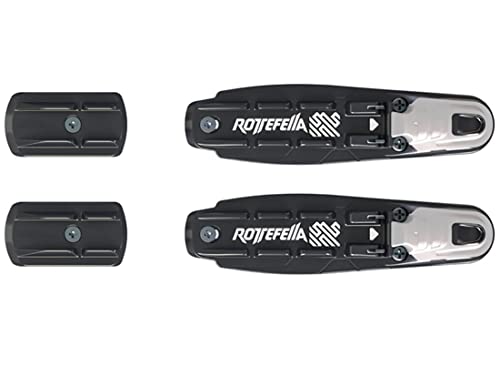


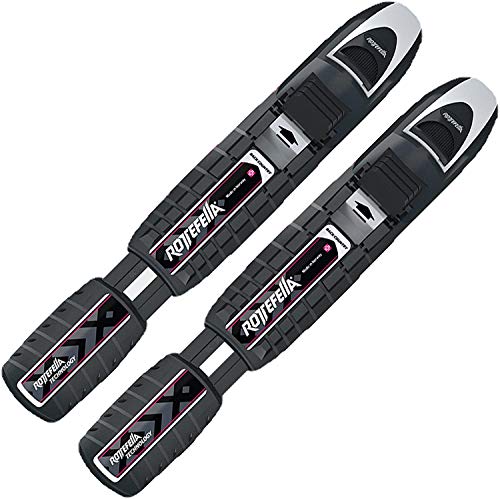
Rottefella NNN-BC Auto bindings
$87.01 at Amazon, as of Nov 22, 2026 12:07 UTC
Check price on Amazon

Whitewoods Norse 75mm 3-pin bindings
$25.89 at Amazon, as of Nov 22, 2026 12:07 UTC
Check price on Amazon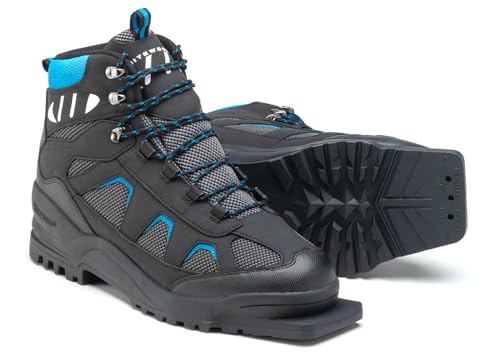
Whitewoods 301 75mm 3-pin boot
$71.90 at Amazon, as of Nov 22, 2026 12:07 UTC
Check price on AmazonNNN or SNS: what the two systems are
Both are boot-and-binding systems for cross-country skiing. That means the boot and the binding are designed as a pair: a bar or fitting on the boot sole locks into a latch in the binding. Change one without checking the other and the boot may not clip in at all.
On the Wikipedia ski-binding page we opened, NNN (New Nordic Norm, from Rottefella) is described as a bar in the toe of the boot that hooks into a latch in the binding, offered in classical, skating, touring and racing versions. SNS (Salomon Nordic System) is described as the first integrated boot-and-binding system for cross-country skis, with later variants such as Profil, Pilot and SNS-BC for backcountry.
The same page says Fischer dropped SNS in 2007 and moved fully to the NIS format of NNN, and that Salomon introduced an NNN-compatible system called Prolink in 2016. In short, the market has leaned toward NNN. We could not open the maker pages that explain cross-fit between NNN and SNS, so we do not state it. Treat NNN and SNS as separate systems unless the maker says a specific boot fits both. Among our candidates, only the Fischer RC3 Combi title says both.
Boots and bindings must match: how to check
This is the one rule that decides everything else. Before you click buy on either half, write down the system on the other half you own or plan to buy.
- Find the name. Look for NNN, NNN-BC, SNS, or 75mm 3-pin on the box, the sole or the binding.
- Check the listing text, not just the picture. The Rossignol boots in our candidate list did not name a system in the listing text we read, so we cannot confirm one.
- Watch the backcountry versions. The Rottefella NNN-BC listing says it does not accept NNN touring soles, and the Whitewoods 306 boot says it works with NNN-BC bindings only.
- Watch the old 75mm 3-pin system. The Whitewoods 301 boot and Norse binding are a separate pair from NNN.
- Ask a shop if the boot and binding come from different brands. A shop can clip the boot in on the counter.
A package deal avoids the question: the Whitewoods ski package in our candidate file lists NNN skis, bindings, boots and poles together. We did not rank packages here because a set is not like-for-like with a single boot.
Compatibility is also a matter of the ski. Some bindings fit directly, others need a plate, and some skis come with the plate fitted. Check the whole chain, boot to binding to plate to ski, before you buy any one link.
Which system for which kind of skiing
The skiing you plan to do narrows the choice more than the brand does.
- Groomed trail, classic or relaxed touring. A touring boot with an NNN touring binding is the simplest path. Most of our boot picks are in this group.
- Classic and skating on groomed trails. Look for a combi boot, such as the Fischer RC3 Combi, whose title names both techniques. Skating also needs skate-specific skis, so a combi boot is not the whole answer.
- Off-trail and backcountry. NNN-BC bindings are described on Wikipedia as a heavier-duty, wider version with a stronger connection bar, suited to metal-edged skis and stiffer boots. The Rottefella listing says wider means more stability for off-trail skiing.
- Already own SNS. Keep to boots whose listing says SNS, or ask the maker. We did not find an SNS-only boot among the candidates.
If you are not sure what you will do, the plain touring route is the usual starting point. It is a research-based view, not a ruling: ask a Nordic shop near your trails.
How to choose, step by step
- Pick the system first. NNN, NNN-BC, SNS or 75mm 3-pin. Everything else depends on this.
- Pick the technique. Touring or classic needs a flexible boot. Skating or combi boots, such as the Fischer RC3 Combi, are listed for both classic and skating.
- Check your skis. Some bindings go straight onto the ski, some need a plate. The Rottefella listing for the Touring Combi NIS says an NIS plate is required. The Rottefella page we opened lists IFP versions for Fischer and Rossignol skis and NIS versions for Madshus, Peltonen, Kastle and Skitrab skis.
- Pick the fit. Men’s, women’s and unisex lasts differ; Rossignol’s women’s boots mention reduced instep volume and a narrower midfoot and heel.
- Pick warmth. Several listings mention Thinsulate or fleece. Warm socks matter as much as lining.
- Check the sizing note. Whitewoods listings say their boots may run small.
Keep the order: system, technique, skis, fit, warmth.
Sizing and measuring your foot
Cross-country boots are sized differently from shoes, and the listings say so. The Whitewoods Erik listing says there is no exact conversion from European to US sizes, and that its boots run small in length and average to wide in width. The 302 listing says to consider taking a size up.
How to measure at home:
- Stand on a sheet of paper wearing the socks you will ski in.
- Mark the tip of your longest toe and the back of your heel.
- Measure the distance in millimetres, then compare with the maker’s size chart in the listing images.
- Measure the widest part of your foot too, since Whitewoods and Rossignol describe width or volume differently.
- Try boots on with ski socks if you can (general fitting advice, not from a source we opened).
The Rottefella page we opened lists boot sizes 36 to 52 for most adult bindings and smaller ranges for junior models. For children and juniors, use the maker’s size chart for that boot, and do not buy a size to grow into. We did not read a children’s-specific rule, so ask a shop.
Common mistakes when buying boots and bindings
- Buying on the brand alone. The system name decides compatibility, not the logo.
- Mixing touring and backcountry. The BC listing says it does not accept touring soles.
- Ordering your shoe size. Whitewoods listings warn the boots may run small.
- Forgetting the plate. The NIS binding listing says a pre-mounted NIS plate is required, and IFP bindings need an IFP plate on the ski.
- Assuming a combi boot is a full kit. It covers the foot only. Classic and skate skis and bindings still differ.
- Trusting the listing picture. The Rossignol listings we read do not state the binding system in the text.
- Ignoring the model year. The Alpina listing says 2022 and the Whitewoods 301 listing says 2024, so check which version you are buying.
- Skipping the warm-up fit. Try boots with ski socks, not thin socks.
When in doubt, bring the boot to the binding, or the other way round, and click them together before you leave the shop.
By level and ambition, without the price tag
Level changes the sensible choice, not the budget as such.
- First-timers and families. A plain NNN touring boot with a basic NNN touring binding. The Rottefella Touring Auto Basic listing says it works with all Whitewoods NNN boots and almost every other NNN boot, and comes with the hardware to mount it. A package set can also remove the compatibility question.
- Regular recreational skiers. Look for a boot with a documented fit feature, such as the Rossignol heat-moldable liner or the Whitewoods Erik width note, and a binding on an IFP or NIS plate if your skis already carry one.
- Keen classic or skate skiers. A combi boot like the Fischer RC3 (listed for classic and skating) pairs best with a binding sold for the technique you use.
- Off-trail skiers. NNN-BC boots with NNN-BC bindings, and skis that suit that terrain.
More expensive does not mean more suitable. Choose the boot for the skiing you will really do, not for the highest-specification name.
Care, drying, storage and when to replace
The listings we read give little care advice, so treat these as general habits and check the maker for details.
- Dry boots after every outing. The Whitewoods listings mention removable insoles; take them out so both parts dry. Ask the maker how to dry a heat-moldable or insulated liner; we did not read a drying rule.
- Brush snow off the sole and binding. Clear any snow or ice from the sole and binding before clipping in (general habit, not from a source we opened). The Fischer XC Pro listing says its sole profile is non-slip and self-cleaning; others do not claim this.
- Check the sole bar and binding latch for cracks, bends or wear each season.
- Store boots clean and dry, laces loose.
- Keep the spare hardware that comes with bindings; the Rottefella and Whitewoods listings say mounting hardware is included.
Replace a boot when the sole bar is damaged, the lining no longer holds heat, or the upper cracks. Replace a binding when the latch no longer clicks audibly or the boot loosens in it. We did not find a maker lifespan figure, so we give none.
Myths and facts
- Myth: any cross-country boot fits any binding. Fact: systems differ, and a NNN-BC binding listing says it does not accept touring soles.
- Myth: SNS is the same as NNN with a different name. Fact: the Wikipedia page we opened describes them as separate designs; whether they cross-fit is not stated there.
- Myth: Fischer still makes SNS. Fact: the page says Fischer dropped SNS in 2007. Some Fischer listings still name SNS in their title, so check.
- Myth: a bigger boot lasts longer for a child. Fact: use the maker’s size chart for the child’s current size.
- Myth: warmer lining means no need for warm socks. Fact: lining helps, but the listings do not claim a temperature range.
- Myth: you need the same brand for boot and binding. Fact: the Whitewoods listing says its boots work with any standard NNN binding, and the Rottefella listing says its binding works with almost every other make of NNN boot.
One-minute checklist
- System written down: NNN, NNN-BC, SNS, 75mm 3-pin.
- Boot and binding both say that name in the listing text.
- Touring, classic, skate or off-trail decided.
- Skis checked for a plate (IFP or NIS) or a bare mount.
- Foot measured in millimetres with ski socks.
- Maker size chart read, including any note about running small.
- Return policy checked, since a wrong size is a return.
- Fit checked with a ski shop if boot and binding are different brands.
If any line is a guess, stop and check it with the maker or a shop. A ten-minute check is cheaper than a return, and it keeps the day on the snow instead of in the garage.
Glossary
- NNN: New Nordic Norm, Rottefella’s system with a bar in the boot toe and a latch in the binding.
- NNN-BC: Backcountry version, wider and sturdier, not interchangeable with touring soles per the listings.
- SNS: Salomon Nordic System, a separate older system.
- Prolink: Salomon’s NNN-compatible system from 2016, per the Wikipedia page.
- IFP / Turnamic: An integrated plate on the ski that allows tool-free binding adjustment.
- NIS: A plate system on the ski that NNN bindings slide onto.
- 75mm 3-pin: Older system with three pins in the boot toe.
- Combi boot: A boot sold for both classic and skating.
- Thinsulate: A brand of insulation named in several listings.
- Last: The foot-shaped form a boot is built on; women’s lasts are described as narrower in several listings.
- Instep volume: How much room there is above the top of the foot.
If a listing uses a term that is not on this list, check the maker’s page rather than guessing, as several listings use brand names for features.
What to buy first and what can wait
Start with the pair: a boot and binding in the same system. Then add the rest as you ski more.
- First: boots that fit, and a matching binding. If your skis carry a plate or come bound, this may already be done.
- Second: poles and ski socks. Poles are separate from the system.
- Later: a wax or grip solution, a second pair of insoles, and a boot bag.
- Only if needed: a heat-moldable fit service if standard liners hurt.
Skipping the later items does not stop you skiing; skipping the match between boot and binding does.
See our guide to cross-country skis for beginners for the ski half of the kit, and our cross-country skiing gear page for the rest.
How we chose these picks
This is a research-based comparison, not a hands-on test. We selected seven touring and combi boots from the Amazon products found by search, using only the listing title, brand and feature text as product facts. Binding and accessory ASINs are listed separately because boots and bindings are not like-for-like. We opened the Rottefella (Norwegian cross-country) page and the Wikipedia ski-binding page for system background. Maker pages for Salomon and the Rottefella NNN pages, and a ski-shop guide, could not be opened (403 or 404), so we do not state anything that depends on them. We give no prices, ratings, sales rankings or customer opinions. General fitting and care habits (such as trying boots on with ski socks) are common practice, not facts from sources we opened. Selection is based on how clearly a listing names its binding system, fit information, and intended use, not on commission.
Sources
- Rottefella (Norwegian cross-country page): IFP/NIS plates, boot size ranges (checked 2026-11-13)
- Wikipedia: Ski binding (Nordic Norm, SNS, NNN, Turnamic, Prolink, BC variants) (checked 2026-11-13)
- Amazon product listing (ASIN B08GJ99JP9) – Fischer XC Pro (women's) (checked 2026-11-13)
- Amazon product listing (ASIN B07YN815NS) – Whitewoods 302 NNN Touring boot (checked 2026-11-13)
- Amazon product listing (ASIN B011VJI0KK) – Whitewoods Erik NNN boot (checked 2026-11-13)
- Amazon product listing (ASIN B08FT8CKP6) – Rossignol XC-2 (men's) (checked 2026-11-13)
- Amazon product listing (ASIN B08FT6HQNX) – Rossignol XC-1 (women's) (checked 2026-11-13)
- Amazon product listing (ASIN B0B3BH6RY7) – Fischer XC Power (women's) (checked 2026-11-13)
- Amazon product listing (ASIN B096PCK8R5) – Alpina T 10 Eve (women's) (checked 2026-11-13)
- Amazon product listing (ASIN B0DJ3DZYG9) – Fischer RC3 Combi (checked 2026-11-13)
- Amazon product listing (ASIN B08ZJSWBRN) – Rottefella Whitewoods NNN Auto Touring Basic bindings (checked 2026-11-13)
- Amazon product listing (ASIN B00673P2CU) – Rottefella Touring Combi NIS bindings (checked 2026-11-13)
- Amazon product listing (ASIN B08J5J8D7M) – Fischer Control Step-in IFP bindings (checked 2026-11-13)
- Amazon product listing (ASIN B01JAKDRXC) – Rottefella NNN-BC Auto bindings (checked 2026-11-13)
- Amazon product listing (ASIN B01HOQ66ZA) – Whitewoods 306 NNN-BC backcountry boot (checked 2026-11-13)
- Amazon product listing (ASIN B0DHLR8RQ6) – Whitewoods Norse 75mm 3-pin bindings (checked 2026-11-13)
- Amazon product listing (ASIN B0DHYLXTZC) – Whitewoods 301 75mm 3-pin boot (checked 2026-11-13)
Frequently asked questions
Can I use SNS boots with NNN bindings?
The sources we opened do not say that they cross-fit, and they describe NNN and SNS as separate designs. Unless the maker says a specific boot fits both (the Fischer RC3 Combi title does name both), assume they do not.
Can I use NNN touring boots in NNN-BC bindings?
The Rottefella NNN-BC listing says its bindings do not accept NNN touring soles, and the Whitewoods 306 listing says its boots work with NNN-BC bindings only. Match the BC logo on both.
What size cross-country boot should I buy?
Use the maker's size chart and a foot measurement in millimetres, not your shoe size. Whitewoods listings say their boots may run small, and the Erik listing says there is no exact European to US conversion.
How long do cross-country ski boots last?
We did not find a maker figure, so we give none. Check the sole bar, lining and upper each season, and replace the boot if the sole bar is damaged or it no longer holds heat.
Do I need different boots for classic and skate skiing?
Many touring boots are described for classic and touring with soft flex, while Fischer lists the RC3 Combi for classic and skating. Skating also needs skate-specific skis and bindings, so check the whole set.
Which is better, NNN or SNS?
Neither is better in itself; the fit between boot and binding matters. The Wikipedia page we opened notes the market has moved toward NNN (Fischer dropped SNS in 2007, Salomon introduced the NNN-compatible Prolink in 2016).
Can I put NNN bindings on any skis?
Not always. The Rottefella NIS listing says a pre-mounted NIS plate is required, and the Rottefella page lists IFP and NIS plates for specific ski brands. The Whitewoods Touring Auto Basic listing says it needs no additional mounting plate.
Can children use adult cross-country boots?
We did not read a children's rule. Use the maker's size chart for the child's foot, and do not buy a boot to grow into. The Rottefella page lists junior binding ranges, so check them when buying for a child.
Are women's boots different?
The Rossignol listings describe a women's FW Fit with reduced instep volume and a narrower midfoot and heel, and the Fischer XC Power listing mentions a women's-specific last. Compare the fit notes, then try them on.
Can I mix brands, such as Whitewoods boots with Rottefella bindings?
The Whitewoods Erik and 302 listings say the boots work with any standard NNN binding, and the Rottefella Basic listing says it works with almost every other make of NNN boot. Confirm the system name on both.