This article contains affiliate links: if you buy through them we may earn a commission, at no extra cost to you. Learn more.
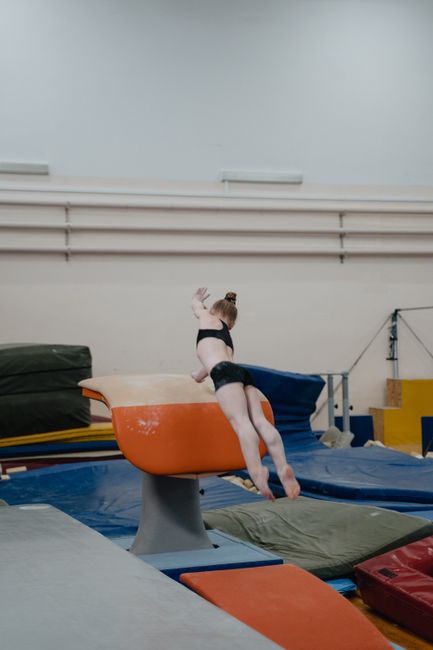
A four-year-old in a too-big leotard doing her first forward roll down a wedge mat. A gym full of chalk dust and nerves at a Saturday Level 4 meet. A sold-out college arena counting down the last beam routine of the night, and an Olympic all-around final watched around the world. Gymnastics runs from preschool tumbling to the Olympic Games, and it asks more of a young body than almost any other sport: strength, flexibility, courage and thousands of landings a week.
Gymnastics, page by page
- Rules: how the game works at every level
- Leagues & associations: pro, college, high school and youth
- Youth & high school: ages, safety and recruiting, for players and parents
- Injuries & sports health: prevention, concussion, when to see a pro
- Training & conditioning: before: off-season to in-season
- Game day: during: fueling, hydration, heat
- Recovery: after: games, tournaments, sleep
- Nutrition & supplements: what to eat, tested supplements
- Best wearables: trackers and watches for the sport
- Gear: the complete equipment list
Buying guide · Our Gymnastics buying guide compares the gear we'd pick, with prices and sizing:
This page is gymnastics for athletes and the people who look after them: the disciplines and how scoring works, what the sport looks like from rec classes to the NCAA and the Olympics, and above all how to stay healthy doing it. Sports health is the heart of it: the gymnastics injuries that show up most, why wrists, backs and ankles take the load, concussion, training hours for kids, athlete safety, and when to see a professional. Then training, recovery and the gear you really need.
Gymnastics at a glance
| Disciplines | Women’s and men’s artistic, rhythmic, trampoline and tumbling, acrobatic (acro), aerobic, parkour and Gymnastics for All. Artistic, rhythmic and trampoline are on the Olympic program. |
|---|---|
| Apparatus | Women’s artistic: vault, uneven bars, balance beam, floor. Men’s artistic: floor, pommel horse, still rings, vault, parallel bars, horizontal bar. Rhythmic: hoop, ball, clubs, ribbon (and rope at some levels). |
| Scoring | Elite: Difficulty (D) score with no upper limit plus an Execution (E) score out of 10.00, minus penalties. Most US youth levels and NCAA women: judged on a 10.0 scale. |
| Governing bodies | World Gymnastics (the FIG, founded 1881) worldwide; USA Gymnastics in the US; AAU, NCAA and state high school associations run their own programs. |
| Main physical demands | Upper-body strength (the arms carry the body on bars, rings, vault and tumbling), flexibility, power for take-offs, and control on hard landings. |
| Most common injuries | Ankle sprains and Achilles problems, wrist pain (including “gymnast’s wrist” in growing athletes), low back pain and stress fractures, knee injuries, concussions. |
How gymnastics works
Each discipline has its own Code of Points from World Gymnastics (the International Gymnastics Federation, or FIG, which renamed itself World Gymnastics in December 2025). The current codes run from 2025 to 2028.
- Artistic gymnastics is what most people picture. Women compete on four apparatus and men on six. The balance beam is 5 meters long, 10 centimeters wide and 125 centimeters off the floor; the floor area is 12 by 12 meters. A women’s floor or beam routine can last up to 90 seconds, a men’s floor routine up to 70.
- Rhythmic gymnastics combines dance, flexibility and handling of a hoop, ball, clubs or ribbon to music. Individual routines last 1:15 to 1:30; group routines have five gymnasts.
- Trampoline and tumbling covers individual and synchronized trampoline (10-skill routines), double mini-trampoline (two skills per pass) and power tumbling (eight skills down a sprung track).
- Acrobatic gymnastics is done in pairs and groups (women’s pairs, men’s pairs, mixed pairs, women’s groups of three and men’s groups of four), with balance, dynamic and combined routines full of lifts, throws and catches.
Scoring at the top level has two parts. The D score adds up the value of the hardest skills (in women’s artistic, the eight highest-valued elements including the dismount), plus points for composition requirements and connections. It has no upper limit. The E score starts at 10.00, and judges take off tenths for bent knees, steps on landings, wobbles and artistry; a fall costs a full point. The final score is D plus E, minus any penalties such as stepping out of bounds. Our gymnastics rules page explains it in detail, including the 10.0 scale used in US youth levels and college.
Gymnastics at every level
Kids and youth
Most children start in recreational classes at a local gym, YMCA or parks program. The American Academy of Pediatrics (AAP) lists tumbling in beginner gymnastics among good activities for preschoolers, and says most children have the basic motor skills for simple organized sports, gymnastics included, by about age 6. Kids who love it can move to a competitive team. USA Gymnastics, which has more than 3,300 member clubs, runs two main women’s paths: the Development Program, Levels 1 to 10 (minimum ages start at 4 for Level 1 and 6 for Level 3), and Xcel, a more flexible alternative with six divisions from Bronze to Sapphire. Men’s, rhythmic, trampoline and tumbling and acro have their own level systems, and the AAU runs a separate youth program. Our youth gymnastics guide covers ages, costs, hours and choosing a safe gym.
High school
High school gymnastics exists in some states, not all. In the 2023–24 NFHS participation survey, 26 states reported girls’ gymnastics, with 15,092 girls at 1,689 schools, and only a handful reported boys’ programs. Many club gymnasts compete for their club instead of their school, so ask your state association and your gym what’s available.
College
NCAA women’s gymnastics is one of the most watched college sports in the spring. Teams compete on vault, bars, beam and floor; six gymnasts go up on each event, the top five scores count, and a perfect team score is 200. Thirty-six teams make the NCAA tournament; in 2026 Oklahoma won the title in Fort Worth, Texas. Men’s NCAA gymnastics is much smaller, with 12 Division I and 3 Division III programs listed by USA Gymnastics; Stanford won the 2026 men’s title in Champaign, Illinois. Club programs give college students more chances to compete.
Elite and Olympic
Elite gymnasts compete under the World Gymnastics Code at national championships, World Championships and the Olympic Games. Men’s artistic gymnastics was on the program of the first modern Olympics in 1896; women’s artistic joined in 1928, rhythmic in 1984 and trampoline in 2000. Senior international competition starts at 16 for women’s artistic and 18 for men’s, counted by the calendar year of the competition. See gymnastics leagues and associations for the full map of who runs what.
Adult and recreational
Gymnastics isn’t only for kids. Many gyms run adult classes, open gyms and parkour sessions, and some clubs have adult competitive teams. If you’re coming back after years away, rebuild wrist, shoulder and core strength before skills, and take landings and tumbling slowly.
Sports health for gymnasts
Gymnastics is repetitive and high-impact, and many athletes train hard while they’re still growing. That makes sports health central. This section is general information, not medical advice; our gymnastics injuries page goes deeper. If you’re hurt, see a professional.
The most common gymnastics injuries
- Ankle, foot and Achilles: in NCAA women’s gymnastics from 2009 to 2014, the ankle was the most injured body part (17.9% of injuries), followed by the lower leg and Achilles, trunk and foot. Ligament sprains were the most common diagnosis, and floor exercise was where most apparatus injuries happened.
- Wrists: gymnasts walk, vault and tumble on their hands. The AAP notes that repeated loading of a young gymnast’s wrist can injure the growth plate at the end of the radius, known as “gymnast’s wrist.” Wrist pain that keeps coming back deserves a check, not just a brace.
- Low back: the American Academy of Orthopaedic Surgeons (AAOS) lists gymnastics among the sports whose repeated back-bending can cause spondylolysis, a stress fracture in the lower spine. Back pain in a young gymnast that lasts or gets worse with arching needs a doctor.
- Concussions: in the NCAA Injury Surveillance Program from 2014 to 2019, concussion was the single most often reported specific injury in women’s gymnastics (8.4% of injuries).
- Competition vs. practice: NCAA gymnasts get hurt at a higher rate in meets than in practice, and an older NCAA study found about 70% of competition injuries came from floor landings or dismounts.
Training hours, rest and overuse
The AAP names gymnastics, rhythmic gymnastics, figure skating and diving as sports that may need earlier specialization, because peak performance comes before full physical maturity. It also notes that girls in these sports have a higher risk of overuse injuries and of the female athlete triad. Its 2024 clinical report on overuse, overtraining and burnout recommends at least 1 to 2 days off a week from competition and sport-specific training, 2 to 3 months away from any one sport each year (which can be split into one-month blocks), and raising training load gradually. A study the AAP cites found young athletes who trained more hours a week than their age in years had a higher risk of overuse injury. Gymnastics schedules often run longer than that, so it’s worth watching.
Concussion: recognize and remove
A missed release on bars or a short landing can mean a hit to the head. The CDC’s HEADS UP program asks coaches and parents to watch for an athlete who looks dazed, confused or slow to react, and to listen for headache, dizziness, balance problems, sensitivity to light or noise, or trouble concentrating. Remove the gymnast from training right away, keep them out for the rest of the day and until a healthcare provider clears them, and bring them back in steps. Call 911 for danger signs such as seizures, passing out, a headache that keeps getting worse or one pupil larger than the other. If a fall involves neck pain, numbness or tingling, don’t move the athlete; call for help.
Fueling, growth and energy
Gymnasts need enough food for training and for growing. The AAP’s overuse report notes that not eating enough for the training load (relative energy deficiency in sport, or RED-S) may make bone stress injuries more likely, and that signs such as menstrual cycle changes can help spot it. Gymnasts and their parents should never feel pushed to diet for the sport. A sports medicine doctor or registered dietitian can help; see our gymnastics nutrition page.
Athlete safety and SafeSport
Since 2017, the U.S. Center for SafeSport has been the independent, federally authorized body for preventing and responding to abuse in Olympic sports, including gymnastics. Its Minor Athlete Abuse Prevention Policies require one-on-one contact between adults and minor athletes to be observable and interruptible, require a parent or another adult to be copied on electronic messages to minors, and let parents watch individual training sessions. USA Gymnastics requires background checks and SafeSport training for its professional members, such as coaches. Concerns can be reported to the Center at uscenterforsafesport.org; if a child is in immediate danger, call 911.
When to see a doctor, physical therapist or athletic trainer
Don’t train through pain that doesn’t settle, wrist pain with weight-bearing, back pain with arching, a “pop” in the heel or ankle, swelling, a joint that gives way, or any concussion signs. A sports medicine physician manages most sports injuries without surgery, a physical therapist guides rehab and the return to skills, and athletic trainers, licensed or regulated health care professionals in all 50 states, are often the first stop at colleges and some clubs.
Training and conditioning for gymnastics
Gymnastics strength is mostly bodyweight strength: handstands, rope climbs, leg lifts, presses and core holds, plus flexibility work for shoulders, hips and back. New skills are built in progressions, from floor drills to mats, low beams and spotting, before the real apparatus. The NCAA studies above found many injuries come from landings, so landing technique, ankle and calf strength and good mats matter. In the off-season or between meets, keep the AAP’s rest days. Our gymnastics training page has the details, and many gymnasts add resistance bands for shoulder and wrist prehab.
Meet day: the sports-nutrition position statement from the American College of Sports Medicine and two dietitians’ groups recommends a familiar pre-exercise meal, mostly carbohydrate, moderate in protein and low in fat and fiber, eaten about 1–4 hours before. Meets can last hours, so pack snacks and water. More on our gymnastics meet day page.
Recovery for gymnasts
Sleep comes first. The CDC, citing the American Academy of Sleep Medicine, recommends 9–12 hours a night for children 6–12, 8–10 hours for teens and 7 or more for adults, which can be tough with evening practices and school. Then real food after training, rest days, and time away from the gym. Simple tools help many gymnasts feel better: a foam roller for calves and quads, a small massage gun for older athletes, and soft recovery shoes for feet that spend hours barefoot on a sprung floor. They’re about comfort, not treatment. See our gymnastics recovery page.
Gear for gymnastics
- Leotards and singlets: women compete in leotards or unitards; men wear singlets, with shorts on floor and vault and long pants on the other events. Jewelry is out, apart from small stud earrings for women under the Code.
- Grips and wrist supports: grips (handguards) protect the hands on bars and rings once a coach says the gymnast is ready. Wrist supports are popular for tumbling and vault; the Code allows handguards, bandages and wrist wraps as long as they’re secure.
- Chalk: magnesium carbonate keeps hands dry on bars and is allowed for small markings on the beam.
- Home equipment: a folding mat and a floor-height beam are great for drills and flexibility. Save new skills, flips and anything inverted for the gym and a coach. The AAP strongly discourages home trampolines.
Three simple picks: Tiger Paw wrist supports, sold in pairs and sized by body weight; the BalanceFrom 4-panel folding mat, 10 by 4 feet and 2 inches thick, for home stretching and drills; and the OOFOS OOahh Slide from our recovery shoes guide for after practice. Our gymnastics gear guide covers grips, leotards, beams and chalk in detail.
Tiger Paw Gymnastics Wrist Supports
- Sold in pairs
- Adjustable, sized by body weight
- Made in USA
BalanceFrom 4-Panel Folding Gymnastics Mat
- 10 x 4 ft, 2 in thick
- Folds to 4 x 4 ft
- About $103
OOFOS OOahh Slide
- OOfoam slide
- APMA Seal of Acceptance
- Machine washable
For more after training, browse Recovery & Regeneration and Training & Performance.
Gymnastics FAQs
What age should kids start gymnastics?
Many gyms offer play-based classes for preschoolers, and the AAP lists beginner tumbling as a good activity at that age. Competitive USA Gymnastics levels start later: Level 1 at 4, Xcel Bronze at 5 and Level 3 at 6. There’s no rush; fun and basic skills come first.
How is gymnastics scored?
At the elite level, a Difficulty score with no upper limit is added to an Execution score out of 10.00, minus penalties. US youth levels and NCAA women’s gymnastics use a 10.0 scale, where a perfect 10 is possible.
What are the most common gymnastics injuries?
Ankle sprains and other foot and lower-leg injuries, wrist pain, low back pain including stress fractures, knee injuries and concussions. Many come from landings and dismounts. Pain that lasts is a reason to see a sports medicine doctor, PT or athletic trainer.
How many hours a week should a young gymnast train?
There’s no single safe number. The AAP recommends 1–2 days off a week and 2–3 months off a year from one sport, and notes that training more hours a week than your age in years has been linked to more overuse injuries. Talk with your coach and pediatrician about the plan.
What is the difference between the Development Program and Xcel?
Both are USA Gymnastics women’s programs. The Development Program has set requirements, Levels 1–10, and leads toward college and elite. Xcel is an alternative with more freedom in skill choice, six divisions from Bronze to Sapphire, and often fewer hours.
How do I know if a gym is safe?
Look for a USA Gymnastics member club (or another recognized program) with background-checked, SafeSport-trained coaches, open viewing for parents, good mats and spotting, and a clear concussion and injury plan. Trust your instincts, and ask questions.
Gymnastics builds strong, brave athletes, and the ones who last are the ones who rest, eat enough, land well and speak up about pain. Keep exploring: our recovery tools guide, Nutrition & Supplements, soccer for comparison, and every other sport on our sports hub.