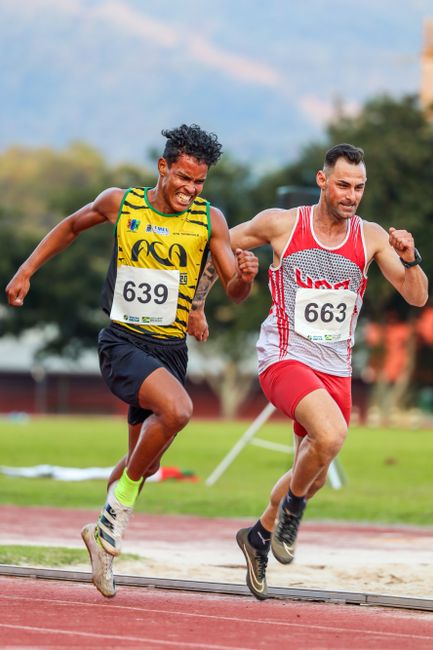
This article contains affiliate links: if you buy through them we may earn a commission, at no extra cost to you. Learn more.
A starter’s pistol on a spring afternoon and eight sprinters exploding out of the blocks. A shot putter spinning in the circle while her teammates yell from the fence. A pole vaulter hanging upside down for a moment, then sailing over the bar. The anchor leg of the 4×400, a whole stadium on its feet. Track and field is really a dozen sports in one: sprints, hurdles, middle distance, jumps, throws and the multi-events that combine them. It is also one of the biggest school sports in America. In 2024–25 it was the No. 1 high school sport for girls (513,808 athletes) and No. 2 for boys (644,235), behind only football, according to the National Federation of State High School Associations (NFHS).
Track & Field, page by page
- Rules: how the game works at every level
- Leagues & associations: pro, college, high school and youth
- Youth & high school: ages, safety and recruiting, for players and parents
- Injuries & sports health: prevention, concussion, when to see a pro
- Training & conditioning: before: off-season to in-season
- Game day: during: fueling, hydration, heat
- Recovery: after: games, tournaments, sleep
- Nutrition & supplements: what to eat, tested supplements
- Best wearables: trackers and watches for the sport
- Gear: the complete equipment list
Buying guide · Our Track and Field buying guide compares the gear we'd pick, with prices and sizing:
This page is track and field for athletes, parents and coaches at every level, from a nine-year-old’s first meet to the Olympic final. Sports health runs through all of it, because each event group gets hurt in its own way and track and field injuries are often preventable. Road racing, cross country and trail running have their own home on our running hub; here we cover the oval, the runways, the pits and the circles.
Track and field at a glance
| Event groups | Sprints (100, 200, 400 m), hurdles (100/110 m and 400 m; 300 m in US high schools), middle distance (800, 1500 m and the mile), long distance and steeplechase, relays, jumps (high jump, pole vault, long jump, triple jump), throws (shot put, discus, hammer, javelin) and multi-events (decathlon, heptathlon, pentathlon). |
|---|---|
| The track | A 400-meter oval outdoors, a 200-meter oval indoors. In races up to 400 m each athlete has their own lane, 1.22 m wide. |
| Governing bodies | World Athletics worldwide (214 member federations); USA Track & Field (USATF) in the US; NFHS rules for high school; NCAA, NAIA and NJCAA for college; AAU and USATF for youth club meets. |
| Biggest events | The Olympics and Paralympics (next: Los Angeles 2028), the World Athletics Championships (Beijing, September 11–19, 2027), the Wanda Diamond League, and the NCAA championships at Hayward Field. |
| Main physical demands | Speed and power for sprints, jumps and throws; speed endurance for the 400 and 800; aerobic endurance for 1500 m and up; plus a lot of technique. |
| Most common injuries | Hamstring and other thigh strains (sprints, hurdles, jumps), shin and lower-leg overuse injuries (distance), foot and ankle problems (jumps), and back, shoulder and elbow strain (throws). |
How track and field works
A meet is a program of events that run at the same time: races on the track, field events on the infield and aprons. In running events, fastest time wins, with heats and finals when the field is big. Sprinters start from blocks, and under World Athletics rules a sprinter who leaves the blocks before the gun is disqualified on the first false start (except in the multi-events). High school rules under the NFHS also disqualify on a first false start; most youth meets give younger athletes one warning.
In the horizontal jumps and throws, you get a set number of attempts and your best fair mark counts. Under World Athletics rules, when there are more than eight athletes, everyone gets three trials and the best eight get three more. In the high jump and pole vault the bar goes up, and three failures in a row end your day. Throws must land inside a 34.92° sector, and the thrower can’t leave the circle until the implement lands. Relays pass a baton inside a marked takeover zone. All of this, plus wind readings, hurdle heights and implement weights by age, is on our track and field rules page.
The multi-events test everything. The men’s decathlon is ten events over two days: 100 m, long jump, shot put, high jump and 400 m, then 110 m hurdles, discus, pole vault, javelin and 1500 m. The heptathlon is seven: 100 m hurdles, high jump, shot put and 200 m, then long jump, javelin and 800 m. Points from scoring tables add up across all of them.
Track and field at every level
Kids and youth
Kids can start young in club track. AAU and USATF Junior Olympic meets have divisions from 8 and under up to 17–18, set by birth year. The little ones run dashes, do the long jump and throw a light shot (4 lb for 8 and under in the AAU) or a soft foam “turbo” javelin. Hurdles, the discus and the triple jump come in a few years later. Our youth track and field page has the events and implement weights by age, plus parents’ questions.
High school
More than 1.15 million high school students did outdoor track in 2024–25 (NFHS), usually in the spring, often after a winter indoor season. State associations run their own meets and championships under the NFHS rules. High school girls throw a 4 kg shot and a 1 kg discus, boys a 12 lb shot and a 1.6 kg discus. Girls run 100 m hurdles at 33 inches, and boys run 110 m hurdles at 39 inches. The javelin is contested in 21 state associations.
College
The NCAA runs indoor and outdoor championships in Divisions I, II and III. For 2025–26 the NCAA projected 883 men’s and 973 women’s outdoor track teams across the three divisions. As of the 2026 season, the Division I outdoor championships were held June 10–13 at Hayward Field in Eugene, Oregon. The NAIA (Asheville, North Carolina, in 2026) and the NJCAA have their own national meets. More on our track and field organizations page.
Pro, Olympic and Paralympic
Elite track athletes are sponsored professionals who race a circuit of meets. The top tier is the Wanda Diamond League: 14 meetings in 2026, from Doha in May to Zurich in August, then a two-day final in Brussels on September 4–5. In September 2026 World Athletics added the Ultimate Championship in Budapest, paying $150,000 to each individual winner. The World Championships come next in Beijing in 2027, then the Olympics in Los Angeles, July 14–30, 2028, with track and field in the LA Memorial Coliseum. The Paralympics follow August 15–27, 2028. Para athletes compete in classes marked T (track) and F (field), with a number for the type and level of impairment.
Adult and masters
Track doesn’t end after college. Under World Athletics rules, masters athletics starts at 35, with its own competitions run alongside World Masters Athletics. USATF clubs, all-comer meets on summer evenings and masters championships are where adults sprint, jump and throw again. Your hamstrings will remind you that you’re not 18, so ease back in (see below).
Sports health for track and field athletes
This section is general information, not medical advice. If you’re hurt, see a sports medicine doctor, physical therapist or athletic trainer.
The most common track and field injuries
The NFHS tracks high school injuries through the High School RIO study. In 2021–22 the hip, thigh and upper leg were hurt most often (43% of boys’ injuries, 30% of girls’), followed by the lower leg (20% and 25%). Strains were the most common competition injury. In meets, most injuries were sudden, non-contact ones like a pulled muscle. In practice, most were overuse injuries: 47% for boys and 71% for girls.
College data tell the same story by event. In an NCAA study of five seasons, the injury rate was 3.99 per 1,000 athlete-exposures, 18% higher for women than men and 71% higher in competition than in practice. Each event group had its own pattern:
- Sprints and hurdles: the most hip and thigh injuries, above all hamstring strains.
- Middle and long distance: the most lower-leg injuries and the most overuse injuries (shin splints, Achilles pain, bone stress). Our running hub covers these in depth.
- Throws: the largest share of back and upper-body injuries (shoulder, elbow, wrist).
- Jumps: heavy, repeated takeoffs load the knees, ankles and feet. An ankle brace or knee sleeve is something to talk through with your athletic trainer.
For sprinters, one exercise stands out. A 2019 review of 15 studies with 8,459 athletes found that injury prevention programs that include the Nordic hamstring exercise cut hamstring injuries by up to 51%. Our track and field injuries page goes event by event.
Pole vault and throwing safety
Two events carry real catastrophic risk, and both have safety rules for good reason. In the pole vault, rule changes in 2003 required bigger landing pads, and the yearly death rate from vaulting fell from 1.0 to 0.22. But a study of 2003–2011 still counted 19 catastrophic injuries, most of them from landing in or around the vault box. Vaulters should learn under a qualified coach, on a setup with the landing pads and padding the rules require, and never vault alone. In the throws, stay out of the sector, never walk across a throwing area, and follow the World Athletics rule that implements are carried back, never thrown back.
Heat, lightning and head knocks
Spring and summer meets mean long days in the sun. The National Athletic Trainers’ Association (NATA) recommends getting used to heat over 7–14 days and fast cold-water immersion for exertional heat stroke; call 911 for confusion or collapse. For storms, NATA’s rule is “When thunder roars, go indoors,” with no return until 30 minutes after the last thunder and lightning. Falls in the vault and high jump, or a hurdle crash, can cause a concussion. The CDC’s HEADS UP advice: if an athlete seems dazed or has a headache, dizziness or balance problems after a hit to the head, remove them that day and get them checked by a healthcare provider before they compete again.
Eating enough and bone health
Distance runners, jumpers and multi-eventers can slip into eating too little for their training. The International Olympic Committee calls this Relative Energy Deficiency in Sport (REDs). Its 2023 consensus says it affects male and female athletes and is linked to bone stress injuries. Missed periods are a warning sign. A sports dietitian and our track and field nutrition page can help.
When to see a doctor, physical therapist or athletic trainer
Don’t push through a sudden grab in the back of the thigh mid-sprint, bone pain you can point to with one finger, pain that changes your stride, approach or throwing motion, or swelling that doesn’t settle in a few days. A sports medicine physician manages most track injuries without surgery. A physical therapist guides rehab and the return to sprinting, jumping or throwing. If your school has an athletic trainer, go there first.
Training for track and field
Training depends on your events, but the building blocks are similar. Sprinters and jumpers do acceleration and top-speed work with full rest, plyometrics, drills and strength in the weight room. Throwers do technique with implements of different weights, plus Olympic lifts and medicine-ball work. Middle-distance runners mix aerobic running with faster intervals. Everyone warms up properly and builds the season in phases. Our track and field training page goes into detail. For drills and timing, see our best speed training equipment guide, and for strength at home, resistance bands.
Meet days are long, with hours between events. Pack food, water and electrolytes, and keep warm between rounds. Our meet day page covers what to eat and when, and electrolyte powders help on hot days.
Recovery after meets and hard sessions
Sleep comes first: the CDC recommends 8–10 hours for teens and 7 or more for adults. Then eat after hard sessions and meets. Many athletes use a foam roller or massage gun on tight calves and hamstrings, compression boots after a long meet weekend, and soft recovery shoes after a day in spikes. These are comfort tools, not treatment. If you use cold water, our guide to how long to ice bath has the details. The track and field recovery page covers prelim-and-final weekends.
Gear for track and field
- Spikes for your event: sprint spikes have a stiff plate and spikes up front; jump spikes add heel cushioning and support; distance spikes have more cushioning. Throwers use flat-soled shoes made for spinning, and javelin throwers wear spiked boots.
- Spike length: World Athletics allows up to 9 mm outdoors (12 mm in the high jump and javelin) and 6 mm on most indoor tracks. Many high school and youth meets allow only ¼-inch pyramid spikes, so check the meet rules.
- Implements: practice with the right weight for your age group (see our youth page).
- Recovery: a foam roller and slides for after.
Four picks for a sprinter’s bag: the Nike Rival Sprint spikes (about $72), with six replaceable spikes and a ¾-length plate; the Champion Sports Olympic Style Starting Block for practicing starts (about $118); the TriggerPoint GRID 1.0 foam roller (about $40); and the OOFOS OOahh Slide for after the meet. Prices change often; these are what we saw at the maker or a major retailer in October 2026. The full list, by event, is on our track and field gear page.
Champion Sports Olympic Style Starting Block
- Slotted chrome rail
- Locking pedals, rubber traction
- About $118
TriggerPoint GRID 1.0
- 13 x 5 in foam roller
- Multi-density surface
- About $40
OOFOS OOahh Slide
- OOfoam slide
- APMA Seal of Acceptance
- Machine washable
For more, browse Recovery & Regeneration and Training & Performance.
Track and field FAQs
What is the most common track and field injury?
Muscle strains, mostly in the hip and thigh. High school injury data from the NFHS put the hip, thigh and upper leg first for both boys and girls, and in college sprinting accounts for the most hip and thigh injuries, many of them hamstring strains. Distance runners get more overuse injuries of the lower leg.
How many events are in track and field?
It depends on the level. A senior program has sprints, hurdles, middle and long distance, the steeplechase, race walks, relays, four jumps, four throws and the multi-events. High school programs are smaller and vary by state; for example, only 21 state associations hold the javelin.
Can you false start once in track?
Not at the senior or high school level: under World Athletics and NFHS rules, the athlete responsible for a false start is disqualified. In the decathlon and heptathlon, one false start per race is allowed. Youth club meets (AAU and USATF) usually give athletes 14 and under one warning before disqualifying.
What does “wind-aided” mean?
In races up to 200 m and in the long and triple jump, a gauge measures the wind. If the tailwind averages more than 2 meters per second, the mark can’t be ratified as a record. Your place in the meet still stands.
How can sprinters prevent hamstring injuries?
A good warm-up, building speed work gradually and regular hamstring strength work all help. The best-studied single exercise is the Nordic hamstring curl: programs that include it cut hamstring injuries by up to half in a 2019 review. If you feel a sudden pull, stop and get it checked.
Whatever your event, track rewards patience: build up gradually, respect the safety rules in the vault and the throws, sleep, eat enough and listen to pain. Keep exploring with our speed training gear, massage guns for tight legs, the running hub for the roads and trails, and every other sport on our sports hub.