This article contains affiliate links: if you buy through them we may earn a commission, at no extra cost to you. Learn more.
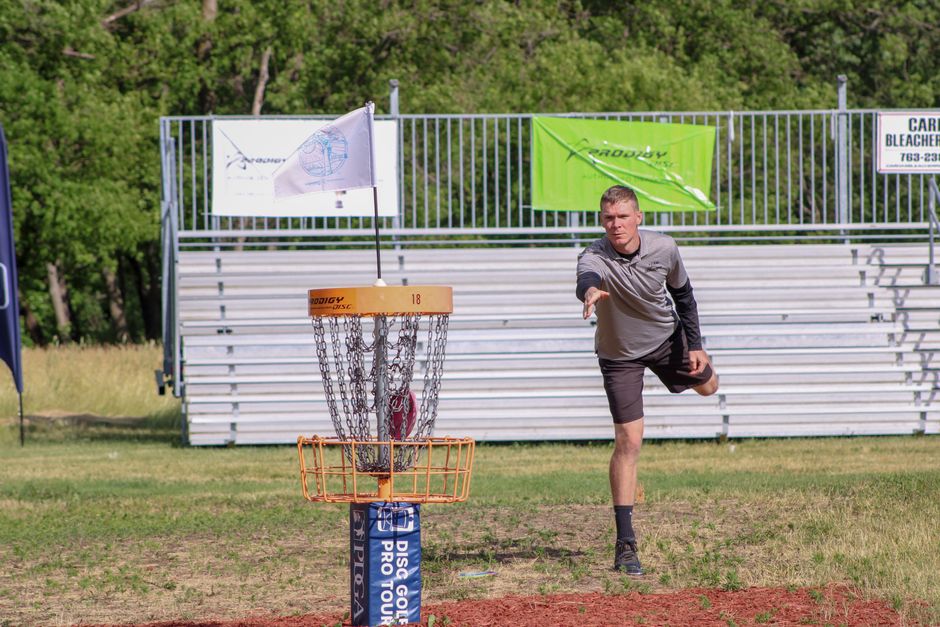
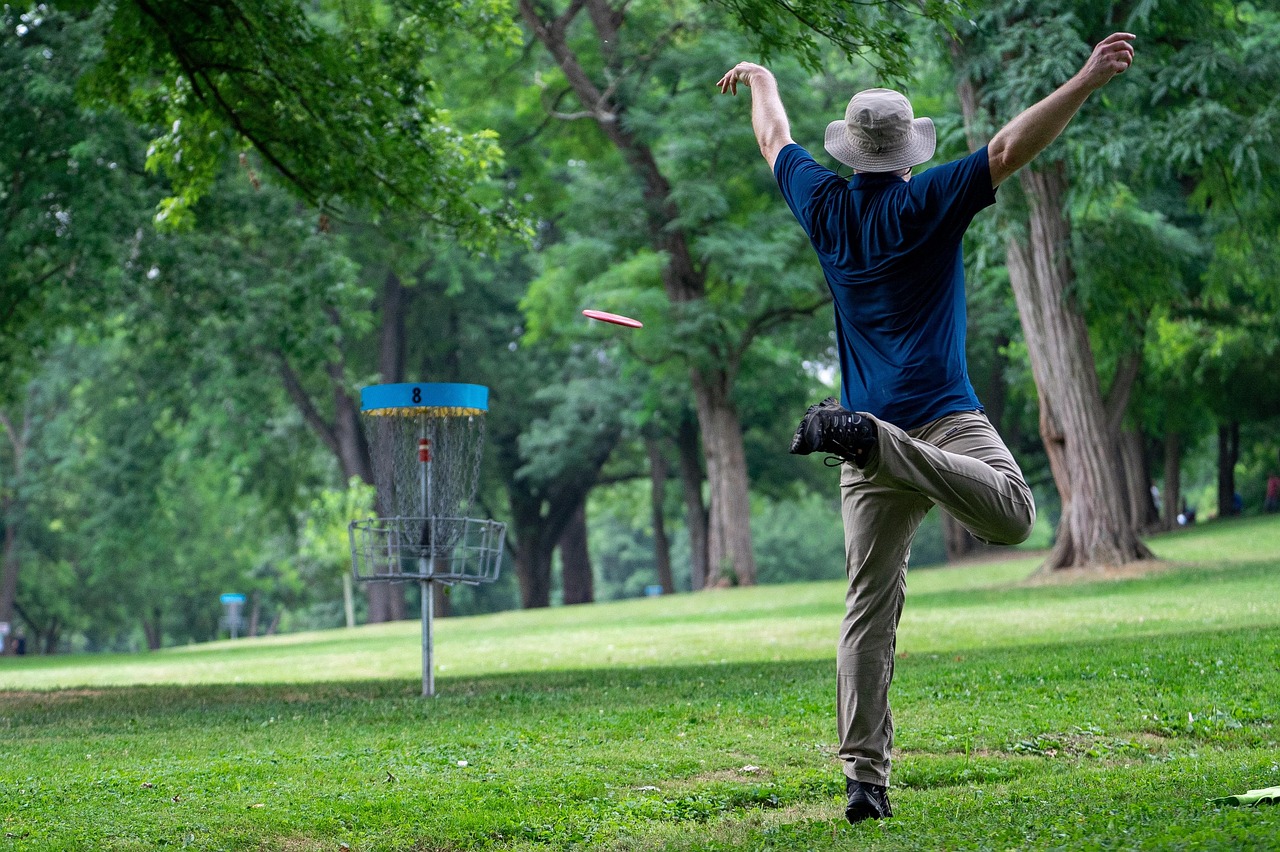
A Tuesday evening at the city park: four friends on the first tee, one bag of discs between two of them, a dog waiting by the bench. Somebody’s drive fades into the trees, somebody else’s putt rattles the chains, and everybody cheers. Across the country, a 10-year-old is playing her first junior tournament with a parent caddying, a college team is driving to a regional qualifier, and on a Sunday afternoon the world’s best players are walking down the 18th fairway at a Major with thousands watching. That’s disc golf: golf’s idea, a flying disc instead of a ball and club, and a metal basket instead of a hole.
Disc Golf, page by page
- Rules: how the game works at every level
- Leagues & associations: pro, college, high school and youth
- Youth & high school: ages, safety and recruiting, for players and parents
- Injuries & sports health: prevention, concussion, when to see a pro
- Training & conditioning: before: off-season to in-season
- Game day: during: fueling, hydration, heat
- Recovery: after: games, tournaments, sleep
- Nutrition & supplements: what to eat, tested supplements
- Best wearables: trackers and watches for the sport
- Gear: the complete equipment list
Buying guide · Our Disc Golf buying guide compares the gear we'd pick, with prices and sizing:
This page is disc golf for beginners and for everyone who keeps going: how the game works, what it looks like from kids’ leagues to the pro tour, and how to stay healthy playing it. Throwing a disc hundreds of times a week is hard on the shoulder, elbow and back, and courses run through woods, hills, sun and tick country, so sports health runs through all of it. Then training, recovery and the gear you really need.
Disc golf at a glance
| Object | Finish each hole, and the course, in the fewest throws. Each throw is made from where the last one landed. |
|---|---|
| Course | Usually 9 or 18 holes, laid out in and around wooded areas and hills. Most targets are elevated metal baskets with chains. |
| Where to play | More than 17,000 courses in 99 countries (11,165 in the US), and 89% are free to play, according to UDisc’s 2026 Growth Report. |
| Round length | A casual round takes one to two hours, per the PDGA. |
| Governing bodies | The Professional Disc Golf Association (PDGA) writes the rules and sanctions events; the World Flying Disc Federation (WFDF) governs flying disc sports internationally and is recognized by the IOC. |
| Main physical demands | Walking on uneven, often hilly ground (UDisc users logged about 36.5 million miles over 21.2 million rounds in 2025), plus fast rotational throws from the legs, hips, trunk and arm. |
| Most common injuries | Elbow, shoulder, back and knee problems: muscle strains, sprains and tendinitis, most of them coming on gradually. |
How disc golf works
Every hole starts on a tee. You throw toward the target, walk to where your disc landed, mark your spot (your “lie”) and throw again from behind it, until the disc comes to rest in the basket’s tray or chains. Your score for the hole is the number of throws plus any penalty throws, and the lowest total for the round wins, just like stroke play in golf. Trees, hills and water are the obstacles; out-of-bounds lines and “mandatories” (a tree or post you must pass on one side) make holes tougher.
Players carry three main kinds of discs: drivers for distance, midranges for control and putters for the short shots into the basket. Any throw from within 10 meters (about 33 feet) of the target counts as a putt, and after a putt in that circle you must show balance behind your mark before stepping forward. Out of bounds costs one penalty throw, and so does a lost disc you can’t find within three minutes. The details, including etiquette and course safety, are on our disc golf rules page.
The sport has a short, colorful history. “Steady” Ed Headrick, who patented the modern Frisbee at Wham-O, installed the first official course at Oak Grove Park in Pasadena, California, in 1975 and patented the Disc Golf Pole Hole basket, the basis of today’s targets. The PDGA was founded in 1976. Today it reports more than 108,000 active members and over 10,000 sanctioned events a year.
Disc golf at every level
Kids and juniors
Disc golf is one of the easiest sports for a family to try: a free park course and a light starter disc are enough. For kids who want to compete, the PDGA runs junior divisions by birth year (18 and under, 15, 12, 10, 8 and 6 and under), each with a mixed and a girls’ division, and the PDGA Junior World Championships, held in Pittsburgh in July 2026. Players 12 and under must have a parent or guardian with them in tournament rounds, and the PDGA recommends the youngest groups play no more than 18 holes a day. More in our youth disc golf guide.
High school
Disc golf isn’t a traditional varsity sport in most US states, but school clubs are growing. The PDGA has scholastic varsity and junior varsity divisions (mixed and girls’), offers grants to school-recognized clubs in the US and Canada, and sanctions high school state championships, such as the South Carolina, Missouri and Washington events held in May 2026.
College
College disc golf is mostly run by student clubs. College Disc Golf runs a season of conference events and regional qualifiers leading to the College Disc Golf National Championships each spring; the 2026 edition was April 8–11 in Rock Hill, South Carolina, with Division 1, 2 and 3 team divisions and a women’s Division 1. The PDGA has matching collegiate divisions (MC1–MC3, FC1–FC3).
Pro tour and Majors
The top level is the Disc Golf Pro Tour (DGPT), the PDGA Elite Series for the Mixed Pro Open (MPO) and Women’s Pro Open (FPO) divisions. As of the 2026 season it has 18 Elite Series events plus five PDGA Pro Majors: the Champions Cup (Virginia), the European Open (Tallinn, Estonia), the U.S. Women’s Disc Golf Championship (Salt Lake City), the Pro World Championships (Milford, Michigan) and the U.S. Disc Golf Championship (Rock Hill, South Carolina). The season closes with the DGPT Championship in October. Disc golf isn’t an Olympic sport. Every tour, division and rating is explained on our leagues and associations page.
Adults, leagues and masters
Most disc golfers are recreational: weekly club leagues, doubles nights and casual rounds. Tournaments group amateurs by PDGA rating, and there are age divisions for players 40 and over all the way to 80 and over, so you can compete for decades. The PDGA calls disc golf “a great lifetime fitness activity,” and players with limited fitness can start slowly and build up.
Sports health for disc golfers
Disc golf looks gentle, but a full drive is a fast, rotational throw, repeated round after round, on ground that is rarely flat. This section is general information, not medical advice. If you’re hurt, see a professional.
The most common disc golf injuries
- Elbow and shoulder: in a survey of 883 disc golfers (Orthopaedic Journal of Sports Medicine, 2015), more than 81% said they had been injured playing, most often the elbow, then the shoulder. Players who mainly threw forehand (sidearm) were more likely to report an elbow injury.
- Back and knee: the same survey counted many back and knee injuries; the most common types were muscle strains, sprains and tendinitis.
- Overuse: a Danish study of 105 players found 13.3% had an injury at the time, mostly shoulder (31%) and elbow (20%), and 93% of those injuries came on gradually rather than from one bad throw.
- Ankles, slips and falls: roots, wet slopes and rocky tee areas are part of the game; good shoes and watching your footing matter.
The pattern points to load: lots of hard throws, field-work sessions and rounds stacked together. Build volume gradually, warm up before you throw hard, and treat elbow or shoulder pain that lingers as a reason to back off, not throw through. Our disc golf injuries page goes deeper.
Getting hit by a disc, and head injuries
The PDGA’s Disc Golfer’s Code starts with “Play Smart”: never throw into a blind area or when players, spectators, pedestrians or other park users are within range, and use a spotter. If a throw heads toward someone, shout a warning; the rules allow shouting only for that. If anyone takes a hit to the head, from a disc or a fall, the CDC’s HEADS UP advice applies: watch for headache, dizziness, confusion or balance problems, stop playing for the day, and see a healthcare provider. Call 911 for danger signs such as a worsening headache, repeated vomiting, seizures, unusual drowsiness or one pupil larger than the other.
Heat, sun, lightning and ticks
- Heat: an 18-hole round can mean hours outdoors in summer. The National Athletic Trainers’ Association (NATA) recommends easing into heat over 7–14 days. Bring water, take shade between holes, and call 911 for confusion or collapse.
- Sun: the American Academy of Dermatology recommends a broad-spectrum, water-resistant sunscreen of SPF 30 or higher, reapplied about every two hours and after sweating, plus a hat.
- Lightning: NATA’s rule is “When thunder roars, go indoors,” and wait 30 minutes after the last thunder before going back out. A wooded course offers no safe shelter.
- Ticks: searching the rough and woods for discs puts you in tick habitat. The CDC suggests EPA-registered repellent on skin, clothing treated with 0.5% permethrin, a shower within two hours of coming indoors and a full-body tick check.
When to see a doctor, physical therapist or athletic trainer
See a professional for elbow or shoulder pain that lasts more than a couple of weeks or returns every time you throw, numbness or tingling in the arm or hand, weakness lifting the arm, a knee that locks or gives way, back pain that runs down the leg, or any concussion signs. A sports medicine physician can diagnose the problem, and a physical therapist can guide rehab and a gradual return to throwing. If you play for a school or college club with an athletic trainer, start there.
Training and conditioning for disc golf
Distance in disc golf comes from the ground up: legs and hips start the throw, the trunk transfers the power, and the arm finishes it. So the best off-course work is general strength for the legs, hips and core, plus shoulder and upper-back exercises (rows, band pull-aparts) that help the arm handle the load. Rotational mobility in the hips and upper back helps too. Our disc golf training page has a full plan, and resistance bands are an easy way to do shoulder work at home or before a round.
Before you throw: walk, swing your arms, do some trunk rotations and make a few easy throws before your first full drive. Putting practice is the low-stress way to improve fast; a portable practice basket in the backyard gets you dozens of putts a night without wear on your arm. Round and tournament day: a familiar, carbohydrate-based meal 1–4 hours before, as the American College of Sports Medicine’s sports-nutrition position statement suggests, plus water and a snack for the back nine. Long tournament days are covered on our round day and tournament day page.
Recovery after a round
Recovery starts with sleep: the CDC, citing the American Academy of Sleep Medicine, recommends 9–12 hours for children 6–12, 8–10 hours for teens and 7 or more for adults. Eat a real meal and drink after a round, especially after a hot tournament day; many players add electrolytes in summer (see our electrolyte powder guide).
After a long walk over hilly ground and plenty of throws, many players like to roll out tight calves, hips and upper back with a foam roller or a massage gun, and to switch into soft recovery shoes. These tools are about comfort, not treatment; pain that keeps coming back needs a professional. More on our disc golf recovery page and in our recovery tools guide.
Gear for disc golf
- Discs: start with three, a putter, a midrange and an easy fairway driver. Innova’s flight ratings explain them: high-speed distance drivers “are not recommended for beginners,” and discs with more glide and more turn are easier for new players. A pro-quality disc costs roughly $15, per the PDGA.
- Weight: lighter discs (many starter sets are about 150–159 grams) are easier for kids and new players to throw.
- A mini marker and your name on every disc: tournament rules require discs to be identifiably marked, and a phone number gets lost discs back.
- Bag, shoes, water: a small bag or backpack, shoes with grip for wet grass and slopes, and a water bottle.
Three picks to start: the Innova Disc Golf Starter Set with Bag (DX Leopard driver, Shark midrange, Aviar putter, a mini marker and a shoulder bag, in light 151–159 g weights); the Dynamic Discs Prime Burst 4-disc set (putter, midrange, fairway and distance driver plus a mini, about $40 in October 2026); and the OOFOS OOahh Slide from our recovery shoes guide for after the round. The full rundown is on our disc golf gear page.
Innova Disc Golf Starter Set with Bag
- Leopard, Shark, Aviar + mini
- 151-159 g beginner weights
- Shoulder bag included
Dynamic Discs Prime Burst 4-Disc Set
- Putter, midrange, 2 drivers
- Mini marker included
- PDGA-approved (maker)
OOFOS OOahh Slide
- OOfoam slide
- APMA Seal of Acceptance
- Machine washable
Play other throwing or course sports too? See our golf guide and our ultimate frisbee guide, or browse Recovery & Regeneration.
Disc golf FAQs
How do you play disc golf?
Throw from the tee toward the basket, then throw again from where your disc landed until it comes to rest in the basket’s chains or tray. Count every throw plus any penalties; the lowest score for the round wins. Most courses have 9 or 18 holes.
Is disc golf free to play?
Mostly, yes. UDisc counts 89% of courses worldwide as free to play, many of them in public parks. Pay-to-play and converted golf courses are growing, so check before you go.
What discs should a beginner buy?
A putter, a midrange and a slow, easy fairway driver, or a starter set that includes all three. Skip the fastest distance drivers at first: makers say they need a lot of arm speed to fly as designed, and beginners usually throw farther and straighter with slower discs.
Is disc golf good exercise?
It gets you walking, often over hilly ground, and throwing works the legs, trunk and arm. The PDGA describes it as upper and lower body conditioning plus aerobic exercise, and players of any fitness level can start slowly and build up.
Why does my elbow hurt after disc golf?
The elbow is the most commonly injured spot in disc golf surveys, especially for players who mostly throw forehand, and most of these injuries build up over time. Cut back on hard throws, warm up first, and see a sports medicine doctor or physical therapist if it doesn’t settle.
How old do you have to be to play disc golf?
There’s no minimum for casual play. The PDGA’s youngest junior division is 6 and under, and kids that young play with a parent or guardian alongside them in tournaments.
Disc golf is cheap, outdoors and lifelong, and the players who keep throwing into their 70s and 80s are the ones who warm up, build up their throwing gradually and listen to their elbows and shoulders. Keep exploring: the rules, the gear, our recovery tools guide and the other sports on our sports hub.