This article contains affiliate links: if you buy through them we may earn a commission, at no extra cost to you. Learn more.
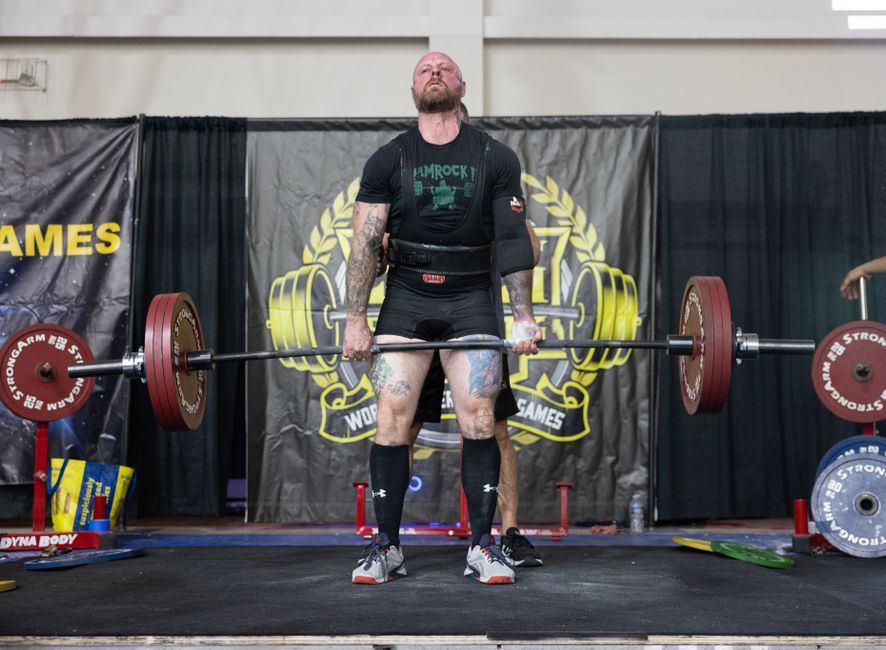
A Saturday morning in a hotel ballroom: folding chairs, a scoring table, a squat rack on a plywood platform, and a lifter’s dad filming on his phone as his daughter walks up for her third deadlift. The bar bends, she locks out, the head referee says “Down”, and three white lights flash on. Across the country, a Texas high school gym is packed for the regional meet, a team chanting for a sophomore on her last bench. And in an arena in Chengdu, China, the world’s best Classic lifters competed at The World Games for the first time in 2025. Powerlifting is the squat, the bench press and the deadlift: three lifts, three attempts each, and a total that’s honest to the kilo.
Powerlifting, page by page
- Rules: how the game works at every level
- Leagues & associations: pro, college, high school and youth
- Youth & high school: ages, safety and recruiting, for players and parents
- Injuries & sports health: prevention, concussion, when to see a pro
- Training & conditioning: before: off-season to in-season
- Game day: during: fueling, hydration, heat
- Recovery: after: games, tournaments, sleep
- Nutrition & supplements: what to eat, tested supplements
- Best wearables: trackers and watches for the sport
- Gear: the complete equipment list
Buying guide · Our Powerlifting buying guide compares the gear we'd pick, with prices and sizing:
This guide is for the people who lift and the people who look after them: lifters, parents and coaches. It covers how a meet works, who runs the sport, every level from 8-year-olds in youth divisions to lifters over 70, and above all how to stay healthy under a heavy bar. It’s general information, not medical advice. If you’re more interested in the snatch and the clean & jerk, those have their own guide: Olympic weightlifting.
Powerlifting at a glance
| The lifts | Squat, bench press and deadlift, always in that order |
|---|---|
| Attempts | 3 per lift; the best good lift of each adds up to your total |
| Judging | 3 referees with white (good lift) and red (no lift) lights; a majority of whites makes a good lift |
| Divisions | Classic or “raw” (belt, knee sleeves, wrist wraps) and Equipped (supportive suits, bench shirts, knee wraps); bench-press-only meets too |
| World body | International Powerlifting Federation (IPF), plus other federations |
| In the US | Powerlifting America (IPF member), USA Powerlifting (USAPL), USPA and others |
| Big stages | IPF Classic and Equipped World Championships; The World Games; Para powerlifting (bench only) at the Paralympics |
| Most commonly injured | Lower back and pelvis, shoulder, elbow and upper arm |
How powerlifting works
The three lifts
- Squat: you walk the bar out of the rack, stand still with knees locked, and wait for the head referee’s “Squat” command. You descend until the top surface of your legs at the hip joint is lower than the top of your knees (the hip crease below the knee), stand back up without bouncing twice or dipping, and wait for “Rack”.
- Bench press: head, shoulders and buttocks stay on the bench and your feet stay flat. You wait with locked arms for “Start”, lower the bar to your chest or upper abdomen, hold it still until “Press”, press to locked arms and wait for “Rack”. Under IPF rules the grip must be thumbs around the bar, never “thumbless”.
- Deadlift: any grip; you pull until you’re standing erect with knees locked and shoulders back, then lower the bar under control on “Down”. Hitching the bar up your thighs or letting it drift down before lockout is a no lift.
Attempts, the clock and the lights
You declare your three openers at weigh-in. After each attempt you have one minute to hand in your next weight, and once the bar is announced as loaded you have one minute to start the lift. Meets run on a “rising bar”: within each round the weight only goes up, so lighter attempts go first, and if you miss you can’t follow yourself; you wait for the next round. Under IPF rules the bar is always loaded in multiples of 2.5 kg (bar and collars together weigh 25 kg). Three referees judge each lift, and if a lift fails they show colored cards or lights to explain why. If two lifters tie on total, the lighter lifter wins. Miss all three attempts on one lift and you have no total, which lifters call “bombing out”, so choosing a safe opener is part of the sport. The full detail is on our powerlifting rules page.
Classic vs Equipped
Classic (also called raw) is by far the most common way to start: a non-supportive singlet over a t-shirt, plus a belt, knee sleeves and wrist wraps if you want them. Equipped lifters may also wear a supportive squat or deadlift suit, a bench shirt and knee wraps, tight gear that stores elastic energy and helps them lift more; Classic and Equipped have separate results and records. Some federations go further: the USPA runs Raw, Classic Raw (knee wraps allowed), Single Ply and Multi Ply divisions. Most federations also run bench-press-only (and some deadlift-only) competitions.
Weight classes and age divisions
| IPF / Powerlifting America (kg) | USA Powerlifting (kg) | |
|---|---|---|
| Men | 59, 66, 74, 83, 93, 105, 120, 120+ (plus 53 for sub-juniors and juniors) | 52, 56, 60, 67.5, 75, 82.5, 90, 100, 110, 125, 140, 140+ |
| Women | 47, 52, 57, 63, 69, 76, 84, 84+ (plus 43 for sub-juniors and juniors) | 44, 48, 52, 56, 60, 65, 70, 75, 82.5, 90, 100, 100+ |
Age divisions run alongside. In the IPF, Sub-Juniors start at 14, Juniors are 19 to 23, and Masters 1 to 4 run from 40–49 up to 70 and over. USA Powerlifting has Youth (8 to 13), Teen (14 to 19), Junior (20 to 23) and Masters divisions all the way up to Master 7 at 100 and over. Weigh-in happens no earlier than two hours before you lift. Because placings are by weight class, federations also use a bodyweight formula to pick a “best lifter” across classes: the IPF uses its own IPF points formula, and USA Powerlifting and the USPA use DOTS.
Powerlifting at every level
Kids and teens
The American Academy of Pediatrics (AAP) supports supervised resistance training for children and teens, with qualified coaching, good technique and gradual increases. Its parent site is more cautious about competition: it says powerlifting, with its maximal lifts, isn’t recommended for children, and that no one-rep maxes or maximal weights should be lifted before skeletal maturity. Federations do offer youth divisions: USA Powerlifting’s start at age 8, with lighter bars, bumper plates and extra-light weight classes for lifters under 14, and drug testing applies from age 14. Our youth powerlifting page covers what pediatricians say, how to choose a coach and parents’ questions.
High school and college
Texas is the heart of high school powerlifting: the Texas High School Powerlifting Association (boys) and the Texas High School Women’s Powerlifting Association (girls) run regional and state meets every spring. Elsewhere, high schoolers lift at federation meets: USA Powerlifting held its 2026 High School Nationals in Killeen, Texas, with junior high, junior varsity and varsity divisions, and Powerlifting America held its own in Omaha, Nebraska. Powerlifting isn’t an NCAA sport, but many colleges have club teams and a few run varsity programs; USA Powerlifting and Powerlifting America both hold Collegiate Nationals.
Adults and masters
Most powerlifters are adults who train in a garage, a commercial gym or a barbell club and do a few local meets a year. Nobody needs a qualifying total for a local meet; you join the federation, sign up and lift. Masters divisions start at 40, so you compete against people your own age for decades, and many lifters start in their 40s, 50s or later. A first meet is friendly: the spotters and loaders want you to make your lift, and the crowd cheers just as loudly for a 100 kg total as for a 700.
Elite: World Championships, The World Games and the Paralympics
Powerlifting isn’t on the Olympic program. The top of the sport is the IPF’s yearly Classic and Equipped World Championships (Open, Sub-Junior and Junior, Masters, plus bench press), and The World Games, the multi-sport games for sports outside the Olympics. The IPF has been a member of the International World Games Association since 1980, and at Chengdu 2025, Classic powerlifting joined Equipped for the first time: 128 lifters, 64 in each, and 16 medal events. Para powerlifting, the bench press for athletes with eligible physical impairments, has been on the Paralympic program since 1984 for men and since 2000 for women, under World Para Powerlifting. Who runs what is explained on our federations page.
Tested or untested: choose first
Powerlifting has several federations, and the biggest difference between them is drug testing. Powerlifting America (the IPF’s US member) and USA Powerlifting are drug-tested federations that follow the World Anti-Doping Agency’s list of banned substances; Powerlifting America lifters can be tested by the US Anti-Doping Agency (USADA) at any meet. The USPA runs separate tested and untested meets with separate records. We don’t cover performance-enhancing drugs: they’re banned in tested sport and carry real health risks, and the honest way up is time, training, food and sleep. If you lift tested, check every supplement against your federation’s rules and choose products that are third-party certified for sport.
Sports health for powerlifters
Powerlifting is safer than its reputation. A 2017 systematic review in the British Journal of Sports Medicine found 1.0 to 4.4 injuries per 1,000 hours of powerlifting training, similar to other non-contact strength sports and low compared with contact sports. An updated 2024 review in BMJ Open Sport & Exercise Medicine agreed, and showed where problems cluster:
- Where it hurts: most often the lower back and pelvis, the shoulder, and the elbow and upper arm. In one study, 70% of powerlifters had a painful condition at the time they were asked, so “nagging” pain is common even when new injuries aren’t.
- Pelvic floor: the 2024 review found pelvic floor problems, such as leaking urine during heavy lifts, in about half of female lifters (and 9.3% of men). It’s common, it isn’t something you have to just live with, and a pelvic floor physical therapist can help.
The big safety habits are simple, and the AAP notes that most resistance-training injuries seen in US emergency rooms happen on home equipment, with unsafe behavior and no supervision:
- Never bench heavy alone. Use a spotter or set the rack’s safety arms just below your chest. Wrap your thumbs around the bar; a thumbless grip lets the bar roll out of your hands.
- Squat inside a rack with the safeties set just below your bottom position, and learn how to dump a missed squat safely.
- Collars on, every set. Plates sliding off one side can tip the bar.
- Work up in small jumps, and save true max attempts for meets or planned test days when you’re fresh.
When to see a professional: sharp pain during a lift, pain that wakes you at night, numbness or tingling down an arm or leg, a joint that gives way or swells, a “pop” in the chest or upper arm during a bench, or pain that keeps getting worse over a couple of weeks. See a sports medicine doctor, physical therapist or athletic trainer, and get emergency care after a dropped bar injures your head, neck or chest. Belts, sleeves and wraps are for support and comfort while lifting; they don’t treat an injury. Our powerlifting injuries page goes deeper.
Training, meet day and recovery
For everyone, the CDC’s baseline is muscle-strengthening activity on two or more days a week that works all the major muscle groups. Powerlifters train the three lifts several times a week, usually in blocks that build toward a meet, with heavier and lighter days rather than testing maxes every week. Upper back, core, hamstrings and the small shoulder muscles support the big lifts; resistance bands are handy for warm-ups and shoulder work (see our resistance bands guide). Walking or easy cycling keeps the heart healthy and helps recovery. Our powerlifting training page covers programming and peaking, and the meet day page covers weigh-ins, warm-ups and picking attempts.
Strength is built between sessions. The CDC recommends at least 7 hours of sleep a night for adults and 8 to 10 for teens, and eating enough protein and total food matters as much as the program. One thing lifters should know: a study in the Journal of Physiology (Roberts and colleagues, 2015) found that regular cold-water immersion after strength training blunted long-term gains in muscle mass and strength, so many coaches keep ice baths away from lifting days. A foam roller for the upper back, hips and quads and a pair of recovery slides after a long day are simple, cheap and popular. See our athlete recovery routine, the powerlifting recovery page and the nutrition and supplements page on protein, creatine and third-party testing.
Powerlifting gear
You can start with flat shoes and a gym with a rack, a bench and a bar. As you get stronger, most lifters add, roughly in this order: chalk, a belt, knee sleeves, wrist wraps, and shoes (flat shoes or deadlift slippers for the deadlift, often a raised-heel shoe for squats). For a meet you’ll also need a singlet, a t-shirt and shin-length socks for the deadlift. If you lift in the IPF or Powerlifting America, your belt, sleeves, wraps and singlet must come from makers on the IPF Approved List; USA Powerlifting only requires listed brands for supportive suits and bench shirts.
- Belt: the Gymreapers 10mm lever belt (about $150) is 4 inches wide with a steel lever buckle, and Gymreapers lever belts are on the IPF Approved List.
- Knee sleeves: the Gymreapers 7mm knee sleeves (about $60 a pair) are at the IPF’s 7 mm maximum and also on the list; compare more in our best knee sleeves guide.
- Wrist wraps: the Gymreapers 18-inch wraps (about $20) for bench day; more in our wrist wraps guide.
- Chalk: Cannon Sports gym chalk, eight 2 oz blocks for about $18. Magnesium carbonate is allowed on your hands and body under IPF rules.
Gymreapers 10mm Lever Belt
- 4 in wide, 10 mm leather
- Steel lever buckle
- IPF Approved List brand
Gymreapers 7mm Knee Sleeves
- 7 mm neoprene, 1 pair
- Comes with a gym bag
- About $60
TriggerPoint GRID 1.0 Foam Roller
- 13 in multi-density
- Hollow core
- About $40
Shoes, singlets, socks and a home-gym setup are compared on our powerlifting gear page, and the best wearables page covers bar-speed and heart-rate tracking.
Powerlifting FAQs
What’s the difference between powerlifting and weightlifting?
Powerlifting is the squat, bench press and deadlift: slower lifts that test maximal strength. Olympic weightlifting is the snatch and the clean & jerk: fast lifts from the floor to overhead. Weightlifting is an Olympic sport; powerlifting isn’t, but it’s on The World Games program, and Para powerlifting (bench press) is a Paralympic sport.
Is powerlifting bad for your back?
Not for most people who train sensibly. Reviews put powerlifting at about 1.0 to 4.4 injuries per 1,000 training hours, similar to other non-contact strength sports, though the lower back is the most common sore spot. Good coaching, gradual progress and planned rest lower the risk. If your back hurts for more than a couple of weeks, or you have numbness or pain down a leg, see a sports medicine doctor or physical therapist.
What does “raw” mean in powerlifting?
Raw, or Classic in the IPF, means lifting without supportive suits, bench shirts or knee wraps. You may still use a belt, knee sleeves and wrist wraps. Equipped lifting allows the supportive gear, and the two have separate records.
How strong do I have to be to enter a meet?
Not strong at all. Local meets have no qualifying totals; you need a federation membership, legal gear and the ability to do each lift to the rules (depth on the squat, a pause on the bench, lockout on the deadlift). National championships do have qualifying totals. Pick openers you could lift on a bad day.
Which federation should I join?
Decide whether you want to lift tested, then look at the meets near you. Powerlifting America is the IPF’s US member and the route to IPF World Championships; USA Powerlifting is a large drug-tested national federation; the USPA has both tested and untested meets. Our federations page compares them.
Do I need a belt to start?
No. Many coaches suggest learning to brace without one first, then adding a belt for heavy squats and deadlifts because it gives your midsection something to push against. A belt isn’t a treatment for back pain; if your back hurts, have it checked.
Three lifts, three lights, nine attempts: powerlifting is one of the simplest and fairest sports there is, and it rewards patience more than anything. Lift for the long run. Keep exploring with our creatine, protein powder and foam roller guides, our bodybuilding and CrossFit sections, and the rest of the sports hub.