This article contains affiliate links: if you buy through them we may earn a commission, at no extra cost to you. Read our affiliate disclosure.
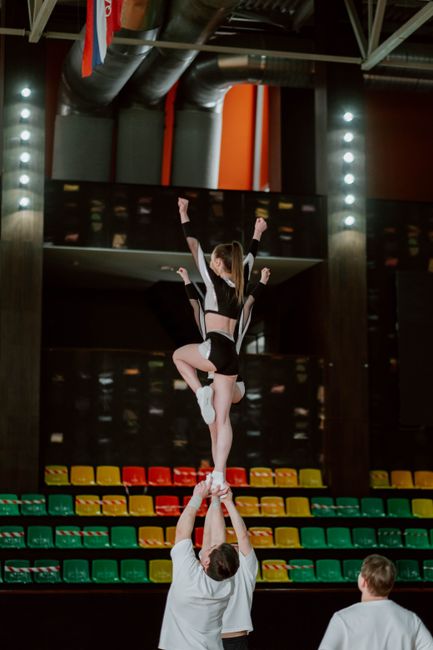
Tuesday practice, the second week of a new routine. Before anyone is lifted, the coach has the squad walk the mat: floor clear, mats flat and joined, bags off the edge. The flyer’s group runs the stunt at half height with the back spot’s hands already up, and only when it is clean three times in a row does it go to full extension. None of that shows up on the competition floor, and all of it is cheerleading injury prevention: the habits around a squad, warm-up, skill progressions, spotting, surfaces, conditioning and a coach who knows when to say stop, that aim to lower the chance of someone getting hurt. They can lower the odds. They cannot promise anything.
Quick answer: The American Academy of Pediatrics (AAP) recommends coaches certified in safety and spotting, trained spotters, skills taught in progressions, stunts and tosses only on mats, grass or a rubberized track, strength and conditioning for every cheerleader, and an emergency action plan. If a cheerleader may have a head injury, the CDC says remove her from activity for the rest of the day until a health care provider clears her. See a sports medicine doctor, physical therapist or athletic trainer for pain that lasts, and call 911 after a fall with neck pain, numbness or weakness.
General information, not medical advice. This page is about lowering risk. For what each cheerleading injury looks like and the injury numbers, see our cheerleading injuries guide; for the bigger picture of the sport, start at the cheerleading hub.
Where prevention aims
Prevention works best when it aims at the real problems. In cheer there are two kinds. The common ones are sprains and strains, mostly of the ankle, with wrists, backs and concussion behind them. The rare ones are catastrophic head and neck injuries, which in studies of U.S. high school and college teams came mostly from stunting falls (AAP policy statement, 2024). A national high school surveillance study found more than half of injuries happened during stunts (Currie et al., Pediatrics, 2016), so most advice below is about stunts, tumbling and the floor under them. The figures are on the injuries page.
Warm up before the squad lifts anyone
Unlike soccer, cheerleading has no widely tested, named warm-up program with injury numbers behind it, so be wary of anyone who says it does. What exists is rule-book and coaching guidance: USA Cheer’s college safety rules list a warm-up and a conditioning program among a coach’s duties, and cheer competition days already run on a warm-up rotation (see our competition day guide). A typical order, from common coaching practice rather than a trial: easy movement, dynamic mobility for hips, shoulders and wrists, light band work, low-difficulty tumbling drills, then stunt drills building up to full height.
Skill progressions and spotting
This is where cheer prevention has its strongest written rules. Under USASF all-star rules, “coaches must require proficiency before skill progression,” and every level includes everything allowed below it. School squads follow NFHS spirit rules or USA Cheer school rules, and USA Cheer’s guidelines say a qualified coach supervises all practices and approves every stunt, pyramid and toss before it is performed. The AAP adds that pyramids should be no higher than two people with spotters present.
- Earn each step. Stunt groups usually move from ground-level to prep-level to extended height only after the lower step is clean and consistent. The steps vary by gym and by rule book; the exact ladder is common coaching practice, not a single published sequence. The tumbling ladder is on our training page.
- Spotters every time they are required. Under USASF rules, required spotters must be teammates trained in proper spotting.
- Landing is a skill. A 2024 lab study of cheerleaders found the flyer’s own landing, not how well the bases caught, drove how hard the landing hit the body (Müller et al., Frontiers in Sports and Active Living). Landing drills belong in every practice, not just the warm-up.
- Rules that changed the numbers. After basket tosses were banned on hard surfaces in 2006-07, the rate of catastrophic basket-toss injuries in high school and college cheer fell from 1.55 to 0.40 per million cheerleaders (Yau et al., Sports Health, 2019). Today’s rules are in our rules guide.
Surfaces and mats
Height and hardness are the two levers. In a surveillance study of fall-related cheer injuries, a stunt or pyramid was involved in 89% of falls, and the most serious injuries (concussions, fractures, dislocations and ACL tears) mostly came from falls of 4 feet or more onto artificial turf, grass, a foam floor without springs or a wood floor. The risk rises as the fall gets higher and the surface gets harder.
- USASF rules ban stunts, pyramids, tosses and tumbling on concrete, asphalt, wet or uneven surfaces or surfaces with obstructions, and say carpet over a hard floor does not count as safe.
- The AAP recommends no stunts on dirt or vinyl floors and basket tosses only on grass, mats or a rubberized track, never on a basketball court or other hard floor.
- USA Cheer college rules also bar technical skills on wet or uneven surfaces. A wet track means the stunts wait.
- At home, keep it to stretching, conditioning and skills a coach has already taught. The AAP strongly discourages home trampolines, and a thin mat does not turn a garage floor into a safe place for flips or stunts. More in our cheerleading gear guide.
Strength, conditioning and training load
The AAP recommends proper strength and conditioning for all cheerleaders. Position statements from the National Strength and Conditioning Association and an international youth consensus (Lloyd et al., British Journal of Sports Medicine, 2014) say resistance training is safe and helpful for young people when it is well designed and supervised. A 2025 study of elite cheerleaders found full-out routines were mostly spent at 80% or more of maximum heart rate, so conditioning that looks like a routine, in short hard efforts with rest, is a better fit than endless laps (Riddell et al., International Journal of Sports Physiology and Performance). No cheer-specific study we know of shows strength work lowers injury rates, so treat it as sensible preparation. Role-by-role exercises are on the training page, and sleep, fuel and time off are on recovery and nutrition.
Cheer is often year-round, with school season, all-star season, camps and private tumbling stacked together. The AAP (Brenner, 2016) recommends 1 to 2 days off a week from the main sport and about 3 months off a year, in blocks of at least a month. A study of young athletes tied more hours a week than your age in years to higher odds of serious overuse injury (Jayanthi et al., 2015); it was not about cheer alone, so treat it as a flag, not a limit.
Concussion: recognize and remove
Concussion was the single most common cheerleading injury in a national high school study, 31% of injuries, and emergency visits for cheer concussions and head injuries rose 44% from 2010 to 2019 while total cheer injuries fell (Xu et al., Orthopaedic Journal of Sports Medicine, 2021). The CDC’s HEADS UP program says to recognize the signs and remove the athlete: “When in doubt, sit them out.” Signs include looking dazed, confusion, clumsiness, mood changes and vomiting and headache or dizziness. She stays out for the rest of the day and returns only when a health care provider clears her, in gradual steps. The CDC danger signs, such as one pupil larger than the other, a worsening headache, repeated vomiting, seizures or loss of consciousness, mean 911. Return detail is on the injuries page.
Coaches, qualifications and the safety plan
Studies keep finding that training with a coach who has little experience is a risk factor, and the AAP recommends coaches certified in safety and spotting techniques, a yearly pre-participation physical for every cheerleader, and a written emergency action plan in every school and gym, practiced with the whole squad. The credentialing bodies are USA Cheer (which combined with the American Association of Cheerleading Coaches and Administrators, AACCA, in 2018) for school programs and USASF for all-star gyms. Since the 2019-20 season USASF has required owners, coaches and staff to complete the U.S. Center for SafeSport Trained course. See leagues and associations and the youth page for a parent’s checklist.
Protective equipment and fit
Cheerleading has little protective gear compared with football or hockey, and none has been shown to prevent stunting injuries. What the sources do support is narrower. USASF requires soft-soled shoes with a solid sole in competition and bans jewelry and gum, candy and cough drops because of choking risk. The National Athletic Trainers’ Association (NATA) position statement recommends athletes with a previous ankle sprain tape or brace for practices and games, noting that lace-up and semirigid braces reduce repeat sprains alongside balance training. USASF allows braces in their original maker form without extra padding; altered ones must be padded, and a hard cast or walking boot rules out stunting, tumbling and tossing. We do not repeat maker claims about “injury-proof” gear, which we have not verified.

THERABAND Beginner Kit
- Yellow, red, green flat bands
- Clinic-standard color system
- Contains latex
$11.99 at Amazon, as of Nov 17, 2026 02:07 UTC
Check price on Amazon
ASO EVO Ankle Stabilizer
- Lace-up with figure-8 straps
- Fits left or right foot
- Low profile
What prevention cannot do
Some risk stays however well a squad prepares. Catastrophic injuries have fallen since the surface and skill rules changed, but they have not gone to zero, and most numbers above come from observational studies, which show a link, not proof. Good habits lower risk, make small problems visible sooner and give an athlete a better chance of staying on the mat. They do not promise an injury-free season.
When to see a professional
- Call 911: any fall with neck pain, numbness, tingling or weakness (do not move the athlete), any concussion danger sign, loss of consciousness, a joint that looks out of place or an obvious broken bone.
- See someone within a day or two: a suspected concussion, an ankle that cannot bear weight, or a wrist that swelled after a fall.
- Book a visit soon: low back pain that worsens when arching or lasts more than a couple of weeks, wrist pain every time she tumbles, pain at night or at rest, or an ankle that keeps rolling. These timeframes are general guidance, not research thresholds.
A sports medicine doctor diagnoses, a physical therapist plans the strengthening and the step-by-step return to tumbling, basing and flying, and a certified athletic trainer, if your school or gym has one, can see problems early. For the injuries themselves, see cheerleading injuries.
Cheerleading injury prevention: FAQs
What is the single most useful safety step for a squad?
There is no single step, but the AAP puts a coach certified in safety and spotting first, with trained spotters, progressions, proper surfaces and an emergency plan behind that.
Can a squad practice stunts on a gym floor or basketball court?
Rules limit it. The AAP recommends basket tosses only on grass, mats or a rubberized track, never on a basketball court, and USASF bans stunts on concrete, asphalt, wet or uneven surfaces.
Does a brace prevent ankle sprains in cheer?
NATA says lace-up and semirigid braces reduce repeat sprains in athletes who have had one, alongside balance training. A brace does not replace rehab.
Can a cheerleader keep going after a hit to the head if she feels fine?
Not if a concussion is suspected. The CDC says remove her for the rest of the day, and symptoms can show up hours later. A health care provider decides when she can return, in gradual steps.
How much should a young cheerleader train?
The AAP suggests 1 to 2 days off a week and about 3 months off a year from one sport. Talk with the coach about total weekly hours.
How can I check whether a gym or school program is safe?
Ask whether coaches hold current USA Cheer or USASF credentials and SafeSport training, whether skills follow progressions, who spots, what the surface is and whether there is a written emergency and concussion plan.
Sources
- AAP, Safety in Cheerleading policy statement, Pediatrics, 2024
- HealthyChildren.org, AAP updated cheerleading recommendations
- Currie et al., cheerleading injuries in U.S. high schools, Pediatrics, 2016
- Yau et al., catastrophic basket-toss injuries, Sports Health, 2019
- Xu et al., cheerleading emergency visits 2010-2019, Orthopaedic Journal of Sports Medicine, 2021
- Müller et al., landing and catching in cheerleading stunts, 2024
- Riddell et al., physiological responses of elite cheerleaders, 2025
- USASF Cheer Rules (proficiency before progression, surfaces, braces)
- USA Cheer College Cheer Rules 2025-26
- NFHS, 2025-26 spirit rules changes
- USASF, SafeSport Trained requirement
- CDC HEADS UP, concussion signs and symptoms
- NATA position statement, conservative management and prevention of ankle sprains (Kaminski et al., 2013)
- AAP, Brenner, Overuse injuries, overtraining and burnout in young athletes, 2016
- Lloyd et al., youth resistance training consensus, British Journal of Sports Medicine, 2014
- AAP, trampoline use policy, 2012
General information for education only, not medical advice. It does not replace a visit with a doctor, physical therapist or athletic trainer. See how we write and check our pages in our editorial policy.