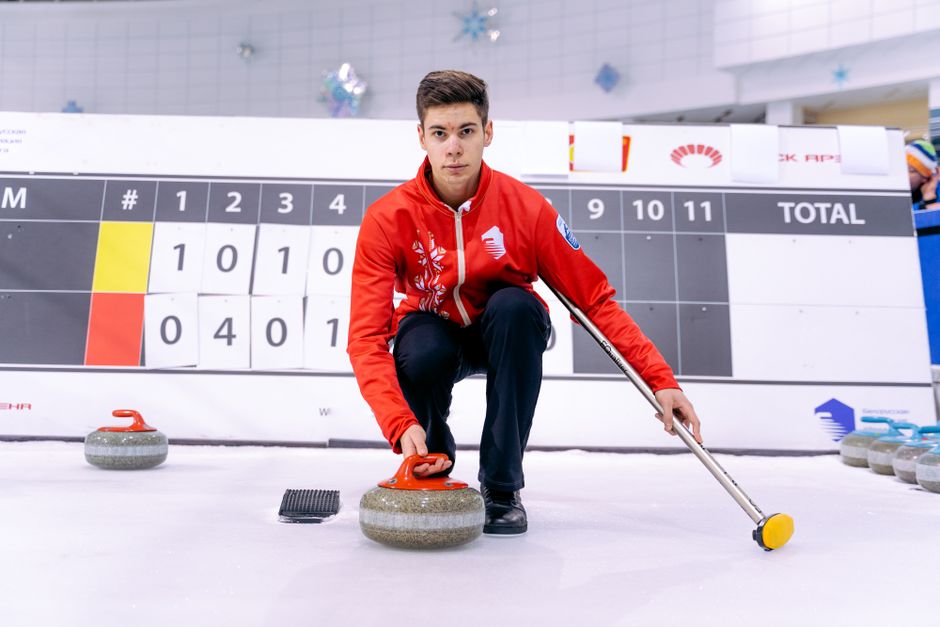
Last end, tied game, you have the hammer. The skip is crouched in the house with the broom held out, the ice looks keen, and your first stone this end rolled a touch heavy. Two sweepers are waiting at the hog line with their brooms already moving. In the next fifteen seconds you will decide how to release the rock, the skip will decide what to shout, and the sweepers will decide whether to believe it. Mental training for curlers is the practice of routines, attention, communication and self-talk so that you throw and sweep your own shot under pressure, from a Tuesday league to a national championship. It supports good curling; it cannot promise a win.
Quick answer: Curling research points to a few habits worth practicing: a repeatable pre-shot routine, calm and clear communication between skip, vice and sweepers, a focus on the next rock rather than the last one, and a plan for resetting after a miss. None of them guarantees a result. See a doctor or a licensed mental health professional, not only a coach, if worry, low mood, disordered eating or exhaustion are affecting daily life.
General information for curlers. Back to the curling hub. The body side (delivery balance, sweeping fitness, legs) is on our curling training page, and warmth, food and bonspiel logistics are on the game day and bonspiel day page. This page covers the thinking side and does not repeat them.
A sport where you think for a long time and act for a few seconds
A curling game is mostly waiting. World Curling gives each team 38 minutes of thinking time in a 10-end game and says an average championship game lasts up to three hours; a weekly league game is typically 90 to 120 minutes, according to USA Curling. A 2024 scoping review of 94 curling studies (Zacharias and colleagues, Frontiers in Sports and Active Living) sorted the research into topics that include strategy and tactics and psychological factors,
Know who does what: roles shape the mental job
USA Curling describes a four-person team this way: the lead and second, the front end, sweep the most stones and are generally responsible for judging a rock’s weight and whether a light stone needs sweeping. The vice often acts as the communicator between the front end and the skip, and the skip manages most of the strategy and tactics. World Curling adds that the skip directs play from the house and that the vice takes over those duties while the skip delivers. The mental demands differ by position. A lead repeats the same weight and line over and over. A skip carries the whole game plan and then has to step out of the house and throw a last rock.
Pre-shot routines: the same steps every rock
A pre-shot routine is a short, fixed sequence you run before every delivery, so that the pressure of the shot is met by something familiar. We could not find a curling study that tests a particular routine, so the structure below is general coaching practice rather than a proven recipe. A typical sequence:
- Read the call. Listen to the skip’s target, the ice and the weight, and repeat it quietly to yourself if that helps.
- Set up. Clean the stone and slider, settle into the hack, and take one slow breath out.
- Pick one cue. A single feeling or word for the delivery, such as a smooth push or a flat slide. Fewer cues are easier to hold.
- Look where you are throwing. In a 2026 study of 48 wheelchair curlers (Li and colleagues, Frontiers in Psychology), elite athletes looked at the task-critical areas more selectively and efficiently than novices and ignored distractions better. The authors link this to the “quiet eye” idea. It was a study of wheelchair curlers delivering with a stick, so treat it as a clue about attention, not a rule for every thrower.
- Go, then let it go. Once the stone is released, your job shifts to the sweeping and the next rock.
Keep the routine the same length in the first end and the last.
Strategy and the skip’s decisions
Strategy in curling depends on the hammer, how urgently you need points and how many ends are left, as USA Curling puts it. A 2026 notational analysis of 34 men’s matches at the 2022 Beijing Olympics (Zhang and colleagues, BMC Sports Science, Medicine and Rehabilitation) found medal-winning teams used a more varied mix of shots than the Chinese team, and that successful promotion takeouts predicted winning. The same study found that more sweeping success went with losing, and the authors suggested sweeping may be a compensating tactic under pressure. That is one study of one tournament, not a rule.
- Decide as a team before the end, not during the throw. Agree on the plan for the end (blank, steal, or force) so the skip is not re-arguing it with the rock already moving.
- Let the vice help. USA Curling notes that the vice may contribute to the skip’s decisions. Many teams use that as a sounding board, especially when the skip is about to throw.
Skip and sweepers: communication that works
In a 2023 study of 241 curlers on 69 teams in the Turkish Curling League (Bedir and colleagues, Frontiers in Psychology), empathy and team cohesion predicted competition performance through communication skills, and communication fully carried that link. It was a questionnaire study of one league, so it shows an association, not proof. Practical habits, from general coaching practice:
- Agree on the calls before the game. The skip directs the sweepers; USA Curling gives “for line” as a call to hold a curling stone straighter. Settle what each call means so nobody is guessing mid-sweep.
- Be brief and specific. One word and a tone are easier to hear and act on than a sentence, especially in a noisy arena.
- Sweepers report back. Front-end players judge weight, so say what you feel (“it’s light”) quickly and plainly. Skips can ask for it instead of assuming.
- Keep your tone steady after a miss. USA Curling’s etiquette says never to cheer a miss; the same courtesy toward your own team helps.
Handling a missed shot
Every curler misses. What happens in the next thirty seconds is trainable. We did not find a curling study that tests a reset method, so this is general practice:
- Acknowledge it and name it. One factual phrase (“too heavy”) and then move on.
- Take one slow breath and a cue word. Short, instructional self-talk is the kind with the best evidence across sport: a 2011 meta-analysis of 32 studies by Hatzigeorgiadis and colleagues (Perspectives on Psychological Science) found it helped most on fine or novel tasks.
- Return to the next rock. The score does not change by replaying the last one.
Staying focused across a long game and a long weekend
The rhythm of curling, bursts of action around long pauses, makes attention drift. Coaches’ ideas, not curling research:
- Have a between-rocks habit. Use the wait to watch the sheet, breathe or chat briefly with teammates, then switch into your routine when it is your turn.
- Treat each end as a fresh start. The scoreboard is the past; the next rock is the job.
- Protect mental energy between draws. In a small study of 15 compound archers, another precision sport, a 30-minute tiring thinking task made accuracy worse (Soylu and colleagues, Brain Sciences, 2026). That suggests keeping long screen sessions and arguments away from your pre-game time, but it is a study of archers, not curlers.
- Plan the weekend. Bonspiel games stack up, as USA Curling notes, with three or four guaranteed and up to six or seven possible. A short reset between draws is part of the mental plan.
Goals, confidence and motivation
Goals work best when you control them. “Win the game” depends on the other team; “run my routine on every rock” is yours. An expert statement for Exercise and Sports Science Australia on goal setting (Swann and colleagues, Sports Medicine 2026) is a good place to read about setting goals well. Confidence tends to hold when it rests on evidence: your draw weight in practice, the shots you made last week, the game plan your team agreed. In a 2025 interview study of 11 wheelchair curlers (Daskesen and colleagues, Frontiers in Psychology), enjoyment and social sources of motivation supported commitment to the sport. For young curlers, see the youth curling page, and a 2025 British Journal of Sports Medicine article (Goddard and colleagues) asks whether goal setting in youth sport can unintentionally contribute to dropout, so keep goals light and playful for children.
Imagery: rehearsing the shot in your head
Imagery means rehearsing a delivery in your mind: the slide, the release, the stone’s path and the sweepers’ calls. A 2026 scoping review (Zhao, Wang and Anuar, Frontiers in Psychology) maps how athletes use mental imagery to manage stress, but we could not find a curling-specific study that shows how much it helps. A simple use is a minute or two before a game.
Mental health is not the same as mental performance
A shot routine, a breathing cue or goal setting are performance skills. Anxiety that does not go away, low mood, disordered eating, constant exhaustion or loss of interest in the sport are health matters, and a better routine will not fix them. The 2019 IOC consensus statement on mental health in elite athletes (Reardon and colleagues, British Journal of Sports Medicine) treats these as health concerns that need proper assessment and care. If they are present, talk to your doctor or a licensed mental health professional. In the US, the 988 Suicide and Crisis Lifeline is available by call or text. Sport psychology resources, such as those from the Association for Applied Sport Psychology, can help you find a qualified consultant for performance work.
Preparing for competition
Preparation for a league night, bonspiel or championship is mostly practical: sleep, food, warmth and knowing the schedule. We keep those on the game day and bonspiel day page, with rules and leagues and associations pages for the format. Worth adding: agree the calls with your team, practice your routine with something on the line, and decide ahead how you will reset after a miss. If you pick up a head or joint injury, see our curling injuries page and our recovery page.
Curling mental training: FAQs
What should I think about when I am in the hack?
Most coaches suggest one or two simple cues for the delivery, such as a smooth push, and keeping your eyes on the target, not on the score. We found no curling study that tests a particular set of cues, so find what works for you in practice.
How do skips and sweepers communicate best?
Agree the calls before the game, keep them short, and have sweepers report what they feel. In a study of 241 Turkish league curlers, communication skills carried the link between empathy, team cohesion and results.
How do I get over a missed shot?
Name it in a few words, take a breath, use a cue word and go back to your routine for the next rock. Short, instructional self-talk has the best research support across sport, but results vary between people.
Does visualization help curlers?
Many athletes use it, and researchers study imagery for stress management in sport. We could not find a curling study showing how much it helps, so treat it as one tool among several.
When is nervousness a health problem?
Pre-game nerves are common. If worry, low mood or avoidance are frequent, last a while or get in the way of daily life, speak to a doctor or licensed mental health professional. In the US, 988 is available by call or text.
Sources
- World Curling, What is curling? (roles, thinking time, game length) (worldcurling.org)
- USA Curling, Intro to Curling (roles, hammer and strategy, calls, etiquette, game length, bonspiels) (usacurling.org)
- Zacharias E, Robak N, Passmore S. Studies related to the sport of curling: a scoping review. Front Sports Act Living 2024 (doi, PMID 38414637)
- Bedir D et al. Communication skill, empathy, team cohesion and competition performance in curlers. Front Psychol 2023 (doi, PMID 36874810)
- Zhang P et al. Notational analysis of men’s curling at the 2022 Beijing Winter Olympics. BMC Sports Sci Med Rehabil 2026 (doi, PMID 42337696)
- Li W et al. Cognitive efficiency and attentional selectivity in wheelchair curling athletes. Front Psychol 2026 (doi, PMID 41798024)
- Daskesen SS et al. Motivations of wheelchair curling athletes to participate in sport. Front Psychol 2025 (doi, PMID 41346500)
- Soylu Y et al. Mental fatigue and compound archery accuracy. Brain Sci 2026 (PMID 42192772)
- Hatzigeorgiadis A et al. Self-talk and sports performance: a meta-analysis. Perspect Psychol Sci 2011 (PMID 26167788)
- Swann C et al. Goal setting in exercise and physical activity: an expert statement for Exercise and Sports Science Australia. Sports Med 2026 (doi)
- Goddard SG et al. Goal setting in youth sport: are we unintentionally contributing to dropout? Br J Sports Med 2025 (doi)
- Zhao L, Wang Y, Anuar N. Mapping the use of mental imagery for stress management in athletes: a scoping review. Front Psychol 2026 (doi)
- Reardon CL et al. Mental health in elite athletes: IOC consensus statement (2019). Br J Sports Med 2019 (doi, PMID 31097450)
- 988 Suicide and Crisis Lifeline (988lifeline.org)
- Association for Applied Sport Psychology resources (appliedsportpsych.org)
General information for education only, not medical advice. It does not replace a doctor, licensed mental health professional or qualified coach. See our editorial policy for how we research and write.