This article contains affiliate links: if you buy through them we may earn a commission, at no extra cost to you. Read our affiliate disclosure.
Rack eleven on a Tuesday league night, a little after 11 p.m. You have been bent over the table since seven, your lower back takes a moment to agree when you stand, and your eyes feel gritty from the bright light over the cloth. Nobody calls pool dangerous, and they are right. Still, hours of held postures and the same stroke repeated hundreds of times add up. Billiards injury prevention means the small habits that keep a game with low injury risk comfortable across a long night, a long season and a long playing life, from league players to tournament grinders and snooker players.
Quick answer: Billiards has low injury risk; the real issues are posture over the table, a tight grip, long sessions without a break, tired eyes, and balls and cues in a crowded room. Stand between shots, hinge from the hips, hold the cue lightly, add practice time gradually, rest your eyes between racks and keep the playing area clear. Prevention lowers the odds but cannot guarantee anything. See a sports medicine doctor, physical therapist or athletic trainer if pain keeps coming back, spreads down an arm or leg, or comes with numbness or weakness.
How much risk is there, honestly?
Not much, and the research is thin. A 2024 study of US emergency department data from 2000 to 2020 in Medicine estimated about 78,500 billiards-related visits over those 21 years. About half (51.1%) came from being struck by a ball or a cue, bruises and cuts were the most common injuries, and 3.2% of patients were admitted. We found no large study of back or elbow overuse in pool players, so the advice below leans on general guidance from the American Academy of Orthopaedic Surgeons (AAOS) and the American Academy of Ophthalmology (AAO). For what the common aches feel like, see our billiards injuries page. This page is about what you can do beforehand.
Warm-up: be realistic
We did not find a published warm-up program built for cue sports, and no study showing that warming up prevents billiards injuries. A sensible, low-effort version is to arrive early enough to walk around, roll your shoulders and neck, open and close your hands, and shoot a few easy balls before the match starts, rather than going straight into a pressure game stiff from the car. That is practical advice, not a research finding. Our league night and tournament day page covers timing and logistics.
Technique: how you stand is most of it
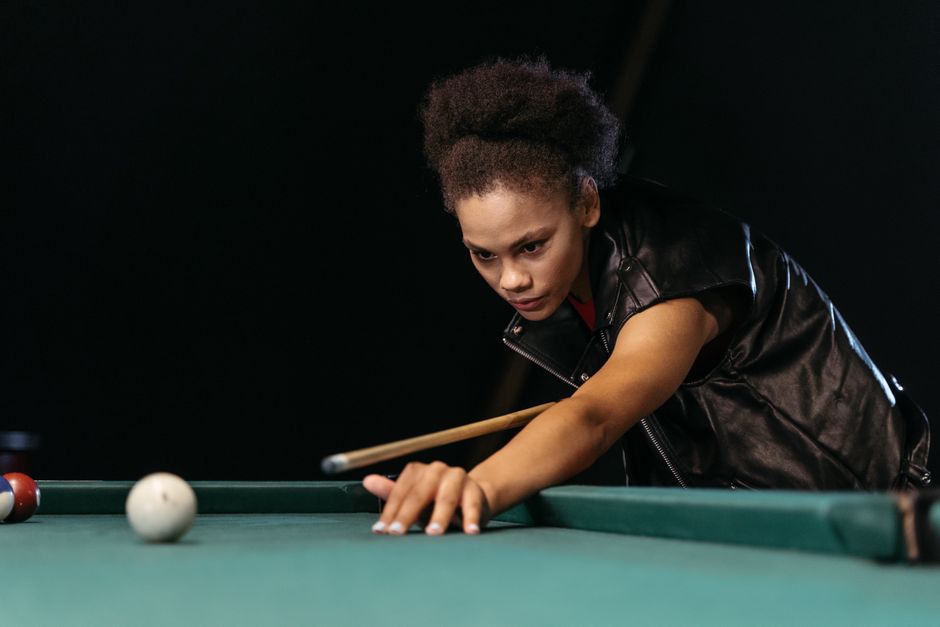
Every shot is a hinge with the head lifted to look along the cue. AAOS names muscle soreness from activity, when muscles and ligaments are overstretched, as a common cause of low back pain, and lists muscle and ligament strain among the most common causes of neck pain. A few habits help:
- Hinge from the hips. Let the bend come from the hips with a fairly long back, not a rounded one. A lesson with a certified instructor can build a stance that is stable and kind to your back; the instructor levels and locator are on our training page.
- Stand up between shots. Read the layout standing and get down only to shoot.
- Use the bridge for long reaches. Stretching flat across the table with a foot off the floor is where many backs complain. The mechanical bridge exists for this.
- Keep the grip and shoulders loose. In a study of novus players, less-skilled players used more upper trapezius activity, and skilled players’ successful shots came with lower activity. A relaxed grip is better for the stroke and for the neck. AAOS describes tennis elbow and golfer’s elbow as overuse problems of the forearm tendons, so there is no reason to squeeze the cue.
Training load: build up gradually
No source gives a safe number of hours at the table, and we will not invent one. The AAOS advice for overuse problems is to change the activity that triggers the pain and return gradually. For billiards that means: after a layoff, start with shorter sessions rather than a six-hour marathon; split long practice into blocks with a stand-up break between them; and if the bridge wrist or the elbow starts to ache, shorten the next session rather than playing through it.
Conditioning: the rest of the week
AAOS recommends regular exercise that combines aerobic activity with back-strengthening exercises, plus a healthy weight and not smoking, to lower the chance of low back pain. Rows, back extensions and trunk work with resistance bands, and general shoulder and forearm strengthening a physical therapist (PT) sets up for you, cover that without a gym. Pool players rarely train outside the table; a short routine two or three days a week is the kind of habit that pays back on long league nights.
Eyes, light and the room
The AAO lists focusing for long periods without blinking, the wrong glasses prescription, too much or too little light and poor posture among the causes of eye strain, and says it does not injure the eye or cause permanent damage. Blink, look at something far away between racks, keep your prescription current and use artificial tears if your eyes feel dry. If you look over the top of your frames when you are down on a shot, show your eye doctor how you hold your head; billiards frames that sit the lenses higher exist. The World Pool-Billiard Association (WPA) recommends table lighting of at least 520 lux with no blinding light in the player’s eyes, a useful benchmark if your home table or hall feels dim or glary.
A few other room points are common sense rather than research. Keep walkways around the table clear of chairs, cases and drinks, leave room to swing the cue (our gear page lists the room sizes tables need), and let the table be installed and levelled by someone who does it for a living, because slate beds are heavy. The WPA specification calls for slate at least one inch thick.
Cues, balls and people
Since about half of emergency visits come from a ball or a cue, the biggest “protective equipment” is attention. Watch your backstroke in a crowded bar, keep children away from the table during breaks and jump shots, and keep balls from rolling off onto the floor, where they are a trip hazard. There is no standard protective gear for the sport. Some players use a glove to let the cue slide through the bridge hand without gripping, which is a comfort choice; we found no evidence it prevents injury. For a blow to the head, CDC HEADS UP says to watch for danger signs such as a worsening headache, repeated vomiting, slurred speech or growing confusion, and to call 911; any eye injury should be checked the same day.
If you drink during league night, the CDC says the Dietary Guidelines advise two drinks or fewer in a day for men and one or fewer for women, and that drinking less is better. Alcohol and a crowded room with long cues is not a recipe for good balance and judgement.
Youth players
We did not find billiards-specific youth injury guidance, so there is nothing sport-specific to add. Our youth page has the youth side of the sport, and the general advice stands: a table height and cue that fit, supervision, and breaks.
What prevention cannot do
Good posture, strength and breaks lower the odds of problems but do not remove them. Back, neck and elbow aches can start for reasons that have nothing to do with the table, and no routine promises you will stay pain-free. Equipment such as bands or a glove is a convenience, not a guarantee.

Bodylastics Resistance Band Set
- Stackable tube bands
- Handles, ankle straps, door anchor
- Set sizes vary on the listing
$49.97 at Amazon, as of Nov 17, 2026 02:07 UTC
Check price on Amazon
Predator Second Skin Billiard Glove
- Fits the left bridge hand
- Small/Medium on this listing
- Other sizes and colors available
$30.00 at Amazon, as of Nov 17, 2026 02:07 UTC
Check price on AmazonOur resistance band guide compares band sets, and the billiards gear page covers cues, chalk and gloves.
When to see a professional
- Right away: a blow to the head with danger signs, any eye injury, or back pain with leg weakness, loss of bladder or bowel control, or fever, chills or unexplained weight loss (AAOS red flags).
- Soon: neck or back pain that spreads down an arm or leg, numbness or tingling, or trouble with fine tasks such as buttons (AAOS lists these as reasons to be checked).
- If it lingers: wrist, elbow or back pain that keeps returning or worsens over weeks, or eye strain and headaches that do not settle after you fix light, breaks and glasses. A new or severe headache, or one with vision changes, needs a doctor.
A sports medicine doctor, PT or certified athletic trainer can assess pain; an optometrist or ophthalmologist handles eyes. Return to the billiards hub, or see recovery for after a long session.
Billiards injury prevention: FAQs
Do I need to warm up for pool?
We found no published warm-up program for cue sports and no study that it prevents injuries. A few minutes of moving your neck, shoulders and hands and shooting easy balls is a sensible, low-cost habit, but that is our practical suggestion, not research.
How do I stop my back hurting after a long night of pool?
Hinge from the hips, stand between shots, use the bridge for long reaches and take real breaks. AAOS also recommends regular aerobic and back-strengthening exercise. Pain that spreads down a leg or comes with numbness or weakness should be checked.
Can I get tennis elbow from pool?
Repeated gripping and arm motion can irritate the forearm tendons, and AAOS describes tennis elbow as an overuse problem. There is no pool-specific research, but a light grip and gradual practice are sensible, and elbow pain lasting weeks deserves a doctor or PT.
Does eye strain from pool do permanent damage?
The AAO says eye strain does not injure the eye or cause permanent damage. Regular breaks, good light and a current prescription help. Sudden vision changes or a new severe headache need a doctor.
Is pool safe for kids?
Injury risk is low, but the emergency visit data show that most injuries come from being hit by a ball or cue. Supervise, keep children clear of the table during breaks and jump shots, and keep them out of the backstroke area.
Sources
- Bhardwaj et al. 2024, Descriptive epidemiologic study of billiards-related injuries, Medicine (PMID 38552053)
- AAOS OrthoInfo, Low Back Pain and Neck Pain
- AAOS OrthoInfo, Tennis Elbow and Medial Epicondylitis (Golfer’s Elbow)
- Talts et al. 2017, Trapezius activity in novus players, Journal of Applied Biomechanics
- American Academy of Ophthalmology, What Is Eye Strain?
- WPA, Recommended Equipment Specifications
- CDC, HEADS UP: signs and symptoms and response
- CDC, Moderate Alcohol Use
General information for education only, not medical advice. It does not replace an evaluation by a sports medicine doctor, physical therapist or athletic trainer. See our editorial policy for how we research and write.