This article contains affiliate links: if you buy through them we may earn a commission, at no extra cost to you. Read our affiliate disclosure.
You are standing in the hallway with a pile of gear: a rain jacket, two water bottles, snacks, a first-aid kit and a map. Your old school bag is sagging, the straps dig in, and you wonder whether to buy a small day pack or go straight to a big pack for overnight trips. It is a common first-hiker moment, and it is easy to buy the wrong size.
The short answer: for hikes that start and end the same day, a pack in the 20 to 30 liter range is what most of the day packs below are built around. For nights out, you move to a larger, supported pack. The National Park Service says overnight hikers should choose a backpack with good support, and should judge how much equipment, food and water they can comfortably carry and for how long. This guide compares five day packs and three overnight packs from Amazon listing data and official packing advice, then shows how to check fit before you commit. No prices are quoted because they change.
Our top picks

Osprey Sportlite 30L (Black)
- 30L (listing title)
- Adjustable torso length, sliding yoke
- Top-loading main compartment
- Internal hydration sleeve, reservoir sold separately

Osprey Hikelite LT 30L
- 30L (listing title)
- LightWire peripheral frame
- Rain cover included, stored in bottom compartment
- Mesh trampoline back panel
$120.00 at Amazon, as of Nov 22, 2026 13:07 UTC
Check price on Amazon
Osprey Tempest 22L Women's
- 22L (listing)
- Adjustable sliding yoke with BioStretch hipbelt
- Item weight 2.27 lb (listing)
- Hydration sleeve, reservoir not included
$168.86 at Amazon, as of Nov 22, 2026 13:07 UTC
Check price on Amazon
TILYMOL 30L Hiking Backpack
- 30L (listing title)
- Hip belt stows in a bottom compartment
- Hydration sleeve up to a 3-liter bladder
- Padded compartment for laptops up to 17 inches

WATERFLY Packable 30L Day Pack
- 30L (listing title)
- Weight 420 g (listing)
- Unfolded 19.3 x 12.5 x 8.6 in
- Folds to 7.5 x 7.9 x 1.97 in
$22.94 at Amazon, as of Nov 22, 2026 13:07 UTC
Check price on Amazon
Osprey Rook 50L (Men's)
- 50L (listing title)
- Item weight 3.6 lb (listing)
- Adjustable AirSpeed suspension with LightWire frame
- Integrated, removable raincover

Osprey Renn 50L (Women's)
- 50L (listing title)
- Item weight 3.5 lb (listing)
- Adjustable AirSpeed suspension, LightWire frame
- Integrated, removable raincover
$141.95 at Amazon, as of Nov 22, 2026 13:07 UTC
Check price on Amazon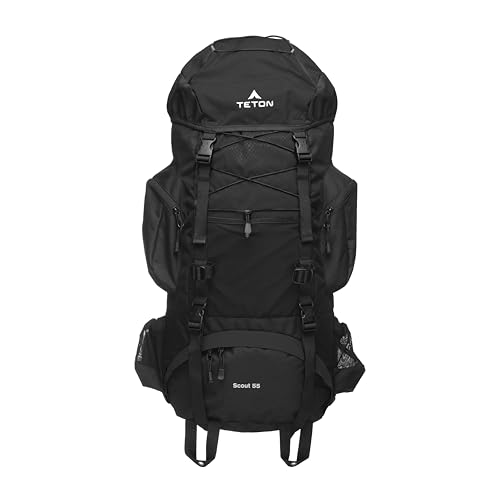
TETON Sports Scout 55L
- 55L (listing title)
- Internal frame
- Multi-position torso adjustment
- Rain cover and hydration pocket per the listing
$84.99 at Amazon, as of Nov 22, 2026 13:07 UTC
Check price on AmazonThe picks compared
| Product | Capacity (listing) | Best for | Torso / fit feature (listing) | Rain cover (listing) | What the listing says |
|---|---|---|---|---|---|
| Osprey Sportlite 30L | 30L | Day hike | Adjustable torso length, sliding yoke | Not mentioned | Ripstop nylon, load lifters, hydration sleeve |
| Osprey Hikelite LT 30L | 30L | Day hike, wet weather | Unisex one size; frame | Included | Mesh back panel, LightWire frame, side pockets |
| Osprey Tempest 22L Women's | 22L | Lighter day load, women's fit | Sliding yoke, BioStretch hipbelt | Not mentioned | 2.27 lb, helmet and ice ax attachments |
| TILYMOL 30L | 30L | Hike plus commute | Stowable hip belt | Not mentioned | 3-liter bladder sleeve, laptop compartment |
| WATERFLY Packable 30L | 30L | Light loads, travel backup | No frame or hip belt described | Not mentioned | 420 g, folds to sandwich size |
| Osprey Rook 50L | 50L | Overnight | Adjustable backpanel, frame to hipbelt | Integrated | 3.6 lb, sleeping bag compartment |
| Osprey Renn 50L Women's | 50L | Overnight, women's version | Adjustable backpanel, frame to hipbelt | Integrated | 3.5 lb, sleeping bag compartment |
| TETON Scout 55L | 55L | Overnight | Multi-position torso adjustment, internal frame | Included | Fits medium and tall per listing, lumbar pad |
The picks in detail
1. Osprey Sportlite 30L (Black): day pack with adjustable torso length
This is the day pack in the group whose listing states an adjustable torso length, which matters if you share a pack or are between sizes. It also lists load lifters, a sternum strap and dual side compression, which help keep a day load stable.
What the Amazon listing says
- 30L daypack, listed as minimalist and technical
- Adjustable torso length with a sliding yoke
- Cushioned AirScape backpanel with airflow channels
- Sternum strap, load lifters, dual side compression
- Listed as meeting bluesign PRODUCT requirements
What the research says: The NPS 10 Essentials page lists items such as extra clothing, food, water and a first-aid kit; check that your own list fits a 30L pack before you buy. We could not open the maker's torso-fit chart, so check it for the torso range this pack covers.
- Strengths: Adjustable torso length per the listing; Padded, ventilated hipbelt and harness; Hipbelt pockets, stretch side pockets and trekking pole loops
- Limitations: Listing does not mention a rain cover; Reservoir is not included; Listing gives no weight
- Suits: Day hikers who want a fit they can adjust, from a maker that lists its materials as 100% recycled nylon ripstop.
- Look elsewhere if: Anyone who needs an included rain cover, or a pack that folds flat for travel.
2. Osprey Hikelite LT 30L: day pack with rain cover and frame included
The listing pairs a ventilated mesh back panel with a frame that it says moves weight off the shoulders, and it includes a rain cover. That combination suits hikers in changeable weather who want air between pack and back.
What the Amazon listing says
- 30L daypack for day hikes of any length, in any weather
- AirSpeed suspension with mesh trampoline backpanel
- Included waterproof 100% recycled polyester raincover
- Massive side pockets, front zip pocket, hydration sleeve
- Unisex fit; listed as bluesign PRODUCT
What the research says: NPS advises packing rain gear so it is ready to use; an included pack cover protects the pack's contents but does not replace a rain jacket for you. We have no independent measure of how well the frame works.
- Strengths: Rain cover included per the listing; Frame and load lifters to balance the pack; Large side pockets for bottles and layers
- Limitations: Listing says unisex, one size, and gives no torso range; Webbing hipbelt with padded wings, not a full padded belt; Listing gives no weight
- Suits: Day hikers in wet or humid places who want a ventilated back and a rain cover in the box.
- Look elsewhere if: Hikers who want an adjustable torso length or a women-specific hipbelt.
3. Osprey Tempest 22L Women's: women's fit day pack, smaller capacity
This is the day pack aimed at women's fit in the candidate set, and the listing gives both capacity and weight. Its 22 liters suit shorter or lighter loads, and it lists attachments for a bike helmet, trekking poles and an ice ax.
What the Amazon listing says
- 22-liter pack for full-day hikes, biking and travel
- Women's fit: adjustable sliding yoke and BioStretch hipbelt
- Trekking pole, LidLock bike helmet and ice ax attachments
- Item dimensions 20.1H x 11.4W x 11.4D in, 2.27 lb
- Hydration sleeve, reservoir not included
What the research says: The listing's 'full-day hike' wording is the maker's. NPS suggests judging how much you can comfortably carry; add up your own water, food and layers before choosing between 22L and 30L. The maker's fit chart was not readable.
- Strengths: Women's fit with adjustable yoke per the listing; Weight and dimensions are stated; Dual hipbelt pockets and stretch side pockets
- Limitations: Smaller than the 30L packs, so less room for extra layers; Listing does not state a torso range; Reservoir not included
- Suits: Women who want a women's-fit day pack for hikes and bike rides with a modest load.
- Look elsewhere if: Hikers carrying extra clothing, a lot of food or gear for others, who may want more than 22L.
4. TILYMOL 30L Hiking Backpack: day pack with a stowable hip belt
The listing describes a hip belt that tucks away, so the same pack can serve trail days and town days. It also gives bladder size and laptop size, which are concrete facts you can check against your own gear.
What the Amazon listing says
- 30L design with rip-stop fabric and water-resistant finish
- Shoulder strap pocket for a phone and small items
- Hip belt stows into a bottom compartment
- Hydration sleeve for up to a 3-liter bladder
- Separate padded compartment for laptops up to 17 inches
What the research says: No independent source we opened covers this brand. Treat the listing's comfort and durability wording as the seller's claims and check the return terms; NPS only says to carry what you can manage comfortably.
- Strengths: Hip belt can be stowed per the listing; Stated bladder capacity up to 3 liters; Rip-stop fabric with a water-resistant finish per the listing
- Limitations: Listing does not mention an adjustable torso length; Listing does not say the bladder is included; Laptop compartment adds a feature a hiker may not need
- Suits: Hikers who also commute or travel with the same pack and want a belt they can remove.
- Look elsewhere if: Anyone who needs a fit-adjustable frame for heavier loads.
5. WATERFLY Packable 30L Day Pack: lightest, folds to sandwich size
The listing gives weight, open size and folded size, which makes it the clearest lightweight pick for a backup or travel pack. It is a soft pack with no stated frame or hipbelt, so it suits light loads.
What the Amazon listing says
- Ultralight packable daypack, 420 g
- Folds to about sandwich size; unfolded 19.3 x 12.5 x 8.6 in
- Tear- and water-resistant nylon
- One main compartment, zipped front pocket, hidden pouch, two side pockets
- Wet pocket and breathable shoulder straps
What the research says: The listing itself lists casual hiking, day trips and shopping. We opened no standard for packable packs, so treat it as a light-load option and check the stitching on arrival.
- Strengths: States weight and both open and folded size; Wet pocket to separate damp clothes; Folds into its own pocket
- Limitations: Listing describes no frame or hip belt; Fabric is called water resistant, not waterproof; Less structure for carrying much weight
- Suits: Casual walkers and travelers who want a very light second pack for easy day outings.
- Look elsewhere if: Hikers carrying water, layers and gear for a long day, who benefit from a hipbelt and frame.
6. Osprey Rook 50L (Men's): overnight pack with adjustable torso length
This is the overnight pack in the set whose listing combines a stated weight, an adjustable backpanel and a frame that transfers load to the hipbelt. It also lists a zippered sleeping bag compartment, which is a common overnight feature.
What the Amazon listing says
- Adjustable AirSpeed suspension; tensioned backpanel for different torso lengths
- LightWire frame moves load to the hipbelt
- Integrated, removable raincover
- Daylite compatible; zippered sleeping bag compartment with floating divider
- Item dimensions 29.5H x 14.6W x 13.8D in; weight 3.6 lb
What the research says: NPS lists a backpack with good support, tent, sleeping bag and pad, stove and food storage as overnight extras. A 50L pack is one way to hold those; add up your own list before buying, because we did not open a capacity-by-trip chart.
- Strengths: Adjustable for a variety of torso lengths per the listing; Frame transfers load to the hipbelt per the listing; Integrated raincover and sleeping bag compartment
- Limitations: Listed as a men's pack; the maker's fit chart was not readable; Weighs more than the day packs by design; Listing does not state a capacity range by torso size
- Suits: Hikers heading out for one or a few nights who want a supported, adjustable pack.
- Look elsewhere if: Day hikers, who will carry more pack than they need, and women who prefer a women's-fit pack (see the Renn below).
7. Osprey Renn 50L (Women's): overnight pack, women's version
The listing uses the same suspension and rain cover wording as the Rook, but is titled for women. It is the overnight option in the set for women who want the maker's women's version.
What the Amazon listing says
- Women's backpacking pack, 50L
- Adjustable AirSpeed suspension for a variety of torso lengths
- LightWire frame transfers load to the hipbelt
- Integrated, removable raincover; Daylite compatible
- Item dimensions 27.6H x 14.6W x 14.6D in; weight 3.5 lb
What the research says: Compare it with the Rook only after you check each maker's fit chart for your torso and hip size; the listings alone do not give the numbers. NPS advice about carrying what you can manage comfortably applies here.
- Strengths: Adjustable backpanel and frame per the listing; Integrated raincover that stows in its own pocket; Zippered sleeping bag compartment with floating divider
- Limitations: Listing does not describe what makes the fit women-specific; Maker's torso and hipbelt chart not read; Heavier and larger than any day pack here
- Suits: Women planning first overnight trips who want an adjustable, supported pack.
- Look elsewhere if: Day hikers, and anyone whose torso falls outside the maker's range, which we could not check.
8. TETON Sports Scout 55L: overnight pack with multi-position torso adjustment
The listing states internal frame, torso adjustment and a large sleeping bag compartment, with sizes of 45L, 55L and 65L. It suits someone who wants a fuller overnight pack from a different maker than Osprey.
What the Amazon listing says
- 55L internal frame backpack with rain cover included
- Listed in 45L, 55L or 65L, adjustable to fit all
- Multi-position torso adjustment fits medium and tall adventurers
- Open-cell foam lumbar pad with molded channels
- Large sleeping bag compartment, compression straps, hydration pocket
What the research says: The listing says it fits medium and tall adventurers while another line says fits all; those wordings differ, so confirm the torso range with the seller before buying. We did not open a maker fit chart for this brand.
- Strengths: Rain cover included per the listing; Multi-position torso adjustment; Large sleeping bag compartment and compression straps
- Limitations: Listing says it fits medium and tall adventurers, so shorter torsos should check; Listing gives no weight; Marketing wording is broad ('fits all')
- Suits: First-time overnight hikers with a medium or tall torso who want a feature list at a fuller scale.
- Look elsewhere if: Shorter hikers, who should check torso fit first, and day-hike-only buyers.
Accessories (separate from the main picks)
- Hydration reservoir: The Osprey listings say the reservoir is sold separately. Check the sleeve size on your pack before you pick one.
- Pack rain cover: Only some listings include one. If yours does not, a cover is a low-weight add-on; it does not replace a rain jacket.
Day pack or overnight pack: which size do you need?
Start with the trip, not the pack. A day hike means you return to your car, home or lodge the same day. An overnight hike means you carry shelter, sleep gear and extra food. That difference changes both the size and the support you need.
The National Park Service lists the items for overnight hikes as a backpack with good support, a tent, a sleeping bag and pad, a stove and fuel, extra food with a safe storage container, and a repair kit. A day hike needs far fewer items, which is why the day packs here are listed at 22 to 30 liters and the overnight packs at 50 and 55 liters.
We did not open a published chart that matches liters to trip length, so treat these sizes as the ones the listings use, not a rule. A simple test: lay out everything you plan to carry, including water, and see whether it fits with room to spare. If you only fill half a 30L pack on every hike, the 22L may be enough.
- Day hike: a 20 to 30 liter pack in the listings below.
- One or more nights: a 50 to 55 liter pack with a frame and hip belt.
- Not sure: buy for the trip you will really do in the next six months.
How to check fit: torso length, hip belt and straps
Fit is where hiking packs differ most from school bags. Maker charts for torso length and hip size vary by brand, and we could not open them for this guide, so read the chart for the exact model before ordering.
What the listings do tell you:
- The Osprey Sportlite, Tempest, Rook and Renn listings describe adjustable torso length, via a sliding yoke or adjustable backpanel.
- The Teton Scout lists multi-position torso adjustment and says it fits medium and tall hikers.
- The Hikelite LT is listed as unisex, one size, with no torso range given.
Practical steps, which are our own suggestions rather than a maker chart: measure your torso against the chart, load the pack with about the weight you will carry, and walk around. Check that the straps do not dig in and that the hip belt rests on your hips rather than sagging. If the pack allows a return, try it indoors first.
Women-specific packs, such as the Tempest and Renn, are listed as having women’s fit features. The listings do not give the exact differences, so read the maker’s fit page.
Hip belt, frame and weight: why they matter on longer hikes
A pack that hangs from your shoulders tires you faster. Several listings say their design moves weight to the hips. The Rook and Renn listings say a LightWire frame transfers loads to the hipbelt, taking pressure off the shoulders. The Hikelite LT lists the same type of frame, and its listing says it transfers weight off the shoulders.
Packable packs like the WATERFLY and some of the cheaper unbranded packs in our candidate set do not describe a frame. That can be fine for a light load, but heavier loads usually ask more of the shoulders.
- For a day load of water, a layer and snacks, a padded or webbing hip belt and load lifters can be enough.
- For overnight loads, a frame and a hip belt are worth the extra weight.
- The TILYMOL listing lets you stow the belt, which is handy if you also commute.
We could not open a source with exact numbers for how much weight a pack should carry, so we leave that out. NPS says only to judge how much you can comfortably carry and for how long.
Essential features versus nice extras
Not every feature earns its place in your budget or on your back. Here is a plain split based on what the listings describe.
Worth checking first
- A hydration sleeve or side pockets that fit your water bottles.
- A sternum strap and adjustable shoulder straps.
- A hip belt that suits your load.
- A way to deal with rain: an included cover, or a jacket plus a plan.
- Fit you can adjust, such as torso length.
Nice extras
- Trekking pole loops, listed on the Sportlite, Tempest and Teton.
- A wet pocket for damp clothes, listed on the WATERFLY.
- A laptop sleeve, listed on the TILYMOL, only if you commute.
- Helmet and ice ax attachments, listed on the Tempest.
Remember that a feature on a listing is the seller’s claim. We did not test any of them.
What to put in the pack: NPS ten essentials
The National Park Service lists ten categories of essentials to carry outdoors: navigation, sun protection, extra clothing, illumination, first-aid supplies, fire, repair kit and tools, nutrition, hydration, and emergency shelter. It advises at least one extra day of food that needs no cooking, and telling someone where you are going and when you expect to return.
For pack size, this means even a short day hike needs space for a map, extra layers, a headlamp, a first-aid kit, extra food and water. The NPS also notes that water may be scarce on some trails, so you may need to carry extra or treat what you find.
Try this: put your real list on the floor, then pick the smaller pack that holds it all without strapping things on the outside. If the list barely fits a 22L pack, step up to 30L. If it needs a tent, sleeping bag and stove as well, you are in overnight territory.
Note that NPS says the ten essentials are the minimum, with extra gear depending on timing, location and trip length.
Common mistakes when buying a hiking backpack
These are the mistakes we see most often when reading listings and guides. They are our judgement, not a studied statistic.
- Buying by liters alone. A bigger pack invites you to carry more, and a loose, half-empty pack can swing.
- Ignoring torso length. A pack that is too long or short sits wrong on your hips, even if the capacity is right.
- Trusting inconsistent listings. The Loowoko 50L listing, one of our candidates, gives its weight as 2.8 lbs in the title and 2.1 pounds in a bullet. When numbers disagree, ask the seller before buying.
- Confusing water resistant and waterproof. The RealCool listing says its fabric is water resistant and not designed for heavy rain. Treat the word as light-shower protection unless a listing says more.
- Buying a tactical pack for hiking. Some candidates are military-style packs with webbing for add-on pouches. They are listed for general use, but their listings say little about hiking fit.
- Skipping a rain plan. NPS advises packing rain gear so it is ready to use.
By experience level and trip type, without prices
You do not need the most advanced pack to start, and you do not need the lightest. Here is how we would think about it by stage.
- First hikes, short and local: a 20 to 30 liter pack with padded straps, a sternum strap and bottle pockets. Packs like the Sportlite or Hikelite LT list these.
- Regular day hiker, changing weather: add a rain cover or frame, and an adjustable torso if you can.
- Travel and commute mixed with hiking: a stowable belt or packable design, like the TILYMOL or WATERFLY.
- First overnight: a supported 50 to 55 liter pack with an adjustable backpanel, such as the Rook, Renn or Scout.
Price tells you little by itself. A more expensive pack is not automatically right for you, and the least expensive option is not always the one a beginner needs. Compare the listed features against your trip and your body, and check return terms.
If you expect to hike a lot, put more weight on adjustable fit and a hipbelt; if you hike twice a year, a simpler pack may serve you well.
Packable packs versus structured packs
Packable packs fold into a pouch. The WATERFLY listing says it folds to about 7.5 x 7.9 x 1.97 inches and weighs 420 g. Other packable packs in our candidate set include 10L to 20L models listed with folded sizes and weights under a pound.
Structured packs, such as the Osprey Sportlite and Hikelite LT, list padded harnesses, hip belts and back panels designed to move air. These add weight and bulk but spread the load.
- Choose packable if you want a spare bag for travel, or only carry light loads.
- Choose structured if you hike regularly, carry water and layers for hours, or carry a heavier load.
Some listings mix both ideas, such as a small pack with a stowable belt. In that case, ask yourself which job the pack does most of the time and buy for that.
A packable pack is a good second pack even for experienced hikers, for summit side trips or travel days, but we do not suggest it as the only pack for long mountain days.
Care, cleaning, storage and when to replace
We did not find a maker care guide we could open, so check the care label on your pack. A few sensible habits apply to any pack.
- Empty it after each hike, including food crumbs that attract insects.
- Let it dry fully before storing, away from damp.
- Store it loosely, not under heavy items.
- If you have a reservoir, empty and dry it after use, and keep it separate from the pack when stored.
- If your pack has a rain cover, check it for holes before each season.
Signs it is time to replace or repair: straps fraying, zippers that do not close, foam that has gone flat, buckles that crack, or a hip belt that no longer holds. The Teton listing mentions a product support team, and the Osprey packs are listed with a brand name you can contact; check the maker’s warranty and repair terms before buying.
These are general suggestions, not maker rules.
Myths versus facts
- Myth: more liters is always better. Fact: size should follow your trip list. The NPS says to judge how much you can comfortably carry.
- Myth: a rain cover makes me waterproof. Fact: it protects the pack. The NPS suggests packing rain gear so it is ready to use.
- Myth: one size fits all. Fact: listings may say so, but adjustable torso length and hip fit still matter, so check the maker chart.
- Myth: a laptop pocket is a hiking feature. Fact: it is a commuter feature, and adds weight on trail.
- Myth: a bigger brand name guarantees the right fit. Fact: even named packs list one-size designs, so fit is still your check.
One-minute checklist before you buy
- Day hike or overnight? Write the trip down.
- Lay out everything you will carry. Does it fit in half to three quarters of the pack?
- Check the torso range on the maker’s chart, not just the listing.
- Look for a sternum strap and hip belt that suit your load.
- Check the rain plan: cover included or jacket packed.
- Check bottle pockets or a hydration sleeve.
- Check weight on the listing if it is given.
- Check the return policy.
- Read the listing for contradictions, such as two different weights.
Glossary of terms
- Torso length. The length of your back that the pack’s frame must match. Makers publish charts.
- Hip belt. The strap around your hips that carries load.
- Sternum strap. The chest strap that keeps shoulder straps in place.
- Load lifters. Straps at the top of the shoulders that pull the pack closer, listed on the Sportlite and Hikelite LT.
- Hydration sleeve. A pocket for a water reservoir; the reservoir is usually sold separately.
- Internal frame. A frame inside the pack to hold its shape.
- Packable. A pack that folds into its own pocket.
- bluesign PRODUCT. A label that the Osprey listings state they meet; we did not open the bluesign page, so we do not describe its criteria.
How we chose these picks
This is a research-based comparison, not a hands-on test. Product facts come only from the Amazon listing text for each ASIN in our candidate file. Packing advice comes from two National Park Service pages opened on 2026-11-13. We tried to read REI’s pack fit, day pack and pack weight pages and Osprey’s fit guide and Sportlite page, but they returned an access error, so no fit chart numbers or pack weight percentages appear here. We did not test any pack and do not use ratings, reviews or sales rankings. Picks cover day packs, one women-specific day pack, and overnight packs, and were chosen for suitability and clear listing information, not for commission. No prices are quoted because they change. Kids’ packs and tactical packs in the candidate set were left out of the main ranking.
Sources
- National Park Service, Hiking Safety (checked 2026-11-13)
- National Park Service, 10 Essentials (checked 2026-11-13)
- Amazon product listing (ASIN B0FGXZDM6S) (checked 2026-11-13)
- Amazon product listing (ASIN B0G6GTC2YT) (checked 2026-11-13)
- Amazon product listing (ASIN B0DSCM6H6S) (checked 2026-11-13)
- Amazon product listing (ASIN B0G4131KY8) (checked 2026-11-13)
- Amazon product listing (ASIN B08P356DZJ) (checked 2026-11-13)
- Amazon product listing (ASIN B0C62HDT5J) (checked 2026-11-13)
- Amazon product listing (ASIN B0C62G9B8F) (checked 2026-11-13)
- Amazon product listing (ASIN B09DRCVVCZ) (checked 2026-11-13)
Frequently asked questions
What size backpack do I need for a day hike?
The day packs compared here are listed at 22 to 30 liters. We did not open a trip-length chart, so lay out your water, layers, food and the NPS essentials, and pick the smaller size that holds them comfortably.
Can I use a day pack for an overnight trip?
Only if your gear truly fits and the pack can carry the weight. The NPS says overnight hikers should choose a backpack with good support, and day packs without a frame or hip belt may not offer it.
What size pack do I need for one night?
The overnight packs here are listed at 50 and 55 liters. Tent, sleeping bag, pad, stove and food take real space, so add up your own list first.
How do I know my torso length?
Use the measuring steps on the maker's own fit chart for the model you want. We could not open those charts, so we do not give numbers here.
Should women buy a women's hiking backpack?
Women-specific packs such as the Tempest and Renn list adjustments for women's fit. The listings do not give detail, so check the maker's fit page and, if you can, try the pack on.
How heavy should my loaded pack be?
We could not open a source with a recommended percentage of body weight, so we do not state one. NPS says to judge how much you can comfortably carry and for how long.
How long does a hiking backpack last?
No source we opened gives a lifespan. Replace it when straps fray, zippers fail, foam goes flat or the hip belt no longer holds.
Is water resistant the same as waterproof?
No. One listing here states its fabric is not designed for heavy rain. If you hike in rain, pack a jacket as NPS suggests and use a cover if one is included.
Do I need a hydration bladder?
No, but several packs here have a sleeve for one, and the Osprey listings say the reservoir is sold separately. Side pockets for bottles are the simple alternative.
What should every hiker carry in the pack?
NPS lists ten essentials: navigation, sun protection, extra clothing, illumination, first aid, fire, repair tools, nutrition, hydration and emergency shelter.