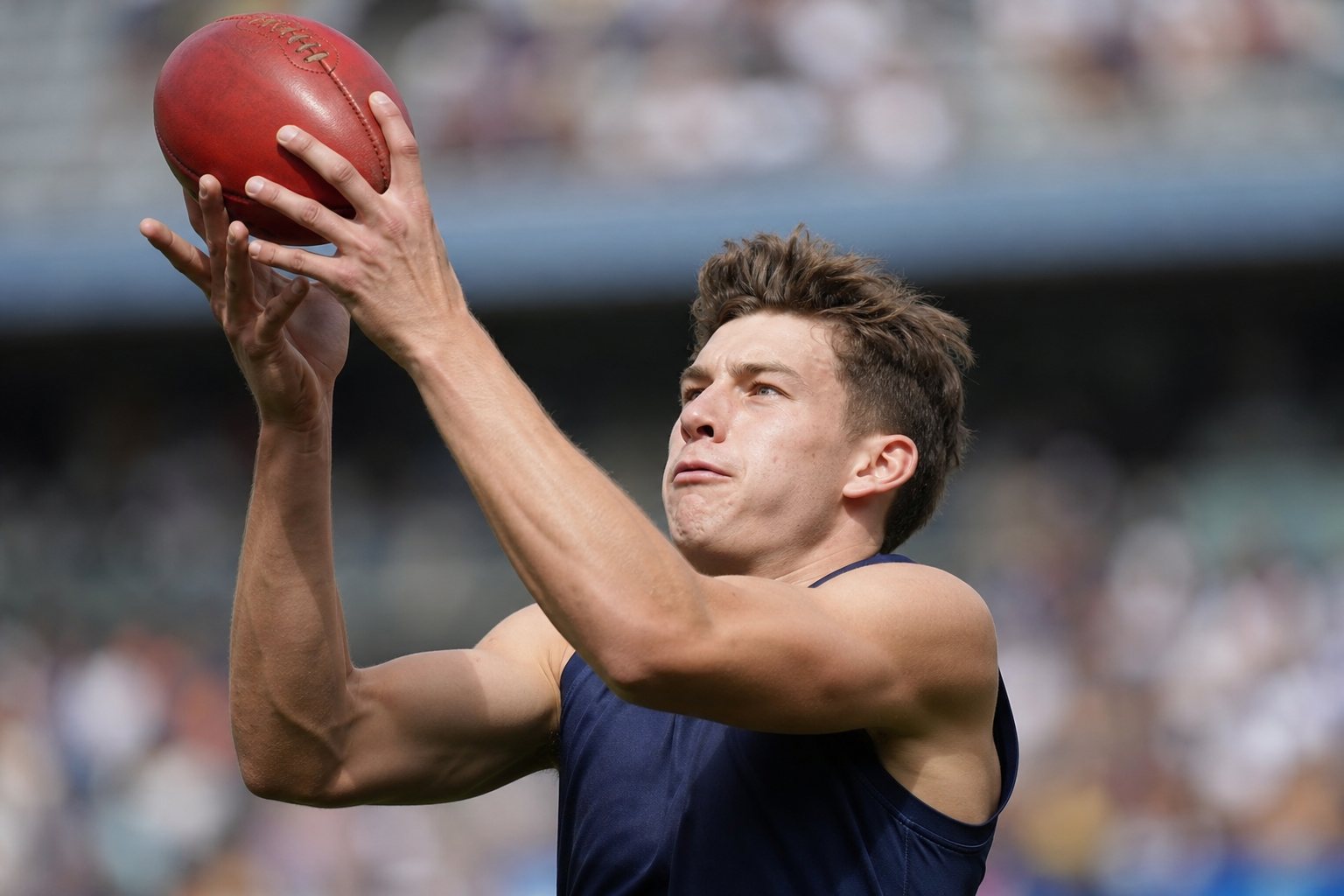
Late in the third quarter your team is six points down, you have just dropped an easy mark, and the next ball is bouncing toward you with two opponents closing. Nothing in the rules gives you time to dwell. Australian rules football mental training is the practice of preparing your attention, confidence and decisions for moments like that, in a game where play rarely stops and every player has to choose between kicking, handballing and running dozens of times a match. This page covers mental performance skills. It does not replace mental health care, and it makes no promise that any technique wins games.
Quick answer: Footy gives natural reset points: the clock stops for stoppages, there are short breaks between quarters (up to 6 minutes at quarter time and three-quarter time, up to 20 at half time under the 2026 Laws), and a free kick from a mark gives a moment before the kick. Build a short routine for those moments, set process goals, and practise the skill under mild pressure. Anxiety, low mood, sleep trouble or eating concerns are health matters for a qualified professional; in the US, call or text 988.
Match-day logistics and the rules are on the rules page. Training is on the training page, and sleep is on the recovery page. The sport overview is on the hub.
What the research does and does not tell us
We did not find controlled trials of mental skills programs in Australian rules players, so most of what follows is general sport psychology practice used by coaches, labelled as such, plus the football-specific facts that shape the mental side of the game. A 2022 systematic review of 48 AFL studies found the physical demands well documented but little understanding of how technical skill and tactics affect what players do, so decision-making research in footy is still thin. The 2026 IOC consensus statement on mental health in elite athletes says mental health symptoms are common among elite athletes, can affect performance and should be supported, which is why we keep mental health and mental performance apart below. Sport psychology resources from the Association for Applied Sport Psychology (AASP) can help you find a qualified consultant.
Confidence and self-talk
Confidence in footy usually comes from preparation you can point to: kicks you have practised, a fitness base, a clear role. After a mistake, the common coaching advice is to use a short, neutral cue (“next ball”, “eyes up”) and get back into the contest. This is a general practice, not a result from an Australian football trial. Rehearse the reset in training when the stakes are low.
Focus and decision-making
Footy asks for fast decisions with partial information: kick or handball, which teammate, whether to contest or hold a position. The 2022 review above notes that tactical analysis is the least studied part of the AFL research, so be wary of anyone claiming proven recipes. Practical ways coaches build decisions include small-sided games with simple rules, calling out options aloud and reviewing short pieces of match video with a coach, asking “what did I see, what did I choose, what else was there.” These are common coaching approaches, not trials.
Goals and motivation
Goals you control work better than goals you do not. “Win” is out of your hands; “contest every ball in the second half” or “take a deep breath before each kick for goal” is within them. Write one to three process goals per match and one skill goal per week. The USAFL says its Aussie Rules Rec program is non-contact and open to all skill levels, and simply enjoying the game is a perfectly good goal.
Imagery and routines
Imagery means picturing a skill, such as a clean mark or a kick to a teammate, before you do it. It is widely used in sport, but the evidence is mixed and depends on the skill and the person, so treat it as a tool to try and not a promise. A short routine can fit footy’s natural pauses: after a mark or free kick you have a moment, so a breath, a look at your target and one cue word may help you settle. Keep it brief and rehearse it in training so it is automatic on match day.
Handling pressure and setbacks
- Between quarters: use the break to reset. Drink, listen to one or two coach points, and let go of the last quarter.
- After a mistake or a goal against: a cue word, a breath and the next task. The Laws let play continue quickly, so the reset has to be fast.
- After a loss or an injury: allow some disappointment, then look at one thing you can control next week. If you cannot shake the mood, see Mental health below.
- Pre-match nerves: nervous feelings are common; familiar routines, a proper meal and arriving early help many players. See the nutrition page for match-day food.
Teamwork and communication
Footy is a game of 18 players spread over a large oval, so talking matters: calling the ball, directing a teammate to space, encouraging after errors. Teams often agree a few short calls and a simple rule such as supporting a teammate who makes a mistake.
Mental health is not the same as mental performance
Skills such as focus and routines help performance. Anxiety, depression, burnout, disordered eating or feeling hopeless are health matters and belong with a qualified professional. In a 2022 study of 68 AFL men, poor sleep predicted large shares of the variation in depression (51%), stress (42%) and anxiety (31%) scores; it was an association, but it shows how sleep and mood go together. The IOC’s 2026 consensus says that with appropriate support and treatment many athletes with mental health symptoms can keep training and competing, and that sometimes participation needs to be modified. If you or a teammate is struggling, tell a doctor, a school counsellor or a mental health professional. In the US you can call or text 988, the Suicide and Crisis Lifeline, at any time; call 911 in an emergency. For eating concerns, see the nutrition page. We found no NCAA Australian football programs, so NCAA resources are not covered here.
Youth considerations
Young players are still learning to handle winning and losing. Parents and coaches can help by praising effort, keeping match talk calm, and letting kids enjoy the game; the USAFL Aussie Rules Next program is contact-free for children. The IOC statement notes that adolescent athletes are relatively understudied and may have their own mental health concerns.
Concussion and the mind
Concussion can affect mood, concentration and sleep. Follow CDC HEADS UP guidance: remove the player from play the same day and let a health care provider decide on return. The injuries page has the details.
Australian rules football mental training FAQs
How do I stop thinking about my last mistake?
A short cue and the next task is a common coaching tool, and footy’s fast pace helps because there is always a next ball. If mistakes stay with you for days, talk to a coach or a mental health professional.
Does visualization really work?
It is widely used and some players find it useful, but the evidence is mixed and not specific to footy. Use it as one tool and practise the real skill too.
How can I handle pre-game nerves?
Many players use a routine: a proper meal, arriving early, a warm-up and one or two cue words. Nerves are common. If anxiety is severe or constant, see a qualified professional.
Is there a sport psychologist for community footy?
The Association for Applied Sport Psychology lists resources for finding a qualified consultant. Ask your doctor or school for a referral if you need clinical mental health care.
Where can I get help right now?
In the US, call or text 988 any time. Call 911 in an emergency. Outside the US, use your local crisis line.
Sources
- AFL: Laws of Australian Football 2026 (quarter and interval lengths)
- Physical, technical and tactical analysis in the AFL: systematic review (2022)
- Mental health in elite athletes: IOC consensus statement (2026)
- Sleep as a determinant of mental health outcomes in elite AFL athletes (2022)
- Association for Applied Sport Psychology: resources
- 988 Suicide and Crisis Lifeline
- CDC HEADS UP: Signs and Symptoms of Concussion
- USAFL (Aussie Rules USA)
General information for education only, not medical advice. It cannot replace a sports medicine doctor, physical therapist or athletic trainer who knows you. See how we research and write in our editorial policy.