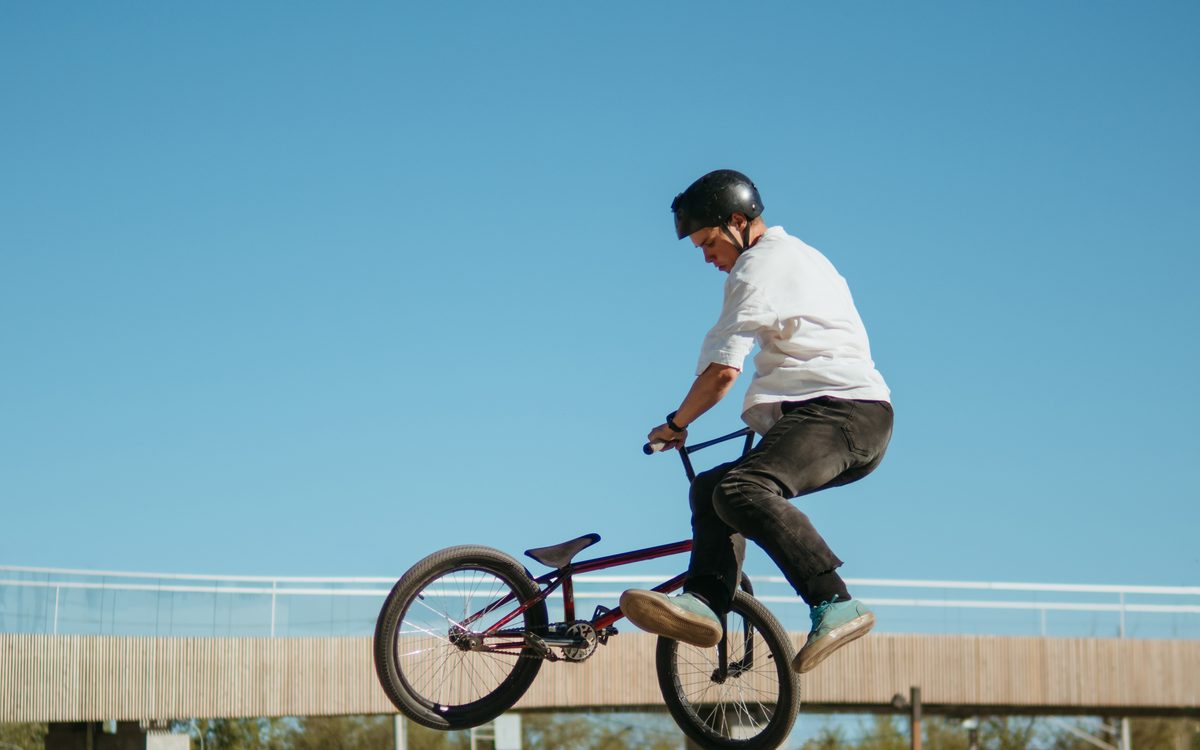
At the top of the quarterpipe the buzzer is about to go. You know the run, you have landed every trick before, and your hands feel weirdly cold. Mental training for BMX freestyle means practising the skills that help you ride your best when it counts: staying focused, handling nerves, setting goals, bouncing back from a crash and committing to a trick. It is different from mental health, which is a health matter and is covered below. Sport overview: BMX freestyle hub.
Quick answer: Mental skills such as pre-run routines, focus cues, imagery and goal setting can be practised like any other skill, and a 2026 position statement from Exercise and Sports Science Australia lists pre-performance routines, attentional strategies, psychological skills training and mindfulness as evidence-based ways to support performance under pressure. They help; they do not guarantee results. Anxiety, depression, disordered eating or burnout are health matters: see a qualified professional.
Why the head matters in this sport
BMX freestyle asks for commitment. The UCI describes judged runs of about a minute where riders choose their own tricks and lines, with scoring on difficulty, execution, style, originality, flow, height and amplitude. A half-committed trick at height is more dangerous than a committed one, and a scary crash can leave a rider hesitating at the lip of the same ramp. Mental skills sit alongside the physical training on the training page. The mental tips below are general sport-psychology practice, not BMX-specific trials unless stated.
Confidence
Confidence tends to come from preparation more than from pep talks. General practice is to build a “bank” of evidence: a progression of smaller features, repeated clean landings, run practice and a record of what you did well. Many riders keep a short note after each session. If a trick feels wrong, the right call is to bail or step back to an easier version, and that decision is a skill too.
Focus
Focus means putting attention on what matters for the next few seconds. Coaches often use short cues: one word for the take-off, one for the landing. In a run, attention wanders to the crowd, the score or the last mistake. The ESSA statement lists implicit attentional strategies among its approaches, which in plain terms means directing attention in ways that keep movement automatic rather than over-thinking each part. Try one cue per trick and drop the rest.
Goal setting
General practice is to mix three kinds of goal: outcome (a place or score), performance (land a trick at a given height) and process (warm up fully, commit, breathe). Process goals are the most in your control. Write them down with a date and review them weekly. Keep them small enough to finish.
Imagery and visualisation
Many riders mentally rehearse a run, the take-off, the rotation, the landing, the line. Imagery is a widely used sport-psychology tool, and we did not find a BMX freestyle trial testing it, so treat it as an optional addition. Practise somewhere quiet, imagine with all your senses, rehearse the feeling of a clean landing and also what you will do if something goes wrong. Keep it short and do not use imagery as a way to try tricks you are not ready for.
Pre-run routines
The ESSA position statement names pre-performance routines as one of the evidence-based strategies for performing under pressure. A routine is a short, repeatable sequence before the start: a breath, a cue word, a look at the first feature, then go. Build it in practice so it is automatic at a contest. Keep it simple enough to survive a delay, a noisy crowd or a changed start time.
Handling pressure and nerves
The ESSA statement says pressure can have both helpful and unhelpful effects and recommends training that prepares riders for pressure. General ways to practise: ride full runs in front of friends, set a rule that you must land a run before you leave, film your attempts, or add a small consequence for a fall. Slow breathing, a quick body scan to relax the hands and shoulders, and a plan for the first ten seconds are common tools. Nerves are normal; the aim is to use them, not to remove them.
Responding to setbacks
Crashes and bad runs are part of the sport. After a fall, check for injury first; if it is a head blow or anything painful, stop and see a professional (see the injuries page). If you are fine, general practice is to step back to a smaller version, rebuild in stages and ask a coach to help set the steps. Talking about fear is normal; hiding it often makes it worse. Return to riding after an injury is a clinician’s decision.
Flow and creativity
Judges score flow and originality, which depend on planning and a willingness to try new lines. Many riders plan a run in sections and rehearse the transitions between them as much as the tricks. A run plan with a fallback, an easier trick you can swap in if something goes wrong, can reduce panic mid-run. This is general coaching practice.
Competition preparation
Practice sessions before a contest vary by event, so check the schedule and rules in advance; see the rules page for the run format. Plan your warm-up, sleep and food, bring a spare of anything that matters and walk the park if you can. Use the same routine you used in training.
Young riders
Kids and teens should enjoy riding first. Adults can help by praising effort and learning, not only results, keeping contests voluntary and avoiding comparisons. We did not find a BMX-specific youth sport-psychology source, so this is general guidance.
Mental performance is not mental health
Mental skills training is for performance. Anxiety that will not go away, low mood, loss of interest, trouble sleeping, disordered eating or burnout are health matters that belong with a qualified professional such as a doctor, psychologist or counsellor, not a pep talk. The 2026 IOC consensus statement on mental health in elite athletes says mental health symptoms and disorders are common among elite athletes, can have sport-related causes, can affect performance, and with support and treatment many athletes can keep training and competing. If you are in crisis in the US, call or text 988 (the 988 Suicide and Crisis Lifeline); elsewhere, contact local emergency services or a crisis line.
BMX freestyle mental training FAQs
How do I stop being scared of a big feature?
Fear is normal. General practice is to work up in small steps, use a smaller version until it feels routine, and ride with a coach or trusted friend. If a fear is overwhelming or has followed a head injury, talk to a healthcare provider.
Does visualisation work for BMX tricks?
Many riders use it, but we did not find a BMX freestyle trial. Treat it as an optional tool alongside real practice, and never as a replacement for working up to a trick.
What is a pre-run routine?
A short, repeatable sequence before a run. The ESSA 2026 position statement names pre-performance routines among evidence-based ways to support performance under pressure.
How do I handle contest nerves?
Practise under pressure, use slow breathing and a cue word, and have a simple plan for your first features. Some nerves are normal and can help.
When should I see a professional about my mental health?
If anxiety, low mood, sleep problems, disordered eating or burnout last or affect daily life, see a doctor or qualified mental-health professional. In the US, call or text 988 in a crisis.
Sources
- Exercise and Sports Science Australia 2026: performance under pressure in sport, position statement (PubMed)
- IOC consensus statement 2026: mental health in elite athletes (PubMed)
- UCI: What is BMX Freestyle – Park?
- 988 Suicide and Crisis Lifeline (US)
General information for education only, not medical advice. It does not replace a sports medicine doctor, physical therapist, athletic trainer or registered dietitian who knows you. See our editorial policy for how we write and source our pages.