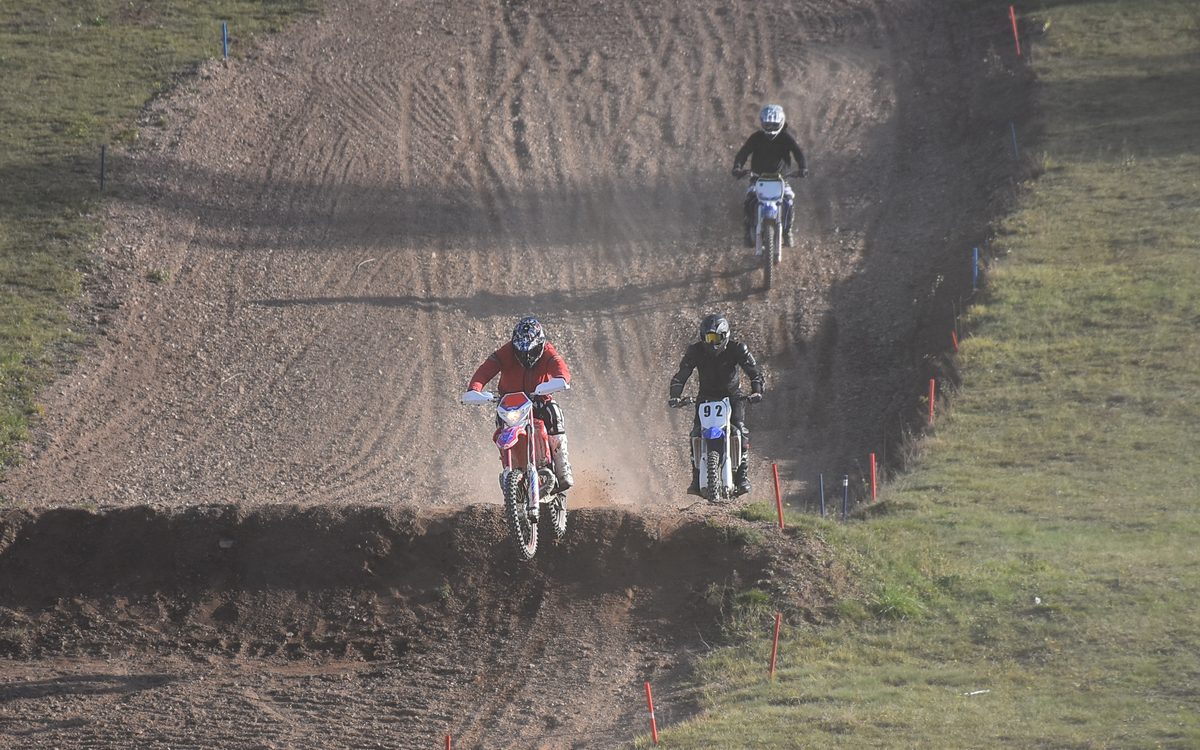
The gate drops, the first three pedal strokes take about as long as a held breath, and by the first jump the race has already been sorted out. BMX racing training is preparation for that half minute: very hard, very short efforts, repeated with rest, plus the bike handling that lets you keep the speed you just made. This page covers the physical demands, a sensible weekly shape, and what the research does and does not show. It is general information; a coach who watches you ride will always know more than a web page.
Quick answer: A BMX race is a sprint of well under a minute, so training centres on gate starts, short maximal efforts with full rests, leg and upper-body strength, jumping power, and track skills. The small amount of research available links peak sprint power to start speed, but samples are tiny. Build gradually, keep at least one rest day, and see a coach, physical therapist or athletic trainer before starting a heavy program, especially for riders still growing.
General information, not medical advice. For the sport itself see the BMX racing hub; for the rules of the race see skills and rules; for protecting your body see injury prevention.
What the sport asks of the body
The UCI says races often last under 40 seconds and elite riders reach close to 60 km/h. That makes BMX racing mostly a test of explosive leg power, handling and nerve, with enough aerobic fitness to repeat rounds through the day. Researchers have started to measure it. In a 2020 field study of 14 male riders (Daneshfar and colleagues), the finishing time of a race had a large correlation with relative peak power (r = -0.68), and the authors suggested coaches look at pedalling rate and power at the start and around the first corner. In a 2026 study of 10 international riders (Marcen-Cinca and colleagues), the time over the first 15 metres of a ramp start correlated with peak power in a short sprint test (r = -0.80), while vertical jump tests did not; the p-value was borderline and the authors urged caution.
Track design changes the demands too. A 2012 notational analysis (Mateo-March and colleagues) of the best eight men at European, World and Olympic events found aerial techniques were about 20% more common on World and Olympic-type tracks than on European ones, with fewer pedalling cycles. Those tracks asked for more technique and less continuous pedalling. In practice, a rider’s training mix should follow the type of track they will actually race.
A systematic review of what matters
The best overview so far is a 2025 systematic review of BMX performance (Becerra-Patino and colleagues). It pooled 21 studies and 287 athletes and sorted them into physiology, physical characteristics (power, speed, sprint), head accelerations and equipment, psychological variables, and skills. It concluded that maximal power, cadence, neuromuscular capacity, feedback and cognitive training, anaerobic and aerobic balance, strength and speed all influence performance. In plain words: the evidence is broad but thin, and mostly about elite or adult riders.
A sensible weekly shape
No published trial tells a rider how many days to do what. What follows is common coaching practice, not a sourced prescription, and it assumes a rider who already races. Adjust it to age, time and the season.
- Gate and start work: short sets of full-effort gates or sprints with long, complete rests so every start is fast. Daneshfar’s riders had 15 minutes between two races in the study, a reminder that quality needs rest.
- Track riding: laps to practise pumping, rhythm sections and cornering, split between easy flow and race pace. A rider who is tired and sloppy is practising bad habits.
- Strength: two supervised sessions a week for the legs, hips, back, chest and shoulders. The Becerra-Patino review recommended hip, knee and ankle extensor work and shoulder exercises, based on performance studies, not injury trials.
- Power and jumping: box jumps, bounds, medicine ball throws and short sprints on the bike, kept low in volume and high in quality.
- Easy aerobic riding: casual riding or other low-intensity activity to help recover between hard days; it is optional, not magic.
- Rest: at least one full day off a week.
Strength training for young riders
Many racers are children. The American Academy of Pediatrics (Stricker and colleagues, 2020) says resistance training is appropriate for youth when it is supervised, well taught and progressed sensibly, and that proper technique matters more than the weight lifted. Parents can ask the club or a qualified coach about a plan; a physical therapist or athletic trainer can screen a rider with a history of injury. Our youth BMX page goes deeper on age.
Periodisation: peaking for the races that matter
Periodisation just means planning the year in phases. A common outline is a general preparation block in the off-season (more strength, more volume), a more specific block as races approach (starts, power, track speed) and a short sharpening period before major events with less volume and more rest. The USA BMX Grand Nationals are scheduled for 25 to 29 November 2026, and many local tracks race most of the year, so riders often choose a few target events and treat the rest as practice. This is common coaching logic, not a sourced rule.
Load, hours and listening to the body
The International Olympic Committee consensus on load and injury (Soligard and colleagues, 2016) says poor load management is a major risk factor for injury and that rapid increases in load are a particular concern. In young athletes, Jayanthi and colleagues (2015) reported that those who trained more hours a week than their age in years had higher odds of a serious overuse injury; that study was not specific to BMX. Bigger jumps in training should therefore be reserved for riders who are rested and who can describe how they feel. Pain that persists, a rider who is suddenly slower, or a child who stops enjoying it are all reasons to talk to a coach and a clinician.
Tools for tracking
Power meters, heart-rate straps and apps can help, but the research above used lab or photocell timing, not wrist trackers. Use simple logs too: gate times, sessions per week and a one-to-five rating of how fresh you felt.
BMX racing training FAQs
How long should a BMX training session be?
There is no sourced figure for session length. Because a race lasts under 40 seconds, most coaches keep gate and sprint sets short and well rested, and stop when speed drops. Ask your coach for a plan that suits your age.
Do I need to lift weights for BMX racing?
The 2025 systematic review recommended leg and shoulder strength exercises for performance. For children, the American Academy of Pediatrics says supervised resistance training is appropriate when well taught. See a coach before starting.
Is BMX racing aerobic or anaerobic?
A single race is a short anaerobic sprint, but riders race several rounds in a day, so some endurance for repeated efforts helps. The review lists the anaerobic-aerobic relationship among factors that influence performance.
Can I train for BMX on a road bike or at the gym?
Gym work and general cycling can build strength and fitness, but the 2012 track analysis shows that jumping and handling skills depend on the track. Gate and track practice is hard to replace.
Does a faster 15 metre start mean a faster race?
In the 2026 study of 10 riders, it was linked to peak sprint power, but the sample was tiny and the p-value borderline, so it is a clue, not a rule. Races are also decided by the first corner and by lines.
Sources
- UCI: What is BMX Racing?
- Daneshfar et al. 2020, Power analysis of field-based BMX
- Marcen-Cinca et al. 2026, lower-body power and start performance
- Mateo-March et al. 2012, notational analysis of BMX races
- Becerra-Patino et al. 2025, systematic review of BMX performance
- AAP, Stricker et al. 2020, resistance training for children and adolescents
- IOC consensus on load and injury, Soligard et al. 2016
- Jayanthi et al. 2015, young athletes and overuse injury
- USA BMX Grand Nationals 2026
General information for education only, not medical advice. It does not replace a sports medicine doctor, physical therapist or athletic trainer who knows you. Read how we work in our editorial policy.