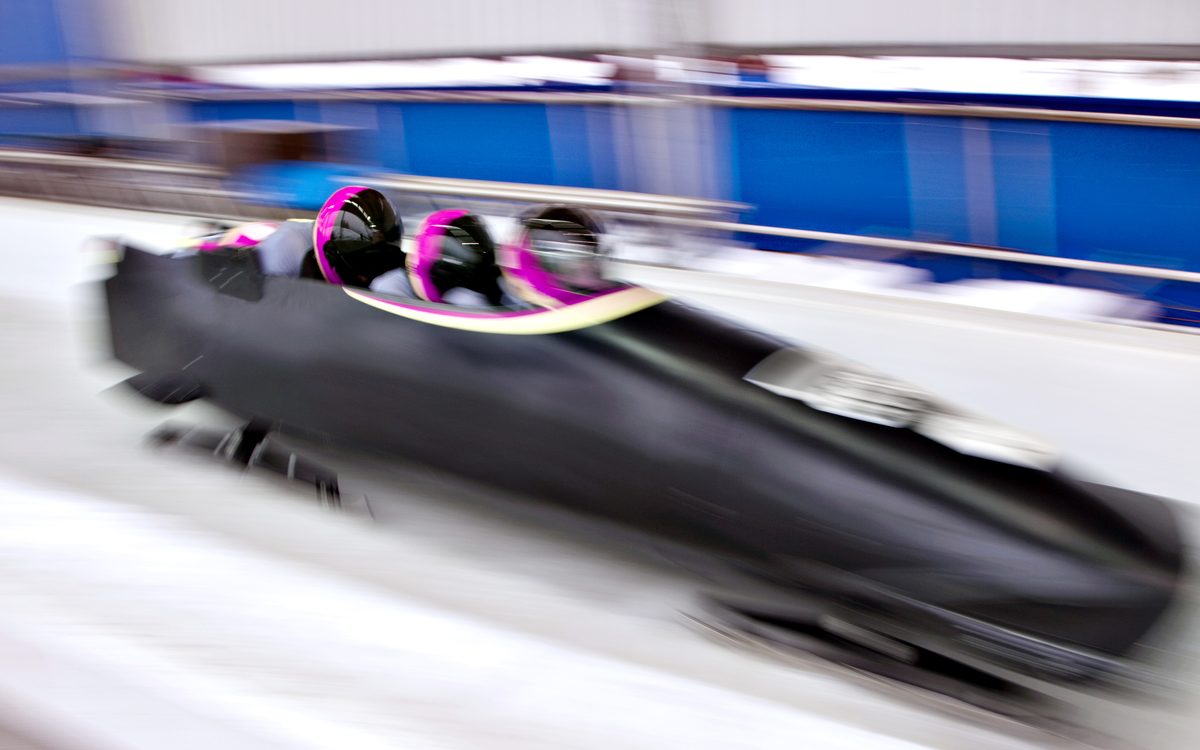
Top of the track, helmet on, the start official counting down, and a body that is about to sprint at full effort for a few seconds with nothing left to fix once the sled drops. Bobsleigh mental training is the set of skills that help a pilot or push athlete stay calm and clear in that moment: focus, a pre-run routine, imagery, handling pressure and bouncing back from a bad run. It is separate from mental health, which is about wellbeing and which we cover below.
Quick answer: The mental skills with the best support in sport research are pre-performance routines, imagery, focus training and self-talk, and a 2026 meta-analysis found interventions of this kind reduced the drop in performance under pressure, especially in closed-skill sports. None guarantee results, and no bobsleigh-specific trial exists. If anxiety, low mood, disordered eating or burnout are affecting life, that is a health matter: see a doctor or licensed mental health professional. In the US, call or text 988.
General information, not medical advice. See also skills and rules, injuries and the bobsleigh hub.
Confidence and focus in a sport of seconds
Sliding has two mental jobs. Push athletes need a maximal, explosive effort on cue. Pilots need to stay relaxed enough to steer smoothly while the sled is moving fast. A 2025 clinical commentary on sliding athletes lists mental imagery and visualisation among the strategies used to optimise performance, alongside an integrated support team. No tested bobsleigh mental programme exists, so what follows is how published general research applies.
Pre-run routines and handling pressure
A 2026 meta-analysis of 21 studies looked at interventions that counter choking under pressure: quiet-eye training, pre-performance routines, mindfulness, left-hand contraction, self-talk and rational emotive behaviour therapy. They improved motor accuracy, executional success and target deviation, and effects were larger and more consistent in closed-skill sports (repeated, predictable actions) than in open-skill ones. The push start is a good fit for a closed-skill routine: the same set-up, the same breath, the same cue. Build the routine in practice, not on competition day, and keep it short enough to do in the start house.
- Routine: a fixed sequence, for example a check of equipment, a breath, one cue word, then the start position.
- Self-talk: short, factual cues (for instance “drive low”) rather than outcome thoughts.
- Breathing: if you use a breathing cue, practise it in training first so it is automatic on the day.
- Between runs: with four runs over two days at the Olympics, a quick reset after each run matters, whether it went well or badly.
Imagery and visualisation
Sliders can rehearse a run in the mind: the push, the line through each curve and the finish. The 2018 Frontiers review on sledding sports lists track experience and visualisation of runs and crashes as athlete-level measures, and says visualising prior crashes may help athletes decide quickly what to do. A 2025 overview of motor imagery says it is influenced by the athlete’s skill level and ability to make vivid, controllable images, and that an internal perspective may suit rehearsing the feel of a movement while an external perspective may suit technique. It also warns that its evidence is the lowest grade. Imagery supports practice; it does not replace it, and it should not be used to ride a track you have not been cleared for.
Setbacks and decision-making
A crash, a mistake or a slow push is part of the sport. In the Milano Cortina women’s monobob, NBC reports the leader made a mistake on the final run and the gold went to a chaser; that is the kind of swing every slider can face. A practical way to handle it is to separate the run from the next one: note one fact to fix, then reset your routine. A coach or sport psychologist can help build this. The Whistler study found more experience was generally linked to fewer injuries, so patience in building track experience is itself a decision skill.
In crews, trust and communication matter: all athletes must finish the run together, and a two-man or four-man push only works if everyone commits to the same moment. Team routines, such as a shared countdown, can help.
Competition preparation
Competition preparation here means getting your head ready, not logistics. Plan sleep and travel (see recovery), keep the same routine as practice, decide beforehand how you will treat a bad run, and know who you will talk to. The 2022 study of presleep heart-rate variability biofeedback in eight Chinese Olympic bobsleigh athletes found mood and sleep measures improved on a single night, which may suggest simple pre-sleep routines are worth trying; it is a very small study.
Youth and young athletes
We did not find research on youth bobsleigh mental training. Young athletes should work only with qualified coaches, and young athletes in sliding sports should be encouraged to speak up about fear or discomfort. The IOC 2026 consensus statement says elite young athletes and para athletes are relatively understudied and may have distinct mental health concerns.
Mental health is not the same as mental performance
Mental skills training builds performance. Mental health is about how you are. The 2026 IOC consensus statement says mental health symptoms and disorders are common among elite athletes, can be linked to sport and can affect performance, and recommends routine screening and monitoring. With support and treatment, many athletes can keep training. If you notice persistent anxiety, low mood, panic, sleep loss, disordered eating, burnout or thoughts of self-harm, take it to a doctor or licensed mental health professional. In the US, the 988 Suicide and Crisis Lifeline is available by call or text. For a sport psychology consultant, the Association for Applied Sport Psychology has resources.
Bobsleigh mental training FAQs
Does visualisation work for bobsleigh?
It is used widely and a 2025 clinical commentary lists it for sliding athletes, but evidence for imagery in sport is graded low, and no bobsleigh-specific trial exists. Treat it as practice support.
How do I handle fear on the track?
Build track experience step by step with your coaches, use a short routine and talk to a coach or sport psychologist. Persistent fear or panic is a health matter for a professional.
What is a pre-run routine?
A short, fixed sequence before the start: equipment check, breath, cue word, start position. A 2026 meta-analysis found routines and similar tools reduced performance drops under pressure.
Is sport psychology the same as therapy?
No. Sport psychology consultants work on performance skills. Therapy for anxiety, depression or eating concerns is provided by licensed mental health professionals.
Where can I get help right now?
In the US, call or text 988. Elsewhere, contact your local emergency or crisis service and your doctor.
Sources
- Interdisciplinary health and performance management of the sliding athlete, Int J Sports Phys Ther 2025
- Zeng et al. 2026: counteracting choking under pressure in sport, meta-analysis
- McCradden and Cusimano 2018, Front Neurol: concussions in sledding sports and “sled head” (PMC)
- Motor imagery training as a load-management tool for athletes, Sports Health 2025
- Presleep HRV biofeedback in Chinese Winter Olympic bobsleigh athletes, 2022
- Whistler Sliding Centre injuries, Br J Sports Med 2016
- NBC Olympics: bobsled results, Milano Cortina 2026
- IOC consensus statement on mental health in elite athletes (2026)
- 988 Suicide and Crisis Lifeline
- Association for Applied Sport Psychology: resources
General information for education only, not medical advice. It does not replace a sports medicine doctor, physical therapist, athletic trainer, licensed mental health professional or qualified coach. See our editorial policy for how we research and write.