This article contains affiliate links: if you buy through them we may earn a commission, at no extra cost to you. Read our affiliate disclosure.
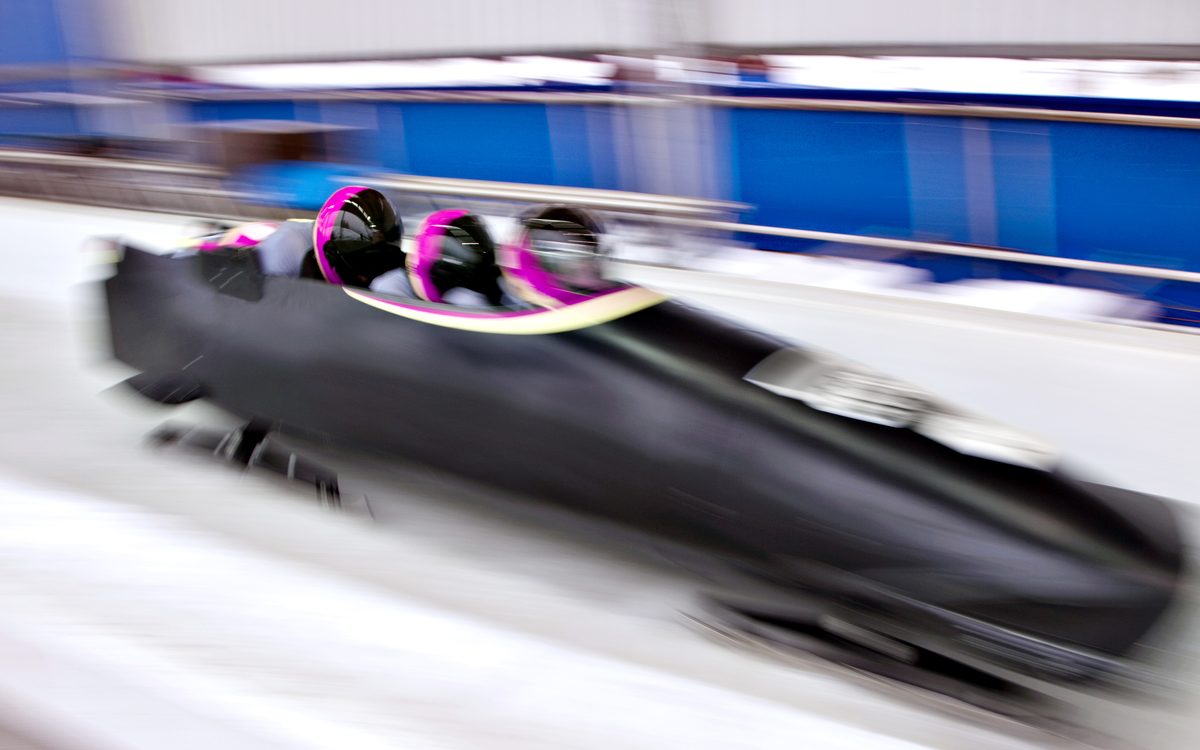
Last run of the women’s monobob at the Cortina Sliding Centre, February 2026. Germany’s Laura Nolte had led for most of the race; American Elana Meyers Taylor, 41, had chased her through three runs. Then Nolte made a mistake on the final run, and Meyers Taylor slid to gold in 3:57.93, four hundredths of a second ahead. Bobsleigh (called bobsled in North America) is the sport where gravity, a sprint start and a steering rope decide medals by hundredths of a second.
Bobsleigh guides: what do you need?
New to bobsleigh? Start with the first card. Everything here is general education, not medical advice.
History & Origins of Bobsleigh
Bobsleigh began in St. Moritz, Switzerland. In the early 1870s English visitors at a local hotel started adapting boys’ delivery sleds for fun, and by the late 1870s the hotel owner had built a natural-ice run near the hamlet of Cresta so sleds stayed off the town’s streets. Formal competition on the Cresta Run followed in 1884, the first club was formed in 1897, and the first purpose-built bobsled track opened outside St. Moritz in 1902. These early dates come from a general history reference; sources for the very first years vary, so treat the exact years as approximate.
The sport became international in the 1920s. The federation now called the International Bobsleigh and Skeleton Federation (IBSF, formerly FIBT) was founded in 1923, and four-man bobsleigh was on the programme of the first Winter Olympics at Chamonix in 1924 (IBSF). Two-man followed at Lake Placid in 1932. For women the path was longer: demonstration races began in the United States in 1983, the two-woman event reached the Olympics in 2002, and the single-seat women’s monobob was added for Beijing 2022 (Olympics.com). Our bobsleigh page explains how a run works.
- Early 1870s: English visitors in St. Moritz adapt delivery sleds for recreation.
- 1884: Formal competition begins on the Cresta Run.
- 1897: First club formed.
- 1923: The international federation (now IBSF) is founded.
- 1924: Four-man bobsleigh at the first Winter Olympics, Chamonix.
- 1932: Two-man event added at Lake Placid.
- 2002: Two-woman bobsleigh debuts at the Olympics.
- 2014: Women are confirmed as eligible for four-man crews.
- 2022: Women’s monobob joins the Olympics.
Legends of the Sport
Pilots and push athletes from different eras, not ranked.
- André Lange (GER): pilot who won four Olympic golds between 2002 and 2010 and 8 World Championship golds.
- Francesco Friedrich (GER): pilot with four Olympic golds (2018 and 2022) and the most World Championship titles of any bobsleigh athlete.
- Elana Meyers Taylor (USA): six Olympic medals from 2010 to 2026, including monobob gold at Milano Cortina.
- Johannes Lochner (GER): won the two-man and four-man at Milano Cortina 2026.
- Laura Nolte (GER): Milano Cortina two-woman champion and a two-time monobob world champion (2023, 2024).
- Kaillie Humphries (USA): medallist for Canada and the United States, with two bronze medals at Milano Cortina 2026.
- Kaysha Love (USA): 2025 women’s monobob world champion.
Official results and records
We only list champions and records here after checking them on the official source. For the latest results, go to:
How we keep this current: we re-check facts after each major championship and update this page. Spot an error? See our editorial policy.
This page explains how bobsleigh works, who plays it and how people actually get into it, what the research says about its injuries (head and neck first), and the gear that is worth a look. It is general information, not medical advice.
Bobsleigh at a glance
| What it is | Timed runs down a banked, iced track in a gravity-powered sled. Crews push the sled at the start, then ride it; the pilot steers. |
|---|---|
| How it is won | Lowest combined time over the runs. At the Olympics that is four runs over two days. |
| Sleds and crews | Two-man, two-woman, four-man and the single-seat women’s monobob at the Olympics. Crews are a pilot, a brakeman and, in a four-man sled, two push athletes. |
| Where | Purpose-built ice tracks. In the US, Lake Placid, New York, and Park City, Utah, are the training and competition homes for the sliding sports. |
| Governing bodies | International Bobsleigh and Skeleton Federation (IBSF) worldwide; USA Bobsled and Skeleton (USABS) in the United States. |
| Season | Winter, on refrigerated tracks. Push-start training goes on all year on a track or in a gym. |
| Biggest health risk | Head and neck loading from rough, fast runs and crashes (see below). |
How bobsleigh works
Everything starts at the top. The crew pushes the sled by hand for the first stretch of the track, then jumps in. The push is the only part of the run an athlete can add power to; after that, gravity does the work and the pilot’s job is to keep the fastest line through the curves. The pilot steers with two ropes or rings that turn the front runners, using small movements. The brakeman rides at the back, pushes hard in the start and pulls the brake after the finish line. In a four-man sled, two more athletes push and ride in the middle. Each run is timed electronically, and every member of the crew must finish with the sled for the run to count.
In the Olympic format, the sled with the lowest total time over four runs wins. The start order for the first run follows world rankings (the top 10 pilots choose their start numbers); after that, order follows the standings, and the last run starts the slowest sleds first. The reference summaries we found put maximum speeds above 120 km/h (75 mph) with forces up to about 5 g in the banked curves, and cap the sled and crew weight so that bigger crews do not get an automatic advantage (the limits differ for each sled type, so check the current IBSF rulebook before relying on a number).
The disciplines
- Two-man: a pilot and a brakeman. At Milano Cortina 2026 Germany’s Johannes Lochner and Georg Fleischhauer won in 3:39.70, ahead of two other German sleds.
- Two-woman: Laura Nolte and Deborah Levi took gold for Germany; the US pair Kaillie Humphries and Jasmine Jones won bronze.
- Four-man: the classic event, on the Olympic program since the first Winter Games in 1924. Lochner won it too, completing a two-man and four-man double; Switzerland’s bronze was its first four-man medal since Torino 2006.
- Women’s monobob: one athlete does the push, the steering and the braking alone in a single-seat sled. It joined the Olympics at Beijing 2022.
Who plays bobsleigh, and how people get in
Bobsleigh has no youth league in the way soccer does, and we did not find an NCAA or school-sport championship for it. It is mostly a talent-transfer sport: sprinters, football players, rugby players, throwers and other athletes who already have speed and power switch over. USA Bobsled and Skeleton recruits through a virtual combine, where athletes upload videos of a 40-yard sprint, a 10-yard sprint, a broad jump and a vertical jump, plus an interview and a highlight reel, with the results checked by a certified strength coach. It has also held in-person combines in Utah and elsewhere, and top performers can be invited to a rookie camp in Lake Placid, often the first time an athlete pushes a sled on ice.
At the top level, IBSF runs the World Cup and World Championships, and national teams (Germany above all) dominate. At Milano Cortina 2026 Germany won eight of the 12 bobsleigh medals, and the US won three (monobob gold, plus monobob and two-woman bronze for Humphries).
Olympic and Paralympic status
- Olympics: four bobsleigh events were contested at Milano Cortina 2026 (two-man, two-woman, four-man, women’s monobob). The next Winter Games are the French Alps 2030 Games; reports from the sliding federations say bobsleigh, luge and skeleton are planned for the refurbished 1992 track at La Plagne. The list of bobsleigh events for 2030 is not confirmed on the sources we could read, so check the official programme for the current Games.
- Paralympics: para bobsleigh was left out of the Milano Cortina 2026 Paralympic program because the IPC counted 10 countries regularly practicing it against a minimum of 12. IBSF still runs Para Sport World Cups and championships in the monobob sled. Check paralympic.org for the current Games.
Physical demands
Bobsleigh is a power sport with a few seconds of work: a maximal sprint push, then a ride that asks the neck, trunk and legs to stay braced under load. Push athletes train like sprinters and jumpers (acceleration, maximal strength, explosive power), and pilots add driving skill and the ability to hold a stable posture while the sled is being thrown around. In the one research study that put sensors in the mouthguards of World Cup bobsledders, 12 athletes (3 pilots and 9 push athletes) were measured over a full 2021-22 season, and the team recorded 1,900 head acceleration events across 48 training days and 53 competition days. The authors point out that the effects of those repeated impacts on cognition and mental health still need study. Because the push starts the run, a short, careful sprint warm-up is part of every training day.
Health and safety in bobsleigh
Sliding sports are fast, and the most common serious problem is the head. If you are hurt, see a sports medicine doctor, physical therapist or athletic trainer; nothing here is a diagnosis or a return-to-sport decision.
Concussion and “sled head”
A 2018 systematic review in Frontiers in Neurology (McCradden and Cusimano) found that concussions made up 13 to 18% of injuries in sliding sports, a larger share than in ice hockey (3 to 19%) or skiing and snowboarding (3 to 11%). At the Sochi 2014 Olympics, 18.1% of bobsledders were injured. Athletes also describe “sled head,” a foggy headache after bumpy or repeated runs, and the review says it is still unclear whether that is a concussion, repeated smaller head impacts or neck strain. The review’s suggestions include helmets, mouthguards, neck strengthening, well-maintained tracks and medical staff on site.
The CDC’s HEADS UP program says to recognize and remove: anyone with a possible concussion stops the day’s activity and is seen by a healthcare provider, who decides about return. Call 911 for danger signs such as repeated vomiting, a seizure, or a headache that gets worse.
Everything else
Push athletes sprint at full effort, and sprinting itself is a known source of hamstring and calf strains in any sport, so a progressive warm-up before the start is sensible. In a related sport, a study of US luge athletes found crashes caused most injuries, mainly contusions and strains, with fractures and concussions the most serious. In the cold, layers and warm-ups matter between runs; see the CDC’s hypothermia and frostbite guidance linked in our sources. We did not find a published injury-rate study specific to youth bobsleigh, so no number is given here.
Training, recovery and nutrition pointers
Sprinting form and start mechanics are worked on in short, high-quality reps with full rest between them, then in sled pushes on a track or a wheeled push cart. Strength work centers on the legs and trunk, and neck strength is a sensible topic to take up with a coach or physical therapist. Sleep first: the CDC recommends at least 7 hours for adults and 8 to 10 for teens. Many athletes use foam rolling or a small massage gun for comfort after heavy sprint days; those are comfort tools, not treatment. For general plans, see sprint and power training in track and field, and our recovery tools guide. Fueling advice belongs with a registered dietitian who knows sport; our track and field nutrition page covers the general principles.
Gear
Sled, helmet and speedsuit are supplied or approved through your team or club; sleds are built to IBSF rules and are not something you buy on a whim. What an athlete can pick up themselves is the training and care kit: a sprint-start spike or track shoe from a specialist, a mouthguard, agility tools and recovery gear.
- Mouthguard: the 2018 review and the head-impact study both treat mouthguards as part of head protection in sliding sports. A boil-and-bite guard such as the Shock Doctor Gel Max is a low-cost starter.
- Start-drill tools: an agility ladder lets you drill quick, light foot contacts on a gym floor between sled sessions.
- Recovery kit: a foam roller and a travel-size massage gun for sprint days.

Shock Doctor Gel Max Mouthguard
- Boil-and-bite gel liner
- Youth and adult sizes
- Maker: exoskeletal shock frame
$11.99 at Amazon, as of Nov 17, 2026 01:07 UTC
Check price on Amazon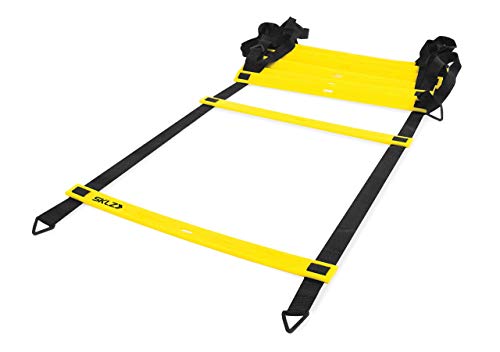
SKLZ Quick Ladder
- 15 ft, 11 flat rungs
- 17 in wide
- Carry bag included
$29.99 at Amazon, as of Nov 17, 2026 01:07 UTC
Check price on Amazon
TriggerPoint GRID 1.0 Foam Roller
- 13 in multi-density
- Hollow core
- Foam rolling for comfort
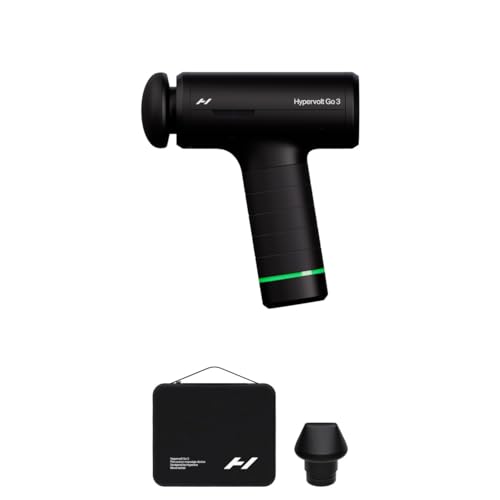
Hypervolt Go 3
- 1.6 lb
- 5 speeds
- Up to 4 hr battery
$149.00 at Amazon, as of Nov 17, 2026 01:07 UTC
Check price on AmazonSafety first: a mouthguard does not prevent concussion, and no product replaces track rules, coaching and medical care. More in our massage gun guide and foam roller guide.
Related sports and disciplines
- Skeleton: head-first on a small sled, on the same tracks.
- Luge: feet-first on your back, the third sliding sport.
- Track and field: where many push athletes come from.
- Speed skating and ice hockey, two more ice sports.
Bobsleigh FAQs
How fast does a bobsled go?
The reference summaries we found say speeds can pass 120 km/h (75 mph), with forces of up to about 5 g in the curves. Exact speeds depend on the track and the sled.
How do I become a bobsledder?
Most athletes come from another sport. USA Bobsled and Skeleton recruits through a virtual combine (sprints, jumps and an interview, with verified results) and in-person combines, and invites the best to a rookie camp in Lake Placid. Check usabs.com for current dates.
What is the difference between bobsled, skeleton and luge?
Bobsleigh is a steered sled with a crew that sits upright. In skeleton you slide head-first on your stomach; in luge you lie on your back and go feet-first. Bobsleigh and skeleton are run by IBSF; luge by the International Luge Federation.
Is bobsleigh dangerous?
It is a high-speed sport with a real head-injury burden: concussions were 13 to 18% of injuries in sliding sports in one review, and 18.1% of bobsledders were injured at the Sochi 2014 Olympics. Track maintenance, protective equipment and medical staff matter.
Can women compete in four-man bobsleigh?
Women’s Olympic events are the two-woman and the monobob. Reference summaries say women may also enter the four-person event under IBSF rules since 2014, but crews rarely do; check the current IBSF rulebook.
Sources
- NBC Olympics: bobsled results, Milano Cortina 2026
- NBC Olympics: How does Olympic bobsled work?
- McCradden and Cusimano, Frontiers in Neurology (2018): concussion in sledding sports
- McPherson and colleagues (2024): head kinematics in World Cup bobsleigh
- USA Bobsled and Skeleton: recruitment
- FIL: La Plagne for the 2030 sliding events
- CDC HEADS UP: signs and symptoms
- CDC: sleep
- CDC: preventing hypothermia
More to explore: the sports hub, the skiing injuries page for winter-weather and head-injury basics, recovery tools and massage guns.