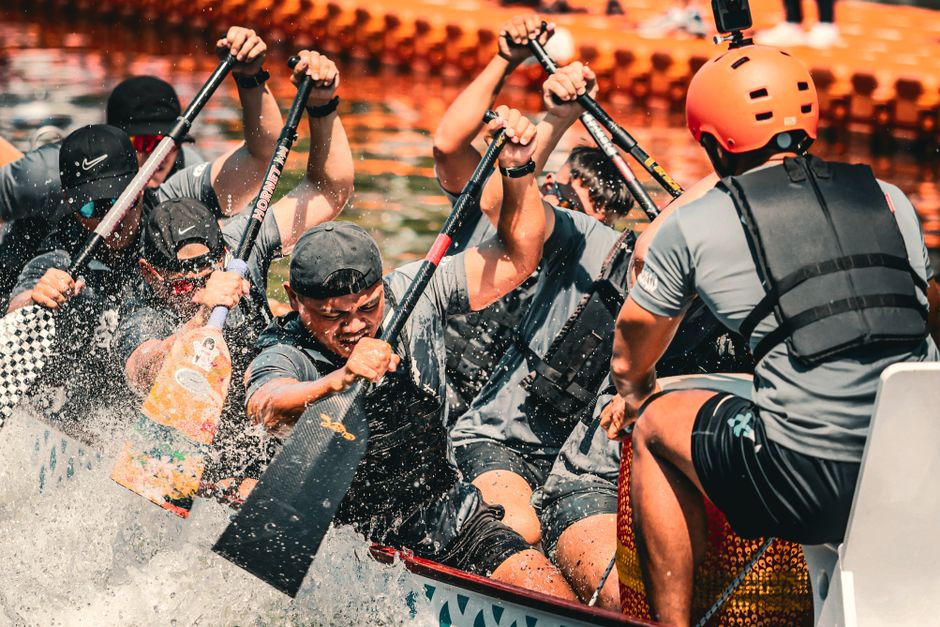
The wind has come up on the far side of the lake, the bow paddler in your tandem canoe has gone quiet, and the shoreline you were aiming for looks a lot farther away than it did ten minutes ago. Or you are standing above a rapid on a river trip, with your stomach tight, deciding whether to run it or carry around. Or you are kneeling at the line for a 500 m sprint with a rival boat in the next lane. Canoeing mental training means practicing the skills that help paddlers think and act clearly in moments like these: calm decisions, a race routine, steady focus over long distances and clear talk between partners. This page is for paddlers, trip leaders, parents and coaches. It is about mental performance, which is different from mental health; a short section below explains the difference.
Quick answer: Mental skills for paddlers are habits you can practice: rehearse capsizes and rescues in safe water so they feel familiar, agree on a plan and a stopping point before you launch, use a short routine at the start line, give your attention one simple cue at a time, and settle roles and signals with your partner before you need them. Research on these skills in canoeists is thin, and none of it promises a faster time or removes the real risks of moving water. If worry, low mood or trouble with eating or sleep lasts more than a couple of weeks, see a doctor or a licensed mental health professional, and in a crisis call or text 988 (US).
Fear of whitewater and of capsizing
Feeling nervous near moving water is normal, and it can be useful: it makes you check the flow, the scouting and your partner. What helps is turning a vague fear into things you have practiced. The Coast Guard’s boating guide asks paddlers whether they could climb back into the boat with all their gear on, and whether they have practiced it. The American Canoe Association (ACA) and American Whitewater (AW) both put skills and self-rescue ahead of courage: the AW Safety Code says to run only rivers where you are sure you can self-rescue, and to keep enough control to stop or reach shore well before danger. Our canoe training guide lists the safety skills worth putting in your week: a controlled capsize, emptying a swamped canoe, re-entry with a partner and, on whitewater, swimming in current.
A practical way to build confidence is to expose yourself to the scary part in small, supervised steps: capsize on purpose in warm, shallow water with an instructor, then again with your gear tied in, then with a partner doing the rescue. We found no published study that tests this approach in canoeists, so treat it as common instruction practice, not a proven treatment. For a related sport, a research review of panic in recreational scuba divers (Morgan, Sports Medicine, 1995) said that panic is widely seen as a factor in diving accidents, that people with higher trait anxiety are likelier to react strongly to a stressor, and that evidence for relaxation or imagery fixes was inconsistent and called for more research. Diving is not paddling and the review is old, so take it only as a reminder that fear in the water is real and deserves preparation, not shame.
Fear is also information. If a river, a crossing or a rapid is beyond what you or your partner can handle today, the AW code and the ACA both treat walking around, waiting or going home as good judgment. Wind and cold water are covered in our canoe trip and race day guide, and the injury picture in canoeing injuries.
Calm decisions when things go wrong
When something goes wrong, a plan made on shore beats an argument made in the water. Before launching, many trip leaders agree on three things: what each person does after a capsize, the point at which the group turns around or lands, and who makes the call. AW’s Safety Code supports the structure around that, suggesting groups of at least three people in two or more boats, a float plan left with someone on shore and check-ins on longer trips. The float-plan steps are in the race day guide.
Under stress, short routines beat long deliberation. One simple pattern used by many instructors is stop, breathe, look, decide: stop paddling the boat into trouble if you can, take one slow breath, look downstream or at the shoreline, then pick one action. That sequence is coaching practice, not a result from a canoe study.
Race routines and the start line
Racing canoeists face a different pressure: a short, loud start with a lane full of rivals. A 2026 position statement from Exercise and Sports Science Australia on performance under pressure (Schweickle and colleagues, Sports Medicine) lists pre-performance routines among the evidence-based strategies, together with psychological skills training and mindfulness-based approaches, and says pressure can help as well as harm. It also says that practicing with some pressure, such as a time trial with teammates watching, can prepare athletes.
For a sprint paddler, a routine can be the same warm-up order, the same breathing before “Ready, Set, Go” and one cue word for the first strokes. Under international sprint rules a second false start by the same crew disqualifies it, and in races up to 1,000 m a capsize ends the race (see canoe sprint and canoeing rules), so a rehearsed start is a calm one. For slalom C1 paddlers, the standard preparation is to walk the course, learn the gates and rehearse the lines in your head; see canoe slalom. Imagery means picturing the run as you would paddle it, using as many senses as you can. A 2023 meta-analysis of psychological interventions across sports (Reinebo and colleagues, Sports Medicine) found moderate effects for imagery, multimodal psychological skills training and mindfulness-based approaches, but the authors report the effects were not stable once non-randomized trials and subjective outcomes were removed. We found no canoe-specific imagery study. Race-day logistics are on the race day page.
Focus and pacing over long distances
Marathon canoeing and long trip days are tests of attention as much as muscle. The mind drifts to the clock, the next bend, the ache in your knees. Many coaches use one cue per phase, such as a stacked top hand or a short stroke that ends at the knee (the ACA’s technique cues, covered on the training page), and bring attention back to it each time it wanders. Drifting is normal; returning is the skill.
On pacing, one published study is available for a neighbouring boat. A 2025 analysis of sprint kayak racing (Estreich and colleagues, PLoS One) described pacing profiles for 500 m and 1,000 m races, found that a drop-off in velocity and a late kick were the main patterns, and reported a trend toward more drop-off among development-pathway athletes. It also found that an athlete’s profile changes through a career. It was done with kayakers, so apply it to canoes with caution; the practical message is that learning to hold pace is a skill that develops, not a flaw of character.
Partner communication in tandem boats
A tandem canoe is a two-person team in one hull. The ACA’s guide puts the bow paddler in charge of cadence and side, with both paddlers switching sides together, the bow not more often than every 10 strokes, and notes that 30 strokes a minute is fine. That is a communication system built into the stroke: one person sets rhythm, the other matches it. We found no study of how tandem canoe partners communicate under pressure, so the following is coaching practice, not research.
Agree signals before you launch: who calls the switch, what words mean “straight ahead”, “turn”, “stop” and “land now”, and who decides when the other partner is worried. Keep calls short and calm; a shout in a wind can be heard as panic. After a bad run or a capsize, review what happened with curiosity, not blame, and swap bow and stern jobs in practice so both partners understand the other seat.
Handling setbacks and bad days
Every paddler has a day that goes badly: a missed gate, a capsize in a race, a trip cut short by weather. A common three-step reset is to acknowledge it (a slow breath), learn one thing, and move to the next job. We found no canoe study of recovering from a bad run, so this is common coaching practice. After hard blocks of training, protect sleep and easy days: see canoeing recovery.
Young paddlers
We found no canoe-specific research on mental skills in youth to cite here. For youth programs and school or club options, see youth canoeing; for clubs and races, see canoeing leagues and associations. Most young paddlers need patient, fun coaching and graded exposure to skills in safe water, not a specialist. If a child shows lasting fear or distress, start with their pediatrician or a licensed mental health professional.
Mental performance is not the same as mental health
Everything above is about performance skills. Anxiety disorders, depression, disordered eating and burnout are health matters, not mindset problems, and a better routine will not fix them. The 2026 International Olympic Committee consensus statement on mental health in elite athletes (Reardon and colleagues, British Journal of Sports Medicine) treats them as medical and psychological care issues. A 2024 survey of affiliated Spanish women paddlers (Scientific Reports) found that about a third had a moderate or high risk of anxiety, that risk was higher among less experienced paddlers, and that those paddlers also had a greater risk of eating disorders; the study describes risk, not diagnosis, and covers one country and one sample. Signs to take seriously include worry or low mood lasting weeks, dread before every outing, withdrawing from the crew, or big changes in eating or sleep.
Start with your doctor, a licensed psychologist or another qualified mental health professional. In the US, you can call or text 988 (Suicide & Crisis Lifeline) at any time. For eating and weight worries, a clinician should lead care; the basics are in our canoeing nutrition and supplements guide.
Frequently asked questions
How do I get over my fear of capsizing?
Practice it in small steps in warm, shallow water with a qualified instructor, with your gear tied in and a partner ready to help. Confidence comes from having done the skill, not from willing the fear away. We found no study testing this approach in canoeists, so treat it as common instruction practice.
How do I stay calm on a river when something goes wrong?
Decide the plan on shore: who does what after a capsize and where you will land. In the moment, a short routine such as stop, breathe, look and decide helps, and so does a short instruction to your partner. If a rapid or crossing feels beyond your group, walking around it is good judgment.
How should tandem partners communicate?
Agree signals before launching, keep calls short and calm, and follow the ACA pattern in which the bow sets the cadence and both switch sides together. Review after each outing without blame.
Does visualization help canoe racers?
A 2023 meta-analysis across sports found moderate effects for imagery, but the authors said the effects were not stable once weaker studies were removed. We found no canoe-specific study, so use it as one tool, not a guarantee.
When is nervousness a health issue?
If worry, low mood or trouble with eating or sleep lasts more than a couple of weeks or interferes with daily life, talk to a doctor or licensed mental health professional. In the US you can call or text 988 in a crisis.
Sources
- Estreich H et al. An analysis of pacing profiles in sprint kayak racing using functional principal components and hidden Markov models. PLoS One, 2025. PMID 40601604
- Anxiety, eating disorders and menstrual disturbances risk in Spanish elite female paddlers. Scientific Reports, 2024. PMID 38956353
- Morgan WP. Anxiety and panic in recreational scuba divers. Sports Medicine, 1995. PMID 8614760
- Reinebo G et al. Effects of Psychological Interventions to Enhance Athletic Performance: A Systematic Review and Meta-Analysis. Sports Medicine, 2023. PMID 37812334
- Schweickle MJ et al. Performance Under Pressure in Sport: A Position Statement from Exercise and Sports Science Australia. Sports Medicine, 2026. PMID 42271117
- Reardon CL et al. Mental health in elite athletes: International Olympic Committee consensus statement (2026). British Journal of Sports Medicine. PMID 42580854
- American Whitewater Safety Code (2024)
- American Canoe Association, Beginner’s Guide
- US Coast Guard, float plan
- 988 Suicide & Crisis Lifeline
General information for education only, not medical advice. It does not replace a doctor, psychologist or other qualified professional, or a qualified paddling instructor. See how we work in our editorial policy. Back to the canoeing hub.