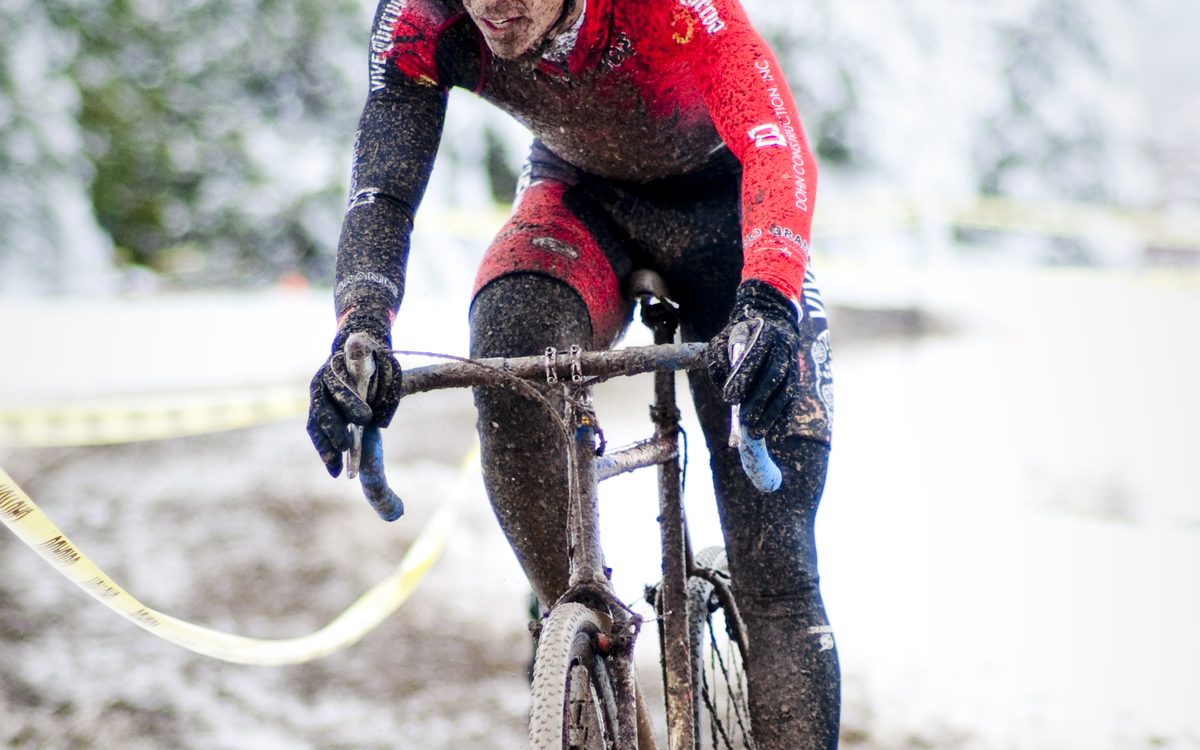
Sunday, 4:30 p.m. The race is done, the bike is hosed off, and your hands will not close around the zip of a dry jacket. Saturday you raced too. Cyclocross recovery is what you do between hard efforts, sleep, food, easy days, warm clothes, mobility work and, for some riders, tools like massage, so that the next session is better, not just survived. Cross season often means two races on one weekend in cold, wet conditions, which makes recovery habits matter. This page covers what evidence supports and where it is weak. See the cyclocross hub for the sport.
Quick answer: Sleep, enough food and easy days have the most support. Massage, compression and cold water can ease soreness or perceived fatigue in studies, but effects are modest and evidence is mixed, so they are comfort tools rather than treatment. After a cold, wet race, get dry and warm quickly. Muscle soreness fades within days; sharp, one-sided or worsening pain is different, so see a sports medicine doctor, physical therapist or athletic trainer.
Sleep comes first
The CDC recommends at least 7 hours of sleep for adults and 8 to 10 hours for teens. Evening races and early-morning drives can cut sleep short, so plan for it: a regular bedtime in race weeks, a dark cool room, and a quiet evening after a late race. We found no cyclocross-specific sleep study, so these steps are general practice. If you rarely feel rested despite enough hours, mention it to a doctor.
Load management across a season
The 2013 joint consensus statement of the European College of Sport Science and the American College of Sports Medicine (Meeusen and colleagues) explains that training needs overload, but excessive overload without enough recovery can lead from short-term fatigue that improves with rest (functional overreaching) to longer-lasting problems. The statement lists fatigue, performance decline and mood disturbance as symptoms of overtraining syndrome, and says no single marker is generally accepted for detecting it. For riders, that means: schedule easy days after hard ones, consider a lighter week every few weeks, and not stack interval sessions on the days around races. These are general practice rules, not sourced numbers. Our training page covers the weekly shape.
Right after the race: warm, dry and fed
The National Athletic Trainers’ Association position statement on environmental cold injuries says people exercising in cold, wet or windy conditions are at risk, and its recommendations cover prevention, recognition and immediate care. As general practice, after a muddy finish, change out of wet kit quickly, put on dry layers and a hat, and warm up with a hot drink. Eat within a short time (see nutrition). Shivering that does not stop, confusion or slurred speech needs medical help.
What the evidence says about recovery methods
A 2018 systematic review and meta-analysis in Frontiers in Physiology (Dupuy and colleagues, 99 studies) looked at active recovery, massage, compression garments, water immersion, contrast water therapy, cryotherapy, stretching and electrostimulation, and measured muscle soreness, perceived fatigue, muscle damage and inflammatory markers. It concluded massage seemed most effective for reducing muscle soreness and perceived fatigue, and that compression and water immersion can help manage perceived fatigue. It measured soreness, fatigue and blood markers, not race results, and effects varied.
- Strong support: sleep, food, fluids and easy days.
- Some support for how you feel: massage, compression, water immersion. Useful if you like them, but not proven to speed adaptation.
- Weak or unclear: many gadgets and powders. Be wary of strong claims. A foam roller or massage gun is a comfort tool, not treatment, and it should not be used on a fresh injury or numb area.
Mobility and flexibility
Cross riders hold a long, forward position on the bike, then run, carry and twist. General coaching practice is to spend a few minutes after riding or in the evening on hip flexors, hamstrings, calves, upper back and shoulders, using gentle movement that does not hurt. We found no cyclocross-specific trial showing stretching prevents injury or speeds recovery. The 2018 review did look at stretching among recovery techniques, but its reported strongest effects were for other methods. Do what feels useful; stop if it causes pain.
Soreness versus injury
Delayed-onset muscle soreness (DOMS) is a dull, widespread ache in the muscles that peaks a day or two after unfamiliar or hard work and eases with gentle movement. Injury pain tends to be sharp, in one spot, worse with certain movements, or accompanied by swelling, bruising or instability. This is general guidance; if you are unsure, get it checked. A fall that leaves a joint swollen or a head injury with symptoms is not a recovery problem. See our injuries page, and for concussion follow CDC HEADS UP: recognise, remove, and let a healthcare provider decide return.
Rest weekends and the off-season
After the last race, many riders take one to two weeks of easy riding or complete rest, then rebuild. This is common practice rather than a measured prescription. The short break lets the body and head reset before the next season, and is a good time to address niggles with a physical therapist.
Cyclocross recovery FAQs
How much sleep do I need during race season?
The CDC recommends at least 7 hours for adults and 8 to 10 for teens. Races and travel may cut sleep short, so plan bedtimes around them.
Do massage guns and foam rollers work?
Massage had the strongest results for soreness and perceived fatigue in one 2018 review, but effects were modest and varied. They are comfort tools, not treatment.
Should I stretch after a race?
It is common practice and can feel good, but we found no cyclocross study showing it prevents injury. Gentle and pain-free is the rule.
How do I recover between Saturday and Sunday races?
Get warm and dry, eat and drink soon after, sleep, and ride easily. These are general practice steps supported by sleep and cold-exposure guidance.
How can I tell soreness from an injury?
Soreness is dull and eases with gentle movement. Sharp, one-spot, worsening or swollen pain should be checked by a sports medicine doctor, physical therapist or athletic trainer.
Related: training, gear and the cycling hub.
Sources
- Meeusen et al. 2013: ECSS/ACSM overtraining consensus (PubMed)
- Dupuy et al. 2018: Post-exercise recovery techniques, systematic review and meta-analysis (PubMed)
- NATA position statement: environmental cold injuries, 2008 (PubMed)
- CDC: how much sleep do I need?
- CDC HEADS UP: signs and symptoms
General information for education only, not medical advice. It cannot diagnose or treat anything or replace a sports medicine doctor, physical therapist, athletic trainer or registered dietitian. See our editorial policy for how we research and write.