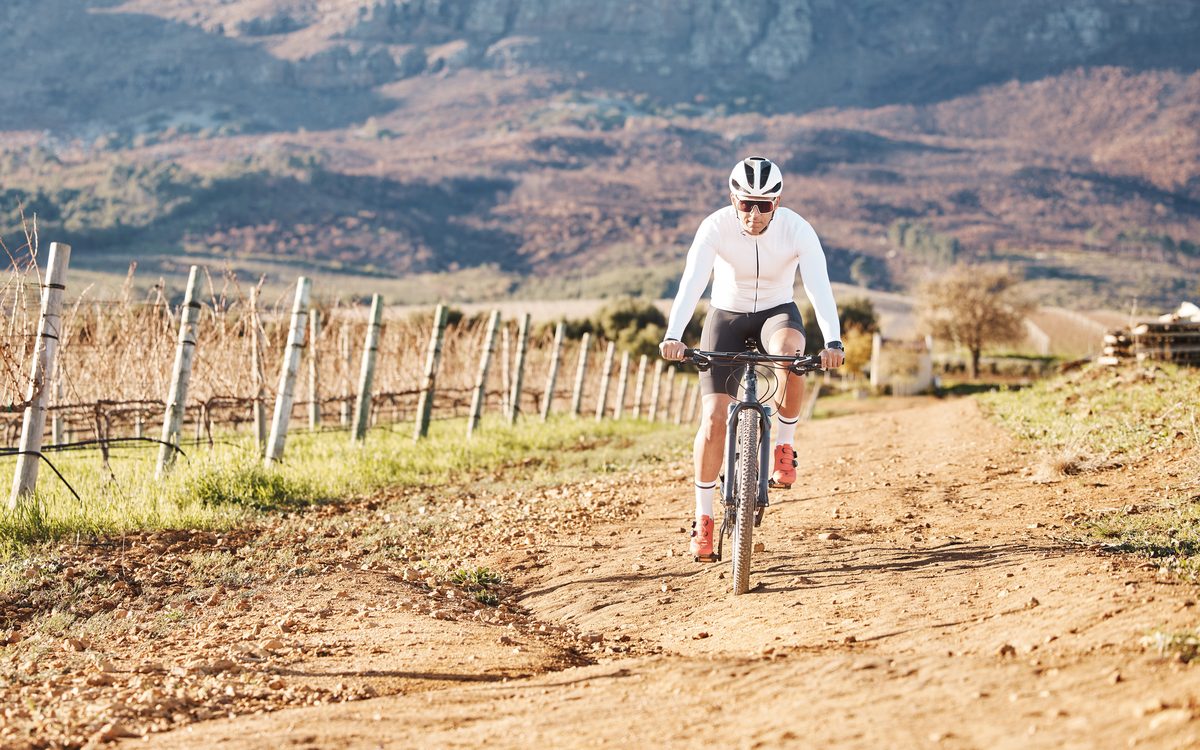
A rider is forty miles from the nearest town on a washboard descent, hands numb, one eye on the gravel and one on the next corner. The tire starts to wander. Gravel cycling injury prevention is the set of habits that lower the chance of a crash, an overuse injury or a medical problem on rides like that: a bike that fits, a helmet worn and replaced properly, a training load that grows slowly, strength work, and planning for heat, remoteness and traffic. These habits lower the odds. They cannot promise anything.
Quick answer: The best-supported steps for gravel riders are a CPSC-compliant helmet that fits, a bike set up for you, a weekly load that grows gradually, some strength work, and a plan for water, heat and help on remote roads. No gravel-specific injury prevention program has been tested, so treat these as sensible habits, not guarantees. See a sports medicine doctor, physical therapist or athletic trainer if pain stays in one place, and call emergency services after a head injury with danger signs.
General information, not medical advice. This page is about lowering risk. What each injury looks like is on our gravel injuries page. Part of the gravel cycling hub; see also the cycling hub.
Warm up and check the bike
We did not find a published injury-prevention warm-up tested in cyclists, so there is no named routine like the FIFA 11+ to point to. A short easy spin of 10 to 15 minutes before any hard effort is common practice, stated here as such rather than as a proven method. Check the bike before every ride: the League of American Bicyclists’ rules of the road include checking tires, brakes, chain and quick releases and carrying tools. On gravel, add tire pressure, tire condition and bolts, since rough roads loosen things.
Bike fit and technique
Fit matters for overuse injuries. The AAOS says a properly sized frame, handlebar and seat reduce overuse risk and suggests a professional bike fit. A 2026 systematic review (Barrajon and colleagues) of three studies found bike fitting was followed by lower back pain reductions in all of them, though the studies were small and not all were randomized. A 2011 review (Bini, Hume and Croft) found a 5% change in saddle height changed knee movement by 35%, and recommended a knee angle of 25 to 30 degrees at the bottom of the pedal stroke. Hand numbness, sometimes called handlebar palsy or cyclist’s palsy, is reduced by padded gloves, changing hand positions and checking reach, according to British Cycling’s physiotherapy guidance.
On loose ground, general technique advice, not from a gravel study: look ahead, keep hands loose on the bars, brake before corners instead of in them and stay seated and centered on washboard. Dropping your pace on unfamiliar descents is the cheapest prevention there is.
Progressive training load
The 2016 IOC consensus statement on load in sport (Soligard and colleagues) makes the general point that how much and how fast training load changes affects injury risk, and that sudden spikes are worth avoiding. It does not give a gravel number, and we are not quoting a percentage. A sensible rule of thumb from coaching practice: raise ride time gradually, include easier weeks, and do not jump from short rides to a 200-mile event. For young riders, the AAP (Brenner 2016) recommends 1 to 2 days off a week.
Strength and conditioning
A 2026 narrative review of resistance training for cyclists (de Pablos and colleagues) looked at performance and bone health, not injury, and described 1 to 2 sessions a week using compound lower-body movements. The CDC recommends at least 2 days a week of muscle-strengthening for adults. We found no gravel study showing strength training prevents injury; the case rests on performance and bone health. Core and upper-body work helps you hold the bike over rough ground, general practice rather than a sourced finding.
Environment: heat, weather, traffic and remote roads
- Heat. The NATA position statement on exertional heat illness advises acclimatizing over 7 to 14 days and recognizes cold-water immersion as treatment for exertional heat stroke. Drink regularly: the AAOS advises about once an hour on long rides.
- Lightning. NATA’s lightning safety statement advises seeking a substantial building or hard-topped vehicle when storms approach. Exposed gravel roads offer little cover.
- Traffic. Rural roads still carry cars. A 2025 study of 83 fatal cyclist collisions in Ontario (Charyk Stewart and colleagues) found rural fatalities were linked to higher speed limits and dark lighting. The AAOS recommends a headlight and taillight visible from 500 feet at night.
- Remote riding. Tell someone your route, carry a phone, spare tube or plug kit, pump and first-aid kit, and know where you can refill water. These are general safety habits, not sourced figures.
Helmet and protective gear
A 2017 meta-analysis (Olivier and Creighton; 55 studies, more than 64,000 injured cyclists) found helmet use was associated with about half the odds of head injury and 69% lower odds of serious head injury. Choose a helmet that meets the CPSC standard, which all helmets sold in the US since 1999 do, and replace it after a crash, as the CPSC advises. The makers of MIPS describe it as a rotational-impact liner; we are not making an effectiveness claim. Padded gloves are a comfort and abrasion step; see gravel gear.
Saddle comfort and skin
NIOSH has published research on groin pressure and numbness from long hours on a bike saddle, and found no-nose saddles reduced pressure in a study of male bike patrol officers. A 2026 interview study of 20 competitive female cyclists (Burnie and colleagues) found saddle sores were highly prevalent and linked to pressure and friction. Good fit, clean shorts and chamois cream are everyday steps; persistent or painful sores deserve a clinician.
What prevention cannot do
None of this removes the risk of falling on loose ground or being hit by a vehicle. The best-supported measure on a crash, a helmet, lowers the odds of head injury rather than preventing it. After any fall with a blow to the head, follow the CDC HEADS UP steps: recognize the signs, remove the rider and have a healthcare provider decide when to return. Call 911 for danger signs such as repeated vomiting, a seizure or one pupil larger than the other.
When to see a professional
See a sports medicine doctor, physical therapist or athletic trainer for pain that stays in one spot, shows up at rest, wakes you at night or changes how you pedal, for numbness that lasts beyond the ride, and for any concussion symptoms. Early assessment is usually easier than treating something that has been ridden through for weeks.
Gravel injury prevention FAQs
Do I need a bike fit for gravel?
It is not required, but the AAOS suggests considering a professional fit, and a 2026 review found fitting was followed by lower back pain reductions in small studies. A fit is worth it if you have recurring pain.
Should I replace my helmet after a crash?
Yes. The CPSC advises replacing a helmet after a crash because impact damage may not be visible.
How do I avoid overuse injuries on long gravel rides?
Build weekly time gradually, include easier weeks, check your bike fit and see a professional for pain that persists. We found no gravel-specific program.
What should I carry on a remote ride?
General safety practice: a phone, spare tube or plug kit, pump, first-aid kit and water, plus someone who knows your route.
Does gravel have a higher injury rate than road cycling?
We do not know. A 2025 systematic review found no gravel studies, so no gravel injury rates exist to compare.
Sources
- AAOS OrthoInfo: bicycle safety
- League of American Bicyclists: rules of the road
- Barrajon et al. 2026, bike fitting and lower back pain
- Bini, Hume and Croft 2011, saddle height and knee injury risk
- Soligard et al. 2016, IOC consensus statement on load in sport and risk of injury
- Brenner 2016, AAP: overuse injuries and burnout in young athletes
- de Pablos et al. 2026, resistance training for cyclists
- CDC: adult physical activity guidelines
- NATA: exertional heat illnesses position statement
- NATA: lightning safety position statement
- Charyk Stewart et al. 2025, safe system approach to cyclist fatalities
- Olivier and Creighton 2017, bicycle injuries and helmet use
- CPSC: which helmet for which activity
- NIOSH 2009-131: no-nose saddles
- Burnie et al. 2026, female cyclists and saddle sores
- CDC HEADS UP: signs and symptoms
- Fallon et al. 2025, injury and illness across competitive cycling disciplines
General information for education only, not medical advice. It does not replace a sports medicine doctor, physical therapist, athletic trainer or registered dietitian. See our editorial policy for how we write and update pages.