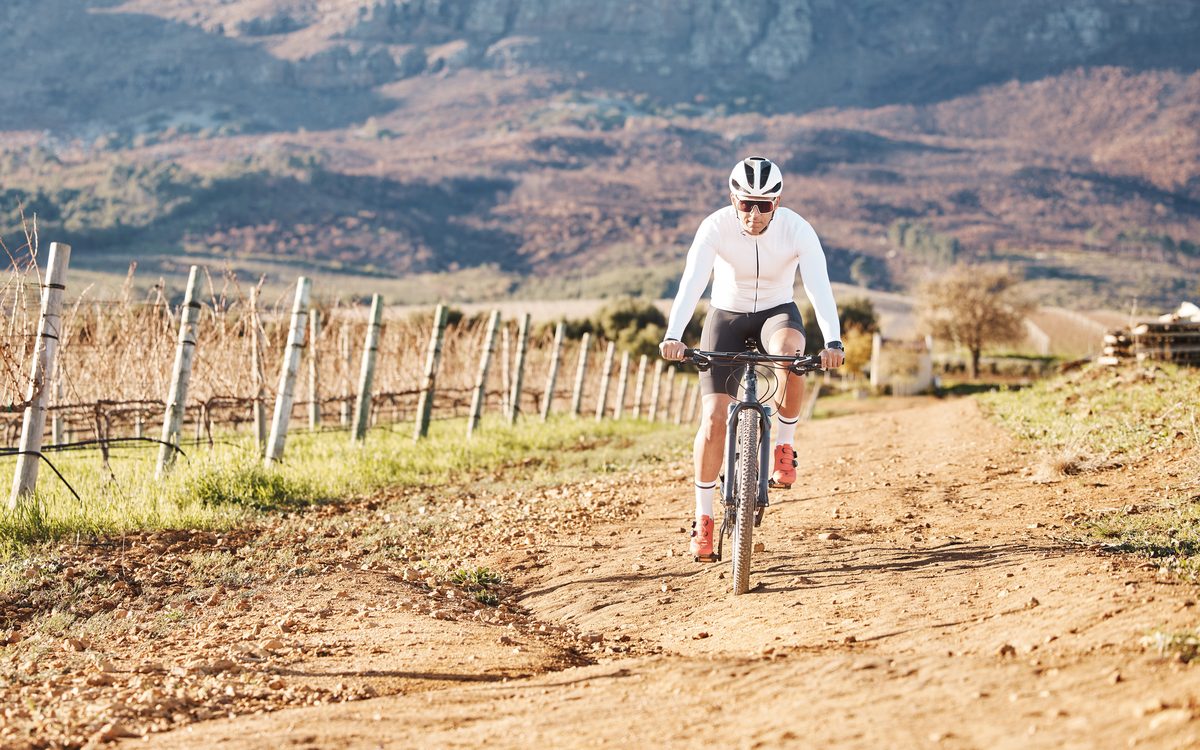
The long ride is done and the legs feel like wet sand. The rider eats, drinks, props her feet up and then sleeps badly because of the day’s caffeine and the late finish. Gravel cycling recovery is everything that helps a rider absorb a hard or very long ride and be ready for the next: food and fluid, sleep, easy movement, load planning and the occasional tool or technique. The honest summary of the research is that the basics work and the extras are mixed.
Quick answer: Eat and drink soon after long rides, sleep enough (7 or more hours for adults per the AASM and CDC) and plan easier days and weeks. Evidence for recovery gadgets and techniques is mixed: massage and some other methods reduce soreness, but cold water immersion can blunt strength gains. Normal soreness fades in a day or two; pain that is sharp, one-sided or lasting is an injury question for a sports medicine doctor, physical therapist or athletic trainer.
General information, not medical advice. Part of the gravel cycling hub; see also the cycling hub. Training structure is on our gravel training page.
Refuel and rehydrate
The ACSM, Academy of Nutrition and Dietetics and Dietitians of Canada position statement (2016) says that when there are less than 8 hours between sessions, athletes should aim for about 1 to 1.2 grams of carbohydrate per kilogram of body mass per hour for the first 4 hours, with about 0.25 to 0.3 grams per kilogram (roughly 15 to 25 grams) of protein early in recovery. To rehydrate, it suggests drinking 125 to 150% of the fluid lost, which is 1.25 to 1.5 litres for each kilogram of body mass lost. After an ordinary ride, a normal meal and drinks are enough. See our nutrition page for fueling during rides.
Sleep
The American Academy of Sleep Medicine consensus recommends adults sleep at least 7 hours a night, and the CDC gives the same figure. For teens, the AASM recommends 8 to 10 hours. After a long event many riders sleep badly for a night or two, which is common, not a sign of injury. Keep the next day easy and return to your usual routine rather than catching up with extra caffeine.
Easy movement and the cool-down
Many riders spin easily after hard efforts. A 2018 narrative review (Van Hooren and Peake) found an active cool-down largely ineffective at improving same-day and next-day performance, though it may speed the recovery of some blood markers and the cardiovascular system. It does not appear to prevent injury. In training-zone terms, Coggan’s “active recovery” level is below 55% of functional threshold power (TrainingPeaks), which in practice means very easy pedaling. A short spin is optional and mostly a comfort and routine choice.
Load management and rest days
Recovery includes planning. Easier days after long rides, an easier week every few weeks and time off the bike after your key event are common coaching practice, not a sourced prescription. For young athletes, the AAP (Brenner 2016) recommends 1 to 2 days off a week and time off during the year. A sudden fall in rides you used to find easy, a high resting heart rate on waking or low mood can all be signs you have done too much; if they last, talk to a coach or doctor. These warning signs are general guidance, not sourced figures.
Mobility and flexibility
Long hours in a bent position tighten hips, hip flexors, calves and the upper back, and the neck and shoulders work to hold the head up. Gentle stretching, hip mobility and a few minutes of lying on your back are comfortable options after a long ride. We did not find strong evidence that stretching prevents cycling injuries, so treat it as comfort and a way to stay loose, not as insurance.
Recovery methods: what the evidence says
| Method | What research found |
|---|---|
| Massage | A 2018 meta-analysis of 99 studies (Dupuy et al.) found massage was the most powerful technique for reducing delayed-onset muscle soreness and perceived fatigue. |
| Compression garments | A 2017 meta-analysis of 23 studies (Brown et al.) found small, likely benefits for recovery of strength, power and endurance performance. |
| Cold water immersion | Reviews find it reduces soreness: 10 to 15 degrees C was the best-performing range in a 2016 review (Machado et al.). But a 2015 study (Roberts et al., 21 men) found 12 weeks of cold-water immersion after strength training reduced gains in strength and muscle mass. |
| Active recovery, contrast water, cryotherapy | The 2018 meta-analysis found small to large soreness reductions for these as well, and no change for several other methods. |
| Foam rolling, percussion massage guns, sauna, red light | We did not review these for this page. Treat claims as unproven; they are comfort tools at best. |
The overall picture: the biggest effects are on soreness and how you feel, not on proven performance gains, and results vary. Cold exposure has safety limits, so check with a doctor if you have a heart condition. Our recovery tools guide compares products without making medical claims.
Soreness or injury?
- Usually soreness: a dull ache on both sides that is worst a day or two after a hard or long ride and eases with gentle movement.
- Think injury: sharp pain, pain on one side only, swelling, numbness that does not clear, pain that wakes you or gets worse with each ride.
- See a sports medicine doctor, physical therapist or athletic trainer if you are unsure. Our gravel injuries page has more.
Gravel recovery FAQs
How long should I rest after a long gravel event?
It varies by person and event, and we found no sourced figure. Many riders take a few easy days; listen to how you feel and ask a coach if unsure.
Is an ice bath worth it?
Cold water immersion reduces soreness in reviews, but a 2015 study found it reduced strength-training gains. Use it sparingly and check with a doctor if you have a heart condition.
Do compression boots or massage guns work?
We found sourced evidence for massage and compression garments (small to moderate benefits for soreness and recovery). We did not review boots or percussive guns here.
How much sleep do I need?
At least 7 hours for adults (AASM and CDC), and 8 to 10 for teens (AASM).
What should I eat after a long ride?
Carbohydrate and some protein soon after, plus fluids. The ACSM position gives per-kilogram targets for when sessions are close together; otherwise a normal meal usually does.
Sources
- ACSM, AND and DC 2016 joint position statement: nutrition and athletic performance
- AASM consensus: recommended sleep for adults (Watson et al. 2015)
- AASM consensus: recommended sleep for teens (Paruthi et al. 2016)
- CDC: sleep and sleep disorders
- Van Hooren and Peake 2018, do we need a cool-down after exercise
- TrainingPeaks: power training levels
- Brenner 2016, AAP: overuse injuries and burnout in young athletes
- Dupuy et al. 2018, post-exercise recovery techniques meta-analysis
- Brown et al. 2017, compression garments and recovery meta-analysis
- Machado et al. 2016, cold water immersion and muscle soreness
- Roberts et al. 2015, cold water immersion and strength training adaptations
General information for education only, not medical advice. It does not replace a sports medicine doctor, physical therapist, athletic trainer or registered dietitian. See our editorial policy for how we write and update pages.