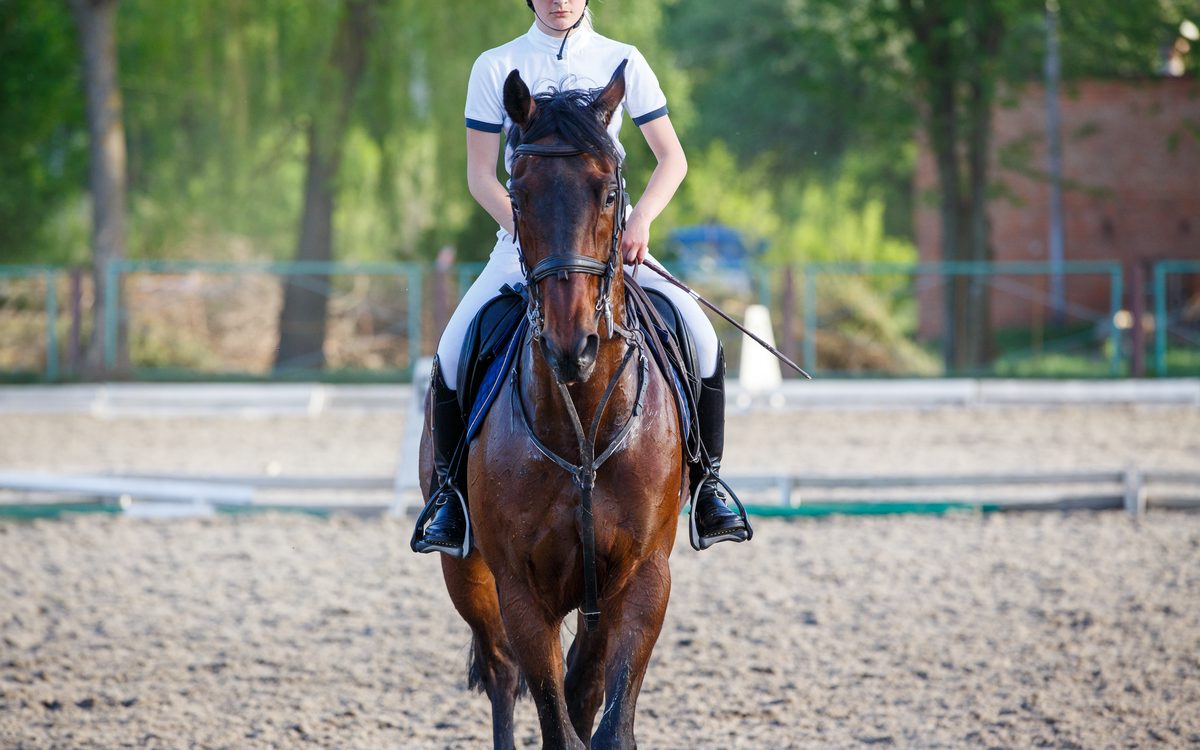
A show morning in a cold barn: a rider ties a hay net, checks the number on her arm, and tells herself she will eat after her test. Her test is at 11:40, the next is at 2:15, and by midday she has eaten half a granola bar and drunk two sips of coffee. Nutrition for dressage riders is about fueling long, early, often outdoor days that combine riding, barn work and nerves, and about staying healthy over many seasons. This page covers what the one major rider-specific review says, hydration, the warning signs of under-fueling (RED-S), and how to think about supplements, which is carefully and doctor first.
Quick answer: Eat regular meals and snacks, drink fluids, and pack food for show days. The rider-specific evidence is a single 2023 review, so general sports nutrition guidance fills in the rest. Under-eating can harm health and riding. Supplements are a decision for a doctor or dietitian, and any you use should be third-party tested, because contaminated products can cause a doping violation.
What the rider-specific review says
The Best, Williams and Pearce review (Nutrients, 2023) is the main source on equestrian nutrition, and it says the field is under-researched. Its energy-needs figures come from riders across disciplines, mostly eventing and polo, rather than dressage specifically. Its carbohydrate table suggests that daily needs depend on workload: 3 to 5 grams per kilogram of body weight for recreational riding and off-horse days, 5 to 7 for one or more horses in light-to-medium work, and 7 to 10 or more for multiple horses in heavy work or multi-day competition. For protein it reports 1.2 to 2.2 grams per kilogram a day, spread over four to six doses of about 25 to 40 grams, and says athletes are discouraged from missing meals and snacks. Those are population-level guides from a review, not a personal prescription; a registered dietitian can tailor them.
Show-day fueling
General sports nutrition practice, not dressage-specific research:
- Breakfast you know. Eat something familiar at least a couple of hours before your first ride; do not try new foods on show day.
- Pack it. Between tests, a banana, a sandwich, yogurt, nuts or a small carbohydrate snack is easier than hoping the food truck is open.
- Think about the whole day. Early starts, warm-up, braiding and tack changes use energy before and after the test. The Best review notes grooming and horse care carry an energy cost.
- After: the same review suggests 1 to 2 grams of carbohydrate per kilogram within three hours after competition, with protein; see dressage recovery.
Hydration and heat
Outdoor shows can be hot, and riders wear jackets, helmets and boots. The CDC recommends water, shade and sun protection. The Best review points to clothing and cooling as factors for riders. The NATA position statement on exertional heat illness is the standard reference on recognizing and treating it. General practice: drink regularly through the day rather than all at once, pack extra water, and use a cooling towel if it is hot. Pale urine is a rough check; check with a doctor if you have a health condition that affects fluids. Electrolyte drinks are optional; many contain sodium, so read labels if you have blood-pressure issues.
Under-fueling and RED-S
RED-S (Relative Energy Deficiency in Sport) is a syndrome of health and performance problems caused by not eating enough for the energy you use. The 2023 IOC consensus statement says it affects female and male athletes and ties it to low energy availability, with growing evidence for links to mental health. In riders, the Best review notes a historical pressure to fit an aesthetic appearance in the arena, and flags the potential for RED-S and disordered eating. General warning signs: constant tiredness, frequent illness or injury, missed or irregular periods, anxiety around food, and feeling unable to eat enough. These are reasons to talk to a doctor, sports dietitian or other qualified professional, not to manage alone. Do not diet to look a certain way in the saddle without professional guidance, especially if you are still growing.
Iron, vitamin D and calcium
The Best review says female athletes are at the highest risk of low iron and recommends at least annual monitoring of iron status. It notes about 90% of vitamin D comes from UVB sunlight, so indoor riding and protective clothing can limit it, and recommends blood testing before supplementing, because both too little and too much matter. The NIH Office of Dietary Supplements warns that too much iron is harmful. Calcium with vitamin D supports bone, and the review notes this may be relevant to fracture risk after a fall, based on clinical populations rather than riders. Ask a doctor for blood tests rather than self-treating.
Supplements: be careful
The 2018 IOC consensus statement on dietary supplements says nutrition makes a small but valuable contribution, that supplements can make a minor contribution, that a full nutritional assessment should come first, and that only a few (such as caffeine and creatine) have good evidence for performance. The Best review says it is premature to comment on specific supplements for equestrians and recommends a food-first approach. Practical points, from the USADA and FEI:
- No supplement is risk-free, according to USADA’s Supplement Connect. Look for third-party certification such as NSF Certified for Sport. This reduces, but does not remove, risk.
- Banned-substance awareness. The FEI’s anti-doping rules for human athletes follow the WADA Code and apply to riders at all levels of FEI competition, with testing in and out of competition. A supplement can contain undeclared prohibited substances.
- Omega-3 and concussion. The Best review sees potential, but evidence is early and nothing prevents concussion. Ask a clinician first.
- Caffeine affects heart rate and nerves; riders already anxious before a test may not want more. If a doctor says it is fine, check the label.
- Pregnancy, medical conditions, medicines: check with a doctor before any supplement.
We do not give doses beyond what is on a label. See our guides to electrolyte powders and protein powders, and talk to a doctor or dietitian first.
Dressage nutrition FAQs
What should a dressage rider eat before a test?
A familiar, easy-to-digest meal or snack a couple of hours before, such as oats, toast or a banana, is general sports nutrition practice. Test foods in training, not at shows.
How much water should I drink at a show?
There is no one number. Sip regularly, bring extra in hot weather, and watch for dizziness, headache or confusion, which need rest and cooling. See a doctor if symptoms are severe.
Do riders need supplements?
Many riders can meet their needs through food, and the 2023 rider review recommends a food-first approach. A doctor or dietitian can test for deficiencies such as iron or vitamin D.
Can supplements cause a drug-test problem?
Yes. The FEI applies anti-doping rules to riders, and USADA warns supplements may contain undeclared prohibited substances. Choose third-party tested products, and still ask your federation if unsure.
Is it okay to skip meals to feel lighter in the saddle?
No. Skipping meals can lead to low energy availability. If you feel pressure about your body or food, talk to a doctor or sports dietitian.
Sources
- Best R, Williams JM, Pearce J. The physiological requirements of and nutritional recommendations for equestrian riders, Nutrients 2023
- Mountjoy M et al. 2023 IOC consensus statement on Relative Energy Deficiency in Sport (REDs), Br J Sports Med 2023
- Maughan RJ et al. IOC consensus statement: dietary supplements and the high-performance athlete, Br J Sports Med 2018
- USADA, Supplement Connect; FEI, Anti-Doping Rules for Human Athletes
- NIH Office of Dietary Supplements, Iron; Casa DJ et al. NATA position statement on exertional heat illnesses, 2015; CDC sun safety
General information for education only, not medical advice. It does not replace a visit with a doctor, physical therapist or athletic trainer. See how we write and check our pages in our editorial policy.