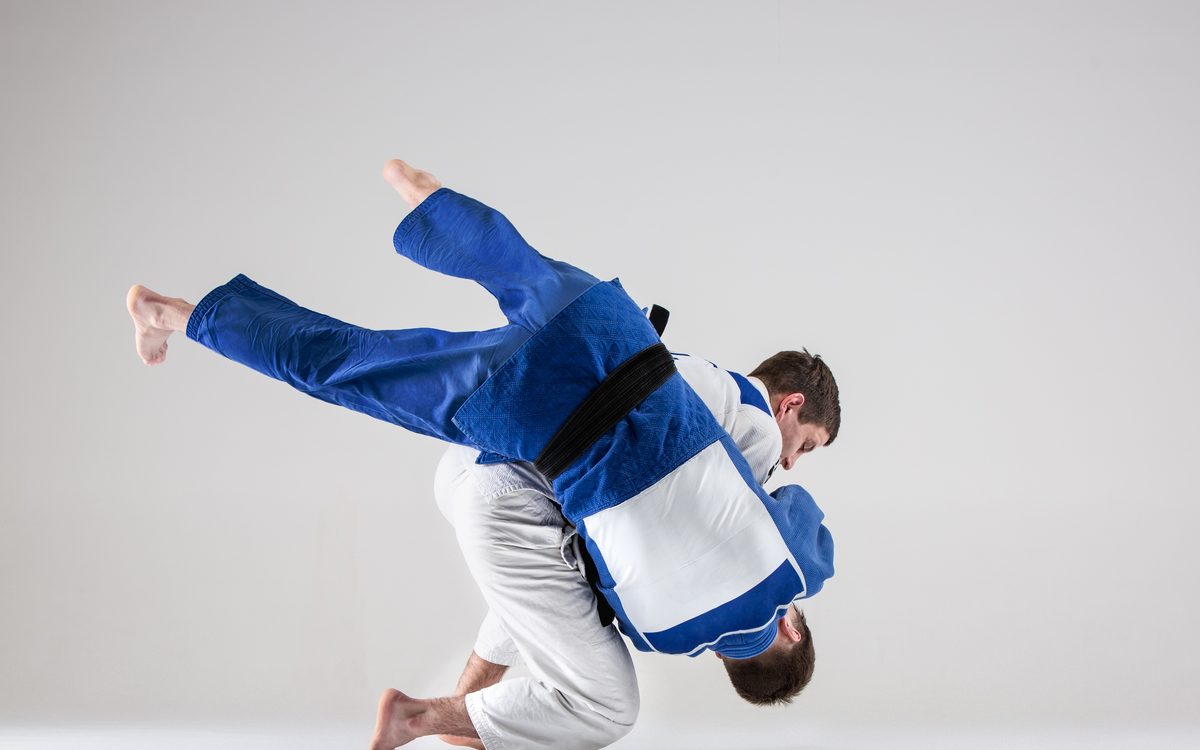
Sunday morning after a club tournament: three contests, one loss, a sore right forearm that will not quite close around a coffee cup, and a shoulder that clicks when lifting the gi bag. Judo recovery is everything an athlete does between sessions to be ready for the next one, sleep, load management, mobility, food and fluids, and a sensible read on whether a sore spot is normal or something to get checked. This page is general information, and where the evidence for a recovery method is weak, we say so.
Quick answer: The best-supported recovery basics are enough sleep, planned rest days, eating and drinking after hard sessions, and gradual increases in training. Many popular tools, such as massage guns, compression and cold-water immersion, have small or mixed evidence, and cold-water immersion after strength sessions was linked to smaller strength gains in one study. Normal soreness eases in a day or two; sharp pain, swelling, a joint that feels unstable, numbness or any head-impact symptoms should be seen by a sports medicine doctor, physical therapist or athletic trainer.
What a hard session does to the body
Hard grappling leaves a mark. In a study of simulated mixed martial arts sparring (Coswig and colleagues, Journal of Strength and Conditioning Research, 2016), the muscle-damage marker creatine kinase was higher at 48 hours than before the session. In a study of Brazilian jiu-jitsu competition (Asian Journal of Sports Medicine, 2013), right handgrip fell from about 45.9 to 40.1 kgf. Neither study is of judo, but both are grappling, and both fit the common experience that grip and forearms need time. A day or two before the next hard session is a general rule of thumb, not a studied number.
Sleep
Sleep is the recovery tool with the strongest support. The CDC lists recommended sleep as 9 to 12 hours for ages 6 to 12, 8 to 10 for teens and at least 7 for adults, in line with American Academy of Sleep Medicine consensus statements. A review of sleep hygiene in athletes (Nedelec and colleagues, Sports Medicine, 2015) points to habits such as a consistent wake time and limiting screens before bed. Evening classes often end late, so plan the wind-down, and treat a sleep debt before a tournament as something to fix, not to push through.
The first hour after practice
- Hygiene: the National Athletic Trainers’ Association (NATA) position statement on skin diseases advises showering after every practice, not sharing towels or bar soap, and laundering practice clothing after each use. That is a skin protection step as much as a recovery one.
- Food and fluids: the ACSM, Academy of Nutrition and Dietetics and Dietitians of Canada joint position (2016) suggests about 0.25 to 0.3 g of protein per kilogram of body weight after exercise, and drinking about 1.25 to 1.5 litres of fluid for each kilogram of body weight lost. For a 68 kg (150 lb) person, the protein figure works out at about 17 to 20 g. See nutrition and athlete health.
- Cool-down: a review of cool-downs (Van Hooren and Peake, Sports Medicine, 2018) found they are largely ineffective for same-day or next-day performance and mostly do not reduce soreness. An easy walk is fine if you like it.
Load, rest days and the week
The International Olympic Committee consensus statement on training load (Soligard and colleagues, 2016) says rapid load increases raise injury risk and recommends planned recovery. The American Academy of Pediatrics (AAP, Brenner 2016) advises 1 to 2 days off a week from a main sport for young athletes, and its martial arts report found some evidence of higher risk above three hours of training a week in children. For adults, we found no judo-specific number. Older athletes often need more time between hard sessions, which is common experience, not a judo study. See our training page.
Mobility and flexibility
The American College of Sports Medicine position stand (Garber and colleagues, 2011) recommends flexibility work at least two days a week, holding each stretch for a total of about 60 seconds. Hips, hamstrings, shoulders and thoracic spine are the usual priorities for judo. Keep neck work gentle and controlled; neck pain after a throw is not mobility work, it is a reason to see someone. Grip days can be spaced so the forearms are not asked for a hard grip session every day, and finger and wrist exercises are general guidance, not a studied judo method.
Recovery tools: what the evidence says
- Massage: a review of 99 studies (Dupuy and colleagues, Frontiers in Physiology, 2018) found massage to be the most effective method for reducing delayed-onset muscle soreness and perceived fatigue among those it examined. That supports hands-on massage; it does not directly test massage guns.
- Compression: a review (Brown and colleagues, Sports Medicine, 2017) found small benefits for strength recovery.
- Cold-water immersion: a 12-week study (Roberts and colleagues, Journal of Physiology, 2015) found that cold-water immersion after strength sessions led to smaller strength and muscle gains. Anyone with heart or circulation conditions should talk to a doctor before cold exposure.
- Foam rollers and massage guns: many judoka use them for comfort. They are not treatment for an injury, and pain over a bone, joint or a neck needs a professional.
Soreness or injury?
Muscle soreness is dull, spread over the muscle, tends to peak a day or two after hard work and eases with gentle movement. Warning signs that point toward injury include sharp or catching pain, pain at rest or at night, swelling or bruising that appears quickly, a joint that gives way, numbness or tingling, and pain that is getting worse. These are general descriptions, not a diagnosis. See our judo injuries page for what the main injuries look like. After a head impact, use the CDC HEADS UP approach: remove from practice and let a healthcare provider decide return; the Amsterdam 2022 consensus describes relative rest for 24 to 48 hours followed by light activity, and the International Judo Federation sets seven days out of competition after a suspected concussion, with medical clearance.
Tournament weekends
At international events, weigh-in is the day before each division’s competition day, per IJF event documents, which puts weight management, travel and sleep into the same days. A Brazilian jiu-jitsu systematic review (Sports Medicine Open, 2017) reported four to six matches on a competition day in that sport, and judo days can also stack up. Eat and drink between contests, keep warm between rounds and plan a lighter day afterwards.
Frequently asked questions
How long should I rest between judo sessions?
There is no single number. Many recreational judoka train every other day or take at least one full rest day a week. The AAP advises 1 to 2 days off a week for young athletes. Ask your coach if you are always tired.
Do massage guns help judo recovery?
Evidence for massage in general is better than for specific devices. Many judoka use massage guns for comfort. They do not treat injuries, and you should avoid pressing over a painful bone, joint or the neck.
Is an ice bath good after judo?
The evidence is mixed. A 12-week study found smaller strength gains with cold-water immersion after strength sessions. Skip it if you are trying to build strength, and ask a doctor if you have a heart or circulation condition.
How much sleep does a judoka need?
The CDC recommends at least 7 hours for adults, 8 to 10 for teens and 9 to 12 for ages 6 to 12.
Is it normal for my forearms and grip to feel weak the next day?
Some grip fatigue is expected after hard grappling, and studies in jiu-jitsu show grip falling after competition. Pain in a finger or wrist, a finger that will not bend, or numbness needs to be checked.
Sources
- Coswig et al., simulated MMA sparring (PMID 26817739)
- BJJ competition physiology, handgrip (PMID 23802056)
- Van Hooren and Peake, cool-down review (PMID 29663142)
- ACSM/AND/DC nutrition and athletic performance (PMID 26891166)
- Nedelec et al., sleep hygiene (PMID 26275673)
- AASM pediatric sleep duration consensus
- CDC: sleep
- Dupuy et al., recovery methods review (PMID 29755363)
- Brown et al., compression (PMID 28434152)
- Roberts et al., cold-water immersion (PMID 26174323)
- ACSM position stand (PMID 21694556)
- IOC consensus on load (PMID 27535989)
- AAP: Youth Participation and Injury Risk in Martial Arts
- NATA position statement: skin diseases
- CDC HEADS UP
- BJJ systematic review (PMID 28194734)
General information for education only, not medical advice. It does not replace a sports medicine doctor, physical therapist or athletic trainer who knows you. See how we work in our editorial policy, and return to the judo hub.