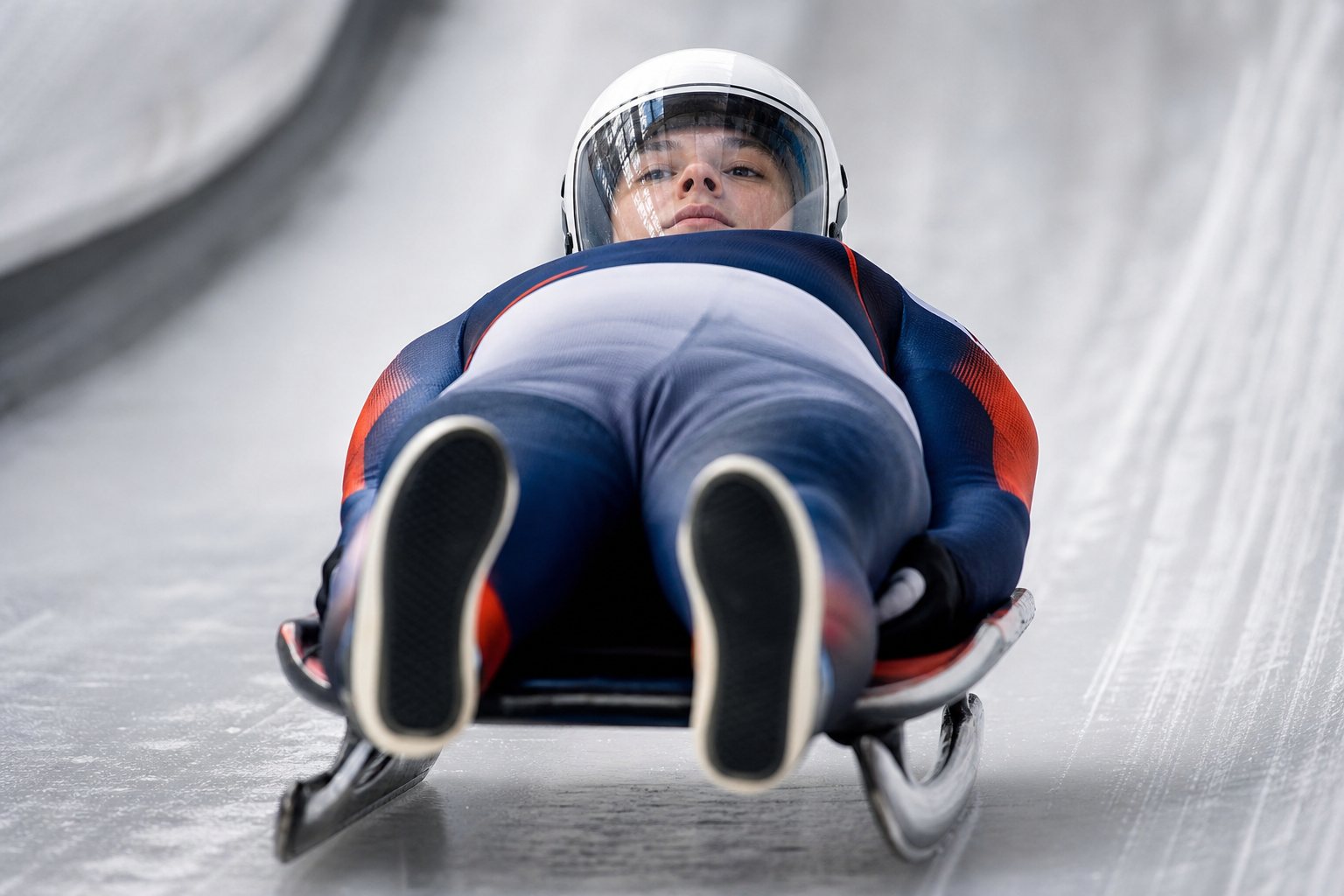
The run is over, the start house was cold, and the slider’s shoulders feel like stone. There is a long drive to the next training block and a school week behind that. Luge recovery is everything an athlete does between sessions to be ready for the next one: sleep, food, rest days, easing out tight muscles and spotting the difference between soreness and an injury. This page is honest about where the evidence is strong, and where it is not.
Quick answer: Sleep is the best-supported recovery tool: a 2021 expert consensus says habitually sleeping under 7 hours is common in elite athletes and individual needs vary. Massage and compression show benefits for muscle soreness and perceived fatigue in a 2018 meta-analysis, but no study we found tested recovery methods in luge athletes. Soreness that fades in a couple of days is normal; pain that is sharp, stays in one spot or follows a crash needs a professional.
General information, not medical advice. For injuries see the injuries page; for training load see the training page.
Sleep first
The 2021 expert consensus on sleep and the athlete (Walsh and colleagues, British Journal of Sports Medicine) says elite athletes are prone to habitual short sleep (under 7 hours a night) and poor sleep quality, that sleeping under 7 hours habitually raises susceptibility to respiratory infection in the wider population, and that a one-size-fits-all target such as 7 to 9 hours is unlikely to be ideal, so an individual approach is advised. The CDC says teens need 8 to 10 hours and adults at least 7. Travel to tracks, early starts and competition nerves are the sport-specific threats the consensus names in general terms. Illness was the biggest health problem in the 2024 study of elite luge athletes (41.9%), so protecting sleep is also about staying healthy.
Load management and rest days
The 2018 consensus statement on recovery and performance (Kellmann and colleagues) describes a balance between training or competition load and recovery as essential for continuous performance, and says responses vary between people. For young athletes the American Academy of Pediatrics (Brenner, 2016) recommends one to two days off a week from the main sport and a few months a year away. In luge, track sessions are limited, so rest days between hard strength days are a place to build in recovery. Shoulder and lower back overuse were the main overuse sites in Tomaselli’s study (20.9% and 16.3% of overuse injuries), so watch these when load rises.
Mobility and flexibility
We did not find a study of mobility programs in luge athletes. Because the sport asks an athlete to lie still on their back and absorb vibration and bumps, many coaches work on shoulder, upper back and hip mobility, but this is common practice, not tested evidence. Ask a physical therapist to look at your own range of motion rather than copying a routine. Stretching hard through pain is not helpful.
Recovery methods: what evidence says
A 2018 meta-analysis of 99 studies (Dupuy and colleagues, Frontiers in Physiology) looked at active recovery, massage, compression garments, immersion, contrast water therapy and cryotherapy after exercise. It found small to large reductions in muscle soreness and perceived fatigue and concluded massage seemed the most effective method for both, with compression, massage or water immersion helping perceived fatigue. Important limits: these studies measured soreness, fatigue and blood markers, not race times, injury or luge, and most were not in sliding athletes.
- Foam rolling and massage tools. Many athletes like them for comfort on the upper back and legs. Our recovery guides cover specific tools. Do not roll over a painful, swollen or recently injured area.
- Cold and heat. Cold immersion is among methods in that meta-analysis, but cold exposure after a freezing start house is a different matter: warm up first after waiting in the cold, and follow the CDC’s guidance on hypothermia and frostbite.
- Compression and travel. Compression garments were among the methods that helped perceived fatigue. This is comfort, not a medical treatment.
- What is weak. Evidence that any one method improves performance or prevents injury in luge is missing.
Soreness versus injury
Delayed onset muscle soreness, a dull ache that builds a day after hard work and eases in a few days, is usually normal. Warning signs are different: sharp pain, pain in one spot that does not ease, pain at rest or at night, swelling, numbness, or any ache that follows a crash or head knock. A sore neck after a crash, especially with headache, dizziness or fogginess, calls for a clinician; “sled head” is the term sliders use for a foggy headache after bumpy runs and it is poorly understood (McCradden and Cusimano, 2018). See a sports medicine doctor, physical therapist or athletic trainer.
Luge FAQs
How much sleep does a luge athlete need?
There is no single number. A 2021 expert consensus says an individual approach is best. The CDC says teens need 8 to 10 hours and adults at least 7.
Does a foam roller help after sliding?
Many athletes use one for comfort. A 2018 review supports massage-type methods for soreness and perceived fatigue, but we found no luge-specific research.
Should I take a rest day after a crash?
If you hit your head, stop and see a health care provider. For other pain that follows a crash, a professional should assess it before training continues.
Is soreness after sled work normal?
A dull ache a day later is common after hard training. Sharp, persistent or one-sided pain is not; see a professional.
Do ice baths help recovery?
A 2018 meta-analysis found cold exposure reduced soreness and inflammation markers in many studies, but it did not test luge, and cold exposure has its own cautions.
Sources
- Walsh and colleagues: sleep and the athlete, expert consensus (2021)
- Kellmann and colleagues: recovery and performance consensus statement (2018)
- Dupuy and colleagues: post-exercise recovery techniques, meta-analysis (2018)
- Tomaselli and colleagues: health problems in elite luge athletes (2024)
- McCradden and Cusimano: concussions in sledding sports (2018)
- AAP: sports specialization and intensive training (2016)
- CDC: about sleep
- CDC: preventing hypothermia
General information for education only, not medical advice. It does not replace a visit with a doctor, physical therapist or athletic trainer. See how we write and check our pages in our editorial policy.