This article contains affiliate links: if you buy through them we may earn a commission, at no extra cost to you. Read our affiliate disclosure.
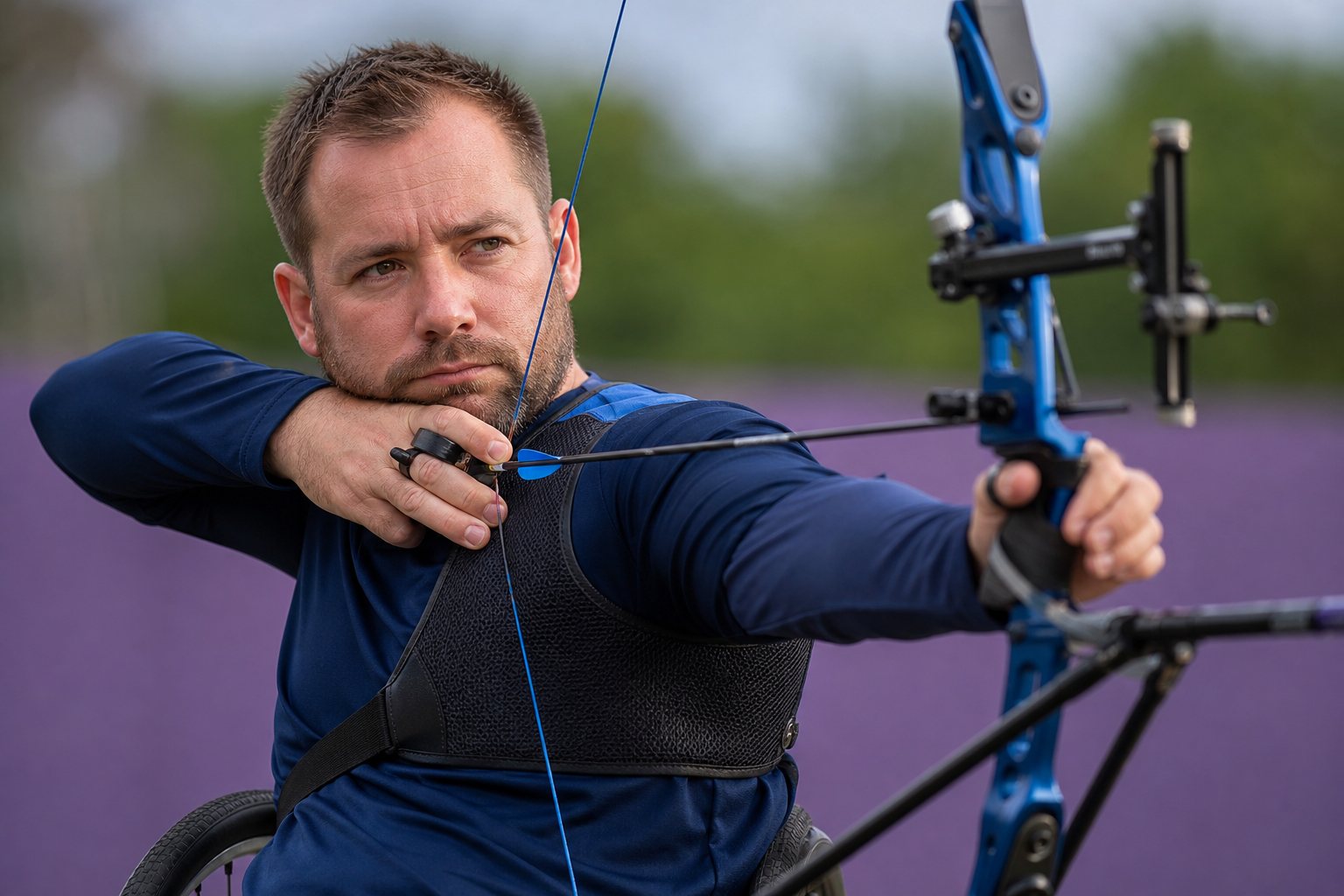
A new archer rolls up to an adaptive session and finds a table of bows, stools and odd-looking supports. The coach asks one question first: what fits you? Para archery gear is not about the most expensive bow. It is about a set-up that is safe, comfortable to hold for a long session and allowed under your classification.
Quick answer: The most important gear rule in para archery is fit: bows, releases, supports and seating are matched to the athlete, and the classification card lists the devices allowed in competition. Start with a coach, borrow equipment before you buy, and inspect everything before every session. Basic protection, an arm guard, a finger tab or glove and sometimes a chest guard, suits many archers. Do not buy specialised gear before talking with your coach and, for competition, your classifier.
Back to the para archery hub. Safety habits are on the injury prevention page.
Start by borrowing
Many clubs and adaptive sports organizations lend bows and basic gear to beginners. Borrowing lets you try recurve and compound, standing and seated positions, and different supports before spending anything. Ask the club what adaptive options they have, and ask a coach to check the draw weight, because a bow that is too heavy leads to poor form and strain.
What the rules say about equipment
World Archery describes stools, wheelchairs and custom release aids as assistive devices, and the classification card lists what each athlete may use in competition. Recurve and compound bows are both used: Open archers follow almost the same rules as able-bodied archers, and W1 archers have limits such as draw weight and sight magnification (IPC and World Archery). Visual impairment classes VI1 shoot blindfolded. Rules and limits are published in World Archery’s rulebooks, and they change, so check the current version and ask your classifier before you invest in an adapted device. We did not read the detailed equipment limits for each class.
Recurve, compound and what changes
Recurve archers shoot at 70 m and compound archers at 50 m (IPC), and the two bows feel different to hold and draw. A compound uses pulleys, magnifying sights and a mechanical release, which suits some archers who cannot hold a heavy recurve draw, while a recurve is simpler and lighter to carry. Neither is better for everyone. W1 archers compete in one class whichever bow they use. Try both with a coach before deciding, and remember the class rules decide what is allowed in competition.
Fit and set-up
- Draw weight and draw length: set by a coach for your body. Start light.
- Seating and position: a stable stool or chair set-up that you can hold for a whole session. Check skin and pressure points, and shift position between ends.
- Supports and release aids: custom pieces should be checked by your coach or classifier so they work safely and are allowed.
- Sights and arrows: arrow length and spine should match the bow, and a coach or a pro shop can check this.
Inspection before each session
In a study of 62 elite European archers, most of the few acute injuries were linked to equipment failure, so inspection is not a formality. Look for cracks or splinters in limbs and arrows, a frayed or worn string, loose bolts, damaged nocks and straps that no longer hold. Do not shoot damaged equipment. NASP instructor guidance warns against dry-firing, because it can harm the archer, other people and the equipment.
Protective gear
A US emergency-department study (NEISS, 2013 to 2022) found fingers and hands were the most common sites of archery injuries and suggested reinforced gloves, finger tabs and forearm guards. These items are common practice rather than certified products, and no standard we could find rates them, so treat maker descriptions as the maker’s claims.
- Arm guard: keeps the bow arm from string slap.
- Finger tab or glove: protects the drawing fingers.
- Chest guard: keeps loose clothing clear of the string.
- Resistance bands: light bands are a common warm-up for the shoulders. Ask your clinician which exercises suit you.


SAS Ambidextrous Suede Leather Finger Tab
- Double-layer leather
- Adjustable ledge and strap
- Ambidextrous


THERABAND Resistance Band Beginner Kit
- 3 latex bands
- Yellow, red, green
- For light strength work
The cards above show what the makers and Amazon list; we have not tested these items, and fit still matters more than brand. We may earn a commission from qualifying purchases at no extra cost to you.
Care, storage and travel
Keep strings waxed as the maker advises, store bows unstrung if the maker says so, and keep gear out of hot cars. Travel cases protect equipment on flights, but airlines and venues have their own rules for sports equipment, so check them before you go. If you use a wheelchair or custom support, carry any small tools and spare parts you might need at the range.
Para archery gear FAQs
Do I need my own bow to start?
No. Many clubs and adaptive programs lend equipment, and borrowing helps you learn what fits.
Who decides what adaptive equipment I can use?
In competition, your classification card lists the devices you may use. Ask your classifier before buying.
Which protective gear matters most?
Research on archery injuries suggests protecting the fingers, hands and forearm, so a tab or glove and an arm guard are common starts.
How often should I check my gear?
Before every session. Look at limbs, string, arrows and any supports.
Are product ratings or maker claims reliable?
Treat them as the maker’s claims. Ask your coach, and look for rules or standards from World Archery where they apply.
Sources
- World Archery: Para archery classification explained
- IPC: Para archery
- USA Archery: Para archery classification
- Archery-related musculoskeletal injuries (NEISS)
- Injuries in elite archers (62 archers)
General information for education only, not medical advice. It does not replace a doctor, physical therapist, athletic trainer, classifier or qualified coach. See our editorial policy for how we research and write.