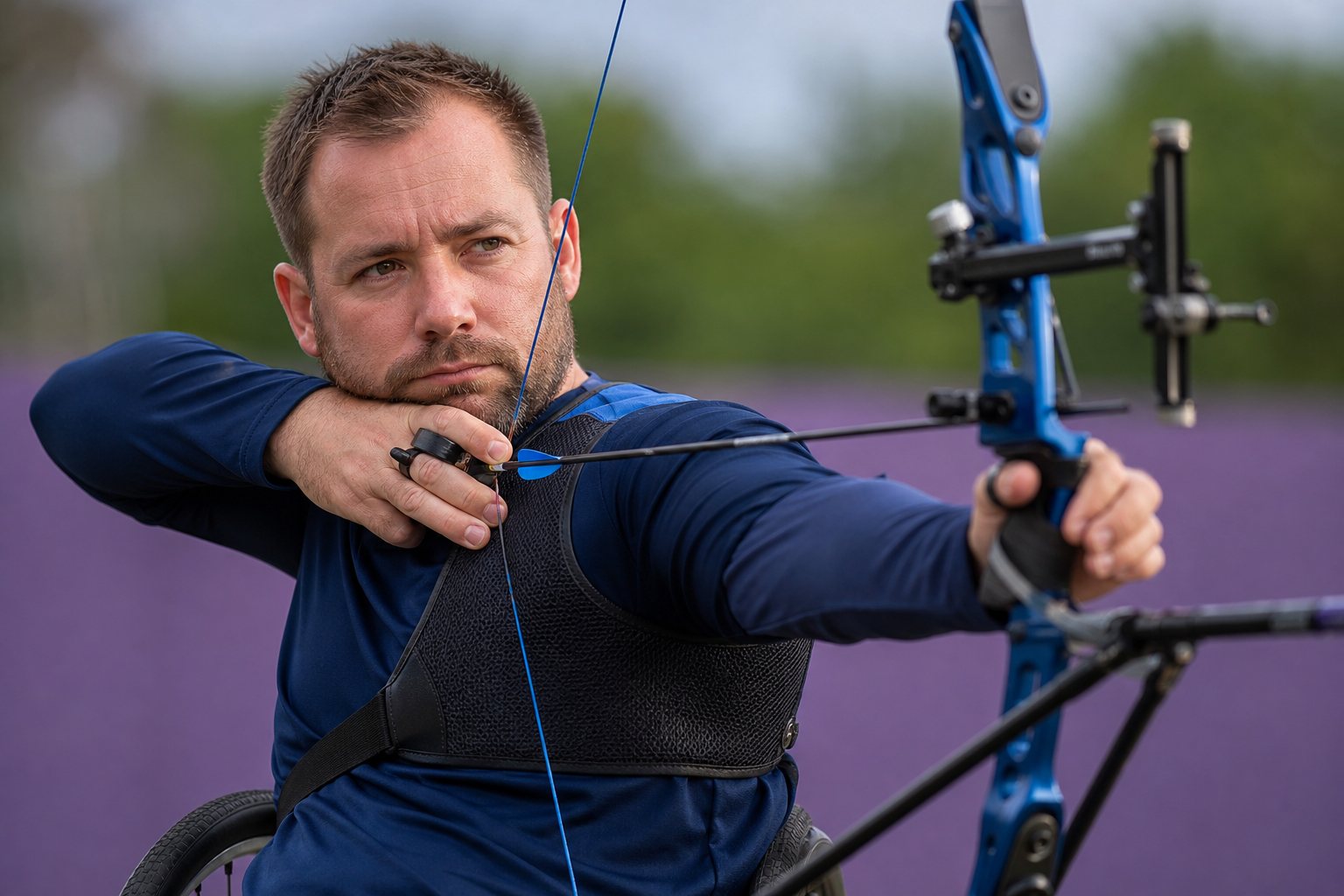
It is the last end of a long afternoon. The drawing shoulder is tired, the chair has been in the same position for two hours, and the next arrow is the one that matters. Injury prevention in para archery means the habits, set-up and planning that lower the chance of overuse problems, skin trouble and range accidents, while accepting that nothing removes risk completely.
Quick answer: Archery is one of the lower-risk sports at the Games, but overuse in the drawing shoulder is common, and fingers and hands are the most common sites of treated injuries. Build up arrow volume gradually, warm up the shoulders and trunk, check your seating and equipment, and follow range safety signals. See a sports medicine doctor, physical therapist or athletic trainer if pain does not settle, or if you notice tingling, weakness or night pain.
Back to the para archery hub. Injury patterns and rehabilitation are covered on the injuries page, so this page stays on prevention.
The risk picture
Archery had one of the lowest injury rates of any sport at the Rio 2016 Olympics (0 to 3%, Soligard et al. 2017). A US emergency-department study found 4.4 archery injuries per 10,000 people aged 6 and older, with 99% treated and released (Palsbo 2012). Archers themselves report more: in a survey of 396 archers, 57.3% had been injured, most often in the drawing shoulder (28.2%), then the neck and back (19.9%) (Alberola-Zorrilla et al.). For para sport, a 2024 systematic review found injury rates ranging from 0 to 91 per 1,000 athlete days depending on sport and impairment, and only three studies on whether prevention works. Evidence is thin, so use these numbers as context rather than as a forecast.
Warm-up
No named archery warm-up programme like FIFA 11+ has been published as far as we could find; we did not run a systematic search. Common coaching practice is five to ten minutes of easy movement before drawing a bow heavy: arm circles, shoulder blade squeezes, gentle trunk movement, and light-band work, then a few easy arrows at low draw weight. Seated archers can do most of these from the chair. Ask your coach or physical therapist which movements suit your body.
Technique and equipment fit
In a study of 62 elite European archers, overuse injuries were mainly in the shoulder (52.9%), and the authors noted technique as a risk factor and advised checking equipment. Acute injuries were rare and mostly arm bruises, with 83.3% linked to equipment failure. A coach who watches your anchor, draw length and release can spot problems early. If you use a custom support, release aid or adapted grip, have your coach or classifier check that it fits and works safely.
- Draw weight: start light, and treat shaking, collapsing form or sharp pain as signs the bow may be too heavy. This is general coaching guidance, not a numbered rule.
- Inspect gear before each session: look for cracks in limbs, frayed strings and damaged arrows. Do not shoot damaged equipment.
- Never dry-fire a bow (release without an arrow). It can damage the bow and harm people nearby, according to NASP instructor guidance.
Progressive load
Increase arrow volume and draw weight gradually and leave easier days after tournaments. No source gives a universal number, so ask your coach to track weekly arrows with you. The AAOS shoulder conditioning program is built the same way: pain-free exercise, 4 to 6 weeks of build-up, then 2 to 3 days a week.
Strength and conditioning
Strong, balanced shoulders and trunk help you hold position. A 12-week lower trapezius exercise programme has been published (see Sources) and AAOS shoulder-conditioning advice points the same way, but the details should come from a physical therapist who knows your impairment. See our training page for the framework.
Environment and body care
- Sun and heat: the American Academy of Dermatology recommends broad-spectrum sunscreen of SPF 30 or higher, water-resistant, applied 15 minutes before going out and every two hours. NATA’s heat-illness statement is a standard reference for hot days. Some impairments change how the body handles heat, so ask your clinician.
- Skin and pressure: long sessions in a chair or on a stool can stress skin. Check your seating and shift position between ends. We did not find a para archery source for this, so treat it as general caution.
- Lightning: stop and move indoors when thunder is heard (NATA guidance).
- Cold: keep sleeves and jackets close-fitting so they stay clear of the string.
Protective gear
A US injury-database study (Konda 2023) found fingers and hands the most common sites and suggested reinforced gloves, finger tabs and forearm guards. An arm guard keeps the string off the forearm and a tab protects the drawing fingers; many archers also wear a chest guard. These are common practice, not certified standards. Details are on the gear page.
Range safety
World Archery Book 3 sets the signals: two whistles to move to the line, one to start, three to collect arrows, and five or more for an emergency stop. Draw only on the shooting line, never point a nocked arrow at anyone, and wait for the all-clear before going downrange. Follow the range officer’s instructions, especially if you are new to a venue.
Head injuries
If someone hits their head, for example in a transfer or a chair tip, the CDC HEADS UP guidance is to stop, watch for signs such as headache, dizziness or confusion, and have a healthcare provider decide when it is safe to return. Call 911 for danger signs.
What prevention cannot do
Good habits lower risk but cannot remove it. Pain can still appear, and each impairment brings different needs. Do not treat any checklist as a promise.
When to see a professional
See a sports medicine doctor, physical therapist or athletic trainer for pain that lasts, night pain, tingling, loss of strength or movement (AAOS lists night pain and loss of strength or motion as signs of shoulder problems), skin breakdown, or any worry about your equipment fit.
Injury prevention FAQs
Is archery dangerous?
It is among the lower-risk sports in the data above, but overuse and finger or arm injuries do occur, and safety rules at the range matter.
Do I need a chest guard?
Many archers wear one to keep clothing clear of the string. It is common practice; ask your coach.
How can I protect my shoulders?
Build volume gradually, warm up, keep technique checked, and ask a physical therapist about shoulder conditioning.
Can I prevent all injuries?
No. Evidence on prevention in para sports is limited, with only three studies in the 2024 review.
What should I do if my hand goes numb?
Stop shooting and tell your coach. Numbness or tingling that does not settle should be seen by a clinician.
Sources
- Soligard et al. 2017, Rio 2016 injuries
- Palsbo 2012, archery injuries in the US
- Where do archers hurt? (Alberola-Zorrilla)
- Injuries in elite archers (62 archers)
- Archery-related musculoskeletal injuries (NEISS)
- Sports-related health problems in para sports: systematic review
- AAOS: Rotator cuff and shoulder conditioning program
- AAOS: Shoulder impingement/rotator cuff tendinitis
- Lower trapezius 12-week programme
- AAD: how to apply sunscreen
- NATA: Exertional heat illnesses
- World Archery Rule Book 3 (signals)
- CDC HEADS UP: signs and symptoms
General information for education only, not medical advice. It does not replace a doctor, physical therapist, athletic trainer, classifier or qualified coach. See our editorial policy for how we research and write.