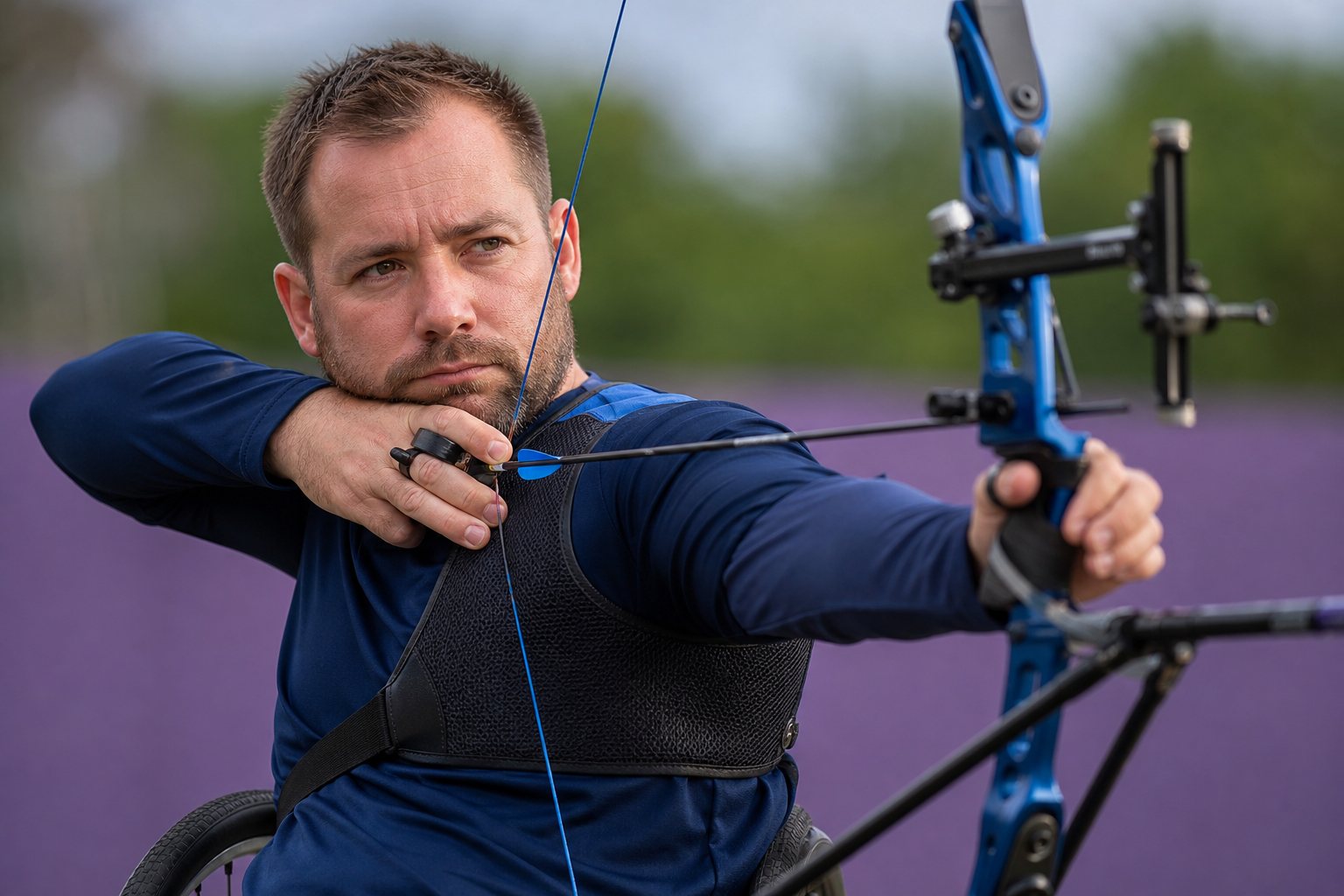
A shoulder that aches after a long weekend of shooting, a split on the pad of a drawing finger, a bruise along the forearm: most para archery injuries are small, but they still deserve attention. This page summarises what research says about para archery injuries and rehabilitation in general terms. It cannot diagnose anything or say when you can return.
Quick answer: Direct injury data for para archery is scarce. For archery in general, overuse of the drawing shoulder is the most common problem in surveys, and fingers and hands are the most common sites in emergency-department data. See a sports medicine doctor, physical therapist or athletic trainer for pain that lasts more than a few days, night pain, numbness, weakness, or any head injury.
Back to the para archery hub. For how to lower risk see injury prevention.
What the numbers say
We could not confirm an injury rate for para archery alone. The Paris 2024 Paralympic surveillance study monitored 4,450 athletes over 14 days and found an overall incidence of 8.6 injuries per 1,000 athlete days across all sports. A 2024 systematic review of para sports found rates ranging from 0 to 91 per 1,000 athlete days depending on sport and impairment. A one-year study of 102 Brazilian para athletes in four other sports found the shoulder complex, then the ankle and knee, carried the greatest injury burden. Treat these as background, not an archery forecast.
For archery in general:
- 396 archers surveyed by Alberola-Zorrilla and colleagues: 57.3% reported injury, most often the drawing shoulder (28.2%), then neck and back (19.9%).
- 62 elite European archers: overuse mainly in the shoulder (52.9%); acute injuries were rare, mostly arm bruises, and most were linked to equipment failure.
- Elite adolescent archers at a European championship: 43.5% reported shoulder pain in training, and 31.8% stopped because of it.
- US emergency departments (2013 to 2022): about 43,000 archery-related musculoskeletal injuries, mostly fingers and hands, with lacerations the most common diagnosis.
Common patterns
Shoulder and neck
Repeated drawing loads the shoulder, and wheelchair users already rely on their shoulders for daily life. Signs worth taking to a professional include pain at night, loss of strength or movement, or pain that keeps returning (AAOS describes night pain and loss of strength or motion in shoulder impingement and rotator cuff tendinitis).
Fingers, hands and forearm
String contact and arrow handling lead to blisters, cuts and bruises. The US study above suggested reinforced gloves, finger tabs and forearm guards. Gear details are on the gear page.
Skin and pressure
Long periods seated can irritate skin. We found no para archery study on this, so it is a general caution: check seating and shift position, and tell your clinician about any skin change.
Head injuries
After a fall or chair tip, CDC HEADS UP guidance is to stop activity, watch for headache, dizziness, confusion or vomiting, and have a healthcare provider decide when it is safe to return. Call 911 for danger signs such as repeated vomiting, a seizure or one pupil larger than the other.
Equipment-related injuries
In the 62-archer study, most of the few acute injuries were linked to equipment failure. A cracked limb, a worn string or a loose attachment on a custom support can hurt the archer or someone nearby, so inspect equipment before each session and have your coach or classifier look at anything adapted. If something feels loose or unusual, stop shooting and fix it first.
Persistent pain in younger archers
The adolescent archer study is a reminder that shoulder pain is common even in young, elite archers, and that nearly a third stopped training because of it. Young para archers should not be told to push through pain; a parent or coach should arrange an assessment.
Why impairment changes the picture
Most archery injury data does not describe athletes with impairments, and the para sport literature is thin. The Paris 2024 study shows injuries are tracked at the Games, but we could not confirm a figure for archery. What affects one archer, such as a spinal cord injury, a limb difference or low vision, may not affect another, which is why individual advice from a clinician who knows your condition beats any general list.
General rehab principles
Published guidance for rehabilitation is broad, and the details depend on the injury and the athlete, so a clinician should lead. Common principles in sports medicine sources include:
- Get a proper assessment first rather than guessing at the cause.
- Exercise to the level your clinician advises. The AAOS shoulder program says exercises should be pain-free, built over 4 to 6 weeks and then done 2 to 3 days a week.
- Change what caused the problem: technique, draw weight, seating, equipment fit or volume.
- Return to full volume gradually, not all at once.
No source supports a single universal recovery time for any archery injury, and this page does not give one.
When to see a professional
- Pain that lasts or returns, night pain, numbness, tingling or weakness.
- A cut that is deep, will not stop bleeding or looks infected.
- Any head injury, or skin breakdown.
- Equipment that feels unsafe or no longer fits.
A sports medicine doctor, physical therapist or athletic trainer who understands your impairment is the right person for diagnosis and for clearance to return. This page cannot provide either.
Para archery injuries FAQs
How common are injuries in para archery?
We could not confirm a rate for para archery alone. Broader data shows archery is a lower-risk sport, but overuse is common in surveys of archers.
What is the most common archery injury?
In surveys the drawing shoulder is the most common site, and in emergency-department data fingers and hands are most common.
Can I keep shooting with a sore shoulder?
Mild soreness differs from pain that persists or wakes you at night. Ask a professional instead of pushing through.
Is rehab different for wheelchair users?
It can be, because shoulders carry daily load. Choose a clinician who understands your situation.
When can I come back after an injury?
Only a clinician who has assessed you can say. No source gives a universal timeline.
Sources
- Injury and illness at the Paris 2024 Paralympic Games (Europe PMC)
- Sports-related health problems in para sports: systematic review
- Injuries and illnesses in Para athletes: one-year study
- Where do archers hurt? (Alberola-Zorrilla)
- Injuries in elite archers (62 archers)
- Injuries and persistent pain in elite adolescent archers
- Archery-related musculoskeletal injuries (NEISS)
- AAOS: Rotator cuff and shoulder conditioning program
- AAOS: Shoulder impingement/rotator cuff tendinitis
- CDC HEADS UP: signs and symptoms
General information for education only, not medical advice. It does not replace a doctor, physical therapist, athletic trainer, classifier or qualified coach. See our editorial policy for how we research and write.