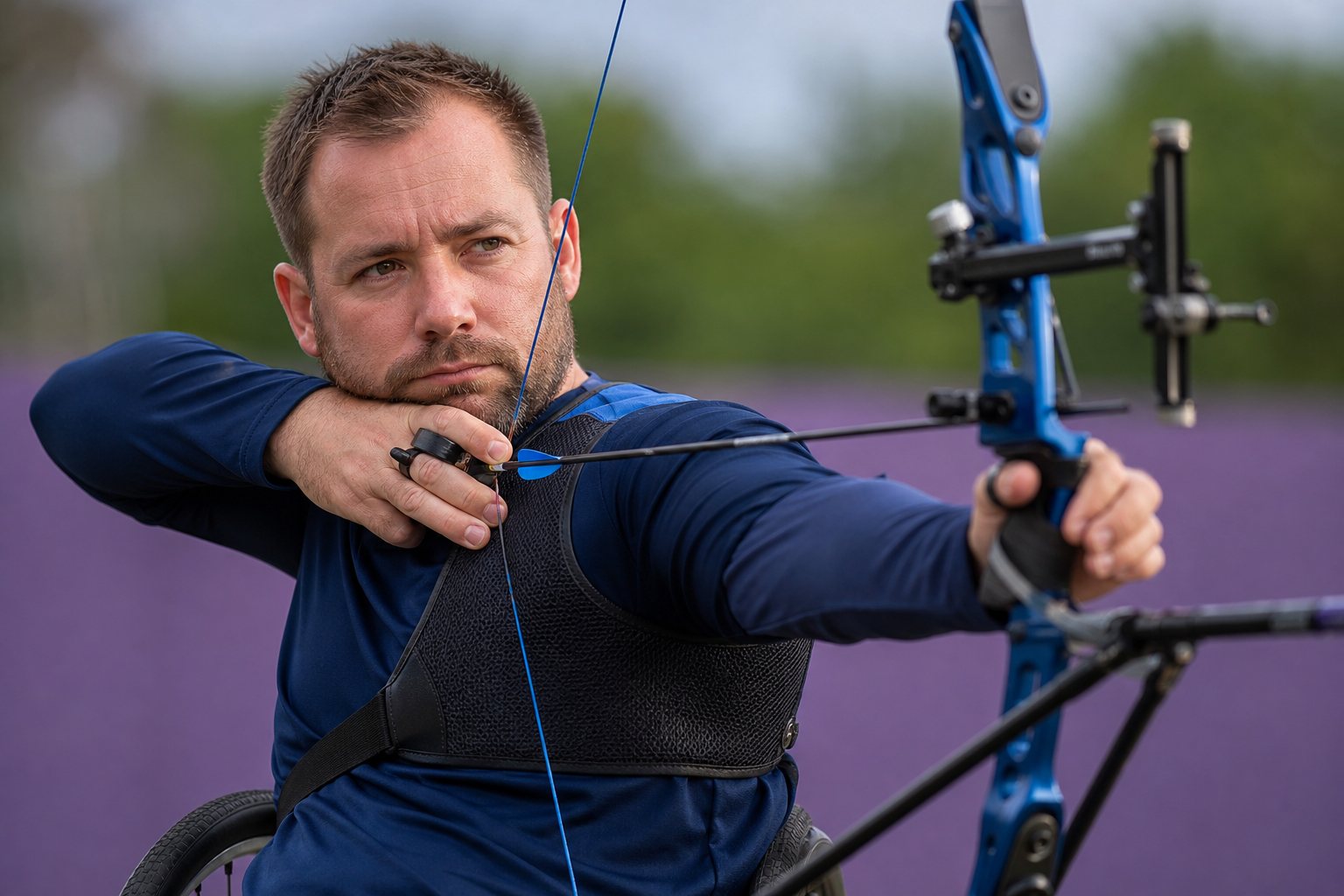
It is a hot outdoor tournament and the qualification round runs three hours. Someone skipped breakfast, someone else is sipping an energy drink they have never tried, and a third is wondering whether the new supplement from a friend is allowed. Nutrition for para archers is mostly ordinary good eating and drinking, planned around a long, calm, precise sport, with extra care about what is allowed.
Quick answer: Research on archers shows no special diet: steady meals, enough fluid and a plan for long days. Beta-blockers are prohibited in archery in competition, and alcohol is banned by World Archery rules. Supplements are risky if they are not third-party tested, so check with a doctor or dietitian first. Some impairments and medicines change nutrition and hydration needs, so ask a clinician who knows yours.
Back to the para archery hub. For rest and sleep see recovery.
What archers eat
Research on archers is small. A 2024 study followed six world-class male archers and recorded energy intakes of 2,563 to 3,986 kcal a day, with more on high-volume days. A 2025 study of eight archers (four women) found men ate more energy and carbohydrate and that all were adequately hydrated. A 2026 study of 51 elite archers from 22 countries described weight, BMI and waist measures. These were not studies of para archers, and no source gives a target diet for them.
Fuel for a long day
Archery is not a high-energy sport, but a tournament can last all day. The ACSM, Academy of Nutrition and Dietetics and Dietitians of Canada position suggests an event meal 1 to 4 hours before and food and fluid you have tried in training. Practical choices are familiar foods, such as rice, pasta, bread, fruit and yoghurt, plus snacks that are easy to eat between ends. Avoid trying something new on competition day. A dietitian can tailor advice if you have swallowing, bowel, bladder or blood-pressure issues linked to your condition.
Eating around impairments and medicines
Nutrition advice for able-bodied archers does not always fit. Some conditions change appetite, digestion, bladder or bowel routines, body composition or how the body handles heat, and some medicines affect hydration or weight. We did not find research on these questions in para archery, so this is where an individual plan from a doctor or registered sports dietitian is worth more than any web page. Bring a list of what you take, and ask whether any of it has anti-doping restrictions.
Hydration
In one study of elite archers, they were slightly hypohydrated on waking and well hydrated before and after shooting. Sweat losses vary with the weather and with how an impairment affects heat regulation, so ask your clinician about your needs. The ACSM position says to drink about 1.25 to 1.5 litres for each kilogram lost if you sweated heavily. Shade, a cap, sunscreen and a drink within reach are practical on outdoor ranges.
Energy availability and weight
Relative energy deficiency in sport (RED-S) means too little fuel for what the body does. It is a recognised concern in sport in general, but we did not find evidence on how common it is in para archery, so treat this as awareness only. Signs such as fatigue, frequent illness, missed periods, or a preoccupation with food and weight should be taken to a doctor or sports dietitian. Archery has no weight classes, so there is no reason to cut weight for it.
What is banned
- Beta-blockers: on the WADA 2026 Prohibited List, prohibited in competition in archery. They slow heart rate and reduce tremor, which is why the sport restricts them. If a doctor prescribes one, ask about a Therapeutic Use Exemption in advance through your national anti-doping organization.
- Alcohol: alcohol is not on the WADA list, but World Archery’s own rules ban it on the field and a positive test can lead to disqualification. This page does not recommend alcohol before shooting.
- Other medicines: check any prescription with your doctor and your anti-doping body, because some medicines used for impairments or pain have restrictions. Athletes can look up substances on the USADA Supplement Connect and Global DRO tools.
Supplements
We give general information only, following the site’s safety rules, and no doses:
- Look for third-party testing such as NSF Certified for Sport. A study of 634 supplements from 13 countries found about 15% contained undeclared prohormones, which is why a “natural” label is not enough.
- Caffeine is not on the Prohibited List, but it is not right for everyone. Check with a doctor if you have a heart condition, anxiety or are pregnant. Shaky hands and fast heart rate matter in a precision sport, so test any amount well before competition.
- Energy drinks: the AAP advises against them for children and teens.
- Not claims: no supplement is proven to improve your score. Talk with a doctor or sports dietitian before taking any.
Para archery nutrition FAQs
Do archers need a special diet?
No special diet was found. Steady meals, fluid and foods you have tried in training are the basics.
Are beta-blockers allowed?
No, they are prohibited in archery in competition on the 2026 WADA list unless you have an approved exemption.
Is alcohol banned?
World Archery bans alcohol in competition, even though WADA dropped it from its list in 2018.
Is caffeine OK?
It is not banned, but it can raise heart rate and shakiness. Test it long before an event and ask your doctor if unsure.
How do I check a supplement is safe for sport?
Look for third-party certification such as NSF Certified for Sport and use USADA’s Supplement Connect. No test is a guarantee.
Sources
- Esen, Walshe, Goodall 2024, archers nutrition (JISSN)
- Esen & Goodall 2025, archers energy and hydration
- Uršulin-Trstenjak et al. 2026, elite archers (PMC)
- ACSM/AND/DC 2016 position stand
- WADA Prohibited List 2026
- World Archery: Clean sport
- NSF Certified for Sport
- USADA Supplement Connect
- AAP: energy drinks, Pediatrics 2011;127:1182
General information for education only, not medical advice. It does not replace a doctor, physical therapist, athletic trainer, classifier or qualified coach. See our editorial policy for how we research and write.