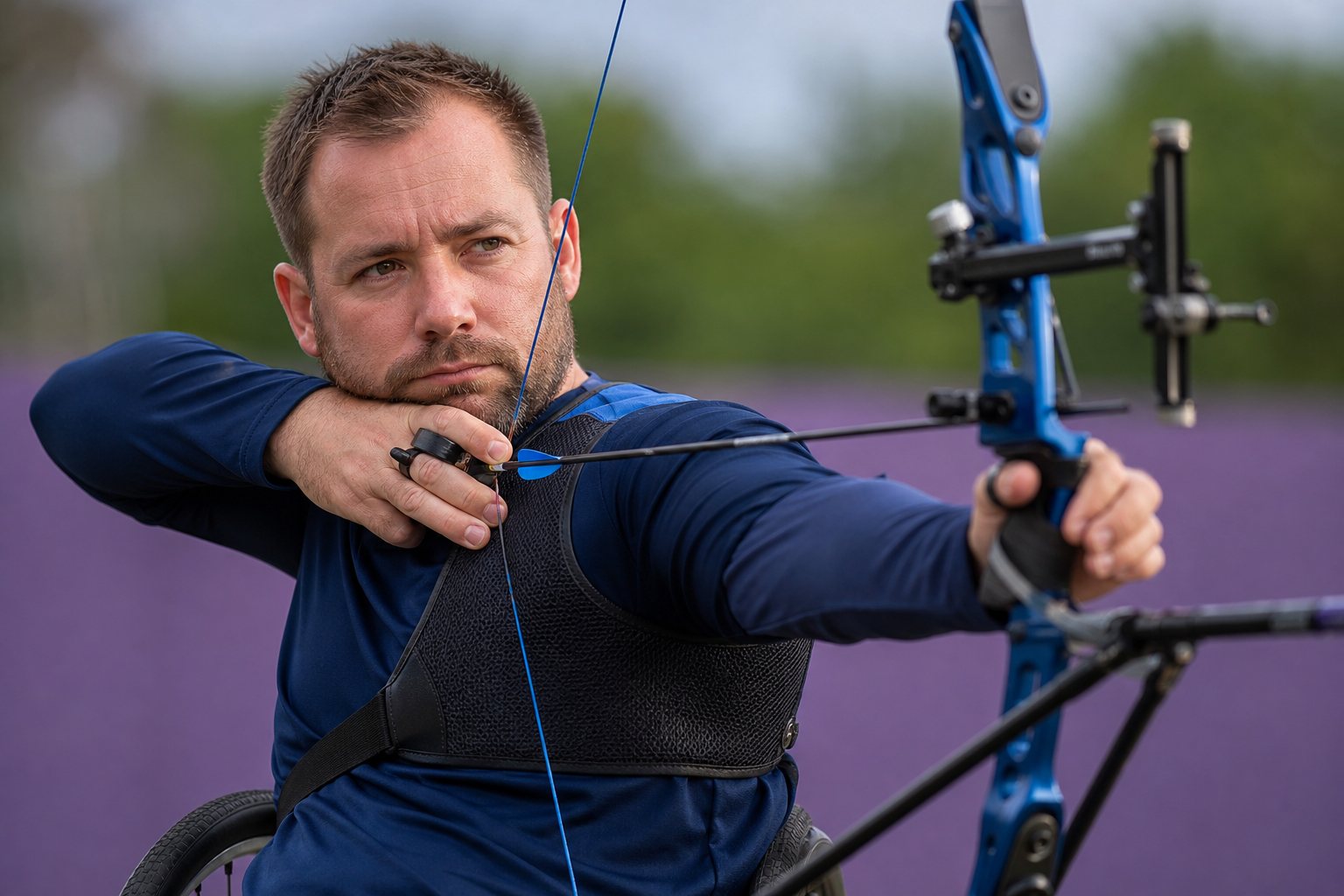
The last arrow is down, the scores are posted, and the drive home starts. Whether your shoulders feel fine or heavy, what you do next, from sleep to the next training block, shapes the next session. Recovery for para archers means giving the body and mind time to settle after load, in a way that fits your impairment.
Quick answer: The best-supported recovery basics are sleep (at least 7 hours for adults, 8 to 10 for teens), enough food and fluid, planned rest days and gradual load. Evidence for massage is moderate for soreness, and for cool-downs it is weak. Sharp, lasting or night pain is not normal soreness: see a sports medicine doctor, physical therapist or athletic trainer.
Back to the para archery hub. For nutrition see nutrition and athlete health; for building load see training.
What shooting asks of you
A day of shooting is many repeated draws on the same muscles, with long periods of concentration in between. A 2026 study of 15 compound archers found that after a 30-minute mental fatigue task their accuracy worsened, so tiredness is not only physical. A study of elite archers by Esen and colleagues found energy intake was higher on high-volume days and reported minimal sleep disturbance, and the authors linked good habits to sustained success. For wheelchair users and others who rely on the upper body in daily life, the shoulders get little downtime, which makes planned rest more important.
A simple after-session routine
Many archers use a short checklist after shooting: drink and eat, put equipment away and check it for damage, write a few notes on form and any pain, and plan the next session before leaving the range. Writing down aches helps you and your clinician spot patterns, such as a shoulder that is always sore after a heavy week. It costs a few minutes and needs nothing special.
Sleep
Sleep is the base of recovery. The American Academy of Sleep Medicine consensus recommends at least 7 hours for adults, and 8 to 10 hours for teens aged 13 to 18 and 9 to 12 for ages 6 to 12. The CDC gives similar guidance. Some impairments, medications and pain affect sleep, so talk with your doctor if you are struggling; this page cannot assess that. Tournament travel, early starts and unfamiliar beds are common reasons for poor sleep, so plan arrival times with that in mind.
Load management
Plan lighter days after a tournament or a big training weekend. The AAP says young athletes should have 1 to 2 days off from sport each week and about three months a year away from one sport, in one-month blocks. The same idea is sensible for adults, but adjust it with your coach. Watch the trend rather than a single day: if form fades earlier, soreness lingers or pain appears, reduce volume and ask for advice.
After shooting
- Cool-down: a 2018 review found cool-downs largely ineffective for next-day performance or soreness. Easy movement still feels good for many people, so do it if you like it.
- Food and fluid: the ACSM, Academy of Nutrition and Dietetics and Dietitians of Canada position says to eat protein (15 to 25 g) early in recovery and drink 1.25 to 1.5 litres per kilogram of body weight lost if you sweated heavily.
- Easy movement: shoulder circles, gentle trunk movement and walking or rolling can help stiffness.
Mobility and flexibility
Gentle mobility for the neck, shoulders, chest and upper back is common in archery coaching, and the AAOS shoulder program is a standard reference for conditioning the area. We did not find a trial showing that a particular stretching routine improves archery performance, so treat mobility as comfort and general care, not as a performance guarantee. Seated archers should choose positions their clinician approves.
Recovery tools and what the evidence says
- Massage: a 2018 review found massage was the most effective of the methods reviewed for delayed onset muscle soreness and perceived fatigue. A massage gun is a common way to do something similar, and many athletes use them, but this review was about massage in general. Avoid areas with injuries, numb skin or implants and ask your clinician first.
- Ice and heat: many athletes use them for comfort. We did not find an archery study, and sensation can differ with some impairments, so check skin carefully.
- Wearables: sleep and heart-rate trackers can help you notice patterns, but they are not medical devices.
Our recovery tools guide compares options in general terms.
Soreness or injury?
Muscle soreness is usually dull, spread across a muscle, and eases over a day or two. Warning signs are sharp pain, pain at night, numbness or tingling, weakness, or pain that gets worse with every session. AAOS lists night pain and loss of strength or motion among signs of shoulder problems. Skin changes in areas that carry pressure should also be checked. If in doubt, see a professional; our injuries page has more.
Para archery recovery FAQs
How much sleep do archers need?
Adults need at least 7 hours and teens 8 to 10, according to the AASM consensus. Individual needs vary.
Should I stretch after shooting?
Gentle mobility is common and can feel good. Evidence that stretching prevents soreness or injury in archery is lacking.
Do massage guns work?
Massage in general was rated the most effective method for soreness in one review. Many athletes use massage guns; use them gently and avoid sore or numb areas.
How many rest days should I take?
The AAP advises 1 to 2 days off a week for young athletes. Adults can use the same idea and adjust with a coach.
Is shoulder soreness after a long day normal?
Mild muscle soreness can be. Pain that is sharp, lasts, or wakes you at night should be assessed.
Sources
- Soylu et al. 2026, mental fatigue in compound archers
- Esen, Walshe, Goodall 2024, archers energy intake (JISSN)
- AASM adult sleep consensus
- AASM paediatric sleep consensus
- CDC: sleep
- AAP: Brenner 2016, sports specialization
- Van Hooren & Peake 2018, cool-down review
- ACSM/AND/DC 2016 position stand
- Dupuy 2018, recovery methods for DOMS
- AAOS: Rotator cuff and shoulder conditioning program
- AAOS: Shoulder impingement/rotator cuff tendinitis
General information for education only, not medical advice. It does not replace a doctor, physical therapist, athletic trainer, classifier or qualified coach. See our editorial policy for how we research and write.