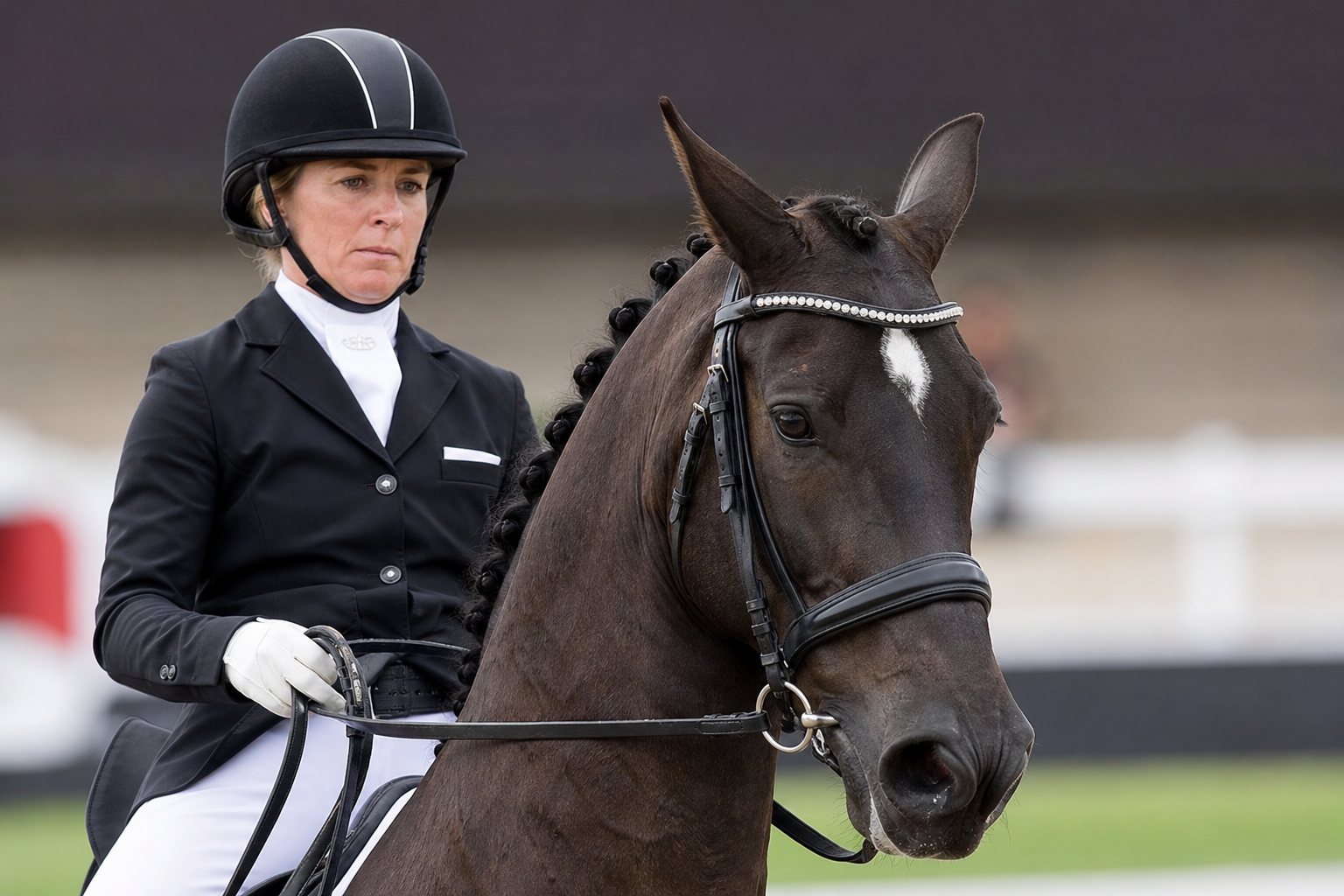
After a long show day, the horse gets a bath, a hay net and a walk. The rider often gets a sandwich and a long drive home. Recovery is everything that lets your body absorb training and be ready for the next ride: sleep, food, rest days, easy movement and managing the stresses your impairment adds. This page covers what the research supports, where the evidence is weak, and how to tell ordinary soreness from an injury. For injuries see our injuries page.
Quick answer: Sleep and regular rest days are the best-supported recovery habits. Cooling can help athletes with spinal cord injury, and massage has some evidence for soreness. Many gadgets and rituals have weak evidence, and we say so. Recovery needs to fit your impairment: skin checks, pressure relief, spasticity and heat control all matter. See a sports medicine doctor, physical therapist or athletic trainer if pain is sharp, is worse at rest or follows a fall.
Sleep first
The CDC says adults need at least 7 hours of sleep a night, and the American Academy of Sleep Medicine consensus for 13 to 18-year-olds is 8 to 10 hours. A 44-week study of 59 Swedish elite para athletes found that reports of anxiety or depression symptoms were linked to an injury or illness affecting sport and to low sleep duration (BMJ Open Sport and Exercise Medicine). It is an association, not proof that sleep fixes anything, but it fits common sense. Travel to shows, early starts for horses and late evening feeding can eat into sleep, so plan for it. Para athletes may have sleep disruptions from pain, spasms or bladder routines; if so, ask your doctor.
Load management and rest days
Recovery starts before the ride, with a plan that does not stack hard days. Brenner and colleagues for the American Academy of Pediatrics (Pediatrics, 2016) suggest one to two days off a week for young athletes. A 2024 systematic review of 14 studies of 4,527 riders linked low back pain to higher riding workload and stable duties, so on a light day, try not to spend hours mucking out. Barn work counts as load. Lift close to the body, bend at the hips and knees and split heavy loads; these are general back-care tips, not rider studies. See our training page for how weeks fit together.
After the ride
- Walk out and cool down. Van Hooren and Peake (Sports Medicine, 2018) found cooling down is largely ineffective for next-day soreness or performance, though it may help the heart and breathing settle. A short walk is still a good time to check on the horse.
- Refuel and rehydrate. Best and colleagues (Nutrients, 2023) suggest 1 to 2 g of carbohydrate per kg body weight within three hours after competition, with protein as well; more on our nutrition page.
- Check your skin and position. If you sit for hours or have reduced sensation, check for red marks or pressure points and change position. This is general clinical advice, not a rider study.
- Stretch gently. Easy mobility feels good, but we did not find evidence that stretching prevents next-day soreness.
Mobility and flexibility
Riders commonly work on hip, hamstring and thoracic mobility, and para riders may work within the range they have. Good mobility helps the seat follow the horse, but we found no study showing that more flexibility raises dressage scores or lowers injuries. A physical therapist can set mobility work for your impairment, particularly if you have spasticity or contractures. Brief daily sessions are usually easier to keep than a long weekly one. Our training page covers conditioning.
Heat, cooling and temperature
For athletes with a spinal cord injury, a 2022 meta-analysis of 17 studies and 145 participants in the Journal of Science and Medicine in Sport found that cooling before or during exercise reduced core temperature, skin temperature and thermal sensation; pre-cooling worked better than cooling during exercise, and benefits were larger in tetraplegic athletes. A 2021 systematic review in Frontiers in Physiology agrees that cooling can reduce the thermoregulatory burden. After a show, getting out of the sun, drinking, and using cool cloths or fans are common practice. Your doctor should advise on what is safe for you, particularly if sensation is reduced. Not everyone should use cold plunges or saunas, so ask a clinician first.
What the evidence says about recovery tools
- Massage: a 2018 review (Dupuy and colleagues, Frontiers in Physiology) found massage the most effective of the methods compared for delayed-onset muscle soreness and perceived fatigue. Check with your clinician if you have reduced sensation, spasticity or skin issues.
- Compression, cold water, foam rollers, massage guns, wearables: the evidence is mixed or small, and we do not claim they speed recovery. If you use them, treat them as comfort tools and follow the manufacturer’s instructions.
- Sleep, food, rest and low stress: boring, but they have the strongest support.
Soreness versus injury
Ordinary muscle soreness is a dull ache across a muscle group, begins hours after unfamiliar work, and eases over a few days. It is more likely after a first lesson in months or a new exercise. Worrying signs include sharp or one-sided pain, pain at rest or at night, swelling or bruising, pain that changes how you ride, numbness, weakness, new spasms, skin that does not recover colour or a headache after a fall. After a head impact, follow the CDC HEADS UP advice: stop, and have a provider decide when to return. These descriptions are general guidance, not a diagnosis.
Para equestrian recovery FAQs
How much sleep do riders need?
The CDC says at least 7 hours for adults; for teens 13 to 18, the AASM consensus is 8 to 10 hours. If pain or spasms disturb your sleep, tell your clinician.
Does cooling down after riding speed recovery?
A 2018 review found it largely ineffective for next-day soreness, although it may help circulation and breathing return to normal. It is still a good habit for checking in on yourself and the horse.
Is massage worth it?
A 2018 review found massage the most effective of the methods it compared for muscle soreness and perceived fatigue. Ask your clinician whether it suits your impairment.
How do I know if my back pain is soreness or an injury?
Soreness is dull and eases over a few days. Sharp pain, numbness, weakness or pain at night should be seen by a clinician.
Should I cool down if I have a spinal cord injury?
Reviews show cooling helps athletes with spinal cord injury manage heat, especially higher-level injuries. Ask your doctor for a plan.
Sources
- CDC, About sleep
- AASM pediatric sleep consensus (PubMed 27456512)
- Mental distress and injury in elite Para athletes, BMJ Open Sport Exerc Med (PubMed 39949565)
- Brenner JS, AAP, Pediatrics 2016 (PubMed 27573090)
- Low back pain in riders, systematic review, Sports (Basel) 2024 (PubMed 39728895)
- Van Hooren B, Peake JM, Sports Med 2018 (PubMed 29663142)
- Best R et al., Nutrients 2023 (PubMed 38068833)
- Pre-cooling and per-cooling in athletes with spinal cord injury, J Sci Med Sport (PubMed 35272937)
- Thermoregulatory responses in spinal cord injury, Front Physiol (PubMed 33868002)
- Dupuy O et al., Front Physiol 2018 (PubMed 29755363)
- CDC HEADS UP, response
General information for education only, not medical advice. Please see a sports medicine doctor, physical therapist or athletic trainer about recovery that fits your impairment. How we write our pages is in our editorial policy. Next: nutrition and athlete health, training and the para equestrian hub.