This article contains affiliate links: if you buy through them we may earn a commission, at no extra cost to you. Learn more.
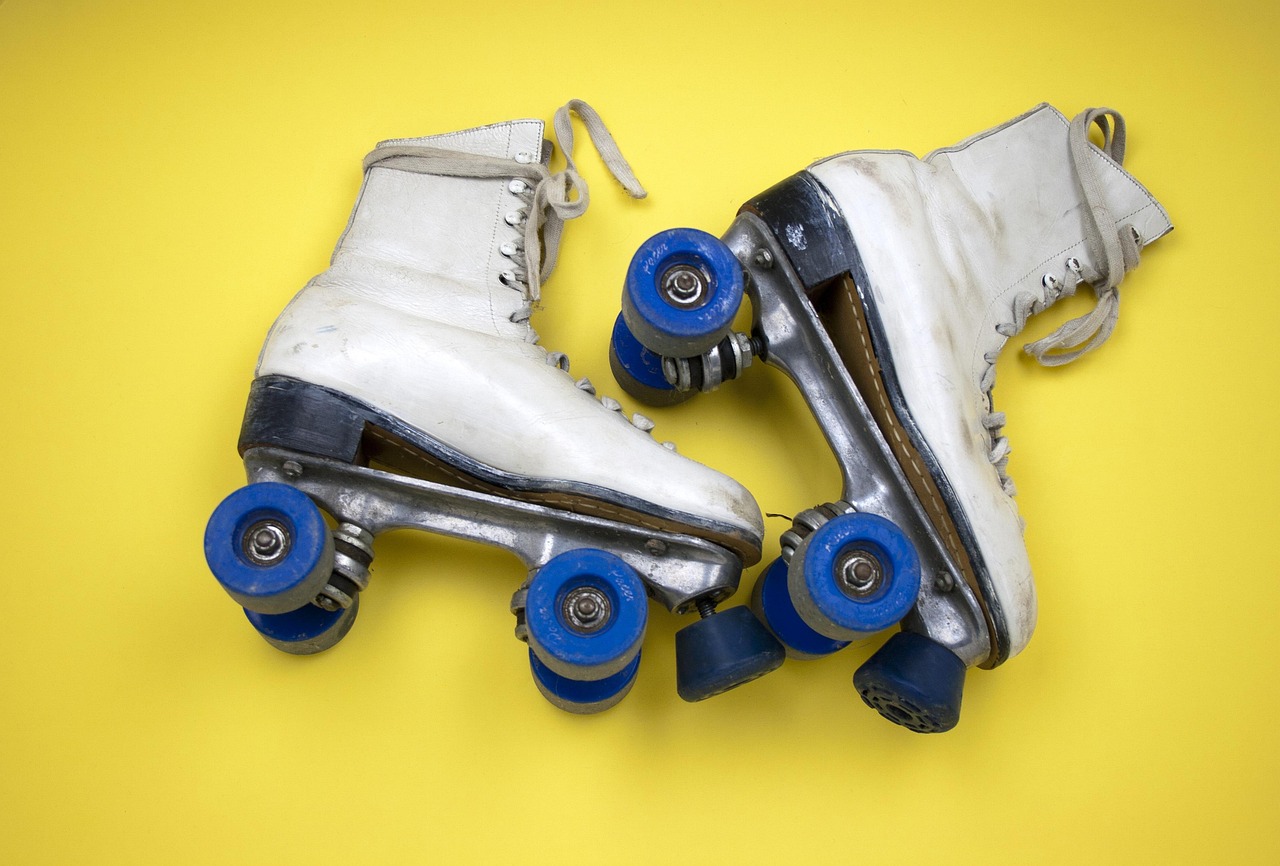
New skates out of the box, laces pulled tight, the first few laps a little stiff until the boots start to give. Choosing roller skating gear is half the fun: pastel quads or sleek inlines, soft outdoor wheels or slick indoor ones, a fitness skate or big-wheeled inlines for speed. But the gear that matters most for your health is the stuff people skip at the rink: a certified helmet, wrist guards, and knee and elbow pads. Here’s the whole list, from quad versus inline skates and wheels to protective gear and a little recovery kit for the day after. Roller derby players have their own list (quads, five pieces of required protection and a mouthguard) on our roller derby gear page.
Buying guide · Our Roller Skating buying guide compares the gear we'd pick, with prices and sizing:
Prices change often. The prices below are what we saw at the maker or a major retailer in October 2026; check the current price before you buy.
Our top picks
Moxi Beach Bunny Roller Skates
- Aluminum plate, metal trucks
- 58 mm 78A wheels, ABEC-5
- About $149
Impala Quad Skate
- Aluminum trucks and plate
- 58 mm 82A wheels, ABEC 7
- About $96
Riedell R3 Indoor Quad Skate
- Low boot, Velcro cinch strap
- 62 x 43 mm 95A wheels
- About $199
Rollerblade Zetrablade Elite
- High cuff, monocoque frame
- 80 mm/82A wheels, SG5
- About $149
Rollerblade Macroblade 110 3WD
- 3 x 110 mm/85A wheels
- 290 mm aluminum frame
- About $210
Pro-Tec Classic Certified Helmet
- CPSC bike, ASTM F1447 and F1492 (maker)
- ABS shell, EPS liner
- About $63
Triple Eight Saver Series 3-Pack
- Knee, elbow pads and wrist guards
- Junior to Large
- About $50
Quad skates vs inline skates
The American Academy of Pediatrics (AAP) sums up the difference: in-line skates have the wheels in a line; quad roller skates have them side by side. In practice:
- Quads have a wide, stable base and a toe stop. They’re the skate for rinks, dance, rhythm and jam skating, and most artistic skating.
- Inlines have a long wheelbase, bigger wheels and usually a heel brake. They roll faster and smoother over pavement, which makes them the usual pick for fitness and trail skating and most speed racing.
- High-top or low-top quads: high-top boots (like most rink skates) give more ankle support; low-cut boots allow more ankle bend for quick footwork.
Skates we’d look at
The Moxi Beach Bunny is a high-top quad with a vinyl boot, die-cast aluminum plate with metal trucks, ABEC-5 bearings and soft 58 mm 78A wheels that cushion rough ground, for indoor and outdoor skating (about $149). The Impala Quad Skate is a popular first pair at a lower price, with aluminum alloy trucks and baseplate, 58 mm 82A urethane wheels and ABEC 7 bearings (about $96). For indoor rink and rhythm skating, the Riedell R3 has a lower boot with a Velcro cinch strap, a nylon plate with metal trucks, ABEC-5 bearings and harder 62 mm by 43 mm, 95A indoor wheels (about $199).
Check the Moxi Beach Bunny price on Amazon
On inlines, the Rollerblade Zetrablade Elite is an entry-to-intermediate fitness skate with a high cuff for support, a monocoque frame that keeps you low and stable, and 80 mm/82A wheels with SG5 bearings (about $149). For kids, adjustable skates that grow four sizes, like the Rollerblade Microblade, are covered on our youth page. Check the label: several adult skates say they aren’t designed for children 12 and under.
Check the Rollerblade Zetrablade Elite price on Amazon
Skates for speed and distance
Skaters who want to go faster and farther move to bigger wheels. The Rollerblade Macroblade 110 3WD is a fitness skate with three 110 mm/85A wheels on a 290 mm aluminum frame, a higher cuff and Twincam bearings (about $210). If you plan to race, read the rules first. World Skate’s speed rulebook allows up to five wheels in a line or two pairs side by side, skates no longer than 50 cm, wheels up to 110 mm (125 mm in the marathon; 90 mm for skaters up to 12 and 100 mm up to 14), and no brakes. Learn a reliable stop without a brake before you take a race skate onto a public path. Our roller skating rules page covers race formats.
Check the Rollerblade Macroblade 110 3WD price on Amazon
Wheels: size and hardness
Wheels are measured by diameter and width in millimeters and by hardness (durometer, on the “A” scale; a higher number is harder). Softer wheels, in the high 70s, grip and absorb bumps outdoors; harder wheels, in the 90s, slide and roll fast on smooth rink floors. Many indoor skaters keep a second set of wheels to match the floor.
- Outdoor: the Moxi Classic wheels are 65 mm by 35 mm at 78A, made for sidewalks, pavement and trails (about $45 for four).
- Indoor: the Radar Halo wheels are 59 mm by 38 mm, with an H-shaped hub for stops and edge control, in a range of hardnesses (about $69 for four).
- Inline: bigger wheels (80 mm on the Zetrablade, 110 mm on the Macroblade 110) roll faster; kids’ skates use smaller wheels (72 mm on the Microblade) to keep speed down.
Before each skate: wheels spinning freely, axle nuts and toe stops tight, and brakes or toe stops not worn down to the plate.
Helmets: certification and fit
- Recreational skating: the Consumer Product Safety Commission (CPSC) says a CPSC-compliant bicycle helmet works for recreational roller and in-line skating.
- Aggressive, trick and park skating: the CPSC lists the skateboard helmet standard, ASTM F1492. A dual-certified helmet meets both, which suits skaters who do a bit of everything.
- Racing: World Skate requires a hard helmet with international certification, fastened the whole time you’re on the course.
- Fit: the American Academy of Orthopaedic Surgeons (AAOS) says a skate helmet should sit flat on the head, bottom edge parallel to the ground, and not move when you shake your head. Buckle the chin strap every time, and replace it when it’s cracked or the liner is crushed, or at least every 5 years.
The Pro-Tec Classic Certified is triple-certified, the maker says: the CPSC bike standard (age 5 and up), ASTM F1447 for recreational bicycling or roller skating, and ASTM F1492 for skateboarding and trick roller skating. It has an ABS shell, EPS liner and 11 vents, in sizes XS (52–54 cm) to XL (60–62 cm), for about $63. The Triple Eight Dual Certified helmet, sold for skateboarding, BMX and roller skating, is dual-certified to the CPSC bike standard and ASTM F1492 and comes with two sets of fit pads (about $46).
Check the Pro-Tec Classic Certified price on Amazon
Wrist guards, knee pads and elbow pads
Skaters fall onto their hands, so wrists take the most fractures: in a pediatric study, 63.1% of roller-skating fractures were in the forearm, nearly all near the wrist. The AAP says wrist guards can reduce injuries by almost 90%, elbow pads by 80% and knee pads by 30%. In a large US study of injured in-line skaters, those without wrist guards had about 10 times the odds of a wrist injury, and those without elbow pads about 9.5 times the odds of an elbow injury.
The Triple Eight Saver Series 3-Pack has knee and elbow pads with EVA foam and polycarbonate caps and wrist guards with molded ABS splints, sized Junior to Large by measuring around the hand at the knuckles (about $50). Wear them every session, not just the first few: the AAP’s advice is for every skater, and pads that slide down don’t protect, so size them by the maker’s chart.
Check the Triple Eight Saver Series price on Amazon
Recovery gear for skaters
Hours in a low skating stance load the quads, glutes, hips and feet. Many skaters roll out afterward with a foam roller such as the TriggerPoint GRID 1.0 (13 by 5 inches, about $40; see our foam roller guide), use a small massage gun like the Hypervolt Go 3 (1.6 pounds, up to 4 hours of battery, about $149; see our massage gun guide), and slip into the OOFOS OOahh Slide after a day in tight skate boots (about $60; see our recovery shoes guide). Skaters coming back from a knee injury may also look at knee sleeves. These are about comfort, not treatment: a swollen wrist or knee after a fall needs a doctor. Our recovery page has the full routine.
TriggerPoint GRID 1.0 Foam Roller
- 13 x 5 in
- Multi-density surface
- About $40
OOFOS OOahh Slide
- OOfoam slide
- APMA Seal of Acceptance
- Machine washable
How to choose roller skating gear
- Protection first. A certified helmet and wrist guards cost less than one emergency room visit.
- Match the skate to the skating: quads for rinks, dance and jam skating; inlines for fitness and trails; big-wheeled inlines for speed and distance.
- Match the wheels to the surface: soft (around 78A) outdoors, harder indoors.
- Fit beats looks: skates snug with no heel lift; a helmet that doesn’t wobble; pads that don’t slide down. Use each maker’s size chart.
- Joining a club? Ask your artistic or speed coach before buying; competition skates and wheels are specific to the discipline, and races have equipment rules.
More for skaters: our roller skating hub, roller skating injuries, roller skating rules and rink etiquette, skateboarding gear for park skaters, and our speed skating section.
Roller skating gear FAQs
Should I get quad skates or inline skates?
Quads if you’ll skate at a rink, dance or do artistic or jam skating. Inlines if you mostly want fitness skating on paths and trails, or speed.
What helmet do I need for roller skating?
For recreational skating, the CPSC says a CPSC-compliant bike helmet works. For trick or park skating, choose one certified to ASTM F1492, or a dual-certified helmet that meets both.
What are the best wheels for outdoor roller skating?
Softer, slightly larger wheels around 78A, like the 65 mm Moxi Classic, roll over cracks and pebbles more smoothly than hard indoor wheels.
What skates do roller speed skaters use?
Mostly inlines with big wheels, though quads are raced too. Race skates have no brakes, and World Skate caps wheels at 110 mm (125 mm in the marathon). For fitness skaters, three-wheel skates like the Macroblade 110 are a common step up.
Are wrist guards worth it for adults?
Yes. Wrist injuries are the most common skating injury, and in-line skaters who skipped wrist guards had about 10 times the odds of a wrist injury in a large US study.