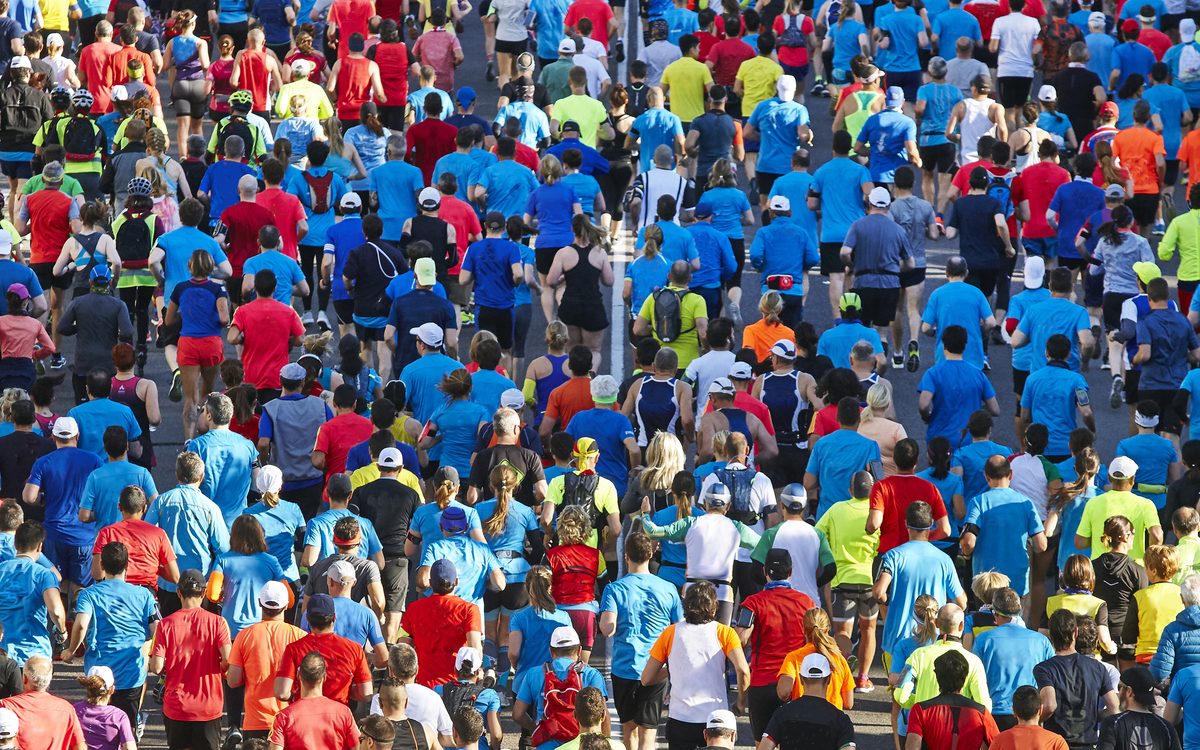
Somewhere around mile 20 of a marathon, there is a moment when the body asks a simple question: what did you eat? A runner who practiced fueling in training reaches for a gel without thinking. A runner who did not suddenly feels the whole race change. Marathon nutrition is the plan for eating and drinking before, during and after the race and across the weeks of training so that the body has the energy it needs. It is general information, not a personal plan; the Academy of Nutrition and Dietetics, Dietitians of Canada and the American College of Sports Medicine (ACSM) say athletes should be referred to a registered dietitian for one.
Quick answer: Most marathoners fuel with carbohydrate during the race, drink according to thirst (not a rigid schedule), and practice both in training first. Heavy overdrinking can cause dangerous low blood sodium. Eating enough across training matters for health, not just speed. Supplements are optional, and anyone who competes in tested events should use only third-party certified products. Talk to a doctor or registered dietitian about your own plan.
Carbohydrate during the race
A 2014 review by Jeukendrup says carbohydrate advice for endurance exercise depends on how long and how hard the effort is. For efforts of about two to three hours it recommends up to roughly 60 g of carbohydrate an hour from a single source, and for ultra-endurance events about 90 g an hour using mixed carbohydrate types, adjusted down when exercise intensity is low. Most marathoners run from about three to five hours, which falls between those figures, so what works is individual. General coaching practice is to build up gradually in long runs to find what your stomach tolerates; we found no sourced marathon-specific number beyond the review above.
The ACSM, Academy of Nutrition and Dietetics and Dietitians of Canada joint position statement (2016) says well-chosen nutrition strategies improve performance and recovery. It also recommends a pre-exercise meal one to four hours before long efforts. On the wall, a 2026 review calls “hitting the wall” a multi-factor event, tied to fuel, heat, dehydration, gut trouble, fatigue and pacing, not simply running out of glycogen.
Drinking: thirst, not a schedule
Under-drinking and over-drinking both carry risks. The 2015 international consensus statement on exercise-associated hyponatremia, as summarized by its authors and publisher, advises drinking when thirsty as the safest individualized approach, and warns that “push fluids” or drink-by-schedule advice can lead to overdrinking. The ACSM joint position statement advises drinking enough to limit loss without gaining weight; one summary figure is about 0.4 to 0.8 litres an hour. These two approaches differ in framing; both aim to avoid the extremes.
Exercise-associated hyponatremia (EAH) means low blood sodium during or within 24 hours of endurance exercise. A 2025 review of 56 field studies found that mild symptoms include nausea, weakness, dizziness, headache and swollen hands or feet, and that altered mental state, vomiting, seizure, collapse or loss of consciousness suggest a severe case. Running and hiking produced far more cases than cycling or swimming events, and a greater share of women than men had it. Our marathon injuries page covers what to do. If you cannot keep fluids down, or you feel confused or very unwell, get medical help right away.
Heat
A study of the Singapore Marathon found a 22% rise in severe casualties for each one-unit rise in heat index. NATA says heat acclimatization takes 7 to 14 days. In a hot race, plan on a slower pace. Marathons do not have weight classes, so the weight-class cautions that apply in other sports do not apply here.
Caffeine
The International Society of Sports Nutrition (ISSN) 2021 position stand says caffeine in doses of 3 to 6 mg per kg of body mass consistently improves exercise performance, that benefits may begin as low as 2 mg/kg, that very high doses (9 mg/kg) bring more side effects, and that aerobic endurance shows the most consistent benefit. It also says effects on sleep and anxiety vary between people. It is not for everyone: check with a doctor if you have a heart condition, are pregnant or are sensitive to caffeine. Practice in training, not on race morning. Caffeine is part of some gels; read the label.
Eating enough: REDs awareness
The 2023 IOC consensus statement on Relative Energy Deficiency in Sport (REDs) says that not eating enough for the energy you use can harm health and performance in both female and male athletes. The AAOS lists low energy intake among stress-fracture risk factors, and the AAP says missed periods in female athletes warrant a doctor visit. Warning signs include repeated injuries, constant fatigue and missed periods. These are health matters for a doctor or registered dietitian, not a training problem to solve by yourself.
Supplements
Supplements are optional, and no supplement replaces food or sleep. USADA says athletes who compete in tested sport are responsible for what is in their system even if it comes from a contaminated product, and that if they use supplements they should choose products certified by a third-party program that tests for prohibited substances. It lists programs including NSF Certified for Sport, Informed Sport and Banned Substance Control Group, and says certification reduces but does not eliminate risk. It also warns about misused logos: check the specific product and batch in the certifier’s database.
This applies most to runners in tested competitions; most recreational runners will never be drug tested, but third-party testing is still a sensible quality check. For gels and drink mixes, see our energy gel guide and the running nutrition and supplements page. Nothing here is dosage advice beyond the label, and everything is “talk to your doctor or dietitian” for your own situation.
Marathon nutrition FAQs
How many carbs do I need per hour in a marathon?
A 2014 review says about 60 g an hour for efforts of two to three hours and about 90 g an hour for ultra-endurance, depending on how long and hard you run. Practice in training to see what your stomach accepts.
Should I drink at every aid station?
The 2015 EAH consensus, as summarized by its authors, says drinking when thirsty is the safest individualized approach. Drinking far more than you lose can cause low blood sodium.
Is caffeine safe before a marathon?
The ISSN says 3 to 6 mg/kg consistently improves performance but that sleep and anxiety effects vary. Check with a doctor if you have a heart condition or are caffeine-sensitive.
What is REDs?
Relative Energy Deficiency in Sport means not eating enough for your energy use, which the IOC says can harm health and performance. See a doctor or registered dietitian if you suspect it.
Do I need supplements?
No. Food comes first. If you do use a product, choose one certified by a third party and check the batch.
Sources
- Thomas, Erdman and Burke, ACSM/AND/DC joint position statement, Nutrition and Athletic Performance, 2016
- Jeukendrup, a step towards personalized sports nutrition: carbohydrate intake during exercise, 2014
- Hew-Butler et al., Third International Exercise-Associated Hyponatremia Consensus Statement, 2015
- Wolters Kluwer news release on the 2015 EAH consensus (drink when thirsty)
- Armstrong et al., exercise-associated hyponatremia review, 2025
- Grivas et al., hitting the wall in marathon running, review, 2026
- Guest et al., ISSN position stand, caffeine and exercise performance, 2021
- Mountjoy et al., IOC consensus statement on REDs, 2023
- Poh and Anantharaman, casualties during marathon events, Singapore, 2025
- NATA position statement, exertional heat illnesses, 2015
- USADA, Supplement Connect
- USADA, verify third-party certified logos
- AAOS OrthoInfo, stress fractures
- AAP HealthyChildren, Running
General information for education only, not medical advice. It does not replace a visit with a doctor, physical therapist or athletic trainer. See how we write and check our pages in our editorial policy.