This article contains affiliate links: if you buy through them we may earn a commission, at no extra cost to you. Read our affiliate disclosure.
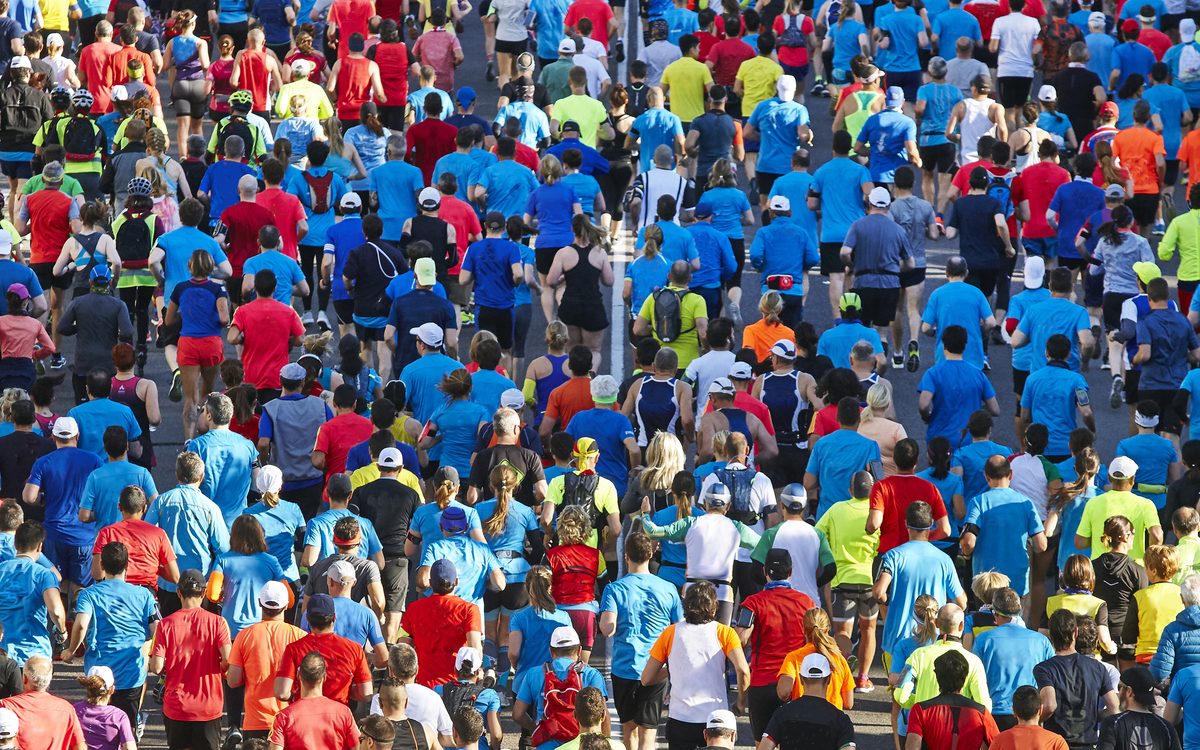
On 26 April 2026 in London, Kenya’s Sabastian Sawe ran the streets of the capital in 1:59:30, a time World Athletics later ratified as a world record and the first marathon under two hours that counts on the record list. Behind him, thousands of first-timers were still on the course, each chasing a very different finish. That is the marathon: 26.2 miles (42.195 km) of road running that is run by the fastest people on earth and by people who are simply proud to finish.
Marathon guides: what do you need?
New to marathon? Start with the first card. Everything here is general education, not medical advice.
History & Origins
The Boston Athletic Association says its marathon was inspired by the first modern Olympic marathon in Athens in 1896, and the first Boston race ran on 19 April 1897 from Ashland to Boston, won by John J. McDermott in 2:55:10 (B.A.A.). The old story of a messenger running from Marathon to Athens is a legend that historians dispute, so we do not treat it as record. Over the next century the marathon moved from a few dozen starters to a mass-participation event: the Boston course was lengthened to the Olympic standard of 26 miles 385 yards in 1924, women fought for a place on the start line in the 1960s and early 1970s, wheelchair racers were recognized in the 1970s, and in 1984 Los Angeles hosted the first Olympic women’s marathon. The most recent milestone came in 2026, when Sabastian Sawe ran the first sub-two-hour marathon that World Athletics counts as record-eligible (World Athletics).
- 1896: First modern Olympic marathon, Athens; it inspires the Boston race (B.A.A.).
- 1897: First Boston Marathon, 19 April, won by John J. McDermott in 2:55:10 (B.A.A.).
- 1924: Boston lengthens its course to 26 miles 385 yards, the Olympic standard, and moves the start to Hopkinton (B.A.A.).
- 1966: Roberta “Bobbi” Gibb becomes the first woman to run the Boston course, unofficially, in 3:21:40 (B.A.A.).
- 1967: Kathrine Switzer is the first woman to receive a Boston bib number (B.A.A.).
- 1972: Women are officially allowed to run Boston; Nina Kuscsik wins (B.A.A.).
- 1975: Bob Hall becomes the first officially recognized wheelchair participant at Boston (B.A.A.).
- 1984: First Olympic women’s marathon, 5 August, Los Angeles; Joan Benoit wins in 2:24:52 (World Athletics).
- 2026: Sawe runs 1:59:30 at the London Marathon on 26 April; the record is ratified in the release dated 23 July 2026 (World Athletics).
Recent Champions
This list covers only results we confirmed on an official page: the open-division Boston Marathon winners for 2022 to 2026, and the 2026 Berlin, Chicago and New York City marathons. It is a small sample, not every race, and it leaves out wheelchair, age-group and Olympic or World Championship results.
| Race | Men | Women |
|---|---|---|
| Boston 2026 (open) | John Korir, Kenya, 2:01:52 | Sharon Lokedi, Kenya, 2:18:51 |
| Boston 2025 | John Korir, Kenya, 2:04:45 | Sharon Lokedi, Kenya, 2:17:22 |
| Boston 2024 | Sisay Lemma, Ethiopia, 2:06:17 | Hellen Obiri, Kenya, 2:22:37 |
| Boston 2023 | Evans Chebet, Kenya, 2:05:54 | Hellen Obiri, Kenya, 2:21:38 |
| Boston 2022 | Evans Chebet, Kenya, 2:06:51 | Peres Jepchirchir, Kenya, 2:21:01 |
| Berlin (27 Sep 2026) | Guye Adola, Ethiopia, 2:02:50 | Tigst Assefa, Ethiopia, 2:11:04 |
| Chicago (11 Oct 2026) | Amos Kipruto, Kenya, 2:01:09 | Hawi Feysa, Ethiopia, 2:13:33 |
| New York City (1 Nov 2026) | Andreas Almgren, Sweden, 2:06:01 | Sheila Chepkirui, Kenya, 2:24:36 |
Results verified through 13 November 2026. The latest completed event included is the New York City Marathon on 1 November 2026. Source: the Boston Athletic Association champions page and the World Athletics reports linked in each row.
Records & Milestones
| Record | Holder | Mark | Date and place | Status |
|---|---|---|---|---|
| Men’s marathon | Sabastian Sawe, Kenya | 1:59:30 | 26 April 2026, London | World record per World Athletics release of 23 July 2026; first record-eligible sub-2:00 |
| Women’s marathon (women-only race) | Tigst Assefa, Ethiopia | 2:15:41 | 26 April 2026, London | World record in its category per the same release; improved her own 2:15:50 from 27 April 2025 |
Source: World Athletics, ratified world records. The previous men’s mark was Kelvin Kiptum’s 2:00:35 (Chicago, 8 October 2023). We leave out the women’s mixed-race record and half-marathon marks because we could not confirm their current status on an official page. Records verified through 13 November 2026.
Legends of the Sport
These are influential marathon runners across eras, in rough date order, not ranked. Athletes only; none is connected to AthleteRx.
- Roberta “Bobbi” Gibb (USA): first woman to run the Boston course, unofficially, in 1966 (B.A.A.).
- Kathrine Switzer (USA): first woman to receive an official Boston bib number, in 1967.
- Nina Kuscsik (USA): won Boston in 1972, the first year women were officially allowed to run.
- Bob Hall (USA): first officially recognized wheelchair participant at Boston, 1975, which started the wheelchair division.
- Joan Benoit Samuelson (USA): won the first Olympic women’s marathon in 1984; a 2:22:43 at Boston in 1983 made her the fastest woman over the distance at that point (World Athletics).
- Kelvin Kiptum (Kenya): set the 2:00:35 men’s world record in Chicago on 8 October 2023.
- Tigst Assefa (Ethiopia): holds the 2:15:41 women-only marathon record and won Berlin in 2026 in 2:11:04.
- Sabastian Sawe (Kenya): ran the first record-eligible sub-two-hour marathon, 1:59:30, in London in 2026.
Official results and records
- World Athletics all-time marathon lists
- Boston Athletic Association champions
- Abbott World Marathon Majors
- Olympics.com
How we keep this current: we re-check results after each major championship and update the date above. Spot an error? See our editorial policy.
The marathon at a glance
| What it is | A road race of 42.195 km (26.2 miles), the standard long road distance in athletics. |
|---|---|
| How it is won | Fastest time from start to finish. |
| Who runs it | Elite runners, qualifiers chasing times for Boston, charity runners, first-timers and older runners. Children and teens are advised against it by the American Academy of Pediatrics. |
| Where | City streets. World Marathon Majors are Tokyo, Boston, London, Berlin, Chicago, New York City and Sydney (the seventh Major, per its official page); Cape Town is due to be the eighth from May 2027. |
| Governing bodies | World Athletics worldwide; USATF in the US; the Boston Athletic Association runs the Boston Marathon. |
| Season | Varies by race; major city marathons are scheduled on fixed dates each year, so check the race calendar. |
How the marathon works
It is simple on paper: start, run 42.195 km, finish. In practice, the race is a long exercise in pacing. Most runners aim for an even effort and a steady pace, and a common mistake is starting too fast in the excitement of the crowd. Courses are marked at each mile or kilometre, with aid stations offering water and often sports drink and gels. Qualifying races such as Boston require a course that is certified by USATF, AIMS or the national governing body, so the distance is accurate.
Many race organisers set a cut-off time, so check the time limit and the rules on headphones and bibs. (USATF amended its rule on headphones in 2008; check each race’s rules.) Our running rules page has the common race rules, and our first marathon training guide covers the plan.
Qualifying times and the Majors
Boston is the best-known race you have to qualify for. For the 2027 and 2028 races, the Boston Athletic Association’s standard for ages 18 to 34 is 2:55:00 for men and 3:25:00 for women, with older age groups given more time. Meeting the standard does not guarantee entry: for the 2027 race the cut-off was 5 minutes 17 seconds faster than the standard. The other Majors use entry lotteries, charity places, time-qualifying places or a mix, so check each race’s page.
Who runs it and at what level
Adult beginners and recreational runners are the heart of the marathon. Many train with a club, a charity team or an app. Teens and children: the American Academy of Pediatrics’ HealthyChildren site advises that children and teens should not run marathons, and the Road Runners Club of America suggests longer road distances only after puberty. School and college athletes race shorter distances instead (cross country and track), and the marathon is not an NCAA or NFHS championship event.
Elite. The men’s world record is Sawe’s 1:59:30 from London, 26 April 2026, ratified by World Athletics; before it, Kelvin Kiptum’s 2:00:35 from Chicago in October 2023 had stood. In women-only races, Tigst Assefa of Ethiopia ran 2:15:41 in London on the same day, also ratified. For women’s records in mixed races, see World Athletics’ record list.
Olympic status
The marathon is an Olympic athletics event. At Paris 2024, Ethiopia’s Tamirat Tola won the men’s race in an Olympic record on a hilly course in the heat, with Bashir Abdi of Belgium second (2:06:47) and Benson Kipruto of Kenya third (2:07:00); the Netherlands’ Sifan Hassan won the women’s race in an Olympic record, ahead of Ethiopia’s Tigst Assefa and Kenya’s Hellen Obiri. For Los Angeles 2028 (14 to 30 July), LA28 lists the marathon on Days 15 and 16, the final weekend of the Games. For the current programme and routes, check olympics.com and LA28. For any Paralympic marathon events, check paralympic.org.
Physical demands
The marathon is mainly an aerobic event: the body runs for hours on a mix of carbohydrate and fat. The challenge is as much muscular as cardiovascular, because tens of thousands of foot strikes add up, and late-race fatigue shows in form. Training builds up long runs, and almost all plans taper in the last weeks. Our running training page goes deeper.
Health and safety in the marathon
This section is general information, not medical advice. See a sports medicine doctor, physical therapist or athletic trainer about pain, chest symptoms or concerns before your first marathon, especially if you are returning to exercise.
Training injuries
Most marathon injuries come from training, not race day. A 2021 systematic review (Kakouris et al., Journal of Sport and Health Science) found an overall running injury rate near 40%, with Achilles tendon problems (10.3%), shin pain (9.4%), kneecap pain (6.3%), plantar fasciitis (6.1%) and ankle sprains (5.8%) most common. A 2015 review in Sports Medicine reported 17.8 injuries per 1,000 hours for novice runners, against 7.7 for recreational runners. The American Academy of Pediatrics’ “10% rule” (adding no more than about 10% mileage a week) is a common guide; many plans build more slowly. Pain that is sharp, gets worse as you run, or lasts, deserves a professional’s eyes before you add more miles. About 90% of sports injuries managed by sports medicine physicians do not need surgery, according to the AMSSM.
Heat, fluids and race-day medical problems
Heat is the main race-day risk. A study of the Singapore Marathon from 2013 to 2016 found that each one-unit rise in heat index raised severe casualties by 22%, and full marathon runners were 3.87 times as likely to be injured as 10 km runners. The National Athletic Trainers’ Association says heat acclimatization takes 7 to 14 days. The ACSM, Academy of Nutrition and Dietetics and Dietitians of Canada statement advises drinking enough to limit loss without gaining weight, about 0.4 to 0.8 litres an hour; drinking far more than you lose carries its own risks. Slow down in heat, take the aid at stations, and stop if you feel dizzy, confused or stop sweating.
Cardiac events
Cardiac arrest in marathons is rare but real. The Race Associated Cardiac Event Registry, reported in JAMA in 2025, counted 176 cardiac arrests among about 29.3 million race finishers from 2010 to 2023, roughly 6 per million. A 2012 study in the New England Journal of Medicine found that bystander CPR was the strongest predictor of survival. If you have chest pain, fainting, or unusual breathlessness in training, see a doctor before the race.
Low energy and falls
The 2023 IOC consensus statement on Relative Energy Deficiency in Sport (REDs) says that not eating enough for the energy you use can harm health and performance in female and male athletes. If you fall and hit your head during a long run, the CDC’s HEADS UP guidance applies: stop, and see a healthcare provider before returning; call 911 for danger signs such as repeated vomiting, a seizure or slurred speech.
Training, recovery and nutrition pointers
Typical plans build a weekly long run, add easy mileage and finish with a taper. Practise your race-day breakfast, drink and gels in training so there are no surprises. The ACSM statement recommends a pre-exercise meal one to four hours before long efforts. After the race, expect soreness for days; sleep matters (the CDC recommends at least 7 hours for adults and 8 to 10 for teens), and easy walking and food help many runners feel better. See our training, recovery and nutrition and supplements pages and the recovery for runners article.
Gear for the marathon
Shoes are the one piece of gear to get right. The American Academy of Orthopaedic Surgeons advises trying shoes on late in the day with your running socks, and the AAP says running shoes usually last about 300 to 500 miles or six months. After that: a watch for pacing such as the Garmin Forerunner 570 (the maker offers Garmin Coach run plans), blister-conscious socks such as the Balega Hidden Comfort, an anti-chafe stick such as Body Glide Original and an energy gel such as SiS GO Isotonic, which the maker says is Informed Sport tested. Try everything in training first. More in our energy gel guide, Garmin for runners and running gear page.

Garmin Forerunner 570
- GPS, AMOLED, 42 or 47 mm
- Garmin Coach run plans
$449.99 at Amazon, as of Nov 17, 2026 01:07 UTC
Check price on Amazon
Balega Hidden Comfort No-Show Socks
- Drynamix wicking yarn
- Cushioned, seamless toe
- Heel tab

Body Glide Original Anti-Chafe Balm
- 1.5 oz stick
- Plant waxes, no petroleum (maker)
- Test it on long runs
$11.69 at Amazon, as of Nov 17, 2026 01:07 UTC
Check price on Amazon
SiS GO Isotonic Energy Gels
- 25 g carbohydrate per gel
- Informed Sport per maker
- Practise in training first
$47.90 at Amazon, as of Nov 17, 2026 01:07 UTC
Check price on AmazonRelated sports and disciplines
- Running: the parent page, from 5Ks to cross country.
- Trail running and ultra running: off-road and longer-than-marathon distances.
- Track and field and triathlon: more athletics and endurance sport.
Marathon FAQs
How long is a marathon?
42.195 km, or 26.2 miles. The men’s world record is 1:59:30, ratified by World Athletics after London 2026.
How do I qualify for Boston?
Run a certified marathon within the qualifying window under the standard for your age and gender; for ages 18 to 34 it is 2:55:00 for men and 3:25:00 for women for the 2027 and 2028 races. The standard alone does not guarantee a place.
Is the marathon in the 2028 Olympics?
Yes. LA28 lists the marathon on Days 15 and 16 of the Games (29 and 30 July 2028), the final weekend.
Can teenagers run a marathon?
The American Academy of Pediatrics’ advice is that children and teens should not run marathons; talk to a pediatrician or sports medicine doctor if a young runner wants to build toward longer distances.
What are the biggest risks on race day?
Heat is the biggest one, as the Singapore data above shows. Starting too fast, under-drinking or over-drinking, and ignoring warning signs (chest pain, dizziness, confusion) are the usual mistakes.
Sources
- World Athletics: ratified world records (23 July 2026)
- World Athletics: Paris 2024 men’s marathon report
- Olympics.com: Paris 2024 women’s marathon
- LA28: competition schedule
- Boston Athletic Association: qualifying
- World Marathon Majors: Sydney and Cape Town Marathon
- Kakouris et al. 2021: running-related injuries and Videbæk et al. 2015: novice runners
- Casualties during marathon events (Singapore, 2025)
- Kim et al. 2025, JAMA: cardiac arrest in running races and Kim et al. 2012, NEJM
- NATA: exertional heat illnesses
- IOC consensus statement on REDs (2023)
- ACSM, AND and Dietitians of Canada: Nutrition and Athletic Performance
- AAP HealthyChildren: Running, RRCA youth running, AAOS: Athletic shoes
- CDC HEADS UP, CDC sleep and AMSSM patient brochure
Keep exploring: the running hub, running injuries, running gear, our recovery tools guide, heart rate monitors and the sports hub.