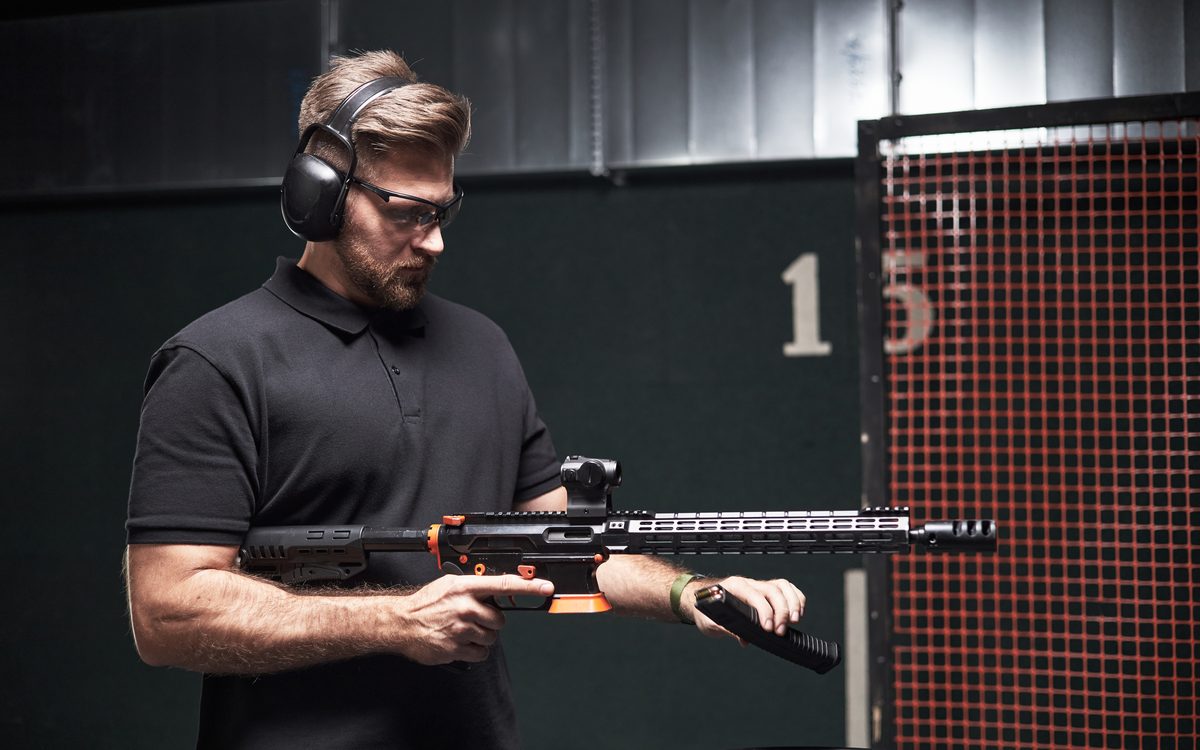
Shooters rarely limp off a range. The trouble shows up quietly: a back that aches after a three-position match, a shoulder that complains after months of holding the same position, a ringing that fades by morning and returns after the next session. Shooting injuries are the physical problems that come from the sport, from sudden accidents on one end to slow overuse and noise exposure on the other. This page summarises what the published research says. It does not diagnose anything.
Quick answer: A 2021 systematic review found low injury percentages in Olympic-style shooting compared with many other sports: 2.3 percent in summer events and 6.9 percent in winter shooting events. But those numbers cover acute injuries; a 2025 survey of 114 college rifle athletes found 89 percent had at least one episode of low back pain. Hearing damage is the other well-documented risk. See a sports medicine doctor, physical therapist or athletic trainer for pain that persists, and a hearing professional for ringing.
General information, not medical advice. How to lower risk is on our injury prevention page. Back to the shooting hub.
What the injury numbers say
A 2021 systematic review of Olympic-style shooting events included 19 studies covering biathlon, rifle, pistol and shotgun. It reported that injury percentages were low compared with other sports: 2.3 percent in summer shooting events and 6.9 percent in winter shooting events, which include biathlon. In the summer group, women had a higher percentage (6.9 percent) than men (1.7 percent); in the winter group, men had a higher percentage (8.6 percent) than women (5.1 percent). The authors note that surveillance in these sports focuses on acute injuries, so chronic and overuse problems may be underestimated. That caveat matters for the next section.
Low back pain in rifle athletes
A 2025 cross-sectional survey of 114 college rifle athletes in the International Journal of Sports Physical Therapy asked about low back pain. The authors describe rifle as a sport that keeps the lower back in demanding positions for long periods. Of the respondents, 101 (89 percent) had experienced at least one episode of low back pain, and 24 percent of those had missed at least one day of training or competition in the 2019-2020 season because of it. The study also reported an association between sex and back pain (p < 0.001), and that during the COVID-19 pandemic 60 percent of respondents could not get the same level of medical care, while 69 percent reported equal or greater pain. A survey of this kind counts how common a problem is and cannot show what causes it. The authors say athletic trainers and other professionals should be aware of the problem and that more research is needed on contributing factors such as training duration and position.
Hearing damage and ringing in the ears
A review in Seminars in Hearing states that peak sound levels from firearms are about 140 to 175 dB, that most recreational firearms reach 150 to 165 dB (small-calibre .17 and .22 rifles and air rifles excluded), and that shooters have a higher risk of bilateral, high-frequency noise-induced hearing loss than people who do not shoot. A small 1998 report on 91 sport shooters in Thailand found 9.34 percent had hearing impairment at 3,000 to 8,000 Hz, and that the right ear was more affected than the left. It is old and small, but it shows the typical pattern of high-pitched loss. Ringing or a feeling of fullness after shooting is a signal to see a hearing professional (an audiologist or an ear, nose and throat doctor); it is not something to wait out.
Shoulders, neck, wrists: what we do not know
Neck, shoulder, upper-back and wrist tension are often talked about in precision sports, but in the sources we read we did not find shooter-specific numbers for them. The 2021 review lists biathlon, rifle, pistol and shotgun athletes but we could not read the breakdown by body part. If a joint hurts, treat it as you would any pain: see a professional rather than guessing from the internet.
Lead and other exposure
Lead is a health matter more than an injury. The Occupational Safety and Health Administration (OSHA) says shooting with lead bullets or lead-containing primers creates airborne lead at indoor ranges, and the CDC’s NIOSH says lead has the same effects on the body whether it is breathed in, swallowed or absorbed through the skin. A doctor can order a blood lead test, so talk with one if you shoot often at an indoor range, are pregnant or have a young child at home.
Concussion and other accidents
Shooting is not a collision sport, and we found no shooting-specific concussion numbers. A fall or slip anywhere can still cause one. The CDC’s HEADS UP program says to recognise the signs, remove the person from activity and have a health care provider decide when they can return. Firearm injuries are emergencies: call emergency services.
Rehabilitation principles
We found no shooting-specific rehabilitation protocol. These are general principles from the sources we read and from standard sports medicine practice, not a plan for your injury:
- Get it assessed first. A doctor, physical therapist or athletic trainer should say what the problem is and what is safe.
- Stay active within limits. The AAOS rotator cuff and shoulder conditioning program describes exercises that should not cause pain; pain during an exercise is a reason to stop and ask.
- Build back gradually. Return to holding positions and range time in small steps, as directed by your clinician.
- Do not guess at timelines. Recovery depends on the injury and the person; no source we read gives a universal time.
- Return to play is a clinician’s decision. We do not clear anyone to shoot.
Shooting injuries FAQs
Are shooting injuries common?
Injury percentages were low in a 2021 systematic review (2.3 percent summer, 6.9 percent winter), but the authors say chronic problems may be missed, and 89 percent of surveyed college rifle athletes reported low back pain.
Why do rifle shooters get low back pain?
The 2025 survey authors describe the sport as keeping the lower back in demanding positions for long periods, but the survey cannot show the cause. A physical therapist can look at your own position.
Is ringing in my ears after shooting normal?
It is a warning sign, not something to ignore. See a hearing professional, and ask your range about hearing protection.
Can I keep shooting with back pain?
That is for a clinician to decide after an assessment. Do not push through pain that is getting worse.
When can I go back after an injury?
We cannot say. Return to shooting is a decision for your health care provider and coach.
Sources
- Prevalence and incidence of injury during Olympic-style shooting events, systematic review, 2021
- High prevalence of low back pain in college rifle athletes, Int J Sports Phys Ther 2025
- Prevention of noise-induced hearing loss from recreational firearms, Seminars in Hearing 2017
- Hearing impairment in Thais due to sport shooting, preliminary report, 1998
- OSHA, lead hazards at indoor firing ranges
- CDC NIOSH, lead
- CDC HEADS UP, concussion response
- AAOS OrthoInfo, rotator cuff and shoulder conditioning program
General information for education only, not medical advice. It does not replace a visit with a doctor, physical therapist or athletic trainer, or instruction from a certified coach or range officer. See how we write and check our pages in our editorial policy.