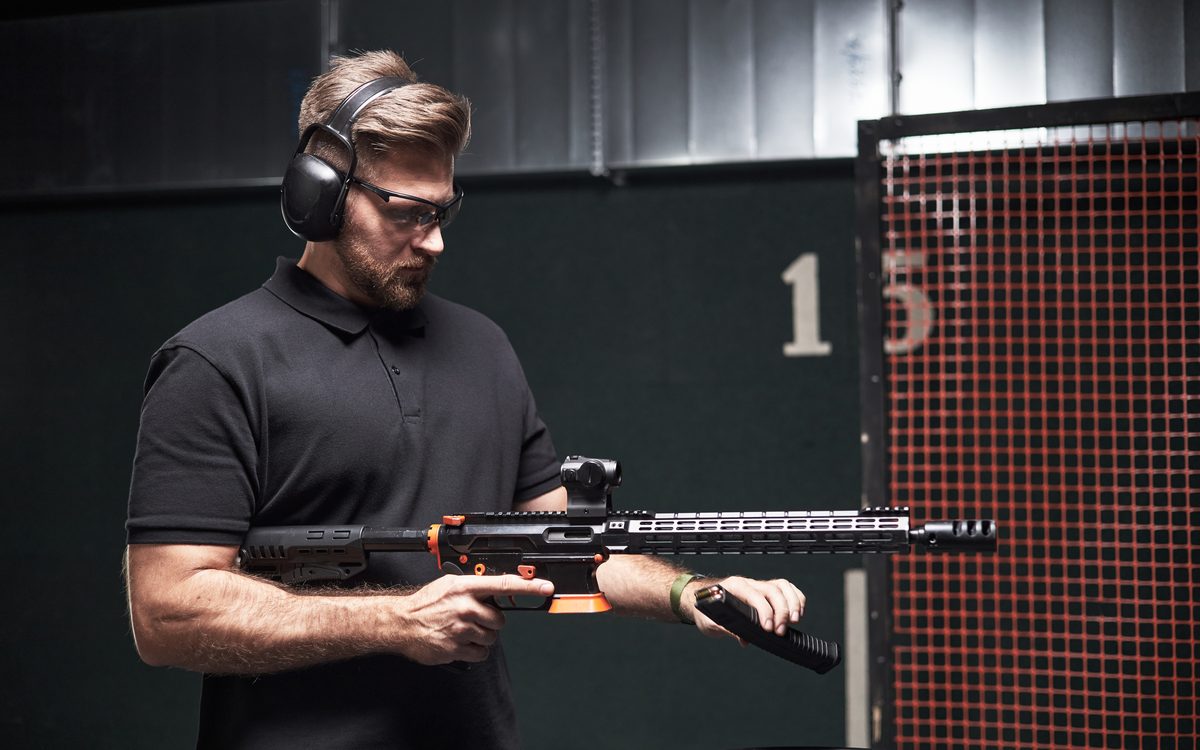
End of a long indoor match: the scores are posted, the range falls quiet, and a rifle shooter notices a faint ringing in one ear and a stiff lower back that has been building all season. Shooting injury prevention is the set of habits around a shooter, safe gun handling, proper hearing and eye protection, clean-range practices, strength and posture work and honest reporting of pain, that aim to lower the chance of harm. They lower the odds; they cannot promise anything.
Quick answer: Official safe-handling rules and range commands come first. Beyond that, the best-documented risks in shooting are noise, with peak sound levels of about 140 to 175 dB from firearms, and, in college rifle athletes, low back pain. Wear the hearing and eye protection your range requires, follow range rules on lead, and build trunk and posture strength with a coach. See a doctor, physical therapist or athletic trainer for pain that stays in one place, and an ear specialist for ringing or muffled hearing that does not clear.
General information, not medical advice. What the injuries look like is on our shooting injuries page, so we do not repeat it here. For the sport as a whole, start at the shooting hub.
Safe handling comes first
The National Shooting Sports Foundation (NSSF) lists ten rules of firearm safety. The core ones are to keep the muzzle pointed in a safe direction at all times, keep the gun unloaded until you are ready to shoot, keep your finger off the trigger until you intend to fire, and be certain of your target and what is behind it. The NSSF also says to wear eye and ear protection. The ISSF rules go further for competition: guns may only be loaded on the firing point after the command “LOAD” or “START”, safety flags must be inserted when a gun is not being fired, and a range officer may stop shooting at any time. Learn these with a qualified instructor and follow your range officer. Details are on our rules page.
Warm up before you shoot
We did not find a published injury-prevention warm-up program tested in shooters, so there is no named routine to point to. What follows is general practice, not a study result. Many coaches suggest a few minutes of easy movement for the neck, shoulders, upper back, wrists and hips before a session, and light holds in your shooting position before live shooting. Keep it gentle and stop if anything hurts.
Technique and position
Shooting positions are static and repeated thousands of times. A position that depends on muscle strain rather than bone support can tire the back and shoulders sooner. A certified coach can check your position against your body, and we advise checking again after growth spurts, a change in equipment, or when pain appears. This is general coaching advice rather than a study finding.
Training load: the slow build
We found no shooting-specific injury load rule. A 2021 systematic review covered 19 studies of Olympic-style shooting and reported that surveillance focuses on acute injuries, so chronic problems may be underestimated. General sports medicine advice, not a shooting study, is to build range time and strength work gradually and keep rest days. Our training page and recovery page cover the details.
Strength and conditioning
A 2025 survey of 114 college rifle athletes found that 89 percent had experienced at least one episode of low back pain. It is a cross-sectional survey, so it shows how common back pain is in that group, not what prevents it. Many programs for sports that involve long static positions include core, hip and upper-back strength; a 2026 pilot randomised trial in 20 national-level air pistol shooters reported better postural stability with unstable-surface trunk training, though only two measures stayed significant after statistical correction, so it is preliminary. Ask a physical therapist or athletic trainer to design a program for you. For upper-back and shoulder work, the American Academy of Orthopaedic Surgeons publishes a rotator cuff and shoulder conditioning program; it advises exercises that should not cause pain.
Environment: noise, lead and heat
Noise. A review in Seminars in Hearing reports that peak sound levels from firearms range from about 140 to 175 dB, that most recreational firearms reach 150 to 165 dB (small-calibre .17 and .22 rifles and air rifles excluded), and that shooters have a higher risk of noise-induced hearing loss than people who do not shoot. The review lists factors that raise risk: a muzzle brake, number of shots, distance between shooters, the shooting environment, ammunition, a suppressor, and how well protection fits and is worn.
Lead. The Occupational Safety and Health Administration (OSHA) says shooting with lead bullets or lead-containing primers creates airborne lead at indoor ranges, that a building’s ordinary air system may not remove it, and that handling spent cartridges can contaminate hands. It lists eating or drinking in the range area and not washing hands and face before eating, drinking or smoking as ways lead exposure happens, and wearing contaminated clothes home. Ask your range how it manages lead and ventilation. Talk with a doctor if you are pregnant or have a child at home who could be exposed.
Heat and light. Outdoor shotgun and 50 m ranges mean sun, wind and long waits. We found no shooting-specific heat guidance; our nutrition page covers fluids in general terms.
Protective equipment and fit
Standards and maker claims are different things. The ISSF rules, 2022 edition, require ear plugs, ear muffs or similar protection for everyone near the 25 m, 50 m and 300 m firing lines and on all shotgun ranges, and say athletes should wear shatterproof shooting glasses or similar eye protection. They do not name a product or rating, so ask your range, club or coach what they require. A maker’s “rating” is the maker’s claim about the device; fit and wearing it every time matter as much. If ringing or a full feeling follows shooting, it may mean the protection is not enough; see a hearing professional.
Youth
A 2014 study of youth target shooting measured 26 firearm and ammunition combinations and found that all exceeded the 120 dB peak limit the World Health Organization has suggested for children, and noted that seated shooting over a tabletop raised levels. Young shooters should have supervision by an adult and a qualified instructor, and hearing protection should fit a smaller head.
What prevention cannot do
Nothing here guarantees you will not be hurt. Shooting-specific prevention evidence is thin, and each person is different.
When to see a professional
See a sports medicine doctor, physical therapist or athletic trainer for pain that lasts, sits in one spot, wakes you at night, or changes how you shoot. See a hearing professional for ringing or muffled hearing that does not clear. Seek emergency care for any injury involving a firearm discharge, or for a head injury with warning signs, as described by the CDC’s HEADS UP program.
Shooting injury prevention FAQs
What is the biggest health risk in shooting?
In the sources we read, noise is the best documented, with peak levels of about 140 to 175 dB. Back pain was reported by 89 percent of surveyed college rifle athletes.
Do I need ear protection for air rifle?
The ISSF rules require ear protection at the 25, 50 and 300 m lines and all shotgun ranges, and say nothing specific about 10 m in the part we read. Many ranges require it anyway; follow your range’s rules.
Can lead be a problem at a range?
OSHA says lead exposure can happen at indoor ranges with lead bullets or primers and recommends hygiene and ventilation measures. Ask the range how it manages this.
Can I prevent back pain from shooting?
No one can promise that. Core and posture training is common, and a small pilot trial reported better stability, but see a professional for a plan.
Are kids at higher risk?
A 2014 youth study found all 26 tested setups exceeded the WHO 120 dB peak limit for children, so supervision and fitted hearing protection matter.
Sources
- NSSF, Rules of firearm safety
- ISSF Rule Book, 2022 edition (safety, range commands, hearing and eye protection)
- Injury prevalence and incidence in Olympic-style shooting, systematic review, 2021
- Low back pain in college rifle athletes, 2025
- Unstable trunk core training, air pistol pilot RCT, 2026
- AAOS OrthoInfo, rotator cuff and shoulder conditioning program
- Prevention of noise-induced hearing loss from recreational firearms, Seminars in Hearing 2017
- Auditory risk estimates for youth target shooting, 2014
- CDC, About hearing loss
- OSHA, Protecting workers from lead hazards at indoor firing ranges (fact sheet)
- CDC NIOSH, lead
- CDC HEADS UP, concussion response
General information for education only, not medical advice. It does not replace a visit with a doctor, physical therapist or athletic trainer, or instruction from a certified coach or range officer. See how we write and check our pages in our editorial policy.