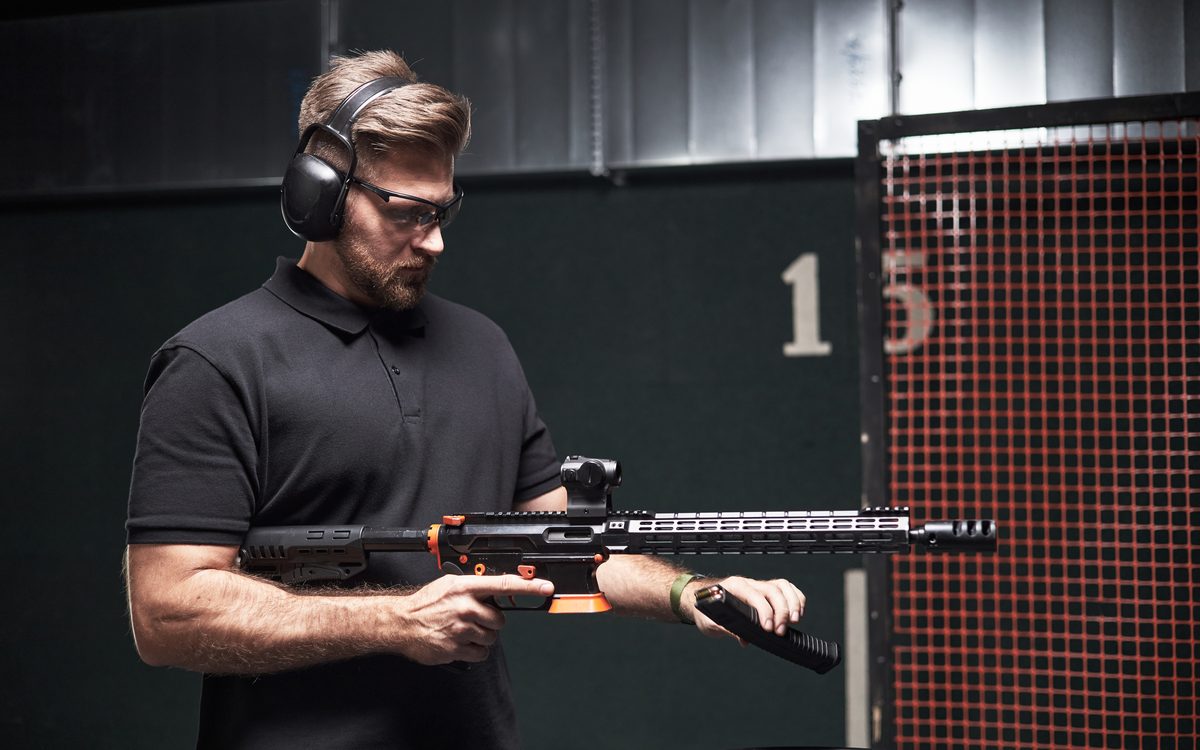
Sixty shots in an air rifle qualification round can take well over an hour of standing, and by shot forty the legs, lower back and the small muscles of the shoulder and neck are all doing a job that looks like doing nothing. Shooting training is the work, on and off the range, that helps an athlete hold a position steadily, repeat the same shot process, and keep both body and attention sharp for the whole match.
Quick answer: Shooting performance rests on a steady body, a calm breathing and trigger routine, and the ability to repeat that for a whole match. Most training is coached range time plus dry practice, with off-range strength, trunk and endurance work. Small trials in air pistol shooters report gains from trunk and breathing-muscle training, but the studies are tiny, so treat them as hints. Ask a coach and a physical therapist or athletic trainer to shape your plan.
What the sport asks of the body
A 2022 ISSF news article argues that in the standing position the ability to limit postural sway and tremor is decisive for performance. Rifle shooters hold a heavy rifle in standing, kneeling and prone positions; pistol shooters support one arm for long stretches; shotgun shooters rotate and track a moving target. The common thread is stillness without stiffness.
Match length matters too. A 2025 study in Scientific Reports used the 60-shot qualification format, split into six sets of 10, to look at stress and performance in elite shooters, and reported an inverted-U pattern: the best results came in the middle of the match, with similar dips at the start and the end. The authors link this to arousal and anxiety, which means training the body to repeat a process for a full match is not only a fitness question. We cover the mind side on shooting mental training.
A sensible week: general coaching practice
No source we found gives a standard weekly plan for shooters, and good coaches build it around the athlete’s level, event, school or work schedule and health. What follows is general coaching practice, not a study result.
- Range sessions: the shooting itself, with a coach, in quality over volume. Many coaches stop a session when focus drops rather than counting shots.
- Dry practice: aiming and trigger work without live firing. The ISSF rules allow dry firing only on the firing line or in a designated area, so follow your range’s rules.
- Strength and trunk work: two or three short sessions a week is a common pattern in general strength training. Pick exercises with your coach.
- Aerobic base and easy movement: walking, cycling or swimming to support recovery between sessions and to help with the long days at a competition.
- Rest days: real days off, especially in the weeks before a major match.
Core and trunk training
A 2026 pilot randomised controlled trial in Scientific Reports gave 20 national-level 10 m air pistol shooters eight weeks of either unstable-surface trunk training (Swiss balls, BOSU balls, balance discs) or the same training on stable ground. The unstable group showed larger gains in postural stability and shooting scores. The authors say that after statistical correction only two measures stayed significant, and that the sample is small and needs confirmation in larger trials. It is a hint, not a recipe.
In the same spirit, a 2025 cross-sectional study of 114 college rifle athletes found that 89 percent reported at least one episode of low back pain, and 24 percent of those had missed a day of training or competition in one season. Because trunk strength and posture are a standard part of back care, many programs include core work; read our injury prevention page for the safety side and the injuries page for the research.
Breathing and respiratory training
Calm, regular breathing is a core shooting skill. A 2018 systematic review of slow breathing in healthy people (not shooters) found that breathing slower than ten breaths a minute was linked with changes in heart rate variability and with calmer, more alert states. In shooters, a 2026 trial in BMC Sports Science, Medicine and Rehabilitation gave 20 trained male air pistol athletes four weeks of inspiratory muscle training, using a threshold device at 40 percent of maximal inspiratory pressure, twice a day, six days a week. The trained group improved in jumping tests and in shooting accuracy measured on a laser scoring system, while reaction times did not significantly change. The trial was registered retrospectively, and the sample is 20 people, so this too is preliminary. Respiratory training devices need instruction; ask a coach or clinician before you start.
On timing the shot within the heartbeat, the evidence conflicts. A study of nonelite air rifle shooters found they fired more often in the first part of the beat, while a later study of junior elite shooters concluded that timing within the cardiac cycle was not a determinant of performance. Do not build a routine around it.
Periodisation basics
Periodisation just means organising training in blocks: a general preparation period, a period closer to competition where range work becomes more match-like, a short taper, and an off-season for rest. This is general coaching practice, and the details depend on the calendar. The ISSF qualification window for LA28 runs from 31 July 2026 to 1 May 2028 according to the ISSF, so elite athletes plan around specific quota competitions, but most club athletes plan around a few key matches a year.
What the research does and does not show
Most shooting-specific training studies are small, short and in elite or national-level athletes, and two of the trials above are pilots. That does not make them wrong; it means a coach and clinician should be involved before copying anything. If you are a young athlete, the 2014 international consensus statement on youth resistance training, published in the British Journal of Sports Medicine, says supervised, progressive strength training can be done safely by young people when it is well coached; ask a qualified professional about age-appropriate programs. See also shooting recovery.
Shooting training FAQs
How fit do I need to be for shooting?
Shooting is not usually judged on fitness tests, but the ISSF notes steadiness in standing matters a great deal, and the college rifle study above shows back problems are common. A basic level of trunk strength, posture and general fitness helps most shooters. Ask a coach what suits your event.
Is dry practice the same as dry firing?
They overlap. Dry practice means aiming and routine work without live ammunition. Dry firing is a specific term in the ISSF rules for releasing the trigger of an unloaded gun, and the rules allow it only on the firing line or in a designated area.
Does core training improve shooting scores?
A small 2026 pilot trial in air pistol shooters reported gains with unstable-surface trunk training, but it needs larger studies. Many coaches include core work anyway for posture and back health.
Does breathing training help shooters?
Slow breathing is linked with calmer physiology in healthy people, and a small 2026 trial reported gains from inspiratory muscle training in air pistol athletes. Neither is proof for your event; try it with a coach.
How many hours a week should I shoot?
We found no published standard. Ask your coach, and watch for signs that focus or your back is suffering.
Sources
- ISSF news, 2022 article on postural sway, heart rate and shooting (read via search summary)
- The inverted-U relationship between stress and performance in elite shooting, Scientific Reports 2025
- Unstable trunk core strength training in elite 10 m air pistol athletes, pilot RCT, Scientific Reports 2026
- High prevalence of low back pain in college rifle athletes, Int J Sports Phys Ther 2025
- Inspiratory muscle training in elite air pistol athletes, BMC Sports Sci Med Rehabil 2026
- Zaccaro et al., slow breathing systematic review, Front Hum Neurosci 2018
- Lloyd et al., youth resistance training consensus, Br J Sports Med 2014
- ISSF, LA28 qualification system
- ISSF Rule Book, 2022 edition (dry firing definition, rule 6.2.4.1)
General information for education only, not medical advice. It does not replace a visit with a doctor, physical therapist or athletic trainer, or instruction from a certified coach or range officer. See how we write and check our pages in our editorial policy.