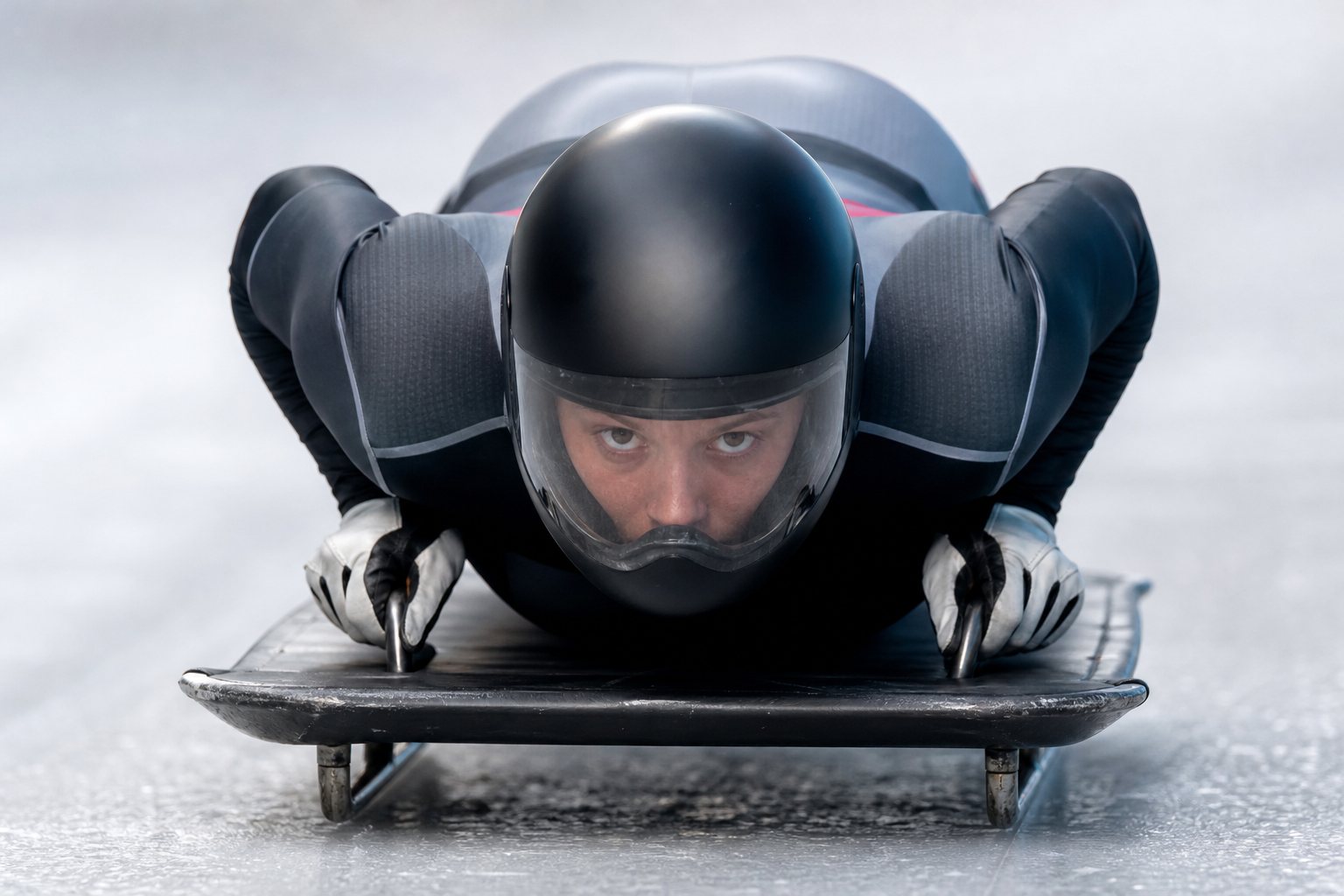
The sled has stopped at the bottom of the track, and the athlete sits up slowly with a headache that was not there at the top. Nothing dramatic happened; it was just a bumpy run. That moment sits behind most of what is known about skeleton injuries: the sport is fast, the athlete’s head is inches from the ice, and the research is small. This page covers the injury patterns that have been recorded with numbers, concussion and the unexplained “sled head”, general rehabilitation principles and when to see a professional. It gives no diagnosis and no recovery times.
Quick answer: Published skeleton numbers are small and come mostly from Olympic Games reports. About 10.6% of the skeleton team was injured at Sochi 2014, and concussions made up 13 to 18% of injuries across the three sliding sports in a 2018 review’s abstract. Head and neck symptoms after a run need a healthcare provider, not a guess. See a sports medicine doctor, physical therapist or athletic trainer, and call 911 for danger signs.
General information, not medical advice. To lower risk see skeleton injury prevention; return to the skeleton hub.
What the surveillance numbers show
Skeleton has very few athletes, so each Games gives only a handful of injuries. A 2018 Frontiers in Neurology review of sledding sports collected the reports. At the 2010 Vancouver Olympics, three injuries were reported in two skeleton athletes and none were concussions. At Sochi 2014, 10.6% of the skeleton team was injured, most during training, and none needed more than a day away from sport. At the 2016 Lillehammer Youth Olympic Games 17.5% of skeleton athletes were injured, versus about 4% at the 2012 Youth Games. The review also reports that at the Torino 2006 Games skeleton athletes had the largest use of medical services among the sliding sports (26%, versus 17% for bobsleigh and 7% for luge). These are team-level percentages from different Games, not injury rates per athlete exposure, and they should not be read as one trend.
A Whistler Sliding Centre study of more than 43,200 runs across all sliding sports found an injury rate of 0.5% of runs, with more serious injury in fewer than 0.1%, and lacerations, abrasions and contusions made up 52% of injuries. One fatality, caused by track ejection, was recorded. This covers all three sliding sports together. For skeleton specifically, we found no published injury rate per athlete exposure for the start sprint.
Illness appears in the same reports. The Vancouver 2010 surveillance found that in skeleton, figure and speed skating, curling, snowboard cross and biathlon every tenth athlete had at least one illness, and the Sochi 2014 report put skeleton among the sports with the highest illness rates, with respiratory problems the most common. More on that in nutrition and athlete health.
Concussion and “sled head”
The 2018 review’s abstract says concussions affect 13 to 18% of sliding-sport injuries, a larger share than in ice hockey (3 to 19%). Its authors also describe “sled head”, a foggy or throbbing headache after bumpy or repeated runs that athletes know well but that nobody has explained. It might be concussion, repeated smaller impacts, neck strain or something else. The only early report the review found, from 1986, described post-run headaches as almost universal among luge athletes. The review says there are no current guidelines for managing sled head and notes that Bobsleigh Canada Skeleton’s concussion protocol disallows athletes with concussion symptoms from training until they are symptom-free.
The CDC HEADS UP guidance is clear and applies to sliders: remove the athlete from sport right away, keep them out the same day, and have a healthcare provider assess them. Most people recover with follow-up care, but if symptoms last longer than 2 to 4 weeks the CDC suggests a specialist in brain injuries. Return to sport is a multi-step process decided by a healthcare provider. Call 911 for danger signs such as repeated vomiting, a seizure, a worsening headache or loss of consciousness.
The sprint and the dive: muscle, joint and skin
The start is a maximal sprint on cold ground followed by a dive onto the sled. Muscle strains in the hamstrings and groin are common in sprint sports, but we did not find skeleton-specific figures. The Vancouver 2010 report for all winter sports lists the head or cervical spine and the knee as the most common injury locations, which is a general picture across sports, not skeleton alone. Skin injuries from contact with ice and the sled are also reported at the track level, as the Whistler lacerations and abrasions figure shows.
General rehabilitation principles
Everything here is general, not an individual plan, and recovery times vary widely, so we give none.
- Get assessed first. The AAOS says a doctor’s exam, sometimes with imaging, confirms the type and severity of a muscle injury. Do not decide for yourself.
- Early care for a strain. The AAOS lists rest, ice (cold packs for 20 minutes at a time, not directly on the skin), compression and elevation for a hamstring strain, then physical therapy that starts once pain and swelling ease, with gentle stretching and then strengthening.
- Return only with a clinician’s go-ahead. Both the AAOS and the CDC say returning too early raises the risk of reinjury or repeat injury.
- Stay involved. A 2025 overview of motor imagery says mental rehearsal of skills is used to keep athletes engaged while injured, an idea worth discussing with your physical therapist.
- Rehab is a team job. The 2025 commentary on sliding athletes recommends integrated medical, strength and performance staff.
When to see a professional
- Any head symptom after a run: headache, dizziness, fogginess, nausea, light sensitivity.
- Neck or back pain that is severe, worsening, or with numbness, tingling or weakness.
- A sudden sharp pain in the back of the thigh or groin during a sprint.
- Pain that stays or returns every time you push or lie on the sled.
- Call 911 for repeated vomiting, a seizure, confusion, a worsening headache or loss of consciousness.
Skeleton injuries FAQs
What is sled head?
A foggy or throbbing headache some sliding athletes report after bumpy or repeated runs. A 2018 review says its cause is not established; it could be concussion, repeated impacts or neck strain.
How common is concussion in skeleton?
A 2018 review’s abstract says concussions are 13 to 18% of injuries across sliding sports. For skeleton alone the numbers are too small to give a reliable rate.
How many skeleton athletes get injured at the Olympics?
The 2018 review reports 10.6% of the skeleton team at Sochi 2014, mostly in training, and 17.5% of skeleton athletes at the 2016 Youth Games. Small teams make these numbers jumpy.
What are the common injuries?
Head and neck symptoms, skin injuries and muscle strains are described, but skeleton-specific rates are limited. See a sports medicine doctor for any injury.
When can I slide again after an injury?
That is a clinician’s decision. Nobody should rely on a universal timeline; the CDC says a healthcare provider decides about return after a concussion.
Sources
- McCradden and Cusimano 2018, Front Neurol (PMC)
- Whistler Sliding Centre injuries, Br J Sports Med 2016
- Sports injuries and illnesses, Vancouver 2010 Olympic Winter Games
- Sports injuries and illnesses, Sochi 2014 Olympic Winter Games
- Motor imagery as a load management tool, 2025
- Interdisciplinary management of the sliding athlete, 2025
- AAOS OrthoInfo: hamstring muscle injuries
- CDC HEADS UP: responding to a concussion
- CDC HEADS UP: signs and symptoms
General information for education only, not medical advice. It does not replace a sports medicine doctor, physical therapist, athletic trainer, licensed mental health professional or qualified coach. See our editorial policy for how we research and write.