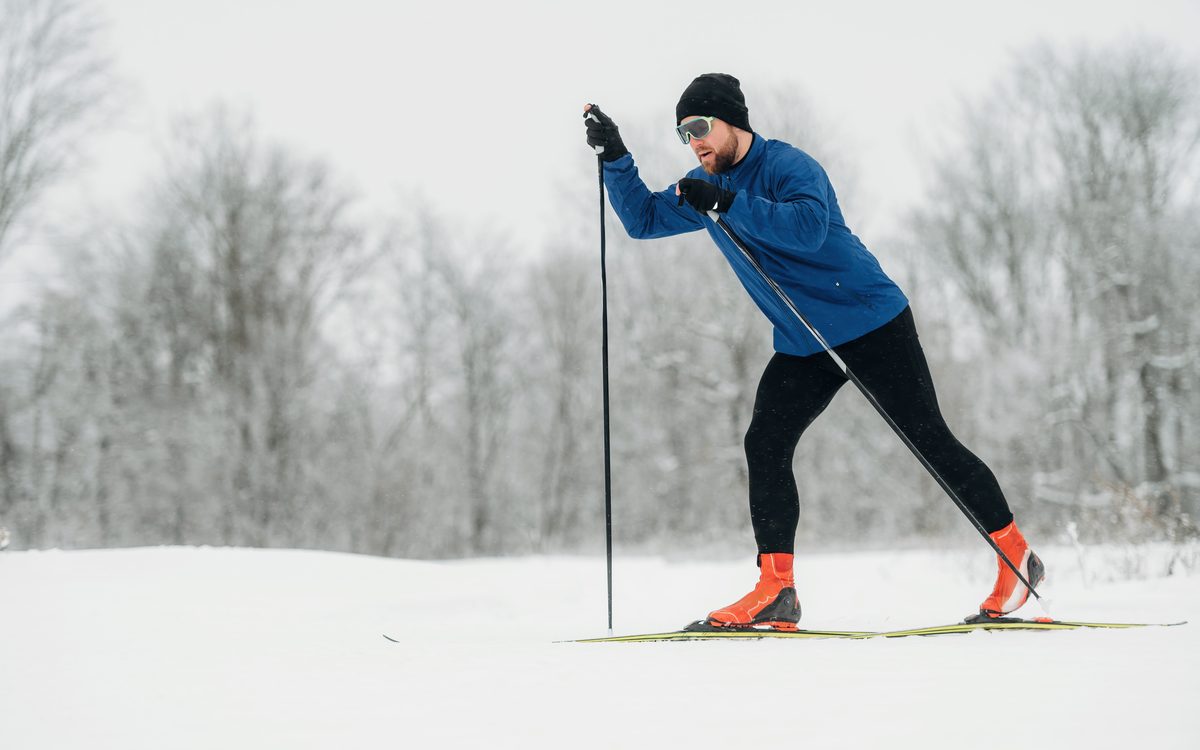
The snow is falling sideways, the wind keeps shifting and a young jumper stands at the gate with cold hands. A good coach adds a few minutes of warming up, checks the helmet and decides whether the jump is worth it today. Nordic combined injury prevention is the set of habits, coaching decisions and equipment checks that lower the chance of getting hurt in the jump or the race. It lowers risk. It cannot promise anything.
Quick answer: The best-supported ideas are learning landings under coaching, building up load gradually with rest days, strengthening the hips and legs, taking weather seriously, and wearing a properly fitted helmet. A mouthguard has also been suggested for the face and teeth. Most of the evidence is from surveys and surveillance, not trials. See a sports medicine doctor, physical therapist or athletic trainer for pain that lingers, and get emergency help after a head injury with danger signs.
This page is about lowering risk. For what each injury looks like, see our injuries page. For the sport overall, see the Nordic combined hub.
Warm-up
We did not find a published injury-prevention warm-up that has been tested in Nordic combined athletes. The usual practice is to raise heart rate and body temperature gradually with easy skiing or movement, then add mobility and jump-specific drills before the first hill jump. Treat the routine as general coaching practice and follow your coach’s plan. Cold hands and legs are a reason to start earlier.
Landings and technique
In the one prospective study of injuries in elite women ski jumpers (Stenseth and colleagues, three World Cup seasons from 2017-18), crash landings caused 70% of injury events, and telemark landings were involved in 46%. In that study, 96% of jumps were shorter than the hill size. The authors present it as baseline information for prevention work. For athletes the practical points are modest: learn the landing on lower hills or off the hill before adding speed, and let the coach decide when to move up. We found no trial showing that a particular technique cut injuries.
Training load and rest
Several studies hint at why load matters. After a 15-day altitude block, French Nordic combined athletes all showed signs of overreaching (Schmitt and colleagues, 2018), and the authors suggested more easy volume with moderate strength and speed work. For youth the American Academy of Pediatrics (Brenner, 2016) recommends 1 to 2 days off a week from the main sport. In world-class cross-country skiers (Walther and colleagues, 2025), reduced load every 8 to 9 days was part of the training pattern. That is a cross-country finding, so treat it as an idea, not a rule for combined athletes.
Hips, knees and strength
Hip pain seems to be common. A 2025 survey of 22 elite ski jumping and Nordic combined athletes (Vasavada and colleagues) found high rates of hip pain, with hip symptoms linked to knee and ankle symptoms, and a 2024 study found ski jumpers had worse patient-reported hip function than combined athletes. The authors suggest hip strength and conditioning work. Knees matter too: at the 2023 Nordic World Championships, 58.3% of injuries were in the lower limbs and every second of those was a knee (Kastner and colleagues). In a 2012 trial, heavy strength training in Nordic combined athletes raised strength without adding body mass (Rønnestad and colleagues), but it measured performance, not injuries. Ask a physical therapist or strength coach for hip, trunk and leg work.
Weather, cold and altitude
Conditions matter. In the women’s World Cup data, 44% of acute jump injury events came in snowy, windy or cloudy conditions. The 2026 Olympic team event, per NBC Olympics, saw several crashes in heavy powdery snow. Jump organisers and coaches decide when conditions are unsafe; athletes should speak up. For the cold, the American Academy of Pediatrics lists fingers, toes, ears and noses as the first places frostbite strikes, and recommends layers and breaks.
Helmets, mouthguards and equipment
- Helmets: a Canadian review of 12 studies of skiers and snowboarders (Russell and colleagues, 2010) found helmets cut head injury odds (odds ratio 0.65) without raising neck injury. It was not about jumping or competition helmets; ask your club about the helmet rules for jump and roller-ski training. The FIS rules for cross-country roller skiing require a helmet and eye protection.
- Mouthguards: in a Swiss survey of 465 ski jumpers and Nordic combined athletes (Stillhard and colleagues, 2015), 56.5% of combined athletes had been injured, and dental injury was more frequent among adults (12.7%) than juniors (6.1%). The authors suggested informing athletes about mouthguards and tooth rescue boxes. This is a suggestion from a survey, not proof.
- Fit and inspection: ski length rules and jumping suit rules exist; see our gear page.
What prevention cannot do
Surveillance numbers are small: Kastner counted 24 injuries among registered athletes across three disciplines, and the Nordic combined share was not separated. Even careful athletes crash. No page can promise safety. Report pain early instead of skiing through it.
When to see a professional
See a sports medicine doctor, physical therapist or athletic trainer for pain that lingers, hip or groin pain, swelling, a joint that gives way, or any head injury. The CDC says to remove an athlete with a suspected concussion from play and to let a healthcare provider make the return-to-sport decision; seek emergency care for danger signs.
Frequently asked questions
Is there a proven warm-up for Nordic combined?
We found no published injury-prevention program tested in these athletes. The warm-up here is general coaching practice.
What is the most common injury location?
At the 2023 Nordic World Championships, the lower limbs, with the knee accounting for half of them (Kastner and colleagues). That study covered three disciplines.
Do mouthguards help?
A Swiss survey suggested they could reduce dental injury risk and that awareness varied between countries. We did not find a trial. Ask a dentist or sports doctor.
Does strength training prevent injuries?
A Nordic combined trial showed strength gains, not injury reduction. Hip and leg strength work is suggested by authors of hip-pain research; it is not proven prevention.
Should kids jump?
Only with qualified coaching, on suitable hills, under a club’s safety rules, and with rest days. See the rules page.
Sources
- Stenseth et al. 2022, injuries in elite women ski jumpers
- Kastner et al. 2025, injuries at the 2023 Nordic World Ski Championships
- Vasavada et al. 2025, hip, knee, ankle outcomes in elite Nordic jumping athletes
- Vasavada et al. 2024, hip pain in ski jumping vs Nordic combined
- Stillhard et al. 2015, injuries and dental injuries in ski jumping and Nordic combined
- Schmitt et al. 2018, live high-train low in Nordic combined
- Walther et al. 2025, periodisation in world-class cross-country skiers
- Rønnestad et al. 2012, strength training in Nordic combined
- Russell et al. 2010, helmets and head and neck injuries in skiers
- AAP, Brenner 2016
- AAP HealthyChildren: winter safety
- CDC HEADS UP: what to do about a suspected concussion
- NBC Olympics: Nordic combined at Milano Cortina 2026
General information for education only, not medical advice. It does not replace a sports medicine doctor, physical therapist, athletic trainer, dietitian or qualified coach who knows you. See our editorial policy for how we write and source our pages.
Keep exploring: the Nordic combined hub, the skiing hub, ski jumping and every sport on our sports hub.